
Minnesota, known as the land of 10,000 lakes, is home to the headwaters of the Mississippi River and plenty of wild, open spaces boasting elk, moose, and bears. While large animals can be frightening to encounter in the wild, large spiders can be a fearsome sight as well. Of the more than 50,000 recognized spider species worldwide, Minnesota is home to over 600. From the tiny pirate wolf spider (Pirata piraticus), which measures less than one-tenth of an inch, to much larger species, most of Minnesota’s spiders are harmless to humans, including five of the largest spiders in the state. Continue reading to learn about Minnesota’s five biggest spiders and why they are nothing to fear.
5. Long-Bodied Cellar Spider
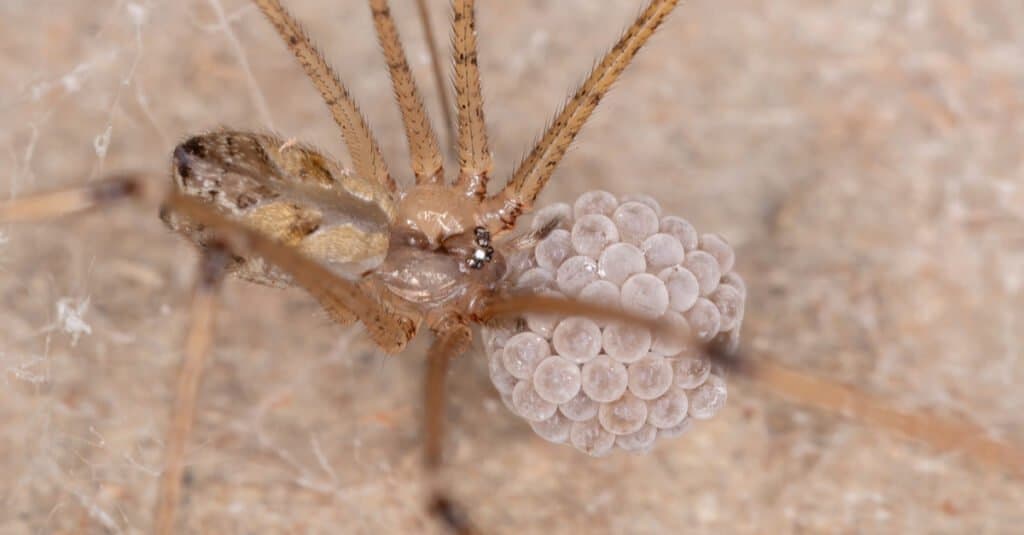
Cellar spiders can move their web in circles to make it harder to see them.
©iStock.com/ViniSouza128
| Scientific Name | Size | Danger to Humans |
|---|---|---|
| Pholcus phalangioides | 1-2 inches | A bite may cause a mild burning sensation. |
The long-bodied cellar spider is often found in homes and outbuildings. It loves the dark recesses associated with basements, garages, sheds, and places where it won’t be disturbed. This spider is brown, tan, or grayish brown and has a somewhat translucent body.
Cellar spiders also have a dark marking on their carapace that some say resembles a skull. This feature, along with their exceptionally long legs, has led people to call them the skull spider or daddy longlegs.
The long-bodied cellar spider is not harmful to humans. In the rare case that a cellar spider does bite, at most it causes mild pain and a momentary burning sensation at the site.
4. Striped Fishing Spider
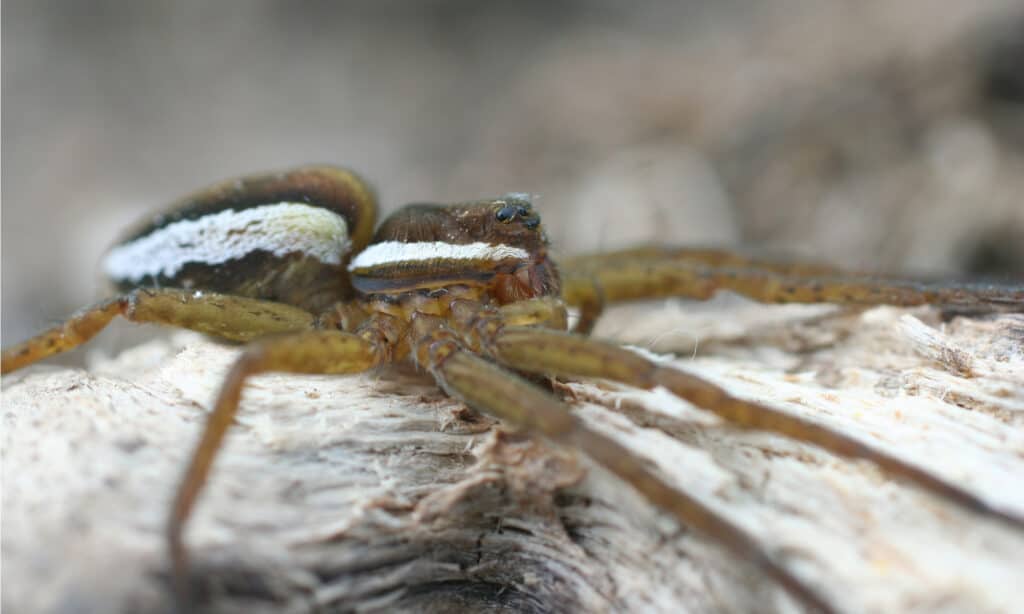
The white stripe along the length of its body is an obvious identifying mark of the striped fishing spider.
©Oleg Nikonov/Shutterstock.com
| Scientific Name | Size | Danger to Humans |
|---|---|---|
| Dolomedes scriptus | 1- 2.4 inches | A bite can cause pain and swelling, much like a bee or wasp sting or bite. |
The striped fishing spider lives near water and is a common sight on docks and boats. They can run across the water and even dive below the surface for up to 30 minutes. Striped fishing spiders are wandering opportunists, meaning they hunt their prey by finding and chasing it.
Oftentimes, striped fishing spiders eat small fish, tadpoles, and other aquatic insects and invertebrates. These spiders tend to be large and brown, with a light brown stripe running down the middle of their body and a tan or cream-colored stripe running down both sides of their carapace and abdomen. They also have a W-shaped pattern on their abdomens.
Striped fishing spiders will typically flee at the sight of a human. However, its bite may cause minimal pain and swelling, but it poses no threat.
3. Black and Yellow Garden Spider
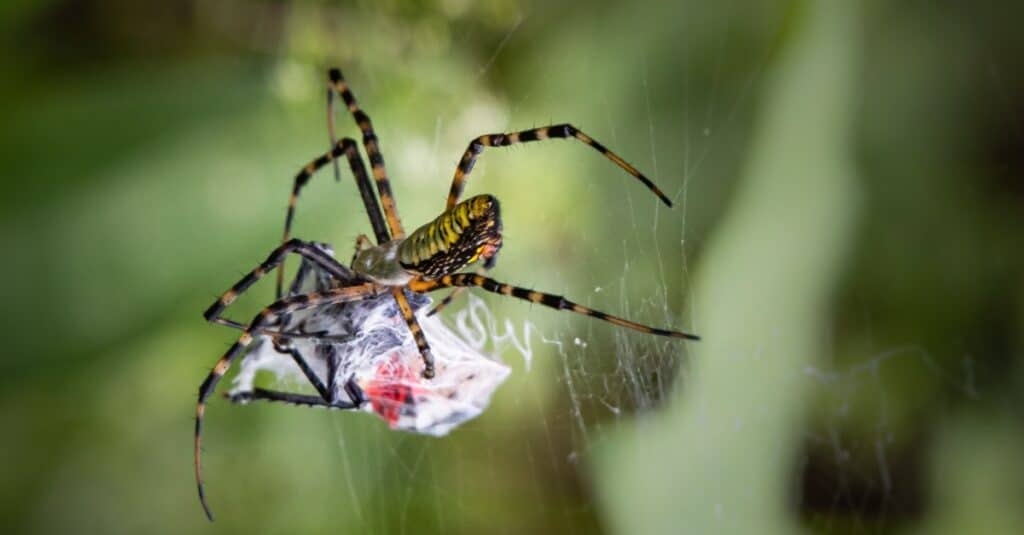
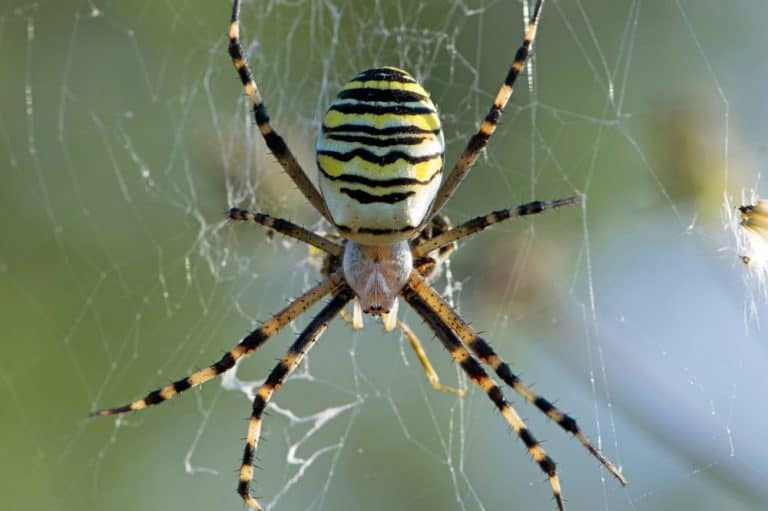
The black and yellow garden spider is known for its beautiful and unique web.
©cwieders/Shutterstock.com
| Scientific Name | Size | Danger to Humans |
|---|---|---|
| Argiope aurantia | 0.5-3 inches | Rarely bites humans, but it may cause pain and swelling. |
The black and yellow garden spider goes by a variety of names, including the writing spider. That name stems from their unique web design. Their webs can be several feet across and have an extra-thick portion running through them in a zig-zag pattern, which is said to look like handwriting.
These spiders live outdoors in open areas where they are protected, such as under the eaves of homes and other buildings.
Black and yellow garden spiders have a patterned black and yellow abdomen with some silver or gray mixed in. Their legs are brown on the femur and banded with black on the tibia. Their bite, though rare, can cause pain and swelling in the affected area.
2. Ground Wolf Spider
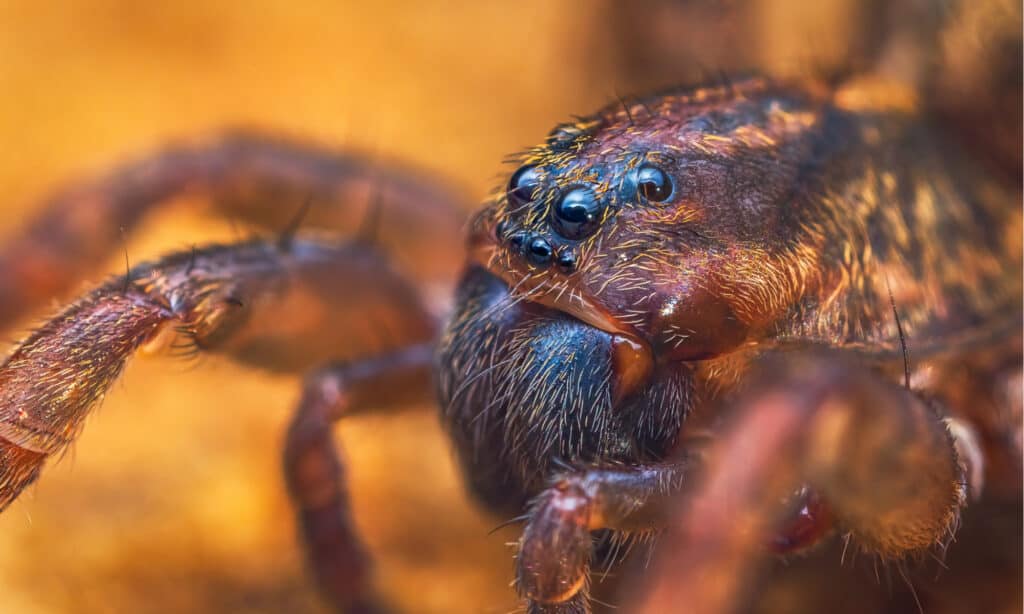
Rather than ensnaring it in a web, ground wolf spiders actively hunt their prey.
©Lukas Jonaitis/Shutterstock.com
| Scientific Name | Size | Danger to Humans |
|---|---|---|
| Trochosa terricola | 2-3 inches | Delivers a mildly painful bite that leaves a bump. |
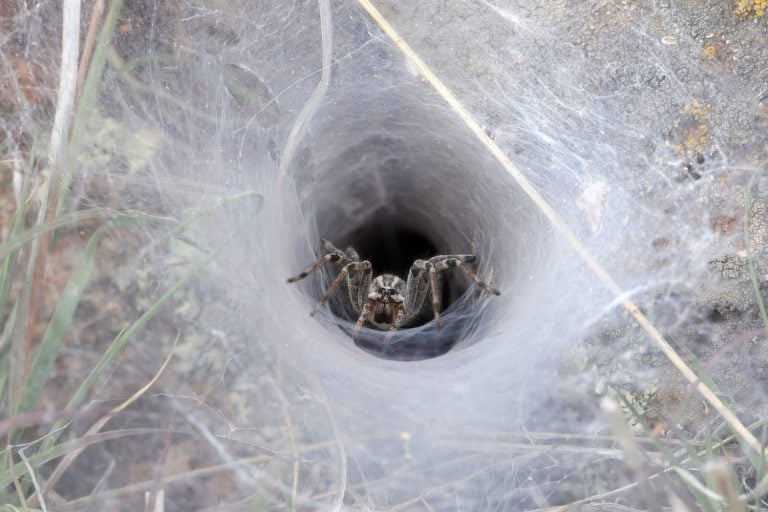
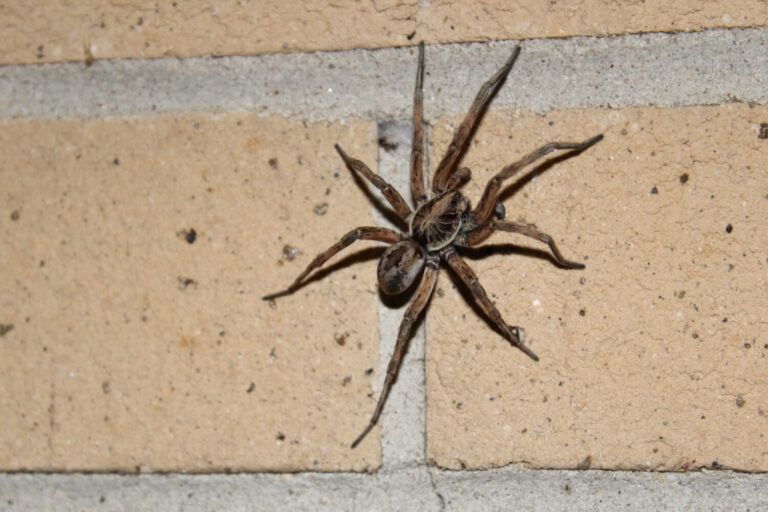
The ground wolf spider, one of the biggest spiders in Minnesota, is reddish brown with a dark brown mottled abdomen and two light-brown lines running down its carapace. These spiders are hunting spiders, meaning they chase their prey rather than ensnaring it in a web.
Ground wolf spiders hide in dark areas in homes, like basements, where they hunt insects. When they’re outdoors, they can be found in forests and fields, often waiting under the cover of vegetation or rocks for prey.
A bite from a wolf spider can be painful, but it is not harmful to most people. However, some people are allergic to their venom and experience additional complications.
1. Dark Fishing Spider
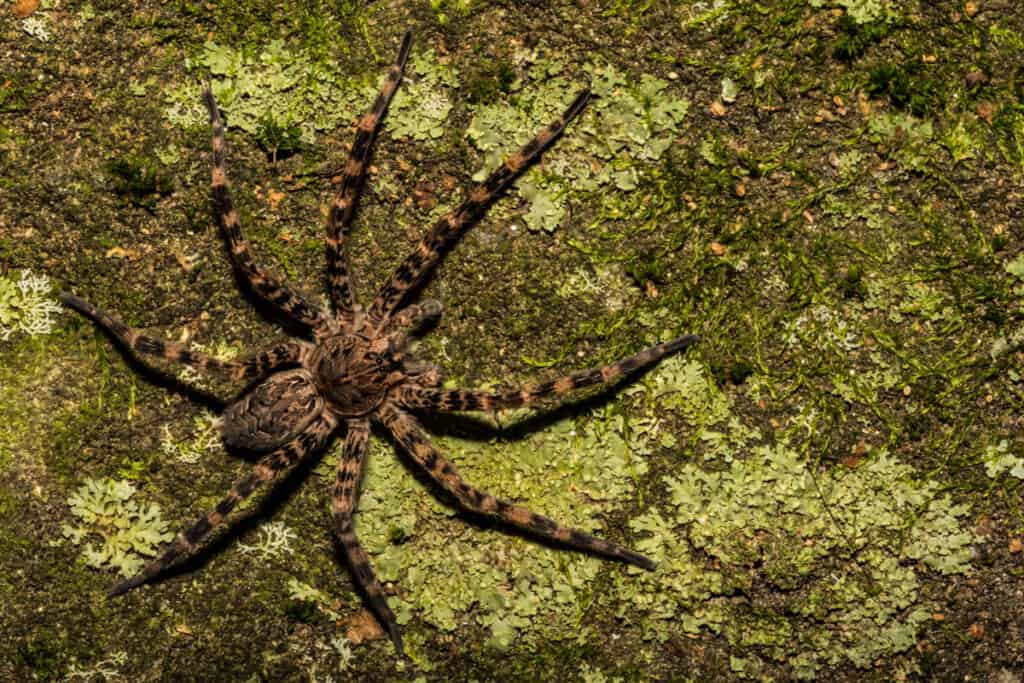
Dark fishing spiders can be found near water or a moderate distance away from it.
©iStock.com/JasonOndreicka
| Scientific Name | Size | Danger to Humans |
|---|---|---|
| Dolomedes tenebrosus | 3.5-4.5 inches | Can bite humans and cause a reaction similar to a bee sting. |
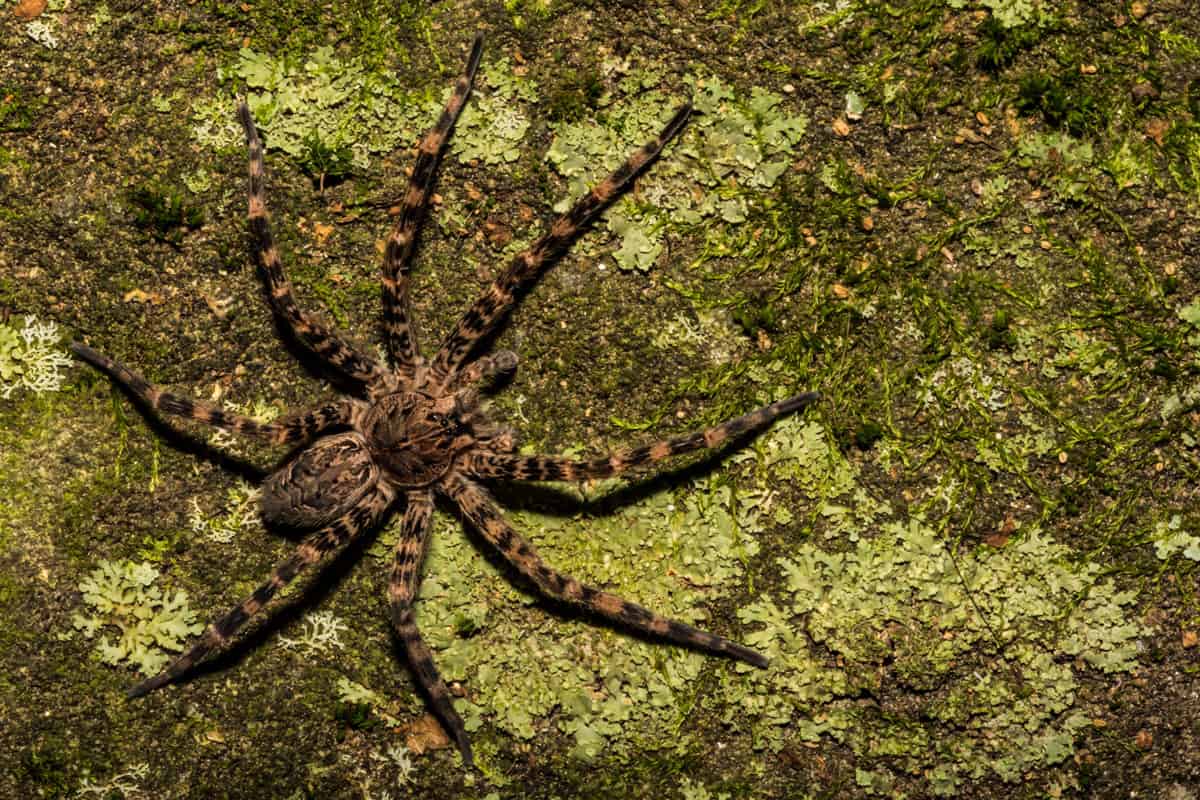
The dark fishing spider is the biggest spider in Minnesota. This spider can grow up to 4.5 inches in leg span and moves quickly, like other hunting spiders. The dark fishing spider has a mottled black and brown body with black patterns on its legs and W-shaped markings on its abdomen. Found near water, the dark fishing spider ranges farther than other members of its family. It can be seen on trees and wandering along the ground away from the water.
The combination of size and speed associated with the dark fishing spider can be intimidating, but these spiders are harmless. Though rare, dark fishing spiders can deliver a bite that is similar to a bee sting.