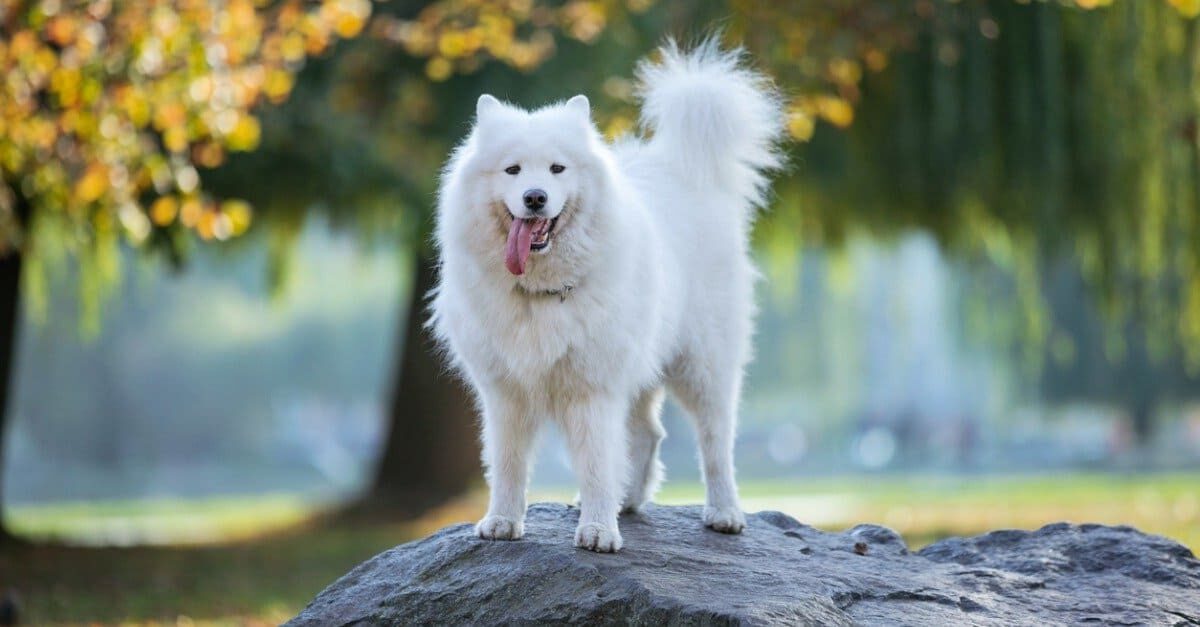

Samoyeds are exceptionally fluffy, smaller dogs that are becoming increasingly popular. These canines were originally bred as sled dogs, working in one of the coldest climates in the world. Their famous white coat is thick enough to protect them from brutal conditions and snow. They’re powerful, tireless dogs that were bred to work.
They’re also known as “smiling dogs,” as it looks like they are constantly smiling. However, the upturned corners of their mouth also kept them from drooling, which would have caused icicles to form.
Typically, these dogs are white. However, they actually come in four different colors (though they are all on the white spectrum, in our opinion).
We’ll go over these four colors from the rarest to the most common below.
1. White and Biscuit (Parti-Color)
White and biscuit Samoyed are usually called parti-color or bi-color. They have a striking appearance and are exceptionally rare. They have a combination of white and biscuit-colored patches or markings on their coat. Usually, white is the dominant color, while the biscuit only appears in patches.
Some of these dogs may only have very small speckles and hardly be particolored at all. However, others have larger, more defined patches. Some may be colored about half-and-half.
This coloration creates a contrast and makes these dogs stand out more from their solid-colored canines. Therefore, they’re often sought after. However, many genes have to come together correctly to make these parti-colored dogs possible.
2. Biscuit
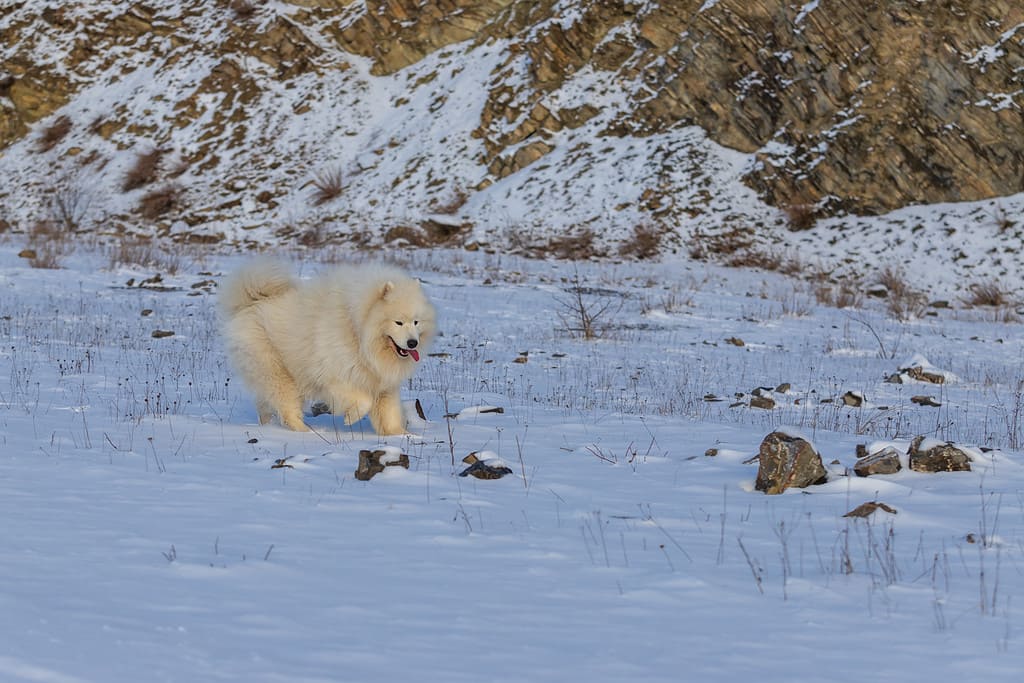
You can really tell these dogs aren’t white when they’re against a white background.
©Roman Bjuty/iStock via Getty Images
Biscuit Samoyeds are also pretty rare, though they are very beautiful. This coloration is more of a cream or tan, making it the most off-white color you can get. Usually, the dog is brown around the back, while their stomach is usually white. The exact extent of the tan color varies, but if it gets too light, the dog will become cream instead.
These dogs aren’t as white as other dogs in the least. Many people are after the pure-white color when they purchase a Samoyed, so these dogs don’t tend to be exceptionally sought after. However, they are still rare, likely because they aren’t the focus of most breeders.
3. Cream
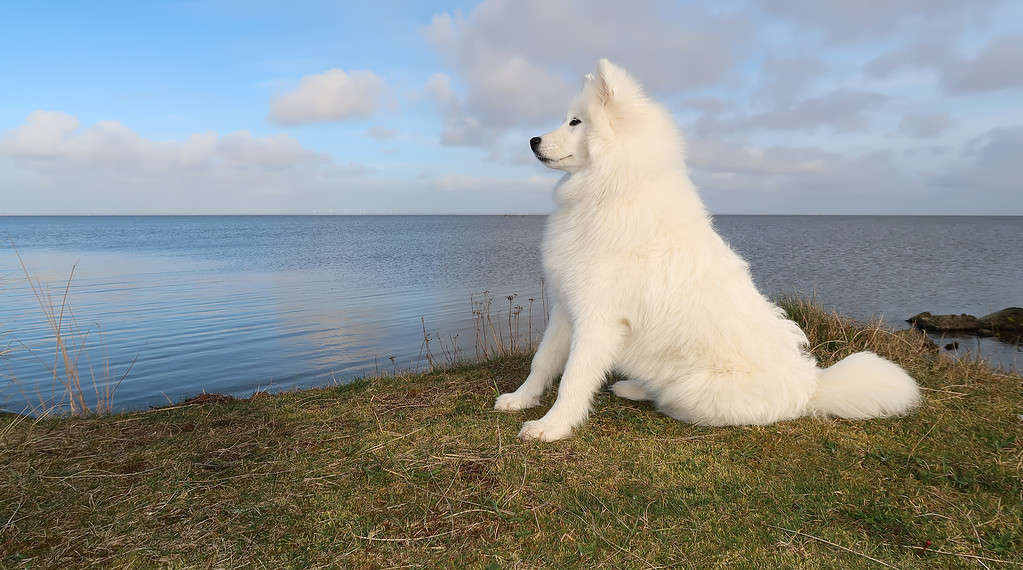
These dogs are almost white – but not quite.
©BoValentino/iStock via Getty Images
Cream Samoyeds are somewhere between biscuit and white. They aren’t pure white, but they aren’t dark enough to be considered creamy. Instead, they’re a pale off-white. While they aren’t as common as pure white Samoyeds, you can still find them around.
Their creamy color can look white if they aren’t standing next to a pure-white Samoyed.
The cream coloration may vary in intensity, ranging from very light, almost white, to a slightly richer cream shade. This variation can add depth and character to their coat, making each Samoyed unique.
4. White
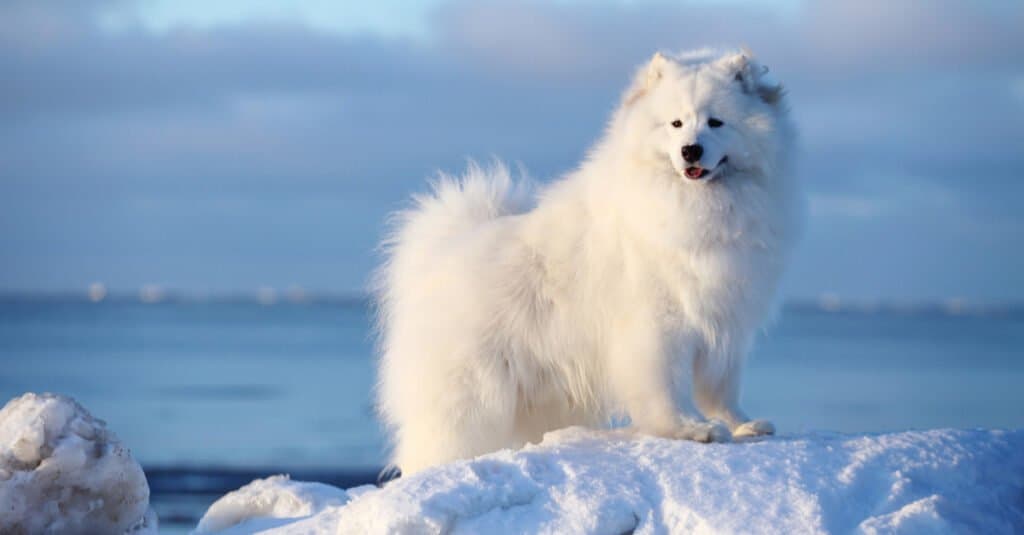
Samoyeds are best known for their white coloration.
©Ilya Barmin/Shutterstock.com
White is a classic, iconic color for Samoyeds. They are very fluffy dogs with pristine, all-white coats. They resemble fluffy clouds, which is why they are so highly sought after. The white coloration is the most common and traditional, and it is also what most people want. Therefore, it only makes sense that this would be the most beautiful coloration.
While this pure white coat is very beautiful today, its color also helped this breed blend into the snowy landscape. Therefore, there is a very practical reason these dogs are white.
Summary of Samoyed Colors
| Number | Color |
|---|---|
| 1 | White & Biscuit |
| 2 | Biscuit |
| 3 | Cream |
| 4 | White |