
Quick Take
- By 1901, science had clear evidence that an okapi existed, yet still couldn't figure out what it was. Discover the okapi's classification →
- The okapi looks like a zebra-giraffe hybrid, but its most giraffe-like feature is one you'd never expect. Explore the okapi's unique traits →
- An animal found nowhere else on Earth has fewer than 10,000 individuals remaining, and one surprising human activity is responsible for nearly all of the decline. See the population decline →
- Mother okapis with calves are considered among the hardest large mammals on Earth to observe, and that is exactly why saving them is so complicated. See why conservation is so hard →
For most of recorded history, the average person did not realize the okapi existed. While the Indigenous peoples of the Ituri Forest knew the animal for generations, the outside world had no confirmed specimen—that is, until 1901, when a skull and skin reached the Zoological Society of London.
Even upon having clear evidence of the okapi’s existence, scientists weren’t sure what they were looking at or dealing with. What is the history and background of an animal that is technically the giraffe’s only living relative?
October 18th is World Okapi Day, a time to celebrate this unique and relatively unknown creature. Now critically threatened, scientists are still uncovering basic facts about okapi. Here’s what we know about them, including how many are estimated to remain in the wild, as well as how conservation efforts are working to repair their populations.
What is an Okapi?
The okapi, classified scientifically as Okapia johnstoni, is the sole living member of the family Giraffidae, other than the giraffe itself. It is endemic to a single country, the Democratic Republic of Congo, which means no wild okapi exists anywhere else on Earth.
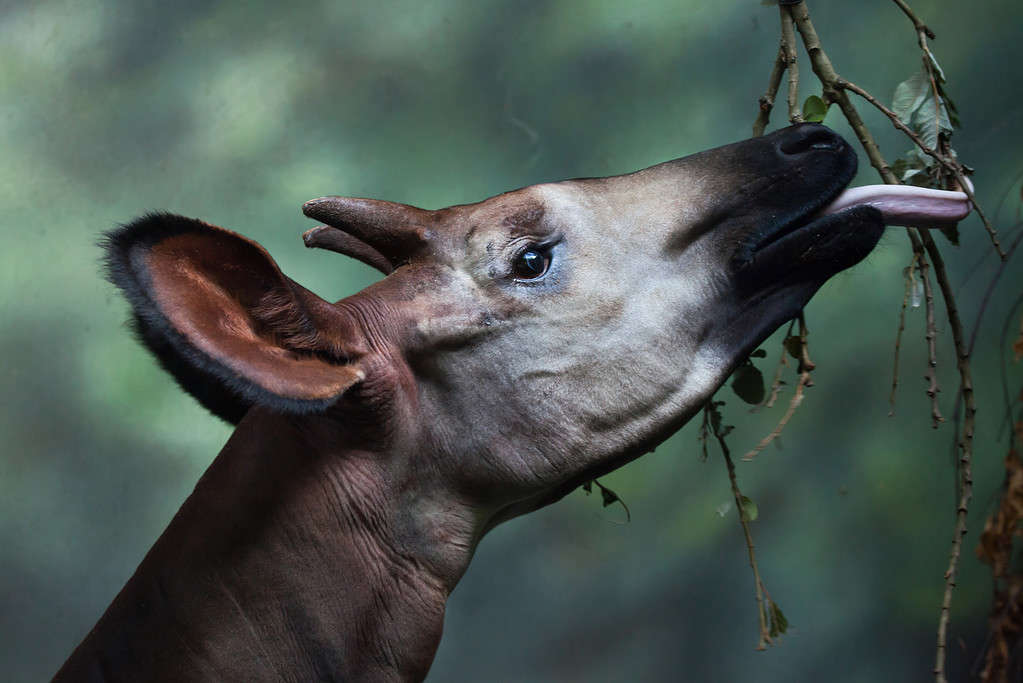
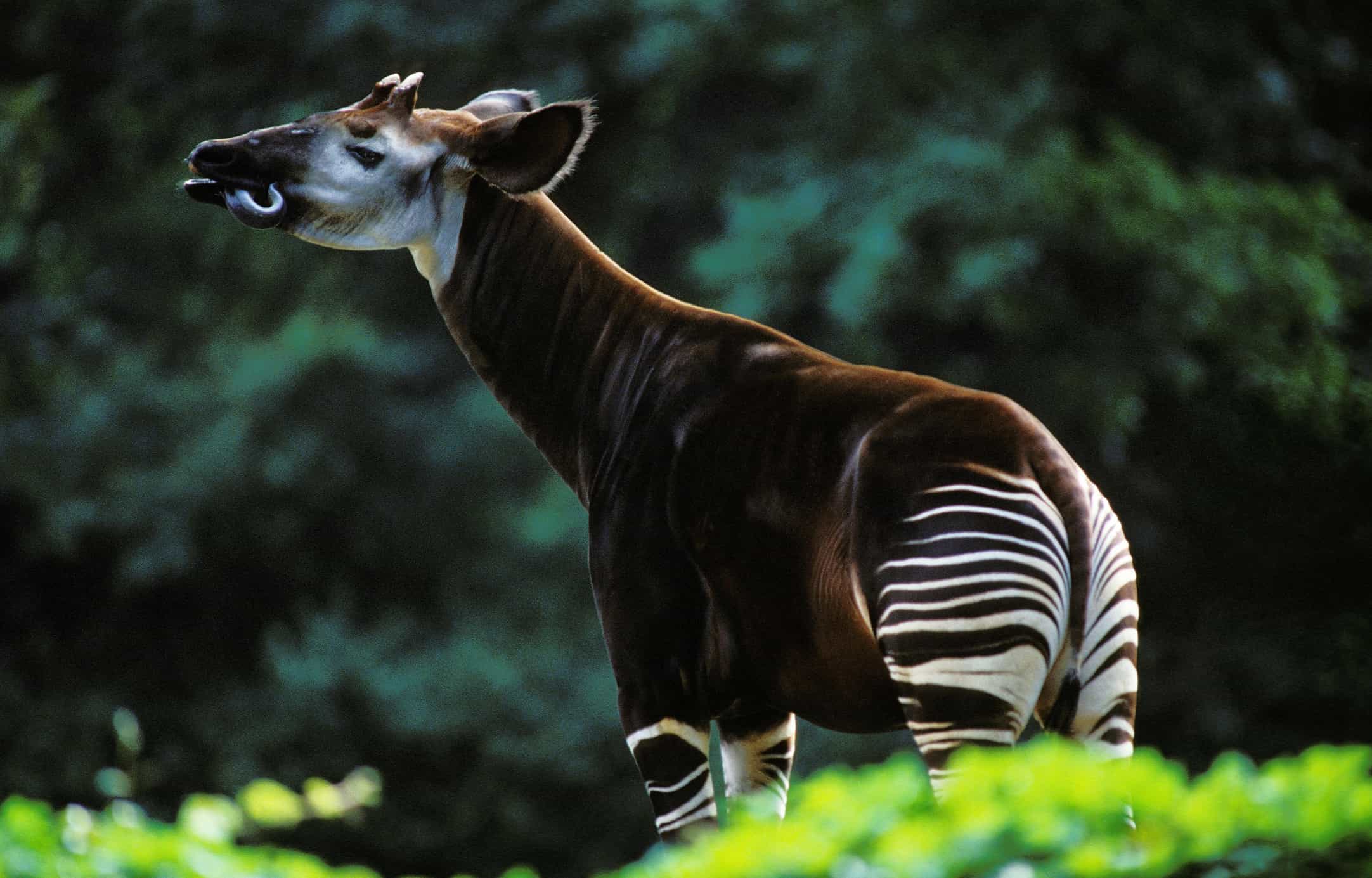
The only living relative of the giraffe, okapi share a similar tongue to them.
©wrangel/ via Getty Images
Okapi live in dense, humid lowland rainforests of the Congo Basin, particularly in the northeast, where the Ituri Forest provides their preferred habitat. The okapi has white-and-black striping on its rump and legs that functions as camouflage within the forest’s broken light.
But how does the giraffe ancestry come into play? An okapi’s tongue is 18 inches long, prehensile, and darkly pigmented to resist sun damage as it strips leaves from dense forest branches. Its large ears are tuned for detecting disturbances or threats in low-visibility conditions, and its low center of gravity and hoofed feet are adapted for navigating the instability of the forest floor.
The okapi is known for being a shy, reclusive animal. It is solitary rather than a herd animal and is also equipped with scent glands that allow it to mark territory without sound or much movement. Females with calves are reportedly among the most difficult large mammals in the world to observe in the wild, which is just one reason why it’s unclear how many okapi still exist.
Okapi Populations in the Wild: Determining Their Numbers
According to the Okapi Conservation Project, the total wild population of this mysterious animal is estimated at between 10,000 and 35,000 individuals, with approximately 5,000 believed to remain within the Okapi Wildlife Reserve itself. However, recent studies show a decline in their already limited numbers.

Mother okapi with their young are some of the most difficult creatures to find in the wild.
©Craig Russell/Shutterstock.com
For example, a 2025 population reconstruction study published in the African Journal of Ecology found that artisanal mining, among other human-caused issues, has been responsible for 98% of the population reduction since 2009, primarily through habitat destruction rather than direct killing.
The IUCN changed the okapi from Near Threatened to Endangered in 2013, a reclassification that researchers said was long overdue. Its 2008 status of Near Threatened severely misrepresented the threats okapi face in their natural habitat. Let’s take a closer look at those threats and what the uncertain future may hold for the okapi.
What is Destroying the Okapi’s Habitat?
The Congo Basin contains the world’s second-largest rainforest and is the most biologically diverse region in Africa. However, despite this beautiful setting, it is also one of the most politically unstable regions on Earth: the eastern DRC has existed in a state of intermittent and armed conflict for more than three decades.
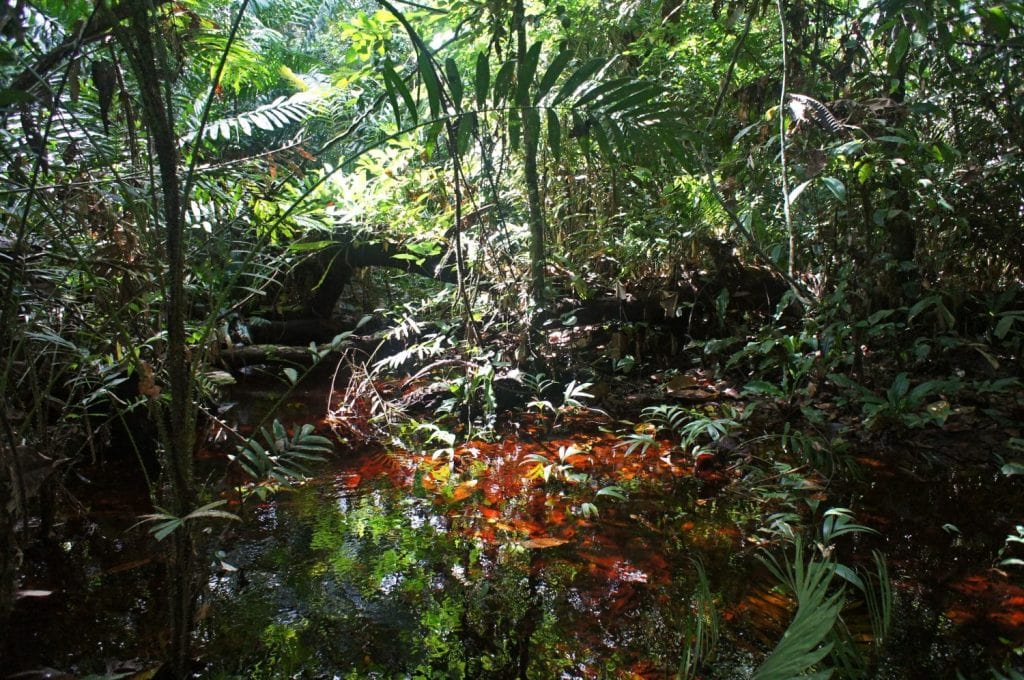
The forest the okapi lives in contains some of the rarest and most diverse animals on our planet.
©Alexandra Tyukavina/Shutterstock.com
What are the drivers of this violence? Illegal artisanal mining for gold and other minerals has led to the most severe habitat destruction inside and around the Okapi Wildlife Reserve. Armed groups controlling mining operations have also been responsible for poaching: in 2012, a militia attack on the reserve’s headquarters killed at least six people and a number of okapis being held at the station. That instability hasn’t changed.
For example, in February 2025, the first okapi in over a decade was returned to Epulu by rangers working with the Okapi Conservation Project and the Wildlife Conservation Society. “Even today, there are still some armed groups in the Okapi Wildlife Reserve,” the reserve’s staff acknowledged.
Beyond this conflict, illegal logging and expanding agricultural settlement are compressing the okapi’s range, a common story for many endangered animals, especially those that exist in valuable agricultural regions. The reserve may be a UNESCO World Heritage Site, but its boundaries are difficult to enforce in a region where the state has limited reach and local populations face severe food insecurity.
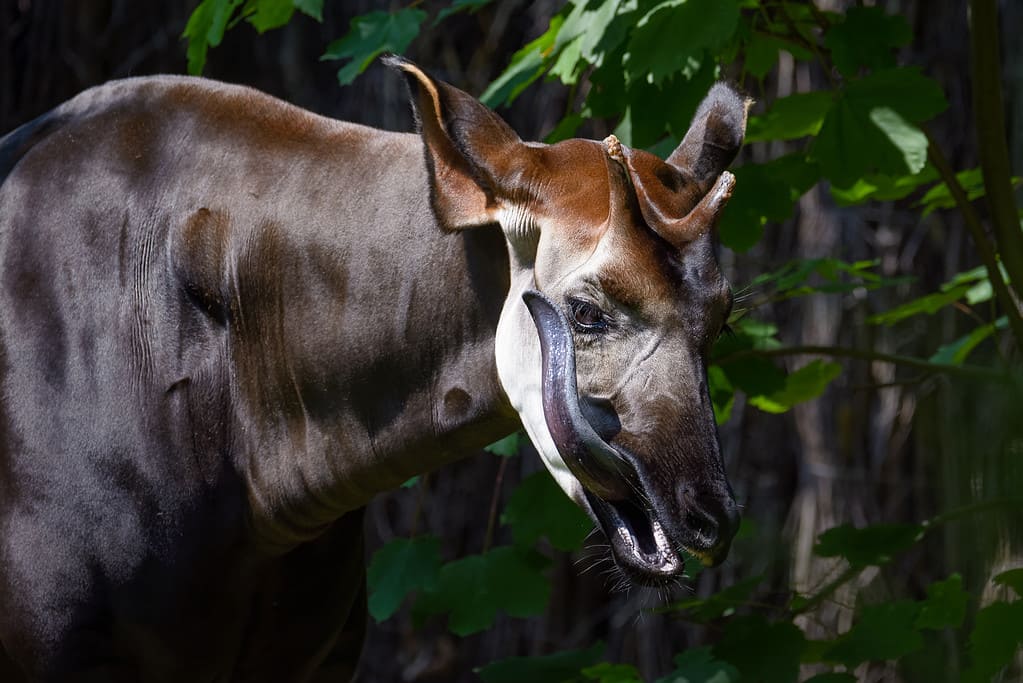
While conservation efforts exist to protect the okapi, there are multiple factors getting in the way.
©Thorsten Spoerlein/ via Getty Images
Deforestation pressure from within the reserve is ongoing, and relieving this pressure is more difficult than many expect.
Conservation Efforts for the Okapi
The Okapi Conservation Project, established all the way back in 1987, works in the Ituri Forest and establishes ranger support, community outreach, conservation education, and sustainable agriculture programs, programs designed to reduce the economic pressure that pushes local communities into the reserve. Their logic behind this is simple: when food security improves, encroachment into the okapi’s protected forest areas decreases.
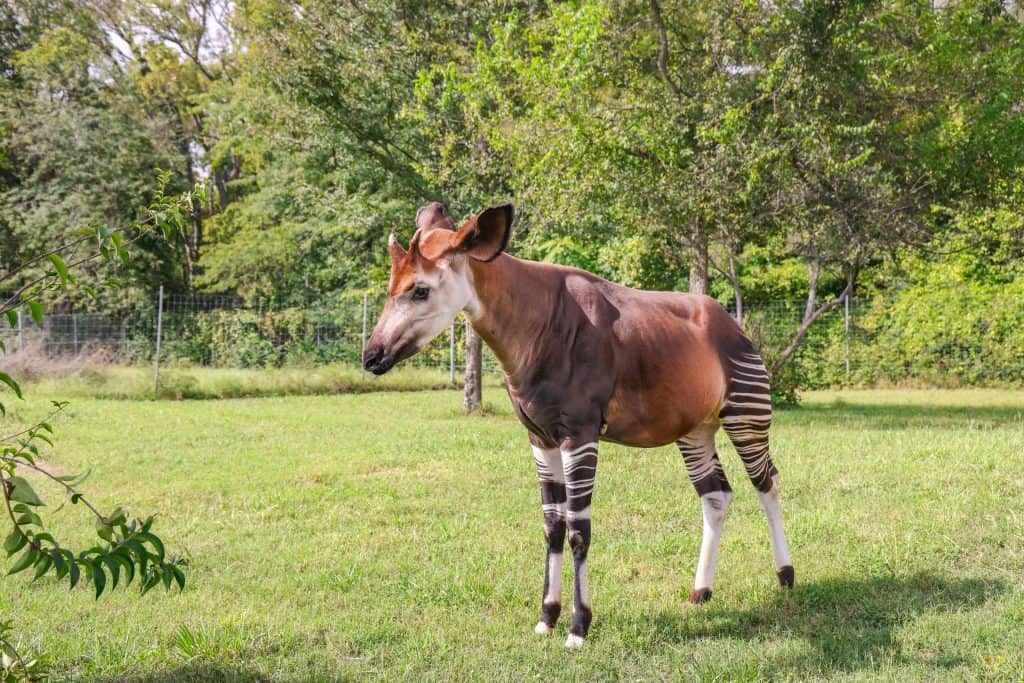
With such a small population, the okapi needs all the protective measures it can get.
©Courtesy of Nashville Zoo
In November 2025, the Wildlife Conservation Society called for the okapi to be listed on CITES Appendix I at a convention on International Trade in Endangered Species. This listing would prohibit all international commercial trade in okapis and their parts. “The okapi’s small and declining population, and increasingly restricted range make it exceptionally vulnerable,” said Dr. Susan Lieberman, the WCS Vice President for International Policy. It is now listed according to what the WCS requested.
This shift helps far more than a rare giraffe relative. Since the okapi functions as a flagship species for the entire Ituri Forest ecosystem, the monitoring systems, patrol infrastructure, and community partnerships built around their conservation also protect hundreds of other species sharing the same habitat.
Celebrate the Fascinating Okapi on October 18th
The Ituri Forest has remained largely unchanged for millions of years; it is a primeval ecosystem with biodiversity in unique forms found nowhere else in the world. Protecting it and the creatures within is a difficult task, but a must for such a special, albeit tumultuous, region.

A rare creature, the okapi is celebrated on October 18th.
©Courtesy of Nashville Zoo
The okapi didn’t enter the scientific records until 1901, and it took another century for researchers to recognize its population declining. World Okapi Day is a reminder that this rarely seen animal is indeed still here, that people are working in difficult conditions to keep it that way, and that the Congo Basin forest it depends on is worth protecting—both for the okapi and all the other animals it lives amongst.