
Quick Take
- The Great Lakes piping plover nearly vanished completely, and the number it dropped to before anyone intervened is staggering. See the population collapse →
- A working harbor became a nesting sanctuary, though the unconventional material used to make that happen is not what you would expect. Discover the dredged sanctuary →
- Community effort is helping the piping plover recover, but experts warn one force could quietly undo all of it. Explore the climate threat →
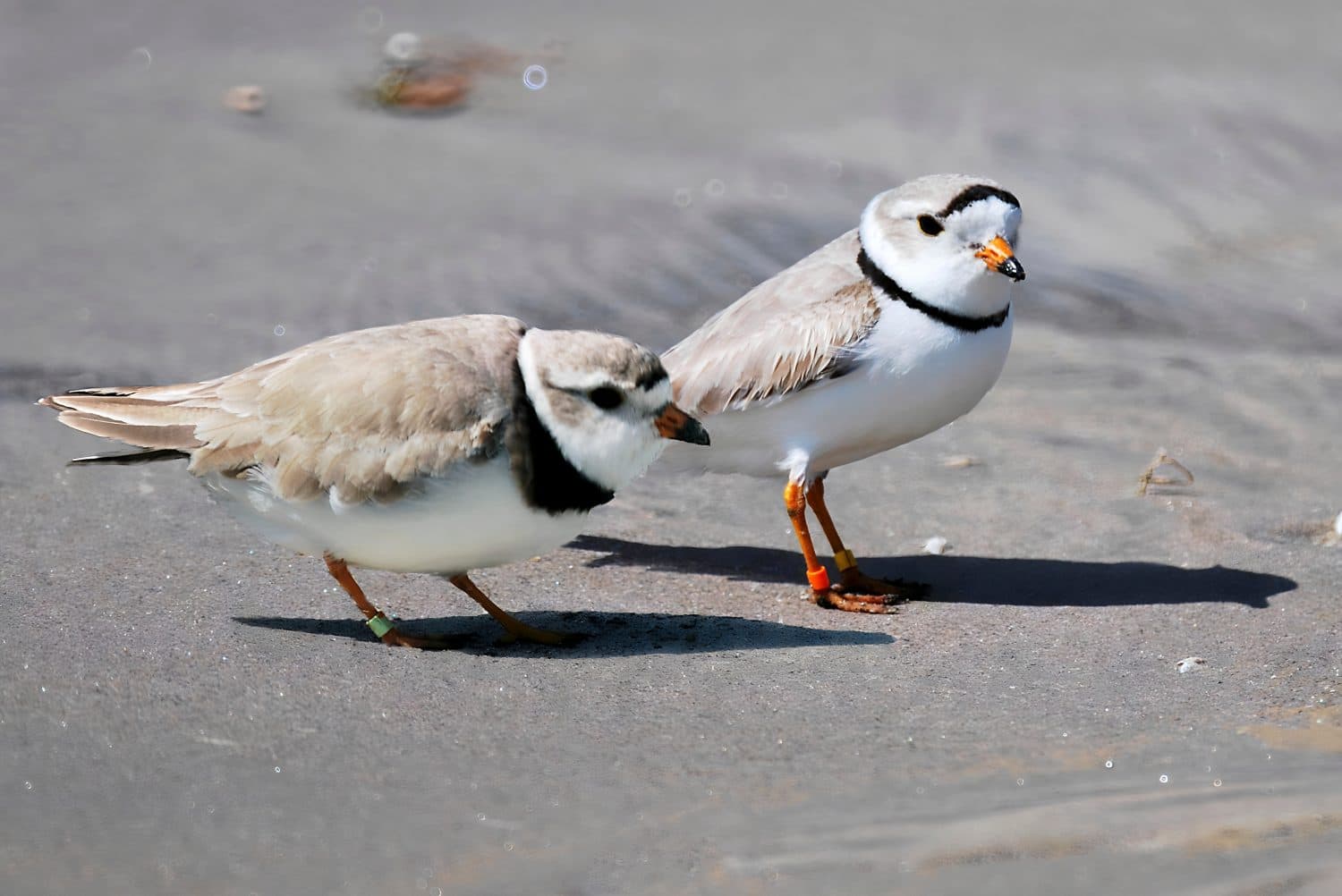
Following a 49-year absence, the endangered piping plover has made a historic return to Wisconsin Point in Superior, WI. This is likely due to the ongoing plover conservation efforts in the region. The piping plover restoration project has provided a safe, isolated, and undisturbed stretch of sand for the bird to nest. This ecological milestone highlights the impact of human intervention and habitat restoration. Additionally, it calls out the complex realities of species recovery.
Here’s what you should know about the piping plover return and the habitat project that made it happen.
What Is the Piping Plover?
The piping plover (Charadrius melodus) is a small migratory shorebird that lives in coastal regions of North America. Three distinct breeding populations of the piping plover exist, one of them on the shorelines of the Great Lakes. The other two live in the Northern Great Plains and along the Atlantic Coast.
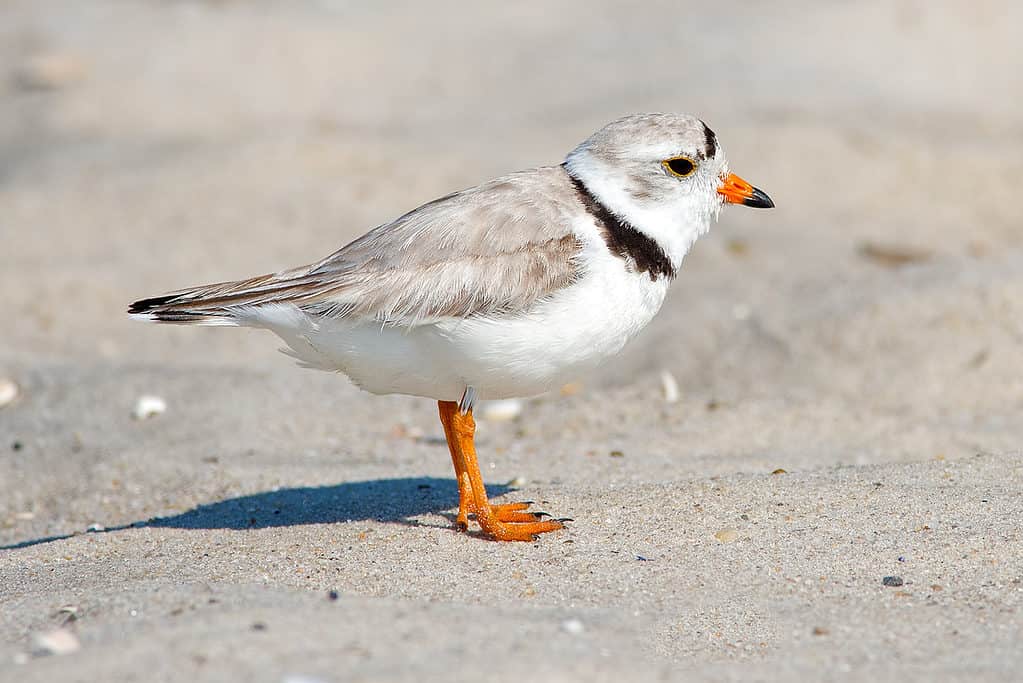
The piping plover is a migratory bird that flies south for the winter and returns north once it’s warm.
©iStock.com/BrianEKushner
In the 1980s, the Great Lakes piping plover population decreased from nearly 800 pairs to just 13. As a result of habitat loss and predation, the shorebirds were listed under the federal Endangered Species Act. To prevent a total extinction of the species, conservation experts teamed up to help recover the bird’s population. In 2025—the fourth record-breaking year in a row—the Great Lakes piping plover population reached 88 nesting pairs.
Now, as of August 2026, the piping plover has returned to Wisconsin Point (a peninsula off the shore of Lake Superior) after 49 years. This is a significant milestone in piping plover conservation.
Piping Plover Habitat Restoration Project
According to a press release by the Wisconsin Department of Natural Resources (DNR), the piping plovers’ pair was seen nesting “on an isolated stretch of sand and cobble that was built as part of a collaborative habitat recovery project for the species.” This sighting proves the effectiveness of the restoration project, which was created in collaboration between the U.S. Army Corps of Engineers, U.S. Fish and Wildlife Service, Wisconsin DNR, St. Louis River Alliance (SLRA), and U.S. EPA, with funding from the Great Lakes Restoration Initiative, the press release states. The groups invested $4.5 million into the site as part of the St. Louis River Area of Concern (AOC).
The Great Lakes population of the piping plover is one of the most imperiled birds in the United States, and its return to Point Wisconsin is welcome news.
Andrew Carter, Director of Biodiversity Policy at Defenders of Wildlife
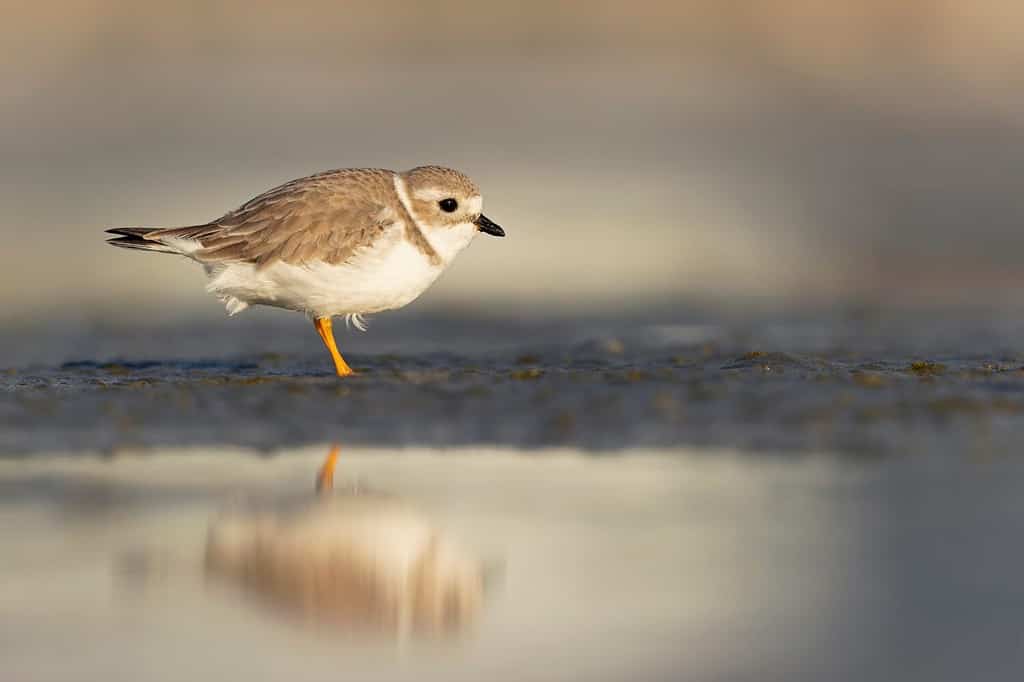
The Great Lakes population of the Piping Plover is still an endangered species.
©Bouke Atema/Shutterstock.com
“The news of a piping plover pair nesting here is a very significant milestone for this site,” said Matt Steiger, DNR St. Louis River AOC coordinator, in the press release. “The habitat project that made this possible is an excellent example of how we can collaborate in a working harbor to restore endangered species habitat.”
The teams utilized 87,000 cubic yards of dredged harbor material to transform a working port into a viable breeding sanctuary. They also closed off the property to the public between April and the end of August for nesting pairs. Thanks to these efforts, Wisconsin Point is now one of only four sites in the state with nesting piping plovers. The other three are in the Apostle Islands and lower Green Bay.
Community Conservation Efforts
In addition to the habitat restoration project, the SLRA—in collaboration with federal, state, and local partners, as well as volunteers—monitors and manages the Wisconsin Point Bird Sanctuary and other sites. They also engage in community outreach and other conservation initiatives. The recent sighting of the piping plovers pair is evidence of their continued effort and habitat restoration.
“The Great Lakes population of the piping plover is one of the most imperiled birds in the United States, and its return to Point Wisconsin is welcome news,” Andrew Carter, Director of Biodiversity Policy at Defenders of Wildlife, tells A-Z Animals.
Thankfully, Great Lakes communities are dedicated to helping this endangered species make its return. Residents and visitors alike are asked to respect piping plovers’ dedicated spaces. Additionally, they keep dogs on leashes and educate one another on conservation efforts. Larger conservation efforts include habitat protection (as established above), nest monitoring, predator management, and even raising the birds in captivity.
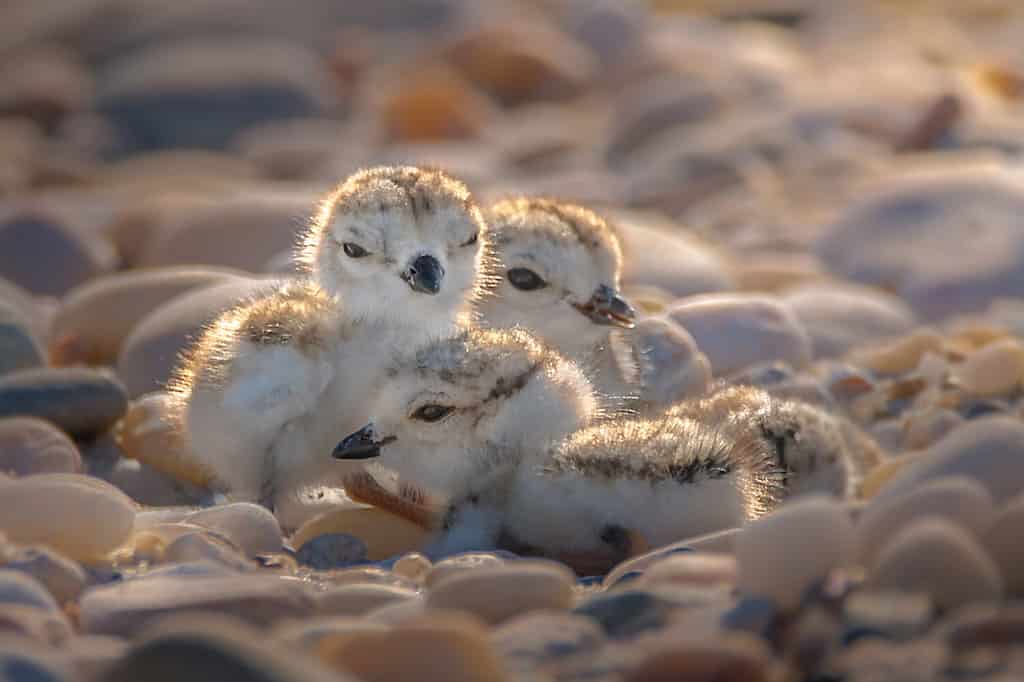
Baby piping plovers are adorably small and fluffy, and they can leave their nest within hours of hatching.
©Jay Gao/Shutterstock.com
But while community effort can make a huge difference, experts believe climate change is also impacting this migratory shorebird. Effects like rising and falling lake levels, severe storms, and exposure to extreme temperatures can be detrimental to nesting plovers and their eggs/young.
“Unfortunately, the bird still exists in numbers far below what is needed for recovery,” Carter says. “However, we hope that the Point Wisconsin project demonstrates that habitat restoration and collaborative conservation are both fundamental to successfully recover imperiled species like the piping plover.”