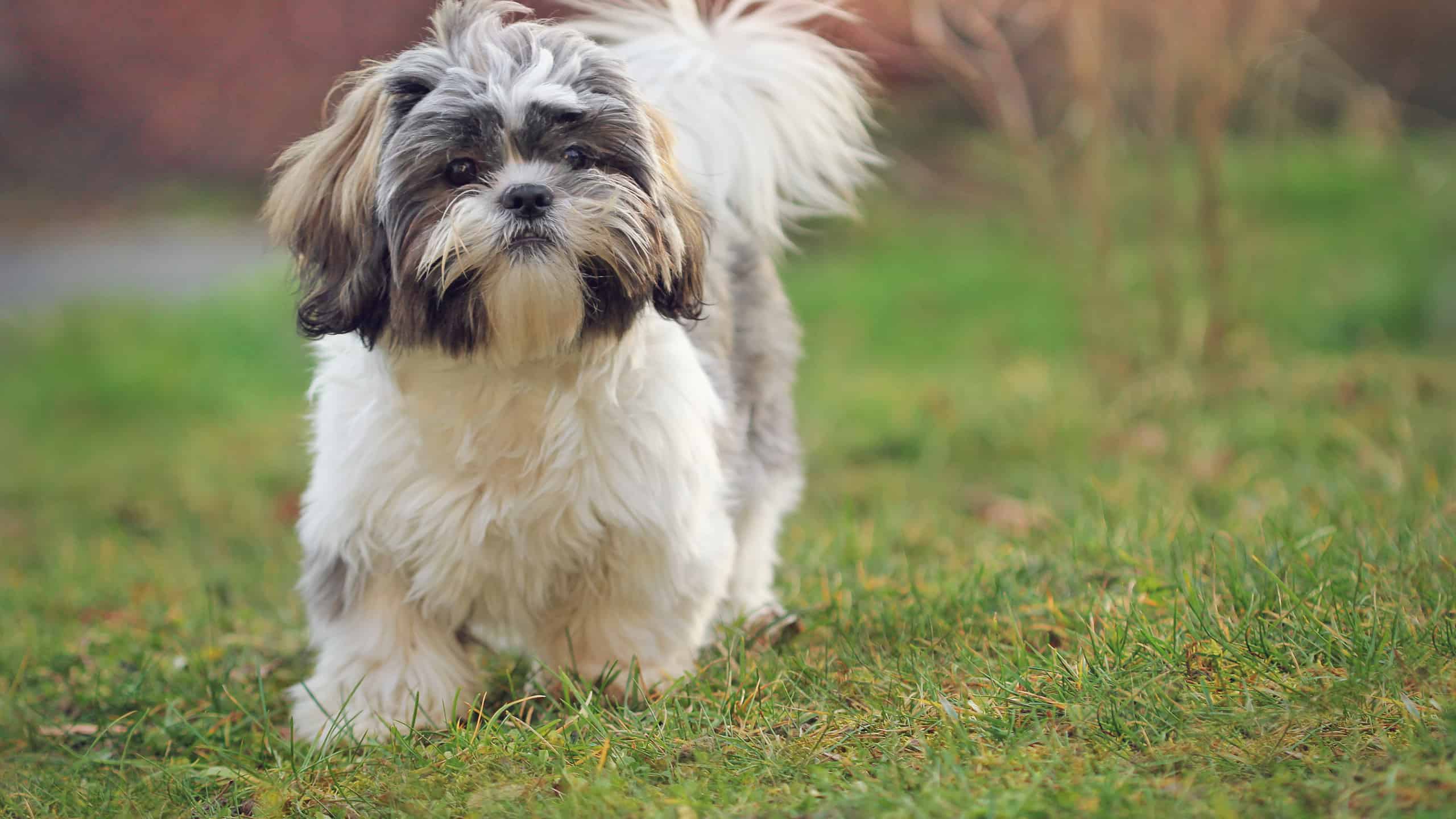

In this article, we’ll uncover everything about Shih Tzu‘s pregnancy, including their gestation period, weekly milestones, and a care guide to help prepare and see you through this exciting but worrying time. Responsible dog owners keep their Shih Tzu’s best interests close to heart and pay particular attention to her diet, exercise, vet visits, and emotional health.
Let’s find out about Shih Tzu’s pregnancy.
Shih Tzu Summary
Shih Tzu is an ancient dog breed hailing back over 1,000 years to Tibet, where they were adored by royals and developed but the emperor’s court. Experts think Pekingese and Lhasa Apso dogs are the Shih Tzu breed’s original lineage.
Today, Shih Tzu is one of the most common toy breeds in the United States. This little dog is loved for its playful, sweet nature, loyalty, and intelligence. In general, they live for around 13 years and make wonderful companion dogs, which was their chief function 1,000 years ago.

Shih Tzus were bred over 1,000 years ago in Tibet. Their name means “little lion.”
©rebeccaashworth/Shutterstock.com
Shih Tzu Pregnancy Symptoms
Shih Tzu pregnancy symptoms vary, but common emotional and physical symptoms include:
Emotional
- Clingy and attention seeking
- Wanting space away from others
- Hyperactivity
- Lethargy
Physical
- Sickness and nausea
- Increased appetite
- Decreased appetite
- Sluggishness
- Swollen pink nipples
- Larger belly
- Weight gain
- Nesting, such as digging blankets and stealing soft materials
- Intolerance
- By week 8, you can feel moving pups in her uterus
Gestation Period: How Long Are Shih Tzu’s Pregnant?
The gestation period for a Shih Tzu is 63 days on average, which works out to around nine weeks. However, a few days on either side of 63 is common – all dogs are different.
Most dog breeds’ gestation period is 63 days, from large German Shepherds to Shih Tzus and all sizes in between.
Pregnancy Care for Shih Tzu
Pregnancy is a magical time, but there are some issues to consider:
Food: To nourish growing pups, a Shih Tzu mom needs well-balanced, nutritious dog food suitable for pregnancy. As the pregnancy moves along, the amount requires adjustment, so it’s best to agree on a feeding plan with your vet. By week five, more frequent smaller meals are suitable, and near the end of her pregnancy. In week eight, your Shih Tzu may feel too uncomfortable to eat much.
Activity: It’s essential to monitor a pregnant Shih Tzu’s weight during gestation. She will increase her body weight, but this should not be fat, which is detrimental to her and the emerging pups’ health.
Regular gentle exercise is important; just take it slowly, and if she tires, finish the walk. Rough-housing games like throw and catch or playing with other dogs should be limited and not allowed in the last half of her gestation.
Vets: A good vet will help take your Shih Tzu through a smooth, issue-free pregnancy. A vet will advise on diet through her gestation stages and offer ultrasounds or x-rays to monitor the developing puppies.
Because some home equipment is inevitable, a good vet can suggest important, potentially life-saving options such as umbilical clamps.
Average Litter Size for Shih Tzu
Shih Tzu’s average litter size varies from one to five, but the average number is three.
However, there are always exceptions, and Shih Tzus are a toy breed that sometimes produces a larger litter of up to seven.
By week five, a vet should be able to predict the number of developing puppies.
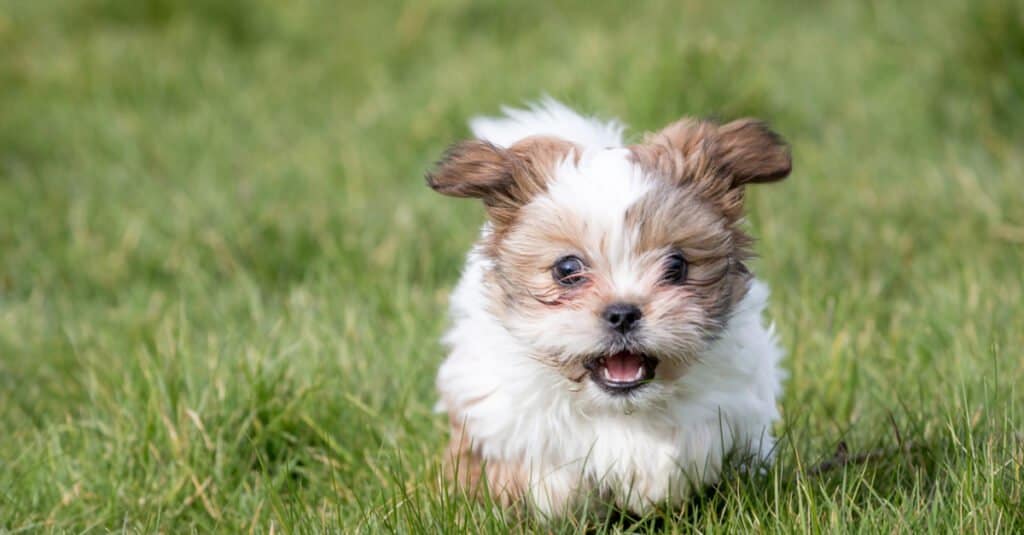
Shih Tzu moms usually birth an average of three puppies.
©Daz Stock/Shutterstock.com
What to Expect in Week 1
Few signs are visible during week one of Shih Tzu’s pregnancy. This is because fertilization has just occurred, and the ovum is making its way to her uterus. Near the end of week one, the placenta develops from the ovum.
At this point, owners can start taking extra care of their Shih Tzu. Their gestation period lasts only over two months, and time moves fast.
In week one of a Shih Tzu’s pregnancy, issues include vet visits, whether her diet is nutritious enough, and where she will give birth.
What to Expect in Week 2
In week two, the embryo attaches to her uterus’s lining and begins the process of forming into pups.
Owners will not likely notice many physical changes in week two, but they may find their Shih Tzu quieter or more hyper than usual.
It’s time to start lessening the intensity of walks and playtime. Exercise is important because Shih Tzus need all their strength for gestation, labor, and milk provision, but it’s important to limit rough-housing and running now.
What to Expect in Week 3
In week three, embryos are less than an inch long, and their central nervous system begins to develop. At this point, a blood test to confirm pregnancy is accurate.
Your Shih Tzu’s personality may begin to change in week three. Experienced Shih Tzu breeders suggest she may become more clingy than usual or, conversely, want less attention and seek out solitude. Don’t force attention or push her away. Her hormones are in full swing now.
Just like human pregnancy, she may experience some morning sickness and lethargy in week three.
What to Expect in Week 4
Week four, and she’s almost halfway through her gestation. This is the week a Shih Tzu’s pregnancy can be confirmed by ultrasound. It’s a good time to schedule a pre-natal vet visit to uncover any problems and ask for advice on how to proceed with her diet.
Internally, the embryos’ brain and spinal cords begin developing and curl into the fetal position. Faces, organs, and limbs start to form, and by the end of week four, the embryos reach about an inch in diameter.
At this point, it’s important to maintain calm walks and provide her with a safe and quiet place to spend time.
What to Expect in Week 5
In week five, the embryos develop sex organs, and their eyelids close. They’re termed a “fetus.”
Mom Shih Tzus show lots of pregnancy symptoms in week five. Her appetite will increase, and her stomach will appear rounder. In preparation for feeding her pups, her nipples become more prominent, swollen, and pinker. On occasion, wetness may appear.
Due to the dramatic increase in fetus development, owners should pay particular attention to diet in week five. The mom will likely feel hungrier, so you can offer another small portion of well-balanced, healthy dog food but limit fatty snacks. Keep up with her gentle daily walks, and don’t allow any roughhousing.

Shih Tzus display a rounded belly in around week five of gestation
©Angel LeBlanc/Shutterstock.com
What to Expect in Week 6
Three weeks to go!
Abdominal enlargement is obvious now because the fetuses rapidly grow. At this point, they develop nails.
Your Shih Tzu may experience a decrease in appetite because she’s uncomfortable. This is normal, but she must get proper nutrition to keep her healthy and ensure well-nourished pups’ development. Breeders suggest offering smaller, more regular meals.
Week five is a good time for a second pre-natal vet check-up. Ask about supplementation at this point.
What to Expect in Week 7
In week seven, the fetuses’ bones begin to calcify, and fur grows. Their development is now evident on ultrasound or x-ray, so if there are worries about their product, it is time to get her checked by a vet.
At the same time, ask your vet what equipment is needed for a home birth. You may need to purchase umbilical cord clamps, for example.
Your Shih Tzu may produce more nipple fluid when her waxy plugs fall away, and she may develop a bald patch on her stomach so her newborn pups can easily find teats.
What to Expect in Week 8
Nearing the end of gestation, fetuses continue growing, gaining weight, and developing their fur.
Shih Tzu moms may produce milk now and feel restless, pace, or find it difficult to get comfortable. Nesting is common too. She may dig at her blankets or steal soft material to furnish her nest.
A whelping box should be provided for her so she can fill it with comforting smells and objects. It’s important she feels safe enough to give birth, so don’t allow other pets or children into her whelping box. Even the most tolerant and friendly dogs may nip or show signs of annoyance in week eight.
What to Expect in Week 9
Full terms pups are ready to be born on day 63, which falls in week nine. However, she may give birth a few days before or after this date. Call your vet for advice if she appears uncomfortable, straining with no result after several hours, or exhibits any distressed behavior.
During labor, make sure all children and pets are kept away, and provide a safe, calm environment with plenty of towels and water for her.
How to Prepare for Labor and Delivery
A safe and quiet whelping box is one of the most important items you can provide your pregnant Shih Tzu. Place it somewhere quiet, away from the main bustle of the house, and fill it with soft bedding material. Introduce her to the box in plenty of time so she knows it’s her safe place.
Suitable whelping boxes should remain warm, which may mean adding heat lamps to keep the new family at 75 degrees Fahrenheit. In terms of size, Shih Tzus don’t need masses of space. Large whelping boxes mean mom loses track of her pups, and they may not receive adequate milk.
Line the boxes with whelping pads capable of soaking up birth fluids. This will save on towel washing and drying when the pups are newborns.
Vet trips to monitor the mom’s health and the developing pups are important too. Whether you opt for an ultrasound or x-ray is your decision, but advice on weight, diet, and equipment for delivery is invaluable. It’s a magical but potentially dangerous time; being prepared can save lives.

A Shih Tzu whelping box must be a suitable size so pups don’t become lost.
©Brian Muck/Shutterstock.com
How to Care For Your Shih Tzu Afterward
Directly after the birth, ensure all used whelping pads are removed so the area is hygienic and won’t attract flies.
Healthy Shih Tzus need plenty of TLC and highly nutritious food after giving birth to recover from the birth and keep their nutrient levels up for nursing. Consult your vet on the best postpartum food for nursing moms.
After the birth, keep a very close eye on mom. Call your veterinarian for advice ASAP if she shows signs of illness, such as excessive panting, bleeding, or no interest in the pups.
Another important task is monitoring her nipples which may become hot to the touch, sore, and inflamed. Mastitis is a problem because it prevents mothers from nursing their pups, or they associate pain with pups and refuse to nurse them. Speak to the vet straight away if you suspect mastitis.
Give her plenty of space. New moms may become protective of their pups, but let her know you are there to help her.