
Quick Take
- One single recessive gene is responsible for a surprisingly wide spectrum of husky coat colors, and most people would not guess which one it is. See the recessive gene →
- The rarest husky coat color isn't white, and the reason it's so hard to produce comes down to genetics rather than luck. Discover the rarest color →
- One husky color pattern is so atypical that owners are regularly told their purebred dog is actually a mixed breed. Meet the mistaken purebred →
- The grizzled coat type almost never appears in show rings, but it dominates one specific working environment for a reason rooted in survival. Explore the grizzled working coat →
The Siberian husky is a resilient, energetic working breed developed thousands of years ago by the Chukchi people of Siberia to pull sleds across long distances in harsh Arctic conditions. Known for their striking eyes and endurance, these pack dogs became famous worldwide for their speed and stamina. The breed was introduced to Alaska in 1908 by a Russian fur trader, but its popularity in the lower 48 states surged after the 1925 diphtheria serum run to Nome, Alaska.
This 600+ mile dogsled relay transported life-saving medication through blinding blizzards and frigid temperatures, preventing an epidemic. The success of the 1925 serum run directly affected the popularity of Siberian huskies in the lower 48 states and is widely regarded as a major catalyst for the breed’s popularity and recognition in the continental United States. Unlike many modern dog breeds, whose color variations were created through artificial cross-breeding, the husky’s wide range of colors is an ancient, natural trait. Continue reading to learn more about this array of colors.
Black and White
Black-and-white is one of the most common husky color combinations. This combination typically features the traditional face mask, with a black back and a white undercarriage and legs. The coat can vary widely, from almost entirely black to salt-and-pepper tones that may make the dog appear more gray.
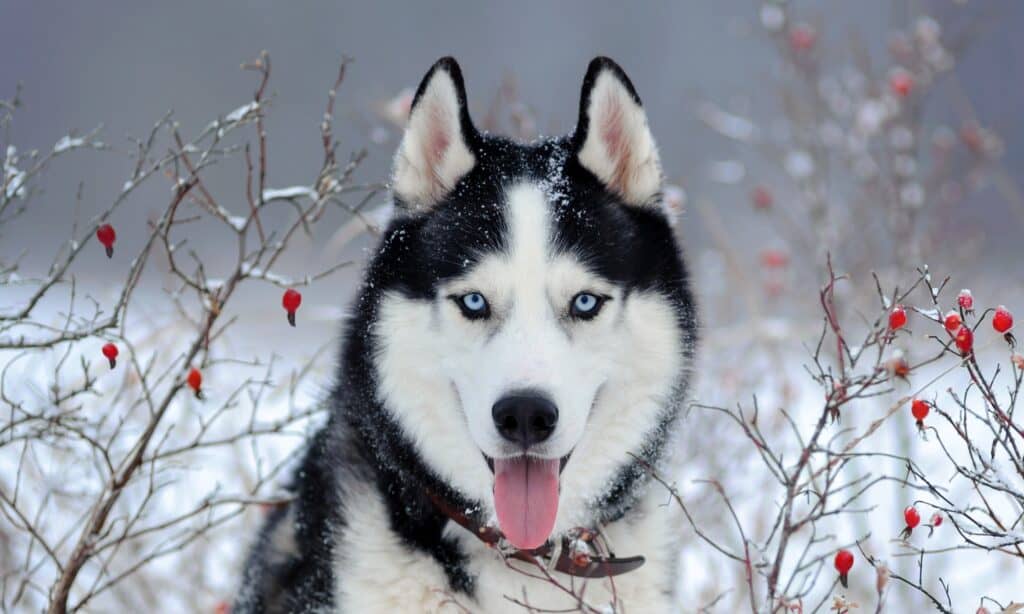
Black and white huskies are one of the most common colors.
©iStock.com/format35
Gray and White
Gray and white huskies are almost as common as black and white huskies. This color combination ranges from light silver tones to darker wolf-gray shades.
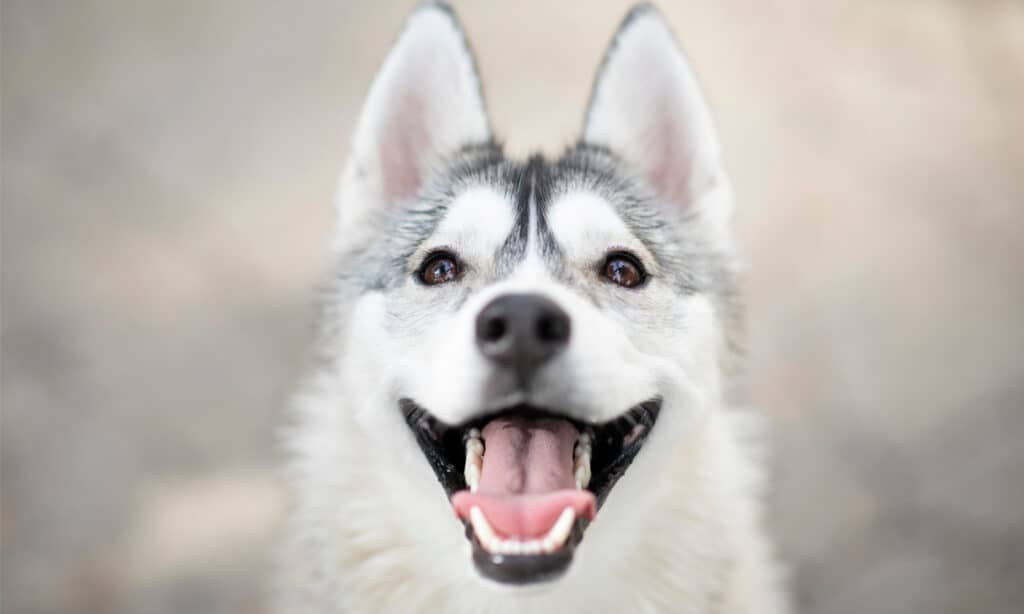
Gray and white huskies are very common.
©iStock.com/KM Photography
Red and White
Red and white huskies can have coats that range from pale strawberry blonde to rich copper and deep mahogany tones. Their markings are typical, with a darker back and a lighter undercarriage. Huskies with this coat color often have liver-colored (brown) noses. Although red shades are more common than brown, both colors are caused by the same recessive gene that blocks black pigment. This single genetic trait results in a broad spectrum of coat colors, from ginger to rich chocolate.
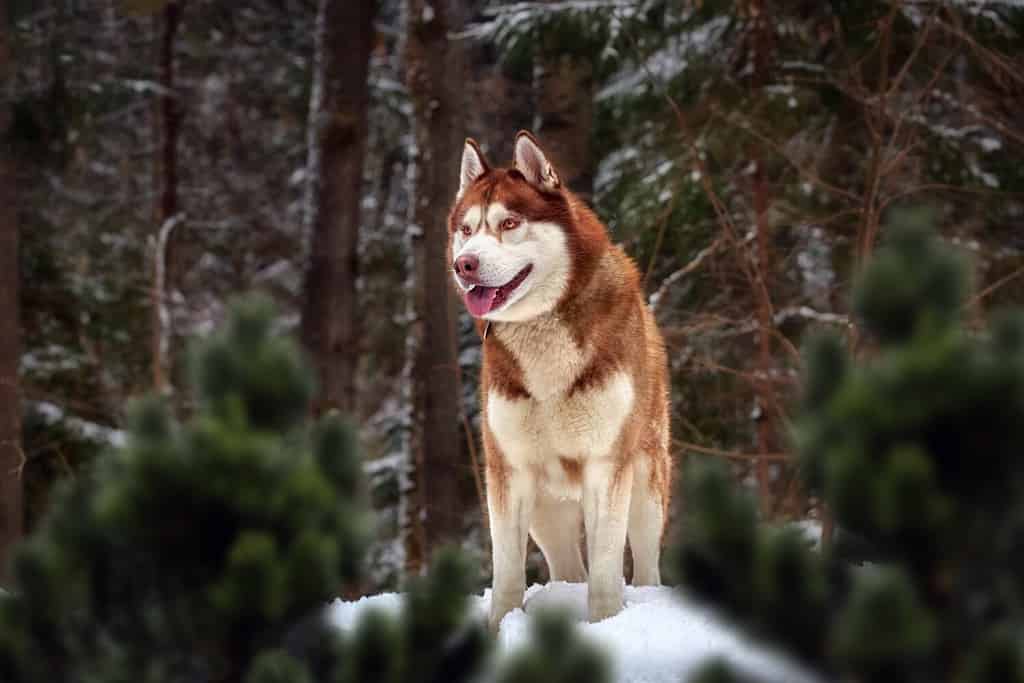
Red and white huskies have light to deep orange coats.
©Konstantin Zaykov/Shutterstock.com
Brown and White
Brown and white coats are a variation of the red and white coloring, caused by the same recessive gene, but are less commonly seen. The brown can range from tan to deep brown, with the typical bi-colored markings found in huskies: white around the eyes, sides of the face, legs, chest, and stomach.
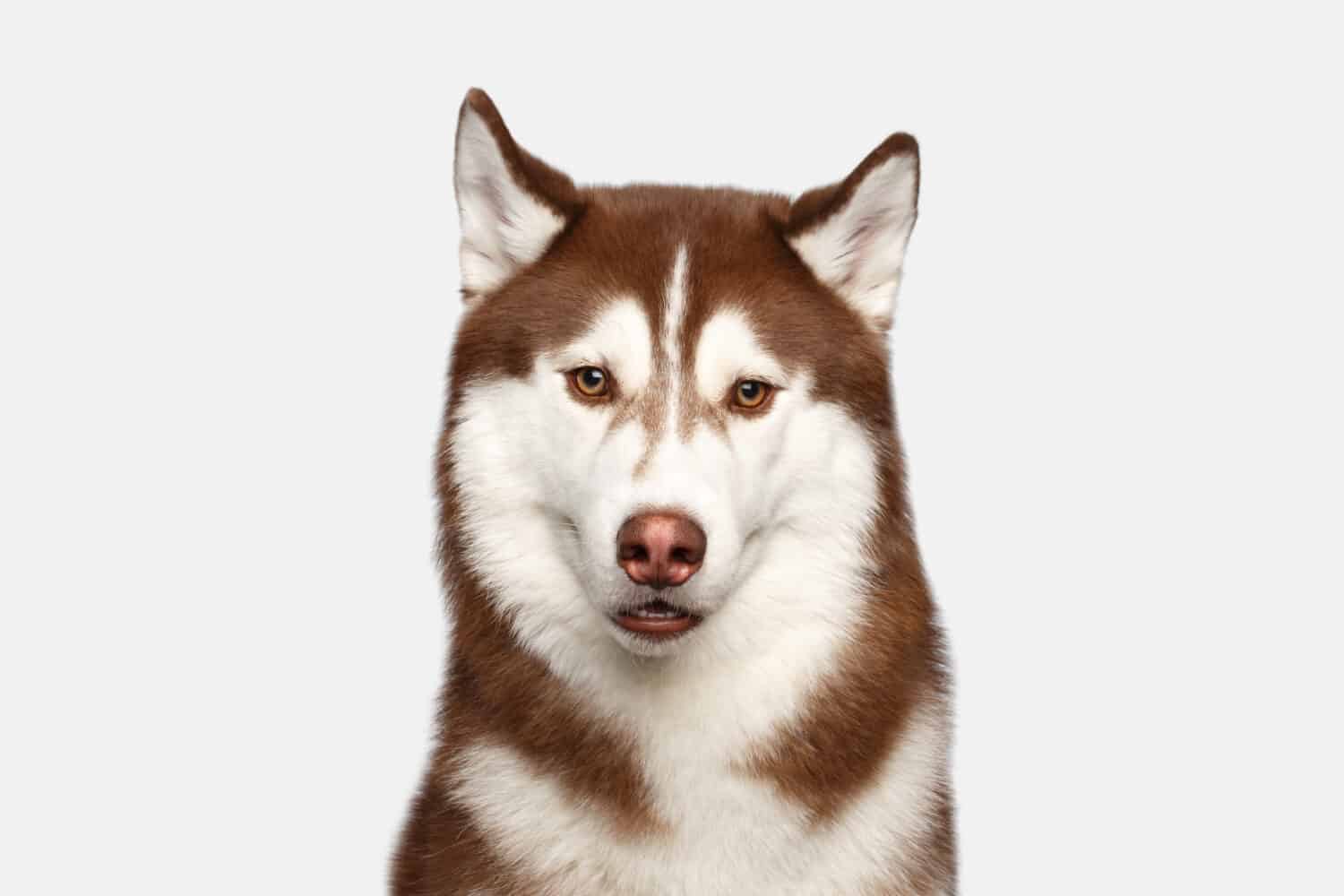
Brown and white huskies have deep brown coats caused by a recessive gene.
©Seregraff/Shutterstock.com
Agouti and White
Unlike standard huskies, the agouti coat gets its unique color from individual hairs that have alternating bands of black, brown, and yellow or cream, creating a grizzled appearance. Each hair has alternating bands of black, brown, and yellow or cream, creating a grizzled look. The facial mask is typically heavy and covers much of the face, sometimes extending down the dog’s body.
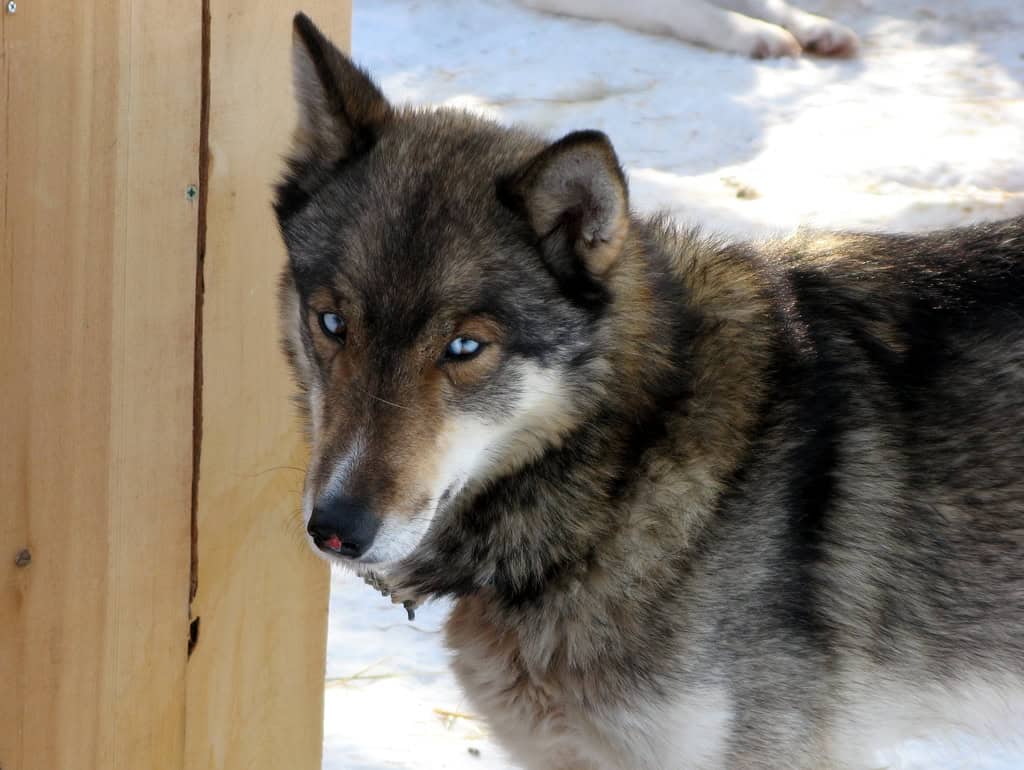
Agouti and white huskies do not have typical husky markings.
Agouti coloring is rarely seen in show or conformation lines. It is much more common in racing and sled-working lines, where natural camouflage and dense, weather-resistant fur are valued.
Sable and White
Sable and white huskies have reddish or copper undercoats, with individual guard hairs that are banded in black at the tips. The presence of black points is the defining genetic factor that distinguishes a sable husky from a true red husky, which has brown points.
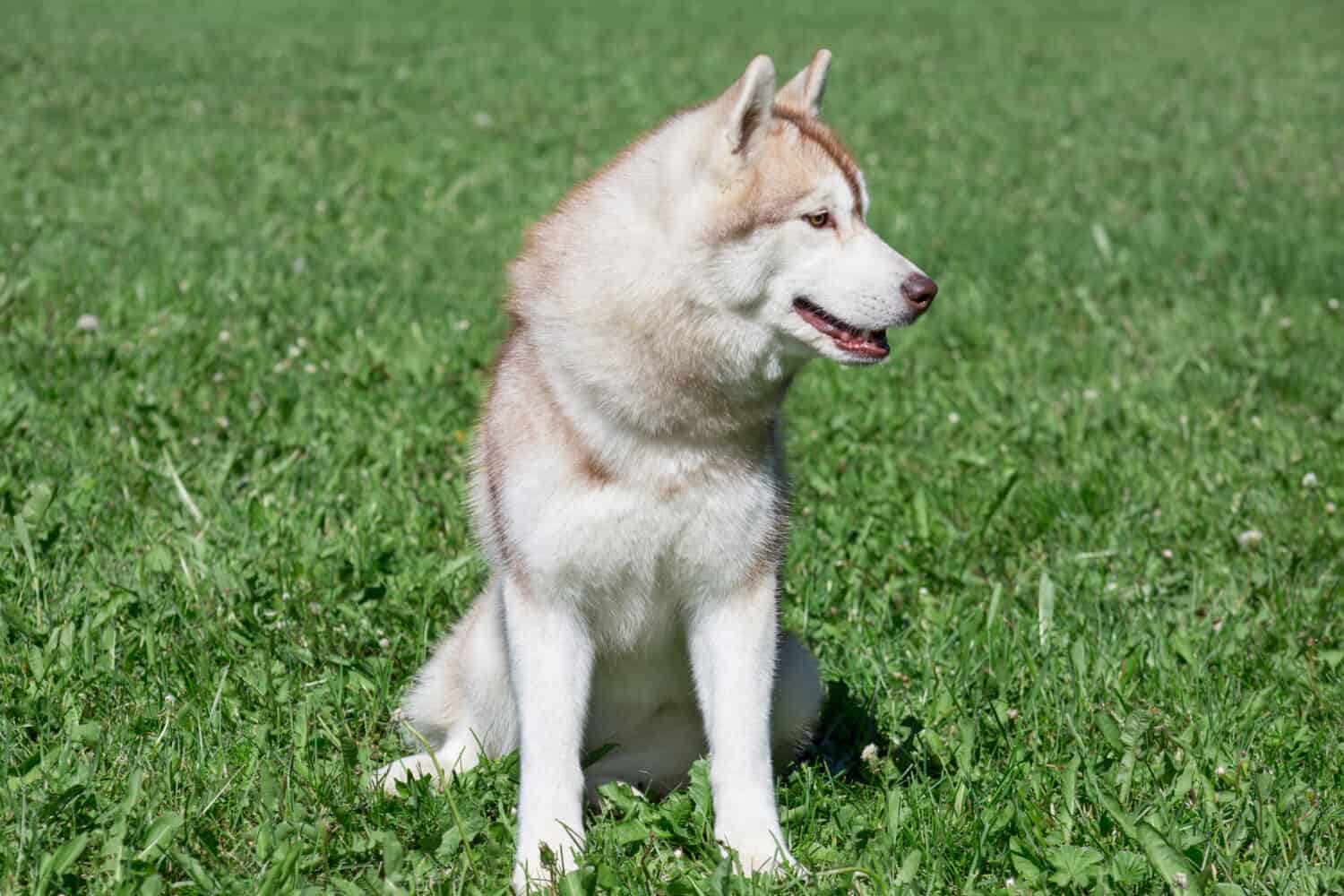
Sable husky fur has light roots and dark tips.
©Tikhomirov Sergey/Shutterstock.com
White
White is one of the rarer husky coat colors. To produce a solid white husky puppy, both parents must carry and pass on the recessive gene for white fur. True white huskies are not albino. They still have dark pigment on their lips, eye rims, and nose.
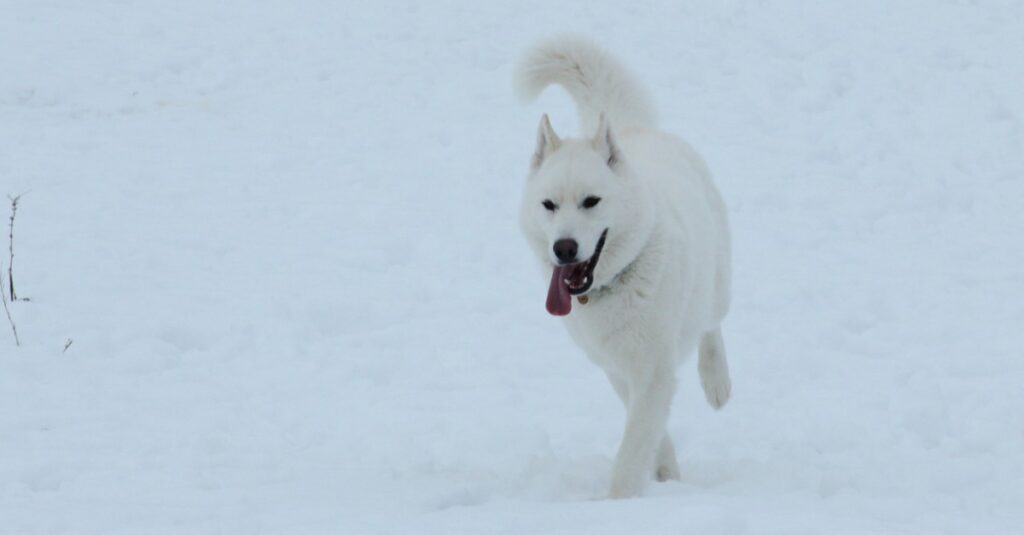
White is one of the rarer husky colors.
©iStock.com/Nicholas Chase
Isabella
Primarily white, with shades of fawn or diluted red in their coats, Isabella huskies are quite rare.
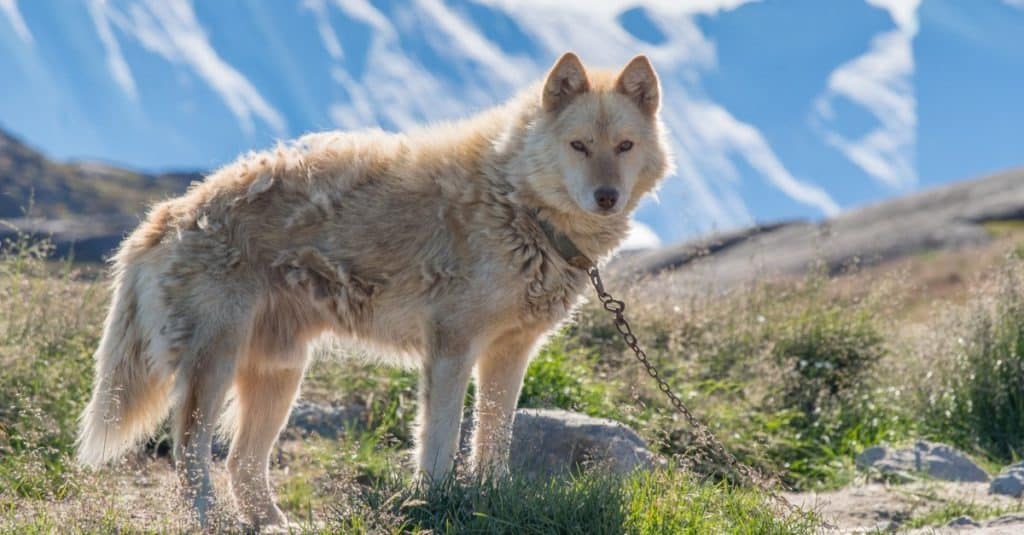
Isabella huskies are white, but with fawn coloring in their coats.
©Tony Skerl/Shutterstock.com
Piebald
Piebald huskies are white with darker patches of fur. They may have a few or many patches in various colors, such as gray or black. Generally, at least 30% of a piebald’s coat is white. Because they lack the classic husky facial mask, they are often mistaken for mixed breeds.
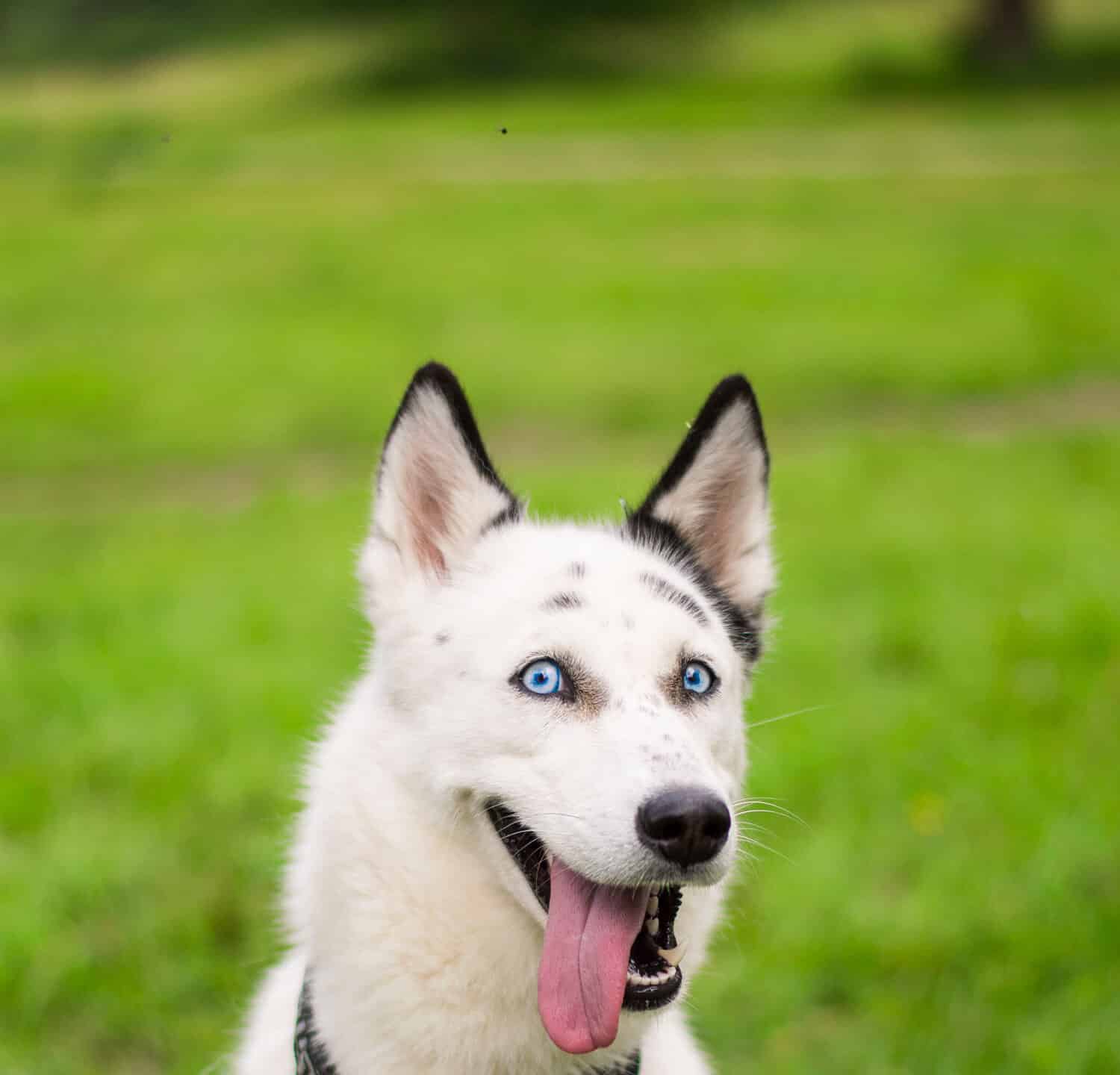
Piebald huskies are white with dark patches.
©Anastasiia Ruzhynska/Shutterstock.com
Black, Tan, and White
Tri-colored black, tan, and white huskies are relatively uncommon. While bi-color coats are common, the specific genetic combination needed to produce distinct tan points along with a black base and white markings makes these huskies especially unique.
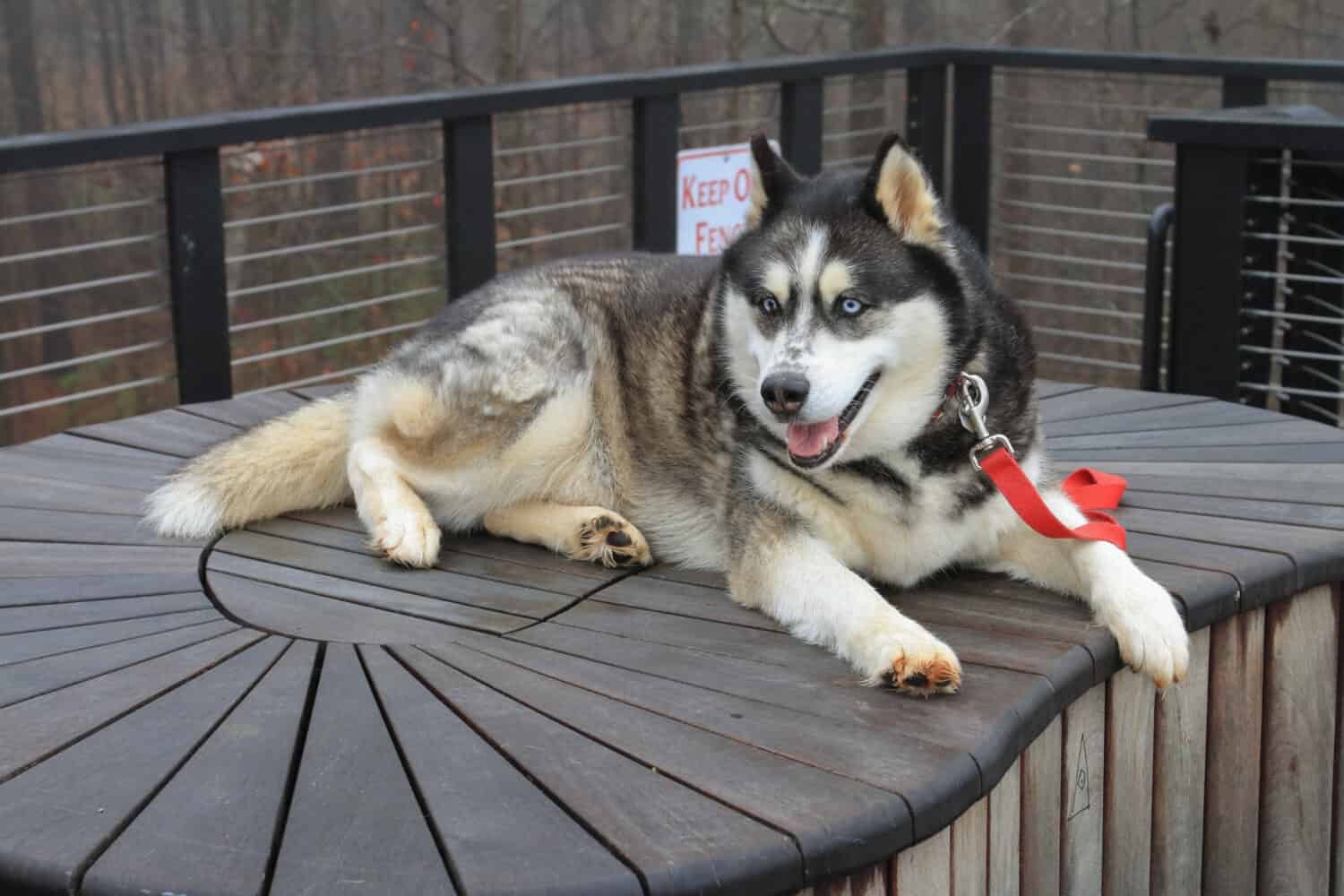
Black, tan, and white is a rare tricolor pattern that is accepted within the AKC breed standard, which allows all colors from black to pure white.
©Gregory Simpson/Shutterstock.com
Solid Black
A solid black husky is exceptionally rare. Although black-and-white coats are among the most common husky color combinations, a completely solid black coat, with no white patches, socks, or facial markings, is highly uncommon, but it does exist.