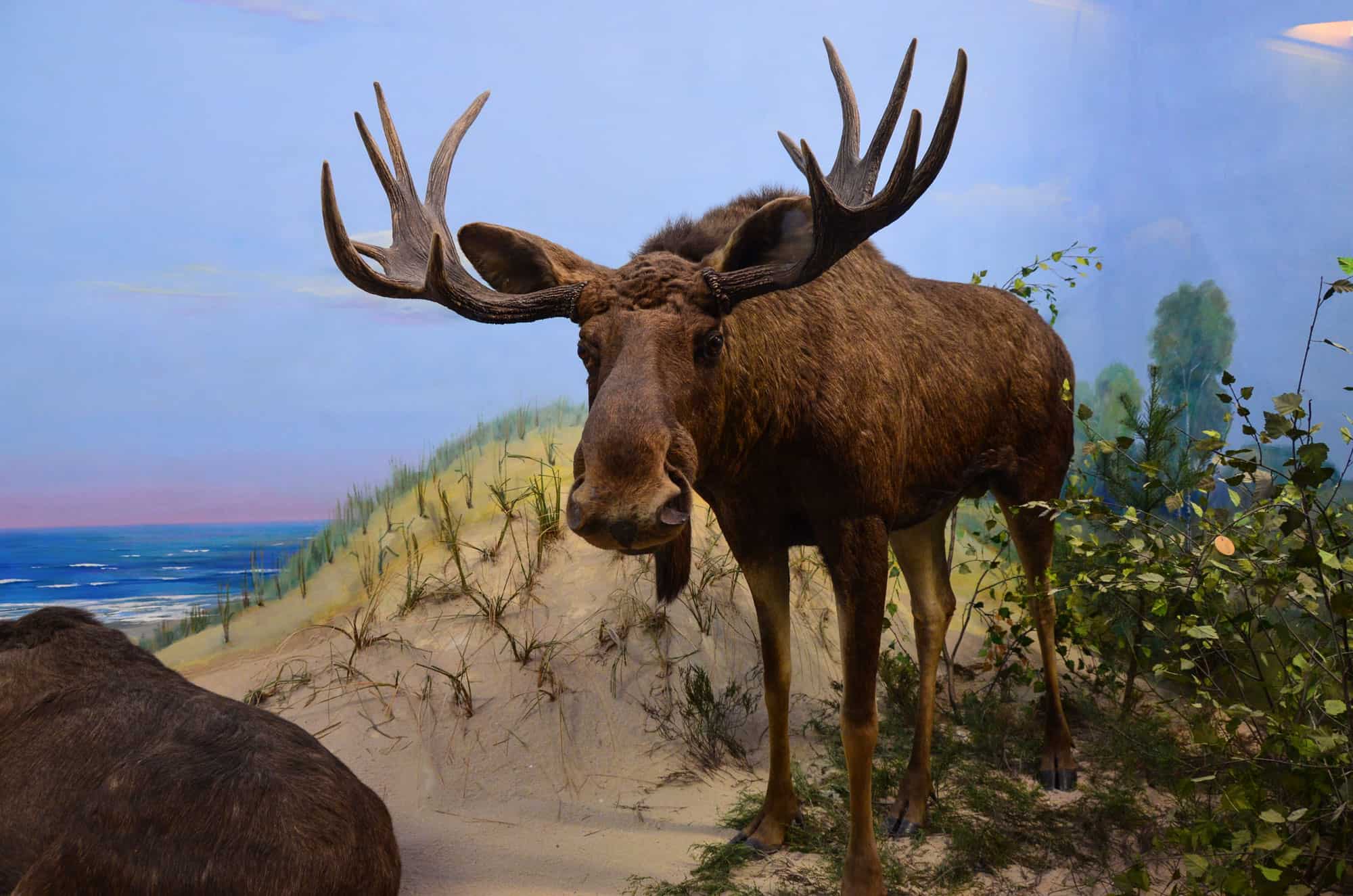

Like other wild animals, the moose has a wide range of sounds that they use to communicate with one another in their natural environment. Not all moose make the same sounds. gender, role, and age are all factors involved.
Many of the noises moose make are during rutting. This is their mating season. Let’s take a look at the common sounds moose make and what they most likely mean. Use the embedded videos to hear each sound for yourself.
1. Bellow
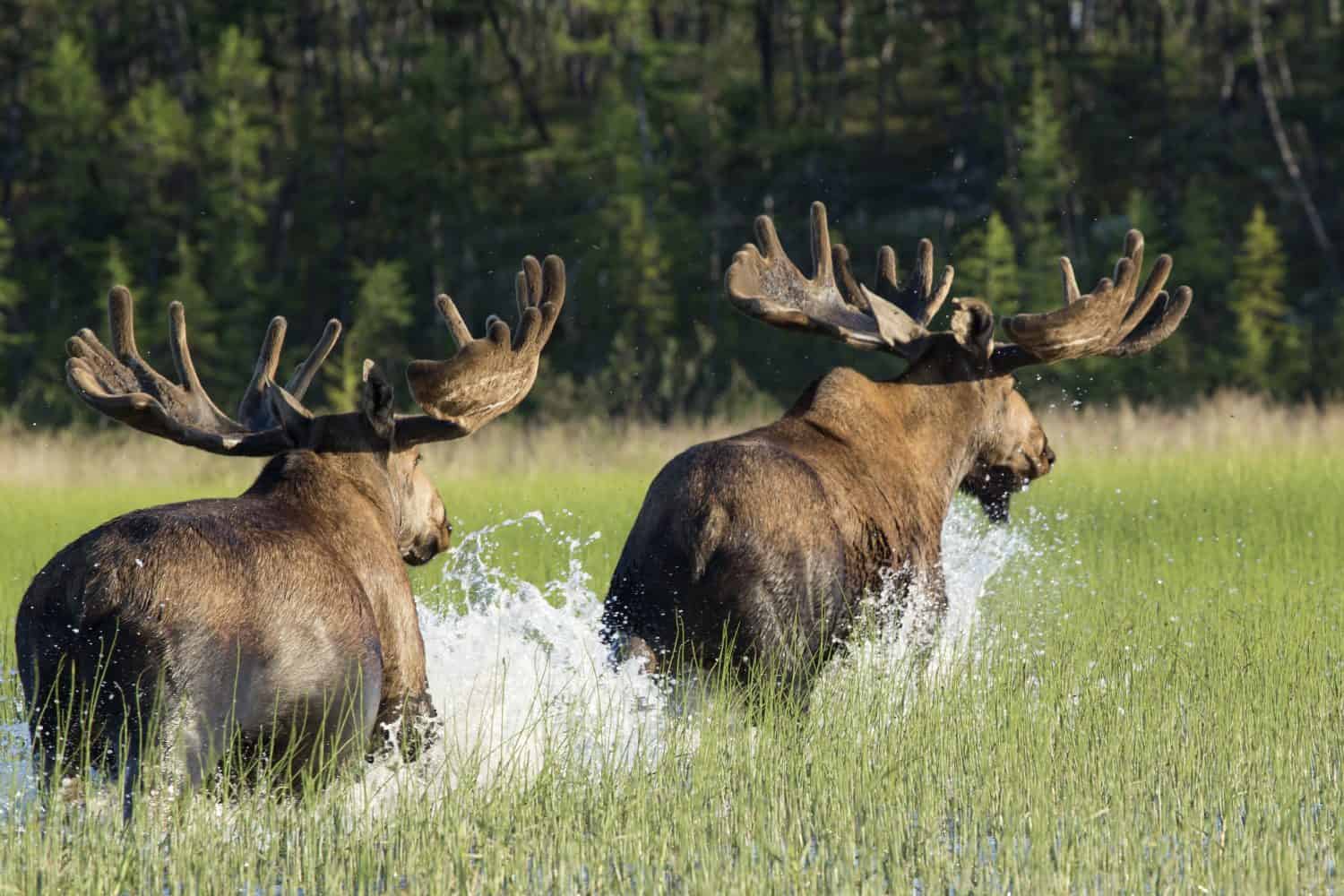
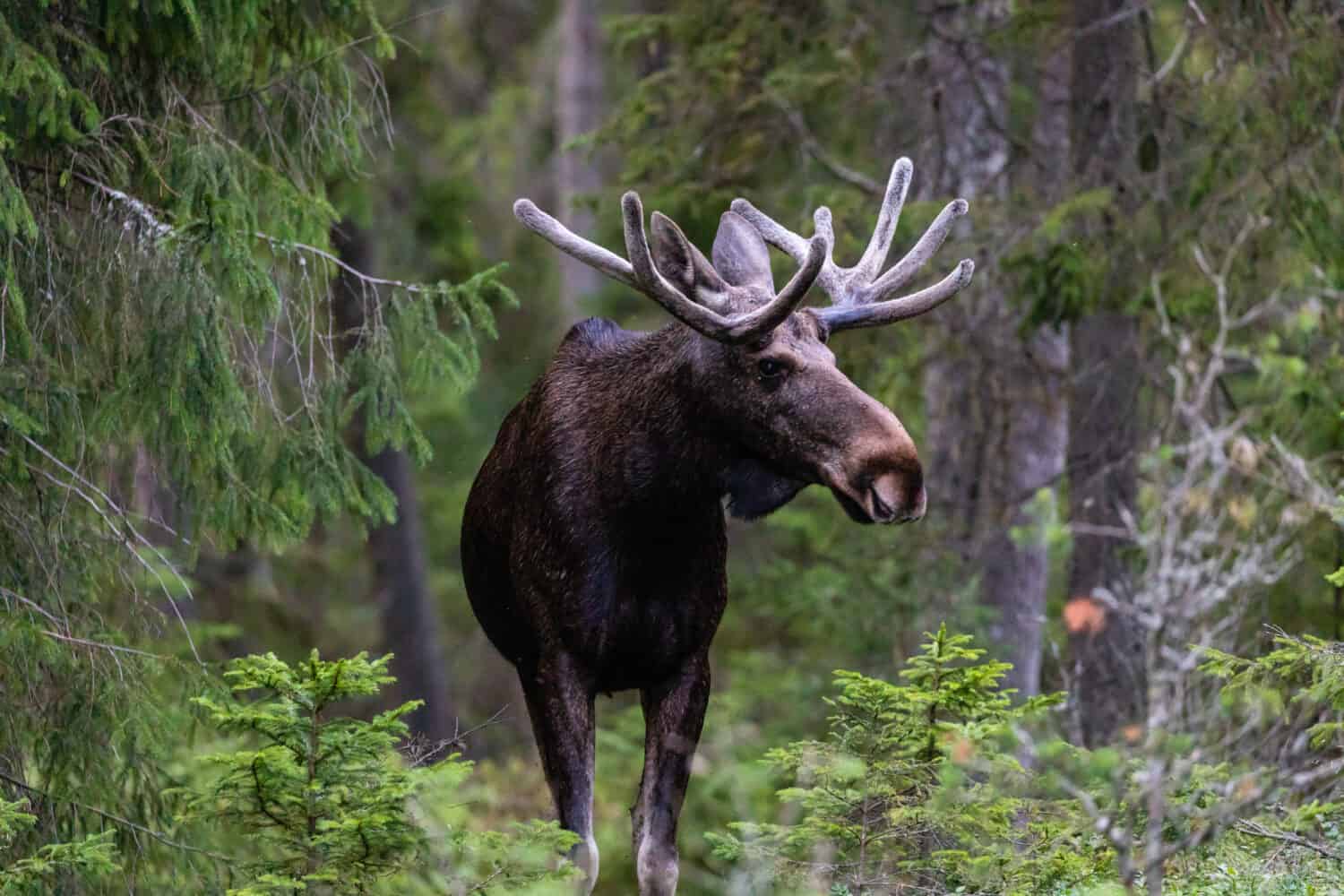
Moose can swim up to six miles per hour.
©Olenyok/Shutterstock.com
The first sound that we’re going to be talking about is the bellow. When a moose makes a bellowing noise it can be heard from over five miles away. The Deep noise can be heard throughout the forest during the rutting season.
This sound typically comes from male moose and is a noise that they make when they’re trying to find a mate. a female moose will perform a wailing sound in response to a male’s bellow.
2. Roar
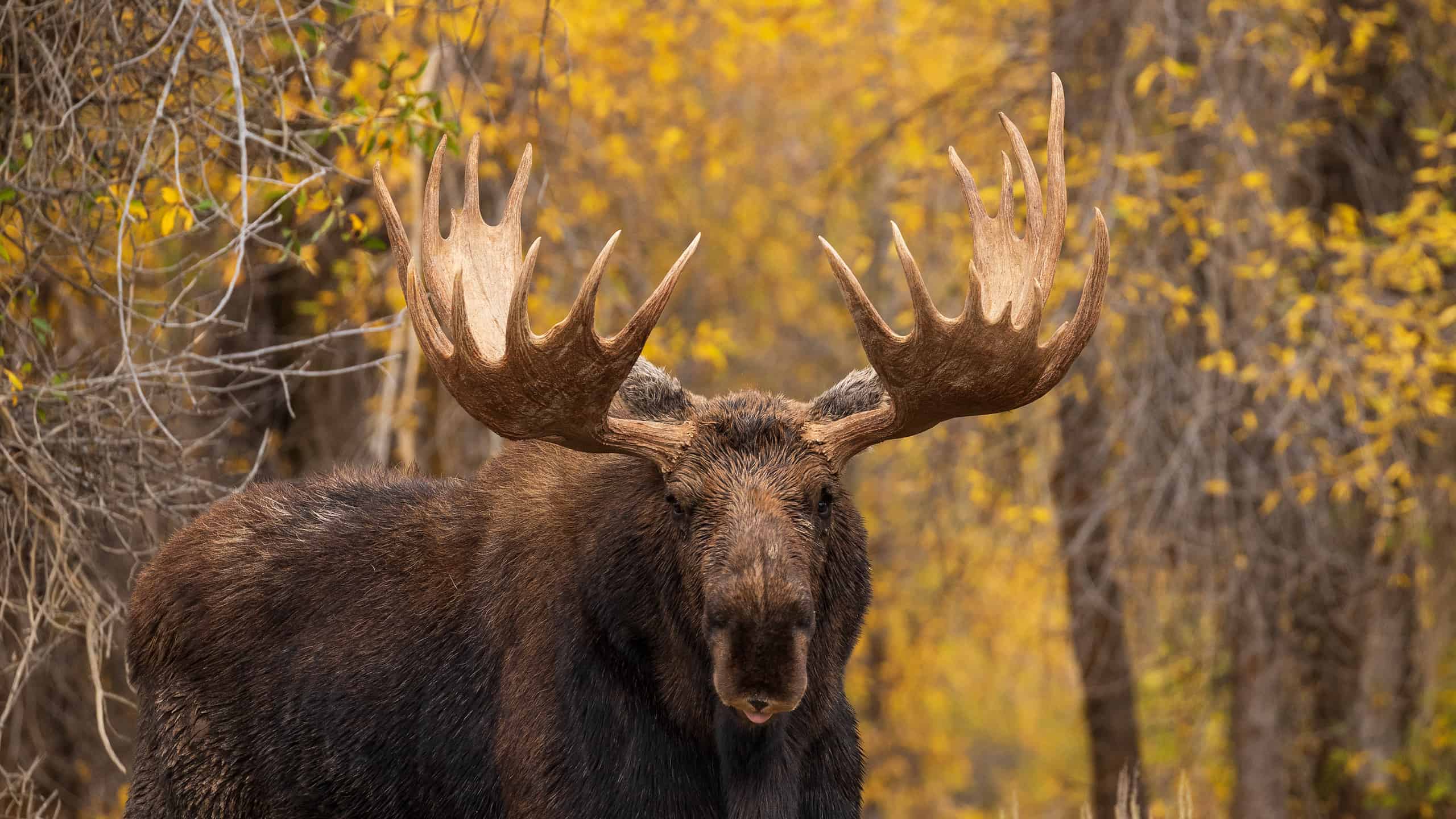
The average male moose weighs about 1,200 pounds.
©ArtBBNV/Shutterstock.com
Toward late September you may hear a moose make a roaring noise. This is a wildly aggressive sound that you never want to be around to hear. Again, this is a sound these large animals make during the rutting season.
They do so to scare off smaller bowls, in hopes of finding a female for themselves. a roar made by a moose sounds like a mixture of an angry cow and a lion. These wild animals will additionally make this noise to warn potential threats that it’s time to leave their territory.
3. Croak
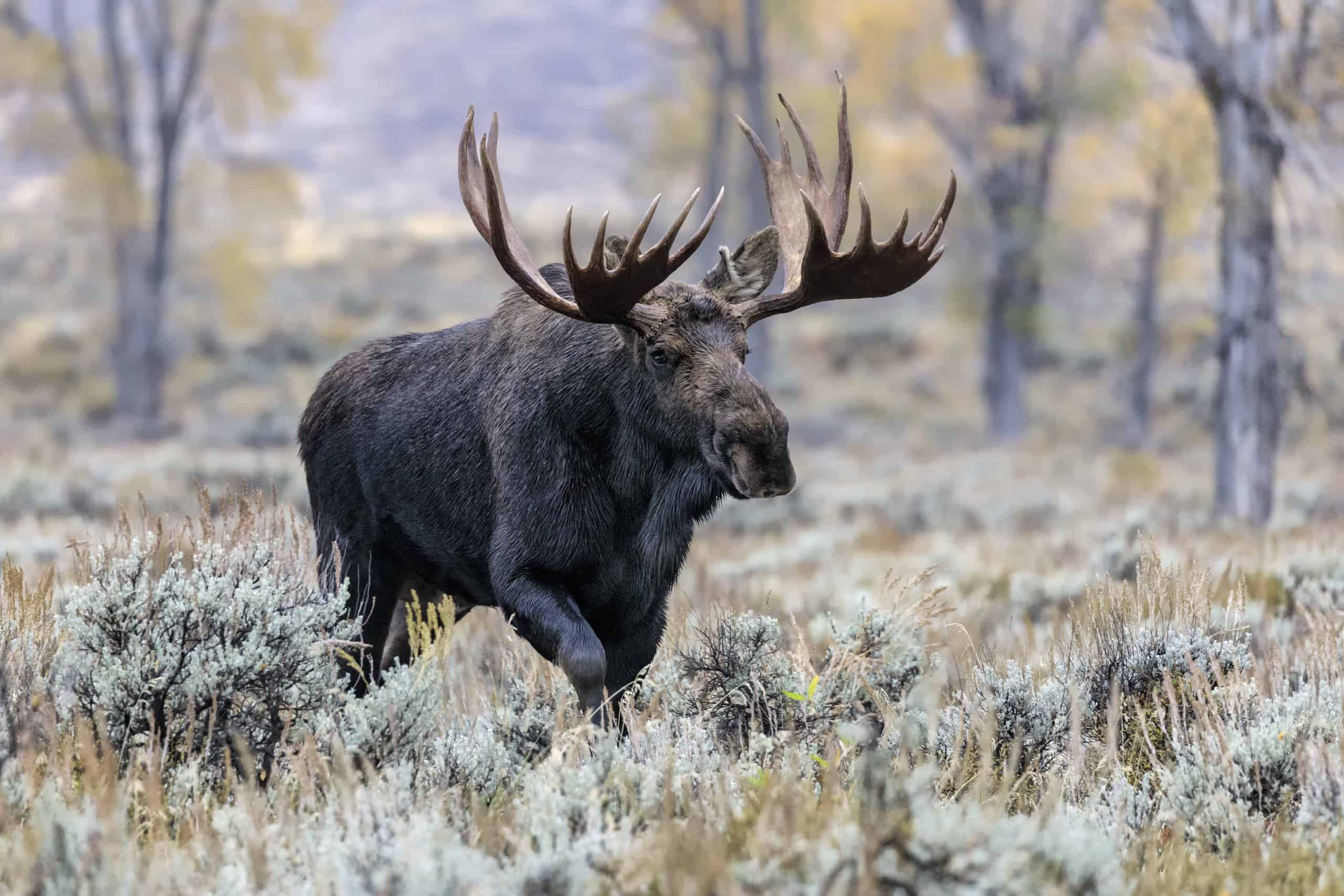
Bulls are fiercely protective of their territory during rutting season.
©Tom Tietz/Shutterstock.com
The third sound moose make in their natural environment is something of a croaking sound. This low-frequency noise can sound similar to grunting. You will hear a moose croak around the end of September through the beginning of October.
These massive creatures use this noise to grab the attention of cows when it’s time to breed. Many hunters will mimic this sound to get the attention of bull moose during the hunting season. It is one of the easiest sounds for hunters to imitate and can lead a male moose right to them.
4. Grunting in Intervals
Alaska has the largest population of moose in the United States.
©David Osborn/Shutterstock.com
If you hear a moose making grunting sounds in short intervals, this simply is an example of a male moose smelling a scent that is foreign to him. These grunts are typically done every three seconds.
Bull moose will grunt for several minutes or until they find out where the scent is coming from. You’ll often see the antlered animal stomping around and licking their lips as they make this noise.
5. Raking Their Antlers
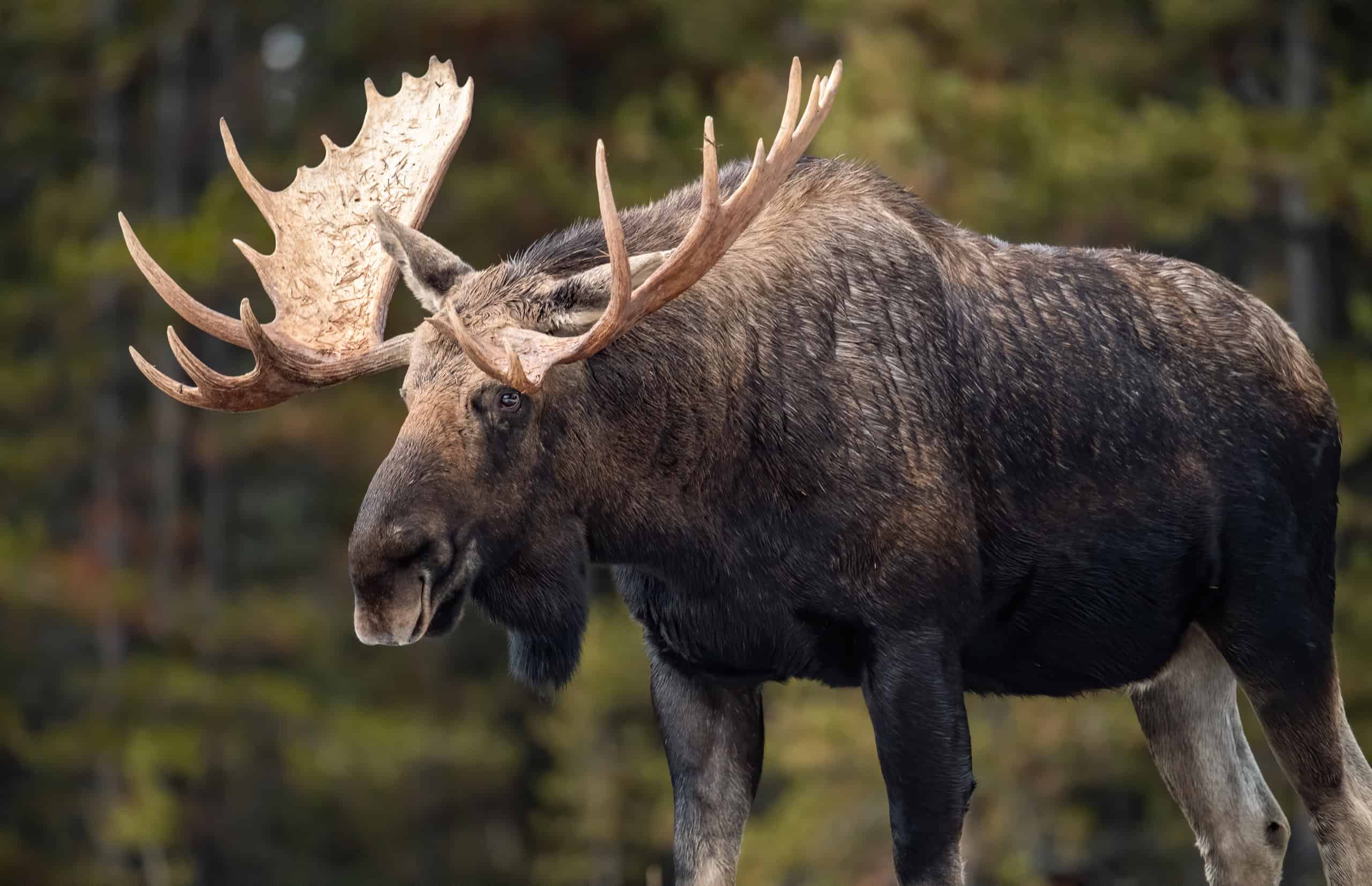
The heaviest moose antlers ever recorded weighed just under 80 pounds!
©Harry Collins Photography/Shutterstock.com
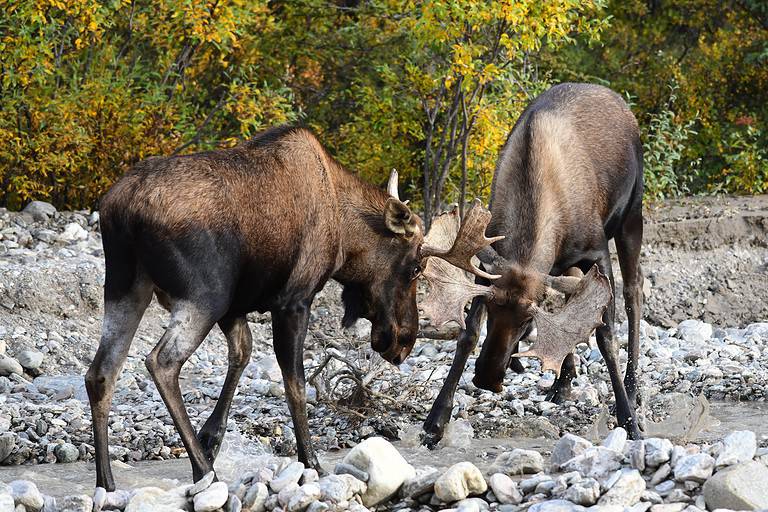
A sound you make here coming from a moose, but not necessarily a vocalization is when they rake their antlers. This is when a moose brushes their antlers vigorously across vegetation. This is their way of deterring other males and letting them know that this is their territory.
Hunters replicate the sound by using a pair of antlers or even a scapula. The scapula is a lot louder and can simply be raked across vegetation. Bull moose will think there are other males in the area that are attempting to gain the attention of a nearby cow.
6. Bark
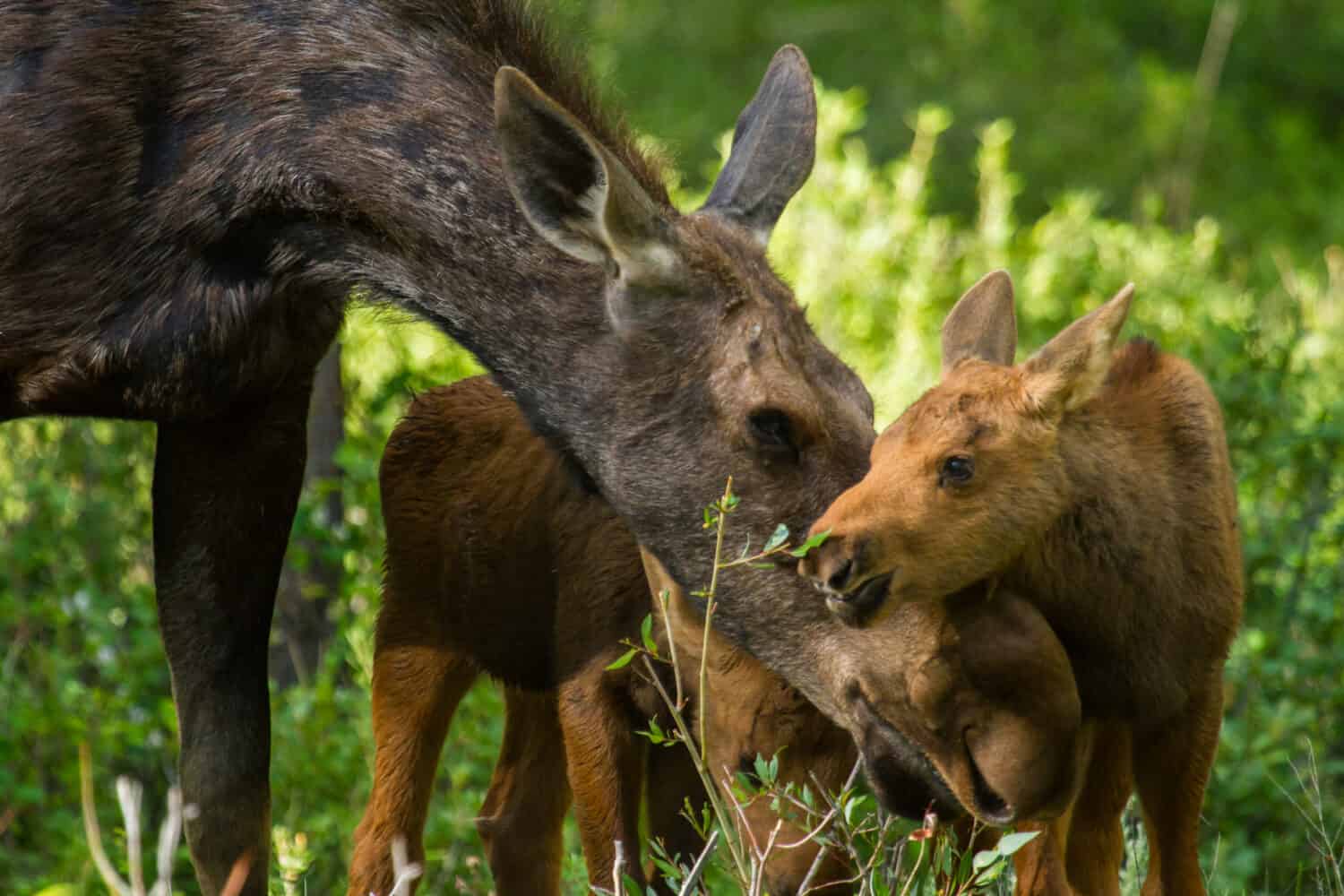
Moose are pregnant for approximately eight months.
©Green Mountain Exposure/Shutterstock.com
Now that you know a bit more about sounds that male moose make, let’s take a look at a barking noise female moose makes. This sound is made when a cow feels as if they are in danger. It sounds a lot like a deer or dog barking.
If a mother moose is apart from her young, she will make this noise to let them know that there is danger nearby. The calf will know it’s time to head back to their mom in hopes of staying as safe as possible.
7. Wail
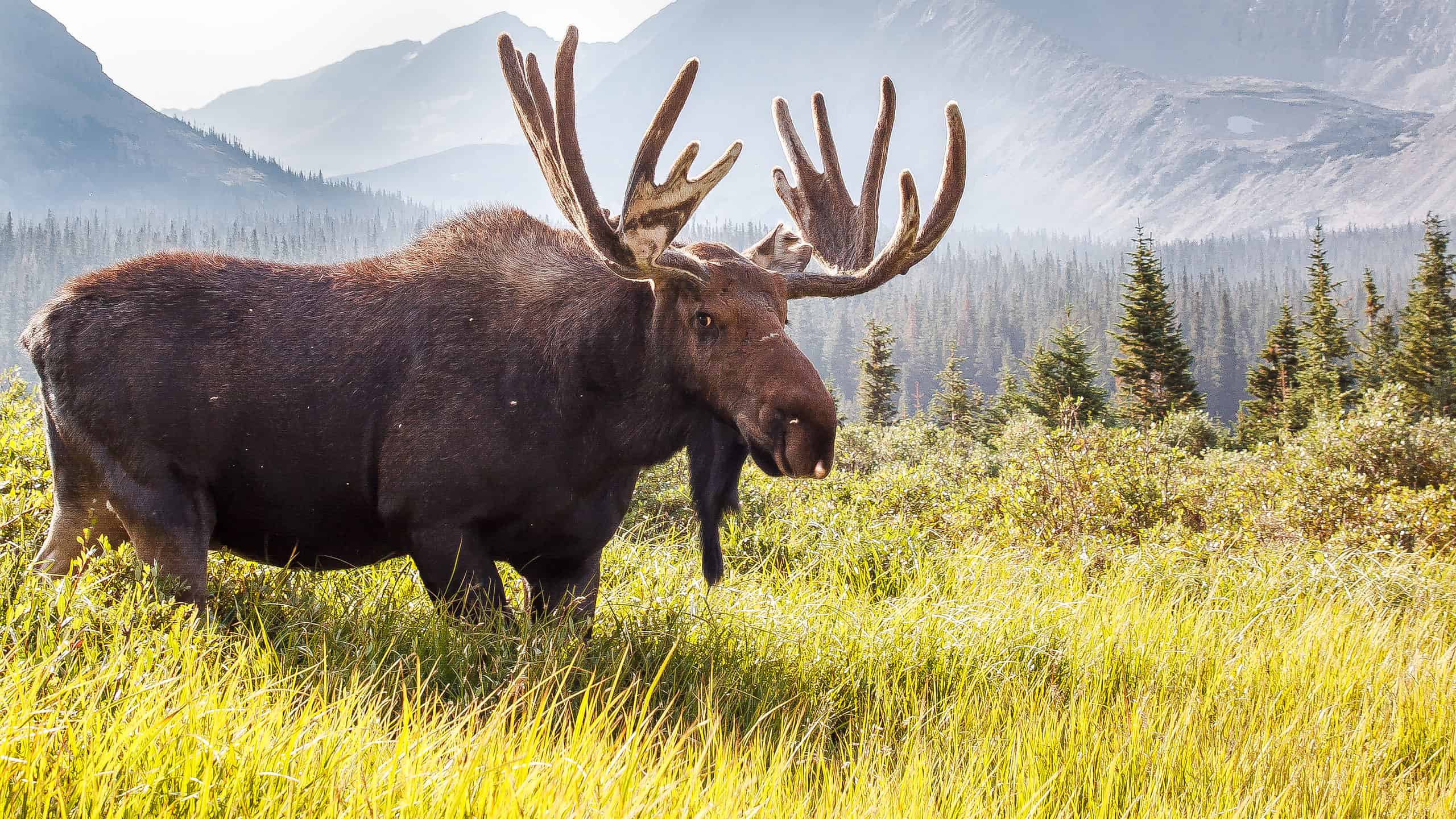
The wailing of a female moose indicates to bull moose that she is ready to mate.
©Michael Liggett/Shutterstock.com
When a cow moose is ready to breed, she will make a wailing sound that is similar to a deep moan. When a bull hears this noise, they will follow it until they reach the cow. It’s quite a guttural sound and is low in pitch.
The wail lasts around seven seconds and is often mimicked by hunters trying to bait a large moose.
8. Bleating
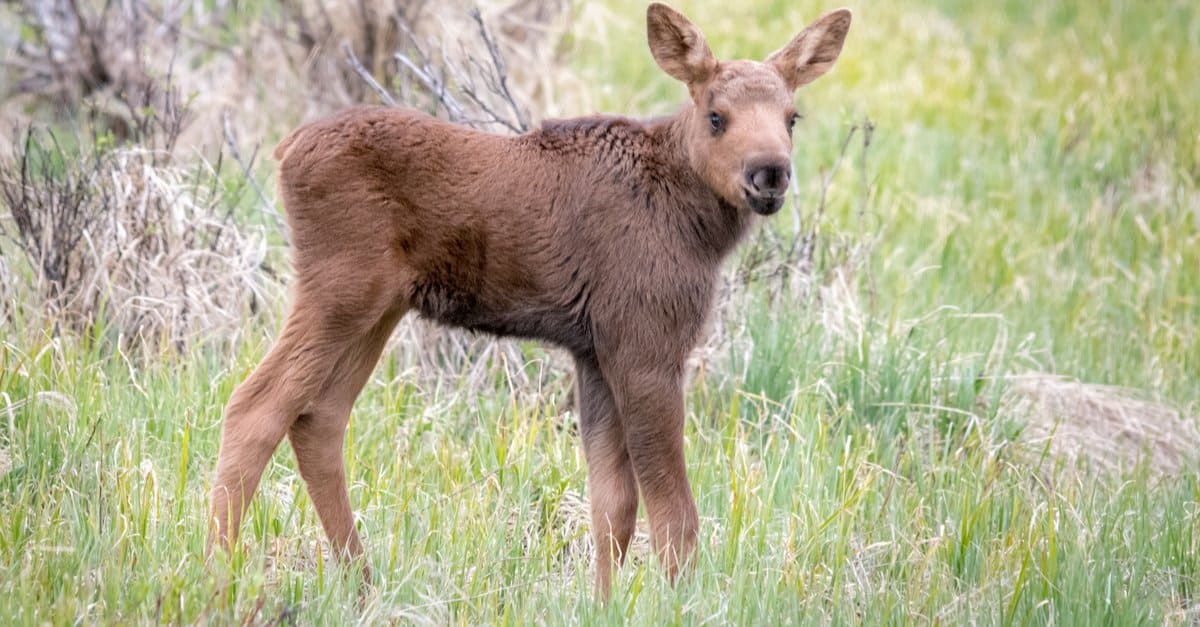
Moose calves weigh about 25 pounds when they are born.
©Eivor Kuchta/Shutterstock.com
Last but not least, moose make noise from the moment they are born. They may not be loud enough to hear while sitting quietly in a hunting stand, but that doesn’t mean they aren’t making noise.
Newborns typically have a high-pitched bleating sound that they repeat over and over. This is essentially a crying sound when a young animal tries to get the attention of their mother. Deer make a bleating noise as well, though it is much higher in pitch than a moose.