
Quick Take
- North America is home to approximately 65 squirrel species, including flying squirrels, ground squirrels, and tree squirrels.
- Most squirrels excrete their solid waste in a specific area.
- Exposure to dried squirrel droppings can cause respiratory ailments.
North America is home to approximately 65 of the 285 recognized squirrel species in the family Sciuridae. These rodents are generally grouped by habitat and behavior: tree squirrels, ground squirrels, and flying squirrels. Tree squirrels are among the most abundant and commonly seen squirrels in North America, particularly in suburban and urban areas. While ground squirrels are also abundant, tree squirrels are more visible as they navigate backyards, trees, and rooftops. Squirrel droppings, however, are not as visible because squirrels are latrine animals that defecate in specific spots rather than scattering droppings everywhere. Continue reading to learn what squirrel droppings look like and more.
What Does Squirrel Poop Look Like?
Tree squirrel poop consists of small, oblong to pill-shaped pellets, often described as resembling coffee beans. Individual pellets are typically about 0.375 inches wide and 0.125 inches in diameter, with rounded ends.
Fresh droppings are dark brown to black, turning lighter brown, tan, or grayish when dry. Pellets may appear smooth, but they can contain visible plant fibers. Tree squirrels are solitary creatures that prefer to forage and live on their own. Their droppings are found in piles or clusters within individual nesting areas, such as attics, rather than scattered, although they can sometimes be found on the ground under trees.
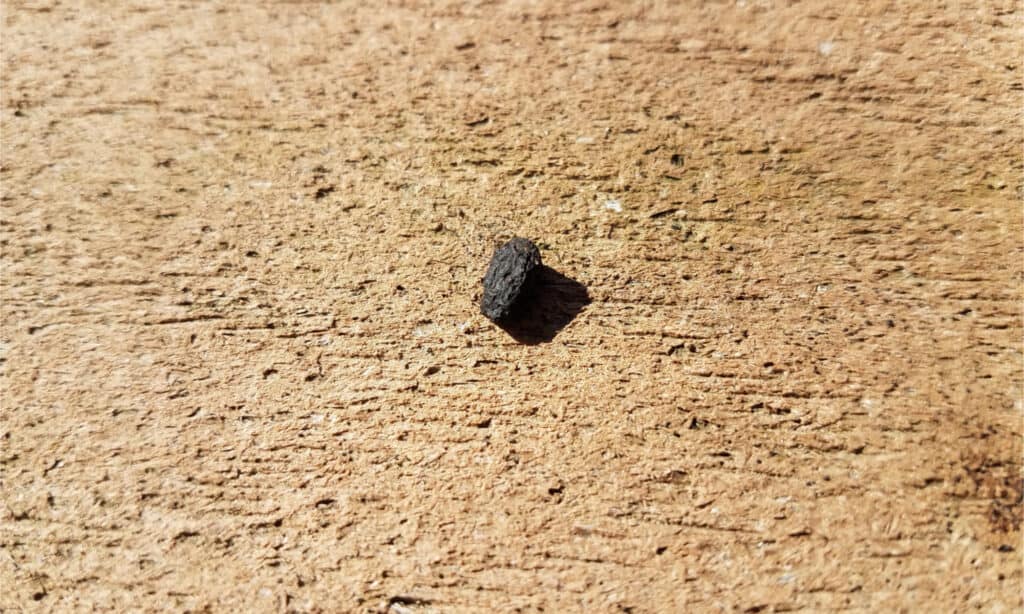
Squirrel poop can have a range of colors, including lighter brown with hues of a reddish color, green, and tan pellets depending on their diet.
©stockphotofan1/Shutterstock.com
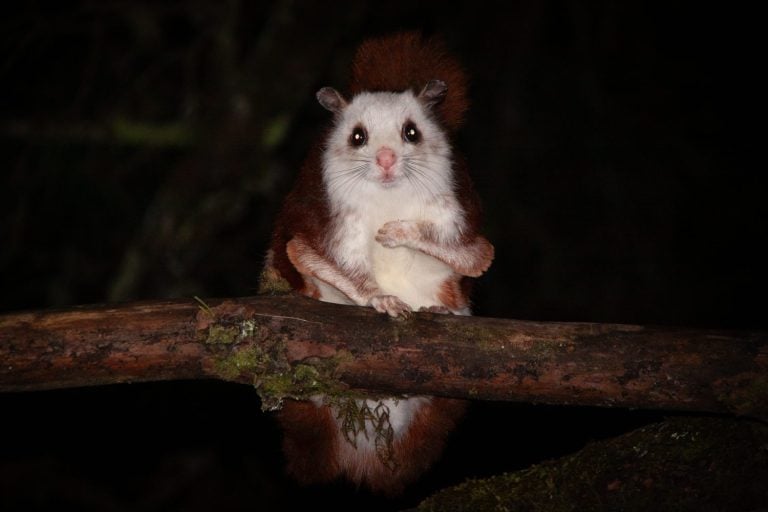
Flying squirrel pellets are the same cylindrical shape and dull color as tree squirrel pellets, although the individual pellets are slightly smaller. However, flying squirrels are highly social rodents that live in family groups or communities. They designate specific, centralized areas as waste areas, often a corner of an attic or a hollow in a tree, in which the waste of the entire colony accumulates in large, deep piles.
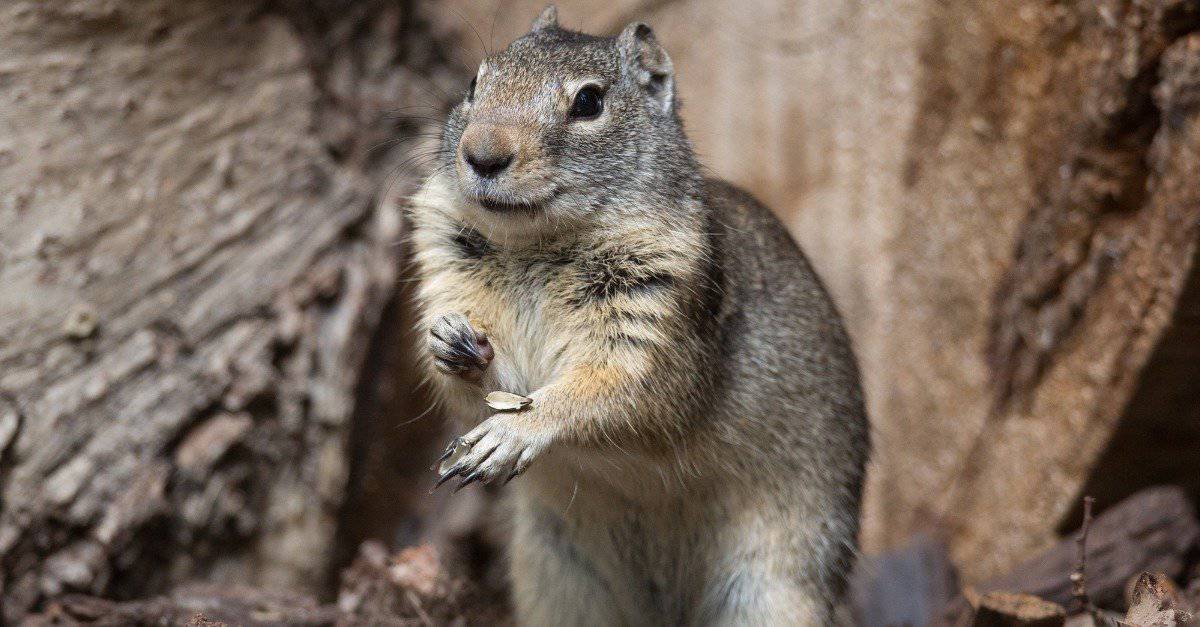
Ground squirrel poop is generally similar to tree squirrel and flying squirrel poop, appearing as small, dark brown or black, pill-shaped pellets with rounded ends, typically measuring about 0.25 to 0.5 inches in length. While they share a similar tubular, barrel-like shape, ground squirrel droppings are primarily found in their burrows.
Where Do Squirrels Typically Poop?
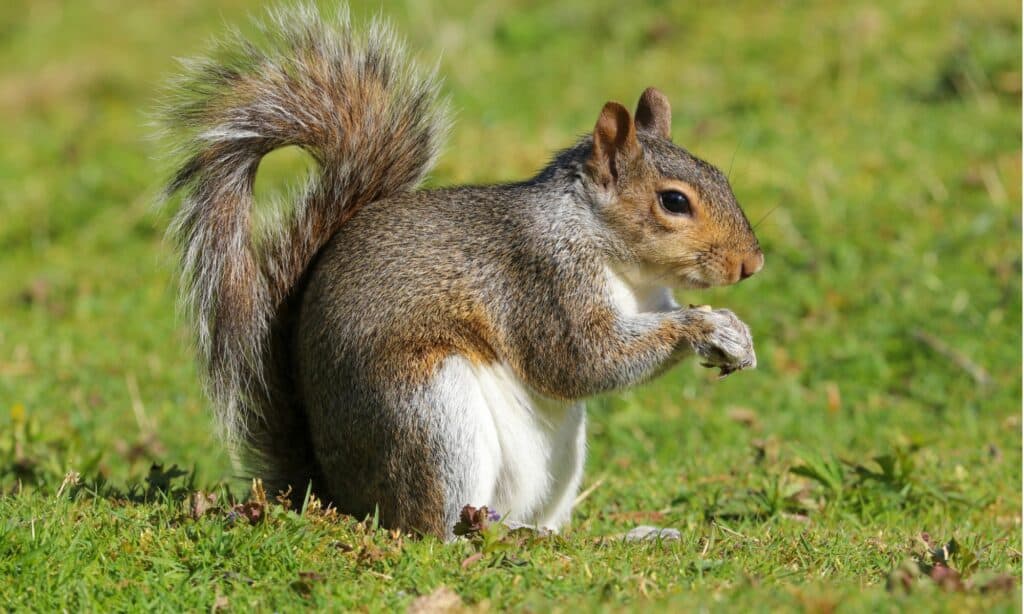
Squirrels are so secretive about pooping that their droppings can rarely be observed outdoors.
©iStock.com/Helen Davies
Do Squirrel Droppings Pose a Health Risk?
Squirrel droppings, like all rodent droppings, can contain a range of diseases and parasites that are dangerous to humans and pets. Despite this, the likelihood of humans coming into contact with squirrel scat is minimal.
Leptospirosis, a bacterial infection spread through rodent urine and feces, is one reason for concern. While it frequently causes flu-like symptoms, leptospirosis can also cause serious respiratory difficulties and even death in extreme cases. Salmonella, which typically causes symptoms like diarrhea and vomiting, may also be present in squirrel scat.
Accumulated squirrel droppings in attics pose a serious inhalation hazard because dried feces can crumble into dust that becomes airborne, potentially triggering severe respiratory issues or asthma attacks. Because of this high risk of contamination, cleaning up squirrel droppings requires specialized care to prevent inhalation of dangerous pathogens.