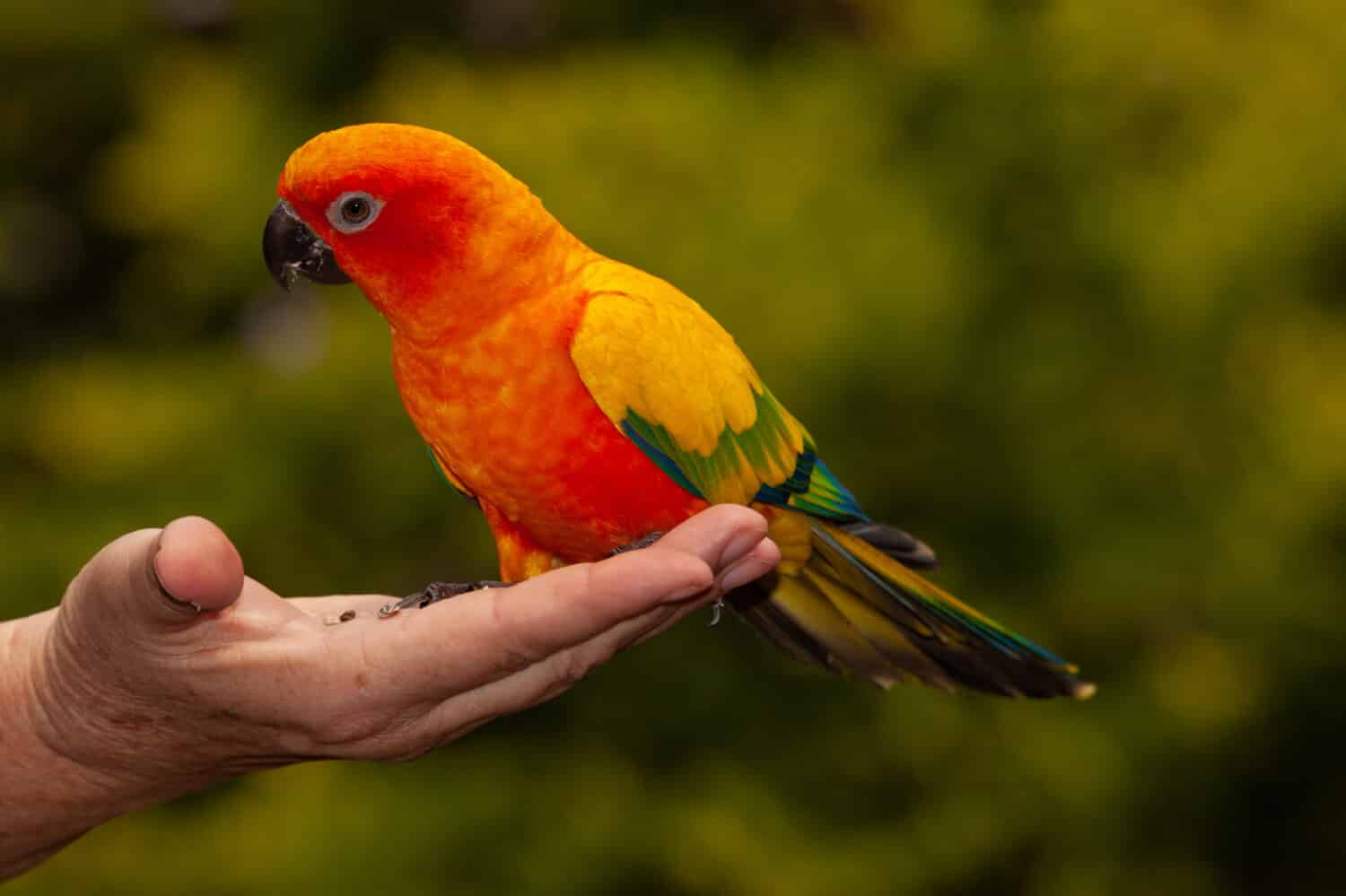

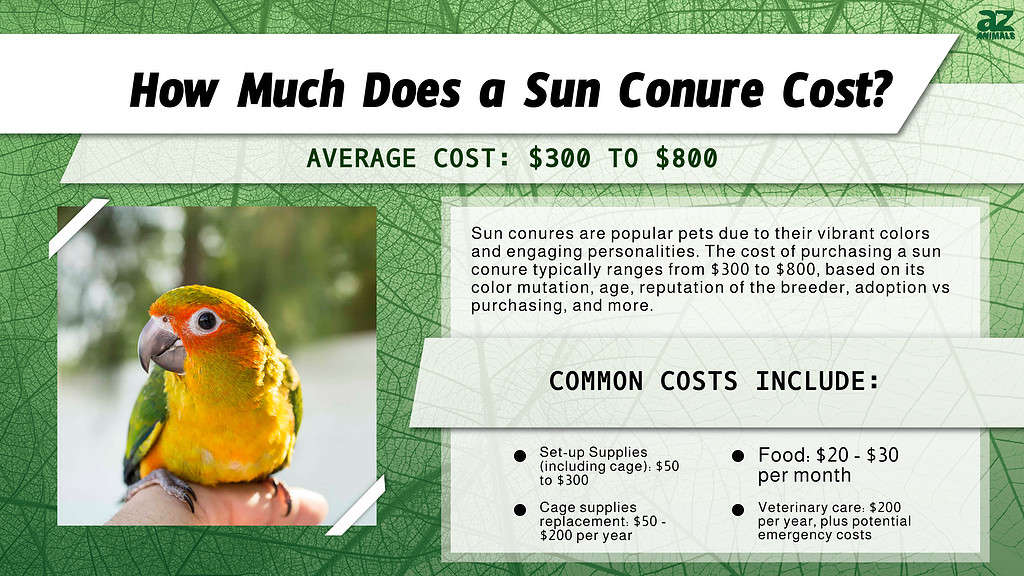
Sun conure prices can vary widely depending on their age, coloration, and health. You can generally expect one of these birds to cost between $300 to $800, though there are some options outside of this price range.
While purchasing a bird is the main initial cost, there are tons of other things you need to purchase. The cost for your sun conure also includes food, toys, veterinary care, and a suitable habitat. All of this can add up substantially.
Introduction: Exploring Sun Conure Prices and Appeal as Pets
This vibrant, colorful sun conure has been a popular pet for a long time. They’re playful birds with colorful plumage, which is why they are so popular. Originally, these small parrots were native to South America. However, many today are bred in captivity, which makes them more capable of living in captivity.
Many people love these birds due to their engaging personalities. They form strong bonds with their human companions and can be very entertaining pets to own.
These birds are good for both newer bird owners and experienced bird owners. However, you do need to account for the price.
Purchase Cost: Factors Affecting Sun Conure Prices
Many factors influence the price of these birds. It’s important to consider these prices when shopping, as they may help you save a bit of money.
- Age: Younger birds typically cost less because they are more sought after. Younger birds are also more time-consuming due to the time and effort required for hand-feeding and training.
- Color Mutation: Traditionally, these birds come in bright yellow and orange. However, there are color mutations that can produce rarer colors. Usually, birds with these mutations are more expensive.
- Health and Genetic Background: Birds with a clean bill of health, as confirmed by a veterinarian, are typically more expensive. Additionally, birds with desirable genetic traits, such as strong colors or good breeding lineage, may command higher prices.
- Breeder Reputation: Breeders with a good reputation may charge more for their birds. Often, these breeders also put more time into their birds, which may be why they have a better reputation in the first place.
- Geographic Location: Prices vary depending on your geographic location. If these birds are common in your area, they will likely be cheaper. Otherwise, they may be more expensive.
- Inclusion: Sometimes, birds come with additional items, such as cages, toys, and other initial supplies. These may be more expensive, as they come with starter items.
- Adoption vs. Purchase: Adopting a sun conure from a rescue organization or shelter can be more affordable than purchasing from a breeder or pet store.
Supplies and Setup: Essential Supplies for Sun Conures

Conures are nicknamed “clowns” due to their constant attention-seeking behavior. They often hang upside down, sway back and forth, and dance.
©Yatra/Shutterstock.com
Before you bring a bird home, it is vital that you set your sun conure’s cage and environment correctly. Your bird will be spending a lot of time in their cage, so it needs to be perfect for them to thrive.
You’ll need an appropriately sized cage that allows your bird to spread their wings and move around comfortably. You should also choose a cage with horizontal bars for climbing. Offer a variety of perches of different thicknesses and textures to promote foot health and exercise. Natural wood perches are a good choice, as they mimic the feel of branches in the wild.
Of course, you’ll also need sturdy, clean water and food dishes. Sometimes, these come with the cage. However, if they don’t, you’ll need to purchase them separately.
These birds are pretty intelligent and playful. Therefore, it’s important that you offer a range of toys, such as chew toys, bells, and swings. These keep them mentally and physically stimulated. We recommend rotating toys to prevent boredom, so plan on having more on hand than your bird may need at once.
You’ll also need to line the bottom of the cage with a suitable bedding material. However, many bird owners use newspaper, which is free if you already have the paper. Therefore, this shouldn’t cost you all that much.
Offer a balanced diet consisting of high-quality commercial bird pellets and fresh fruits and vegetables. Sun conures also enjoy nuts as an occasional treat. Of course, this is also an ongoing expense.
A secure and well-ventilated carrier is essential for transporting your sun conure safely. You’ll use this for trips to the veterinarian or when traveling. These aren’t terribly expensive, but we absolutely don’t recommend skipping one “until you need it.” You often don’t need a carrier until you really need one.
We also recommend keeping a basic first aid kit nearby. You may want to include styptic powder to stop bleeding, for instance, as well as some tweezers. These items are inexpensive, but you probably won’t be able to go out and purchase them when you need them.
You may want to consider training your sun conure. In this case, you’ll need to purchase a few extra supplies, such as target sticks and other training tools.
Ongoing Expenses: Cost of Food, Supplies, and Veterinary Care for Sun Conures
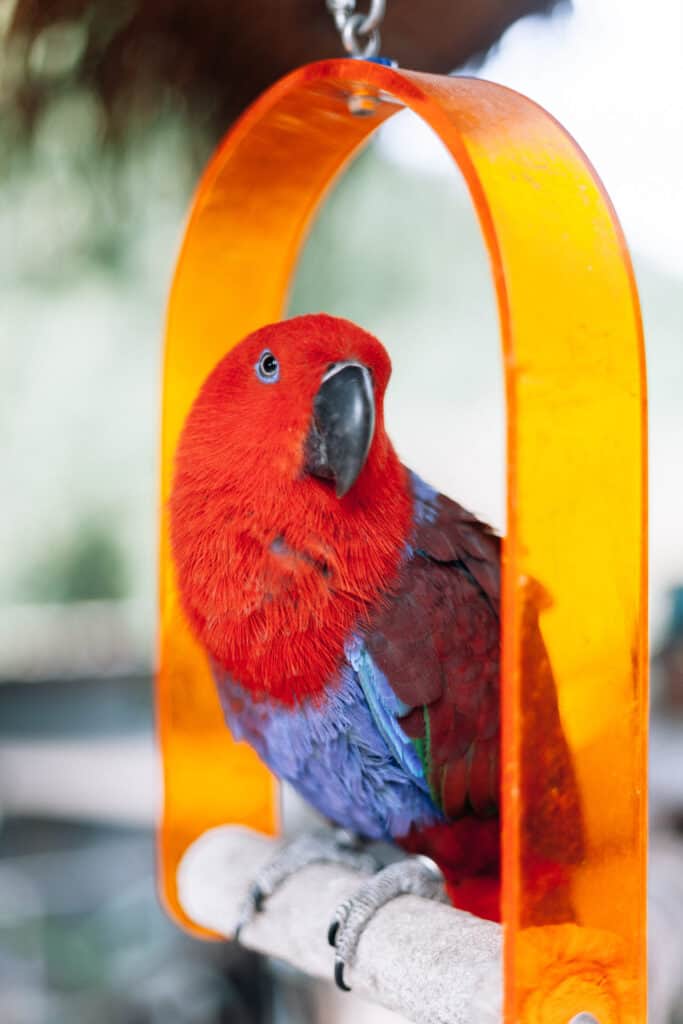
Updating toys and perches annually can cost from -0.
©panupong thiyawong/Shutterstock.com
On top of paying the initial cost for your bird, you’ll also need to pay monthly fees to take care of the conure. One of the most obvious of these is food. Conures do best on a high-quality commercial bird pellet diet, as well as a few fruits and veggies. These pelleted diets are formulated for your bird’s specific needs and include all the necessary nutrients.
You can expect to pay between $20 to $30 a month for these birds.
You’ll also need to replace cage supplies over time. For instance, toys, perches, and bedding all need to be replaced regularly. Luckily, this should only cost around $50 to $200 a year.
Regular cage cleaning is highly recommended, and this requires cleaning supplies. You can often use what you have lying around your house, such as vinegar and baking soda. Therefore, while this does cost something, it should be incredibly low.
Just like any other animal, your bird needs regular veterinary check-ups to ensure that they remain healthy. Budget for an annual wellness exam and other preventative care your bird may need. Often, this may cost around $200 a year.
You should also budget for emergency vet costs, ranging from a few hundred dollars to thousands. This cost is hard to budget for, as well, as you never know when you’ll need to pay.
Grooming is also necessary, though this shouldn’t be terribly expensive. Often, sun conures only need their nails trimmed every few months, which can be done at home or by your vet.
Budgeting Tips: Budgeting for Sun Conure Ownership
Creating a reasonable budget is an important part of owning one of these birds. You should start by figuring out how much your bird will cost you using our guide above. Everyone’s expenses will be slightly different, though, so you may need to make adjustments.
Emergency funds are also important, though they may not fit within your usual budget. Aim to save a few hundred dollars or more to cover unexpected vet bills. This fund can be part of your larger family emergency fund or set aside by itself.
Ensure that the basics, such as high-quality food, a suitable cage, and regular veterinary care, are prioritized in your budget. These are non-negotiable expenses for your sun conure’s well-being. You can DIY many other expenses, like toys.
Consider shopping around for the best prices. Often, you can find cheaper items online or during store sales. Shop after the holidays, as holiday-themed items are often on sale.
Don’t skimp on preventative care; these help catch and treat problems early when they are often cheaper.
You can also learn how to perform DIY nail trimming and make your own toys. This may help you save a bit of money, though be cautious about the supply cost (which may not make it that much cheaper).