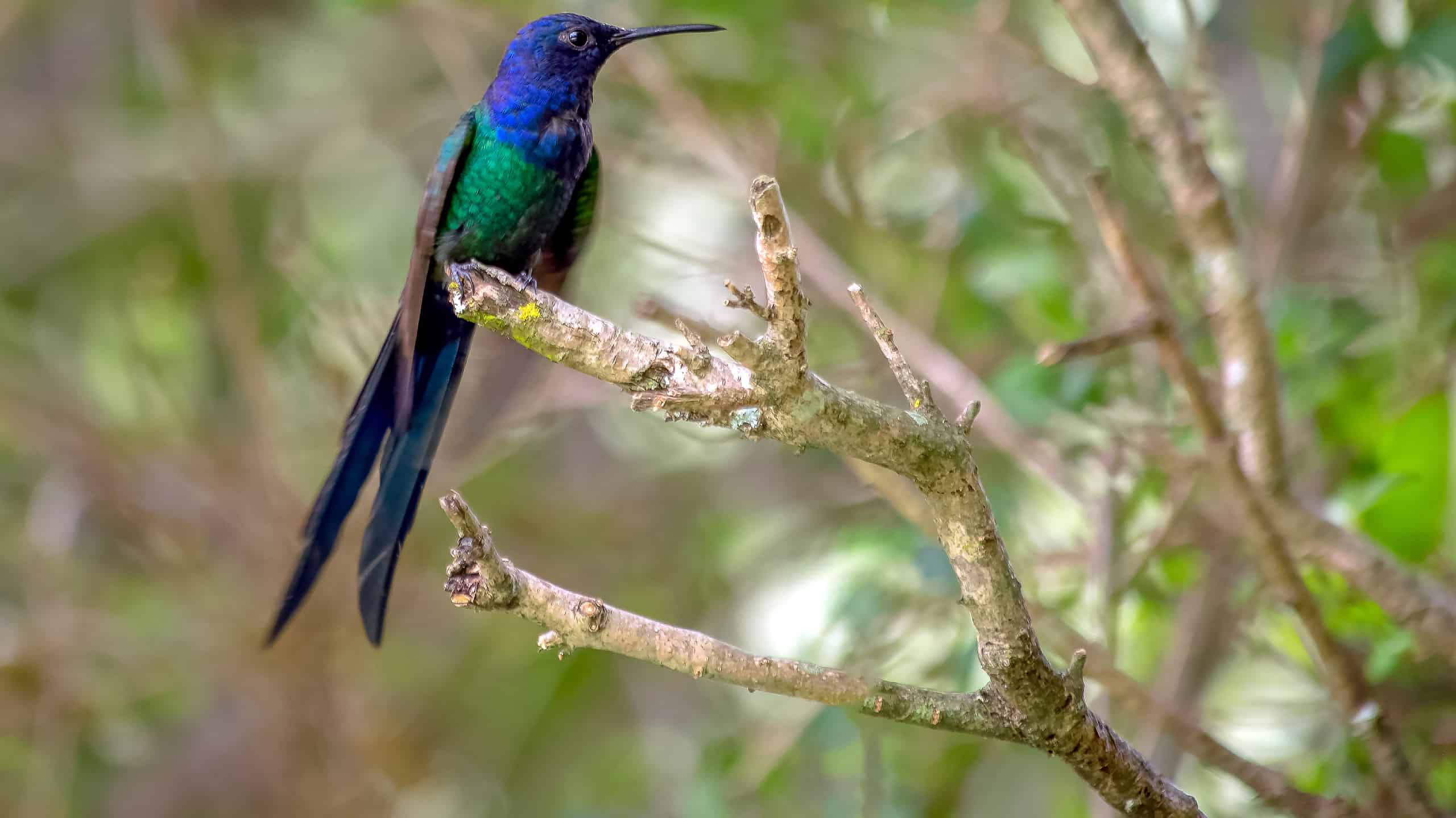

More than 300 species of birds call Jamaica, a small island with lush rainforests and white sandy beaches in the Caribbean Sea, home for at least part of the year. Not quite 30 of those species are endemic to the Caribbean island, making this country a must-see destination for avid birders. But one of those endemic birds caught the heart of a nation: the red-billed streamer-tail hummingbird, commonly called the doctor bird.
Doctor bird is a nickname, of course. Trochilus polytmus is also known as the swallow-tail, swallow-streamer, or scissor-tail hummingbird.
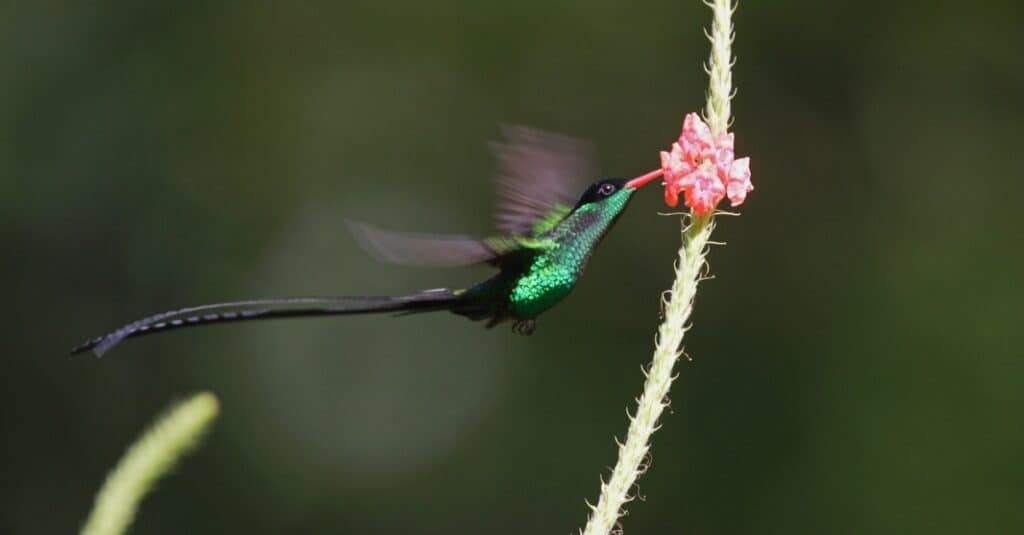
The red-billed streamer-tail hummingbird can’t be found anywhere in the wild outside of Jamaica as this island nation is its only home.
©iStock.com/neil bowman
According to Jamaica’s Office of the Prime Minister, there is ambiguity in how Trochilus polytmus earned its nickname, doctor bird. “It has been said that the name was given because the erect black crest and tails resemble the top hat and long tail coats [sic] doctors used to wear in the old days,” it reads. “Other schools of thought believe that it refers to the way the birds lance the flowers with their bills to extract nectar.”
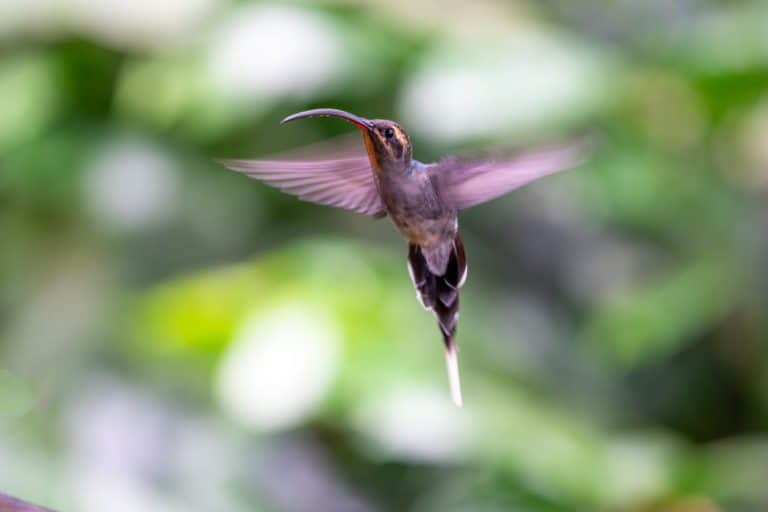
The name, however, describes the appearance of the adult male hummingbird because of its long black tail feathers that resemble streamers (or tailcoats worn my doctors of old) that are as long as its body. Both males and females have an iridescent green body, a black crown, and a long, thin red beak, although the red for females is duller in color compared to the males’ beak.
Hummingbirds are the smallest species of bird in the world. The red-billed streamer-tail hummingbird is around 4-5 inches long with females being slightly smaller. The tail on the male extends the length of the bird another 4-5 inches. This male hummingbird typically weighs between 4.0 and 6.5 grams while females fall between 3.0 and 6.1 grams. For comparison, a penny weighs about 3 grams, which gives a whole new meaning to “my 2 cents.”
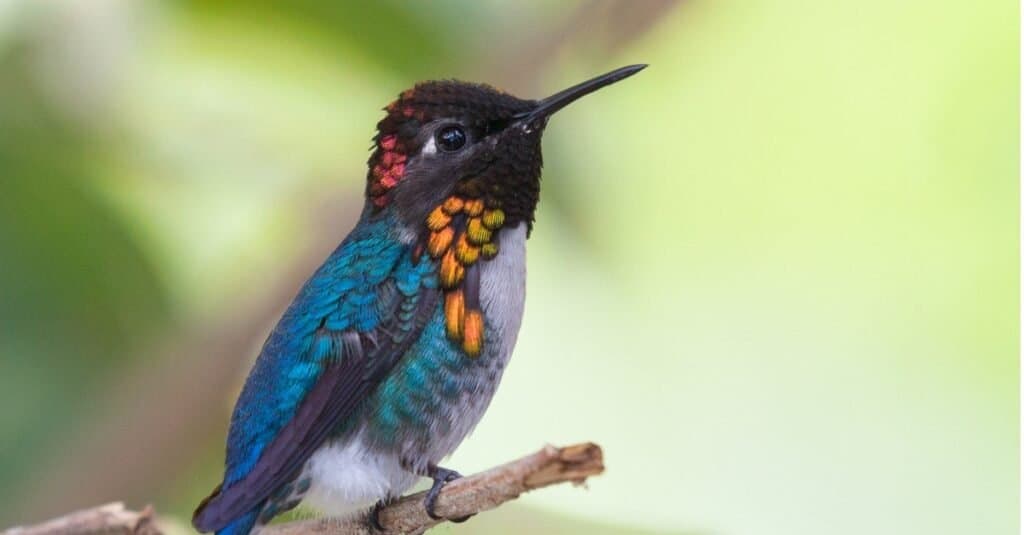
The bee hummingbird holds the title as the world’s smallest species of bird. Jamaica’s national bird is approximately twice the size.
©iStock.com/epantha
Another species of hummingbird, the bee hummingbird, is the smallest in the world and are half the length (2 inches or so) of the red-billed streamer-tail hummingbird, and an adult bee hummingbird weighs just 1.5 grams. While this species is native to Cuba, they can also be found in Jamaica as well as Haiti.
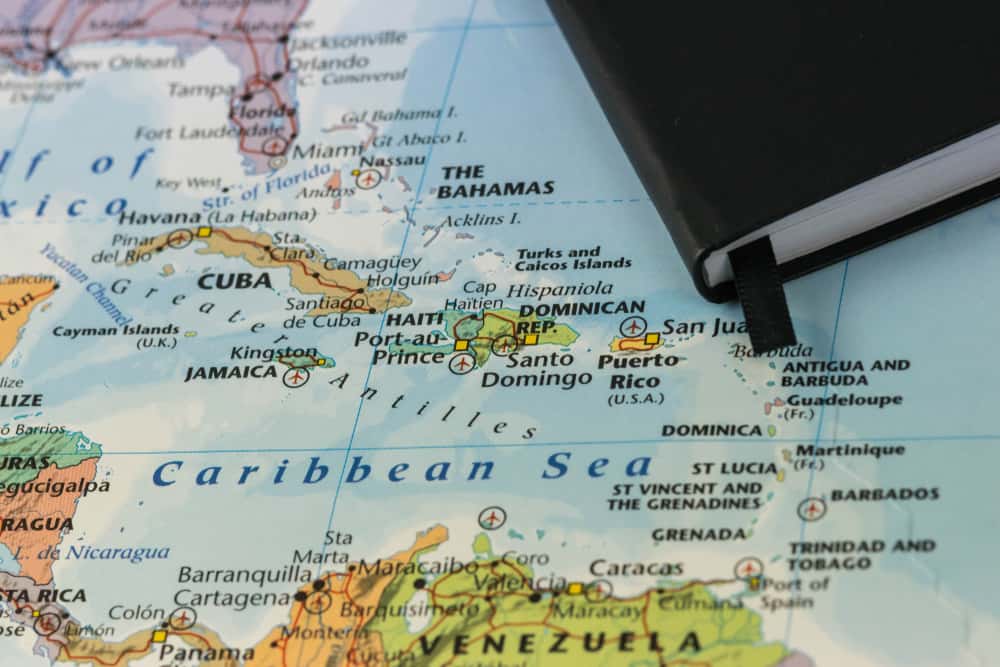
Jamaica’s doctor bird lives at every altitude and in every part of the country, except the most eastern edge.
© wael alreweie/Shutterstock.com
Red-billed streamer-tail hummingbirds live throughout the island of Jamaica, although they cannot be found at the country’s most eastern end, where its cousin, the black-billed streamer-tail hummingbird, makes its home. They are found at every altitude, and are frequently seen near people in parks, gardens, and along trails.
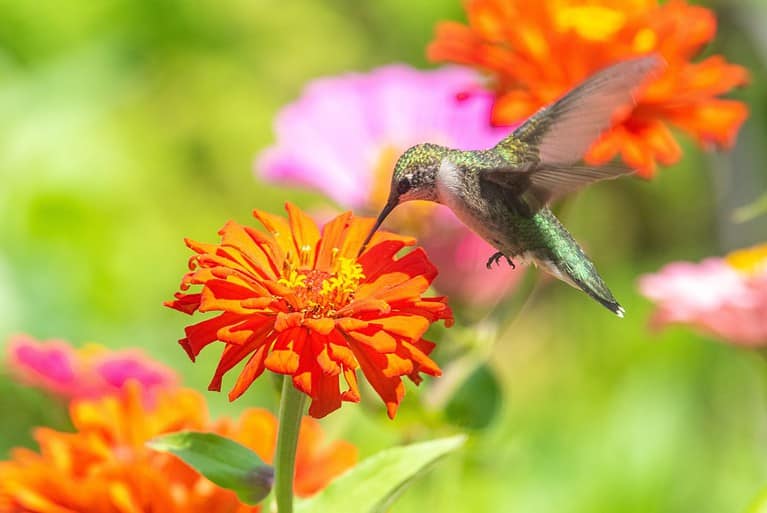
They can be found nearly everywhere on the island because there are plenty of flowers whose nectar is ripe for the taking. Hummingbirds insert their long beaks into flowers to extract the nectar. Brightly colored tubular flowers, notably the following, attract them:
- the purple blooms of the passion flower vine
- the cigar plant, a shrub with tubular reddish orange flowers
- the firespike plant, which has bright red, fire-like blooms
- the China hat, an evergreen shrub with orange-red flowers with a tubular center
- the red tassel tree, also known as the powder puff tree, for its red-colored “fluffy” blooms
- the pepper hibiscus, a tree-like plant with red blooms
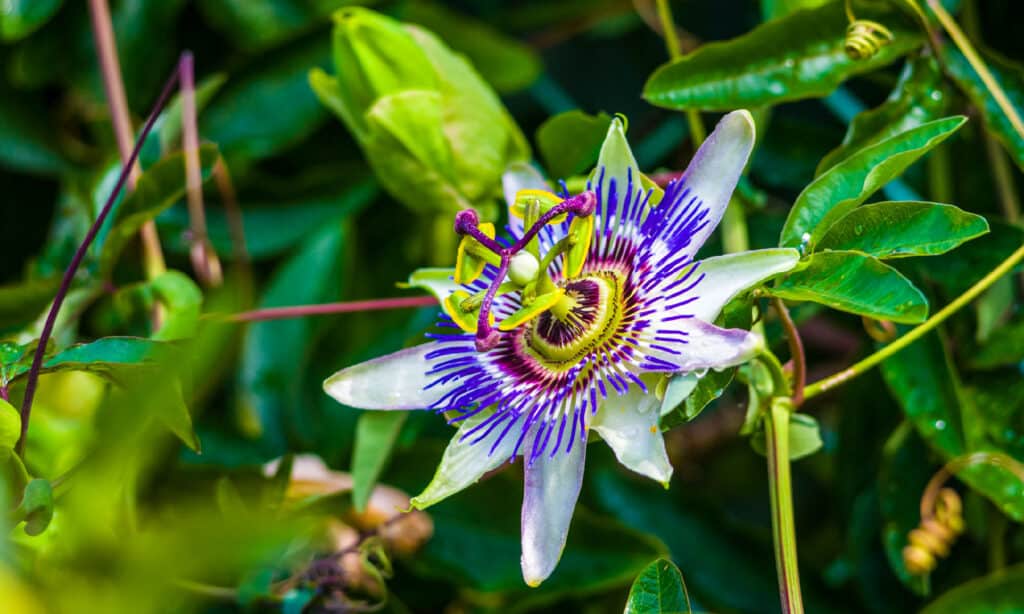
Hummingbirds use their long beaks to extract the nectar from flowers. Brightly colored tubular flowers attract them, like this species of passion flower.
©iStock.com/Shedu
Is the Red-Billed Streamer-Tail Hummingbird Featured on the Jamaican Flag?
No. The Jamaican flag has a yellow “X” across it with the top and bottom triangle being green and the left and right triangle being black. The colors of the flag represent:
- Black: strength and creativity
- Gold: natural wealth and beauty of sunlight
- Green: hope and agricultural resources
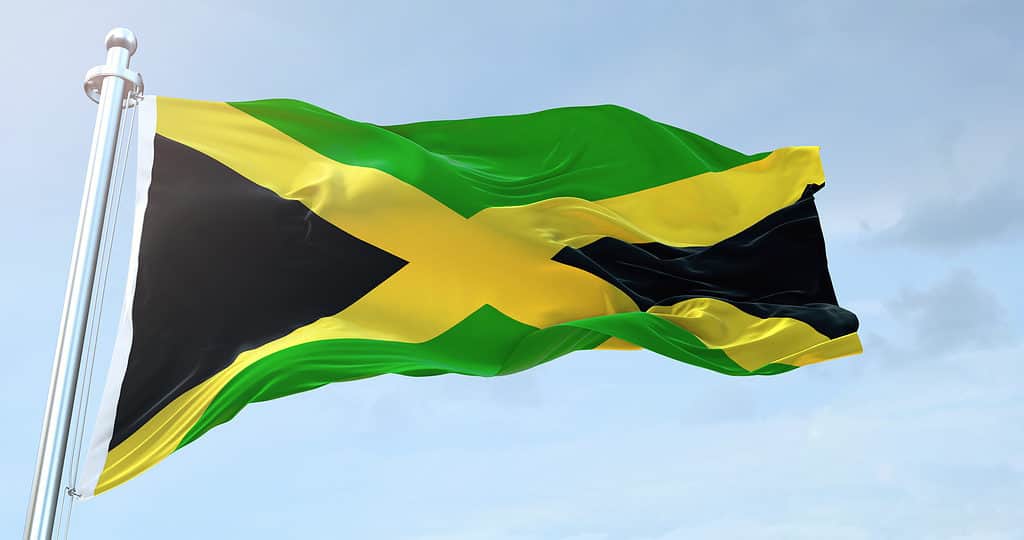
The Jamaican flag has a yellow “X” across it with the top and bottom triangle being green and the left and right triangle being black.
©iStock.com/EA
Is the Red-Billed Streamer-Tail Hummingbird Featured on Jamaican Money?
The red-billed streamer-tail hummingbird used to be on the back of the 25-cent coin but it is no longer in circulation. It was demonetized on February 15, 2018. The Coat of Arms of Jamaica is currently on all of the coins. The banknotes feature famous people on the front and on the back there is the Doctor’s Cove Beach, Montego Bay, Dunn’s River Falls, an old map of Jamaica highlighting Port Royal and Jamaica House.
What Animal Is on the Jamaican Coat of Arms?
The crocodile is on the Jamaican Coat of Arms. The Coat of Arms features a shield with five pineapples on it and two Taino (Arawak) standing on either side, the female is on the left and the male on the right. On top of the shield is the Royal Helmet and Mantlings and on top of that is a crocodile.
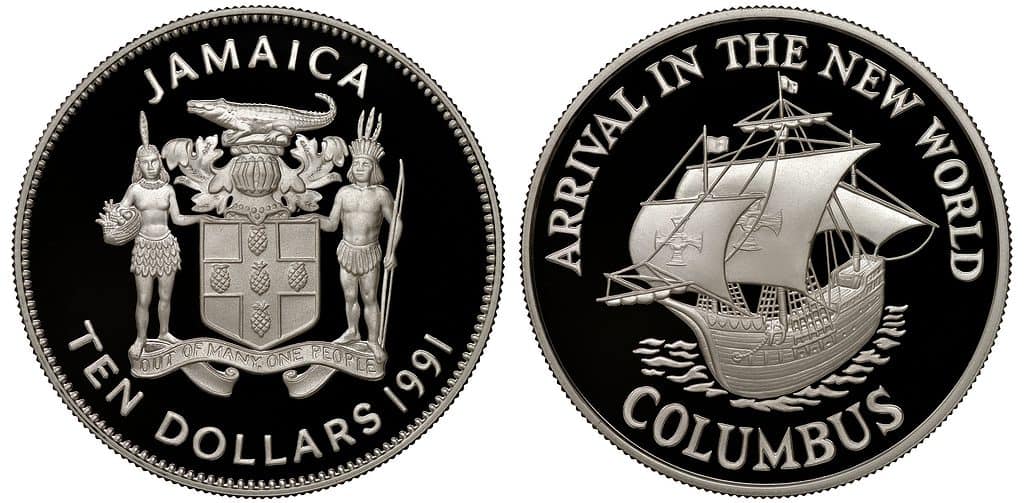
The crocodile is on the Jamaican Coat of Arms.
©Yaroslaff/Shutterstock.com
What Kind of Crocodile Lives in Jamaica?
The American crocodile lives in Jamaica. They mostly live on the southern coast. American crocodiles can get to be 16 feet long and they are carnivores (meat eaters). They live in brackish wetlands, rivers and swamps. American crocodiles are “Vulnerable” by the IUCN database on the last assessment in February of 2020. The threats in Jamaica are the same as other countries, hunting and habitat loss. For years the American crocodile was listed as endangered so the conservational efforts to maintain and increase their populations is working, but more work still needs to be done.
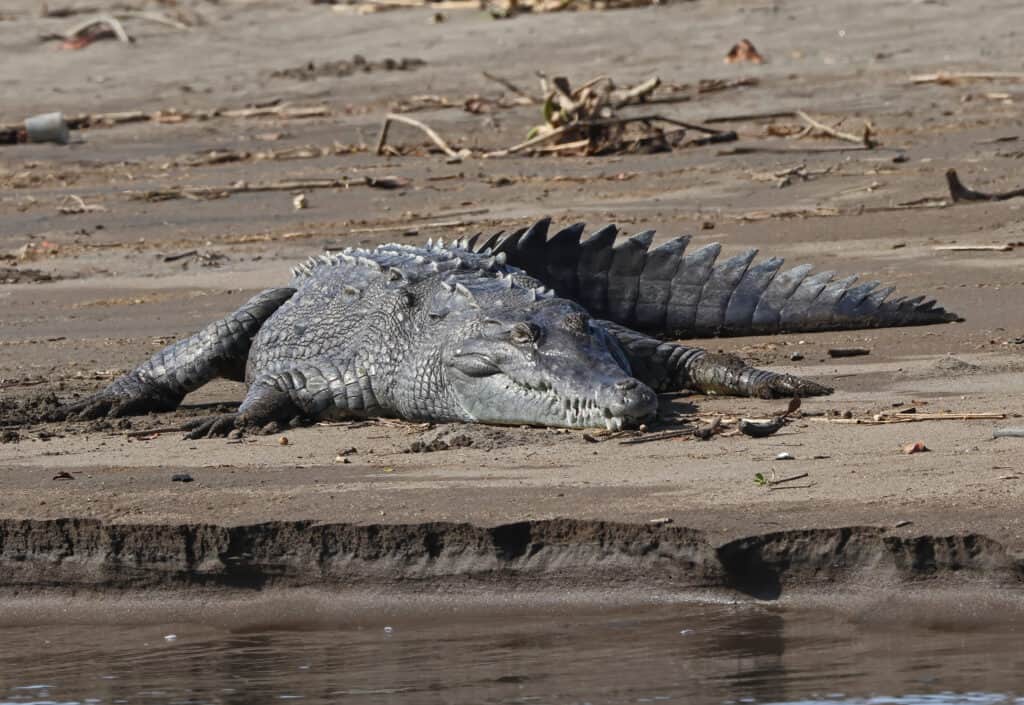
The American crocodile lives in Jamaica. They mostly live on the southern coast.
©iStock.com/neil bowman
What Other Animals Live in Jamaica?
For a small island country you would be surprised how many different animals live in Jamaica! One of the most unique animals in Jamaica shares a name with the swallow-tail hummingbird. The Jamaican swallow-tail butterfly is the largest butterfly in the Americas with a wingspan of up to 6 inches! For reference a dinner plate is 10-12 inches, a salad plate is 8-10. That is one big butterfly!
Along the beaches and off the coast you will find sea turtles, manatee, crabs, booby, dolphins, whales and sharks. There are coral reefs off the shore (did you know coral is actually an animal?) with hundreds of fish and wildlife species. If you go snorkeling you may see parrotfish, angelfish, barjacks, clown fish, stingrays and squirrel fish. Out further you may find tuna, mackerel, marlin and swordfish.
What Kinds of Parrots Live in Jamaica?
Jamaica could have chosen some of its more flashy birds as their national bird like the yellow-billed parrot, but instead they chose the red-billed streamer-tail hummingbird, a worthy choice. The beauty of the other birds on the island, especially some of the colorful parrots is also respected and admired. Besides yellow-billed parrots there are green-billed parrots and black-billed parrots. Parrots do have the ability to mimic human speech, so perhaps if you visit Jamaica, you hear a greeting from a friendly parrot’s welcome of “Hey mon!”.
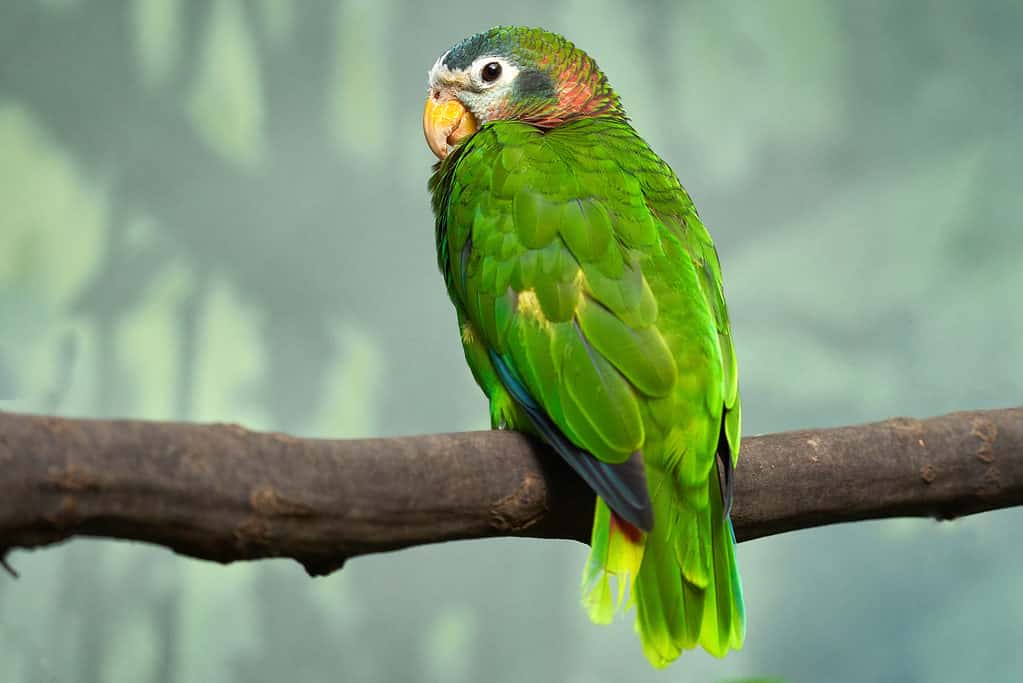
The yellow-billed parrot is one of the many feathered residents of Jamaica.
©Ondrej Prosicky/Shutterstock.com
Up Next
- The Flag of Jamaica: History, Meaning and Symbolism
- 10 Sharks Found in the Caribbean Sea
- 10 Incredible Hummingbird Facts