
Quick Take
- This bird's wings move faster than a hovering hummingbird's, yet even that speed still isn't fast enough to produce its signature note. See the wing speed math →
- To make music, this bird had to break one of the most fundamental rules of bird anatomy. Discover the bone adaptation →
- Its musical ability comes at a cost that should, by all logic, make it less likely to survive. Yet females keep choosing it anyway. Explore the evolutionary tradeoff →
- Sexual selection didn't just change this bird's feathers. It rewrote its skeleton. See how selection rewrote bones →
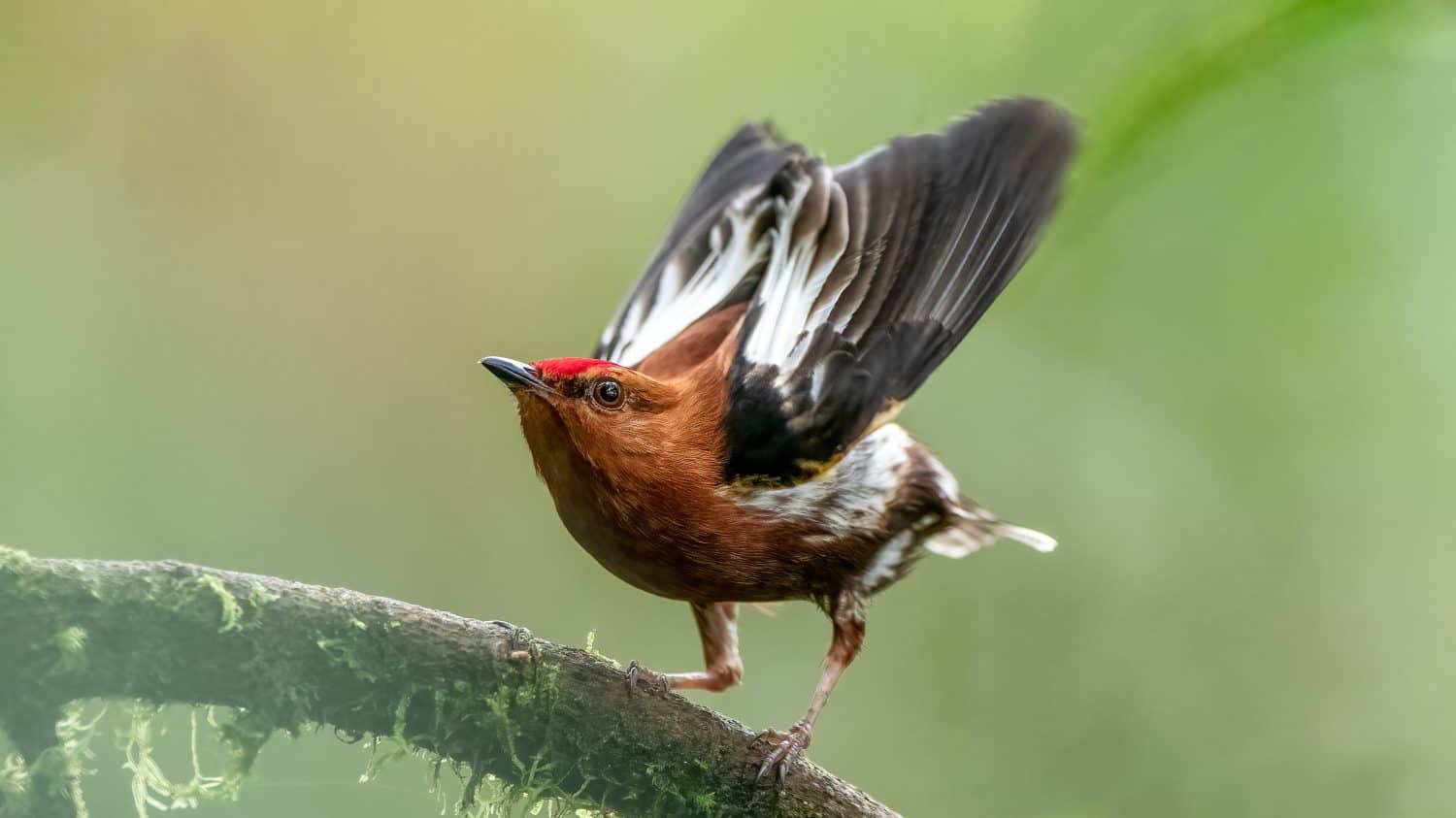
While most birds sing using a vocal organ called the syrinx, the male club-winged manakin (Machaeropterus deliciosus) does something truly unusual: it plays music with its wings. Hidden in the cloud forests of Ecuador and Colombia, this tiny bird produces a clear, violin-like “ting” without ever using its voice at all.
The club-winged manakin is the only bird out of nearly 10,000 species known to use this technique. Evolution has reshaped its feathers and wing bones over millions of years into a living musical instrument to impress its mate.
The Bird That Plays Its Wings Like a Violin
Many members of the manakin family produce unique, mechanical sounds during their elaborate courtship displays, but none of them do it quite like the club-winged manakin. Its secret lies in three highly specialized secondary wing feathers, which are unusually thick and rigid.

Club-winged manakins live in western Colombia and Ecuador.
©ibrahim kavus/Shutterstock.com
One feather acts like a tiny pick or violin bow, while the adjacent feather has a series of raised ridges, similar to a washboard. When the bird vibrates its wings, the pick- or bow-like feather scrapes across these ridges, producing sound through friction—a process known as stridulation.
The third, club-shaped feather, along with the ridged feather, acts as a resonator, helping to amplify the sound into the bird’s signature ringing note.
The Fastest Wing Performance You’ve Never Seen
When a female club-winged manakin lands near his display perch, the male launches into an energetic courtship performance of short flights, deep bows, and backward jigs. Then comes the grand finale.
The male flips his wings over his back and vibrates them approximately 107 times per second — still among the fastest limb movements ever recorded in a vertebrate. That’s faster than the wingbeats of a hovering hummingbird or the rattle of a rattlesnake’s tail.
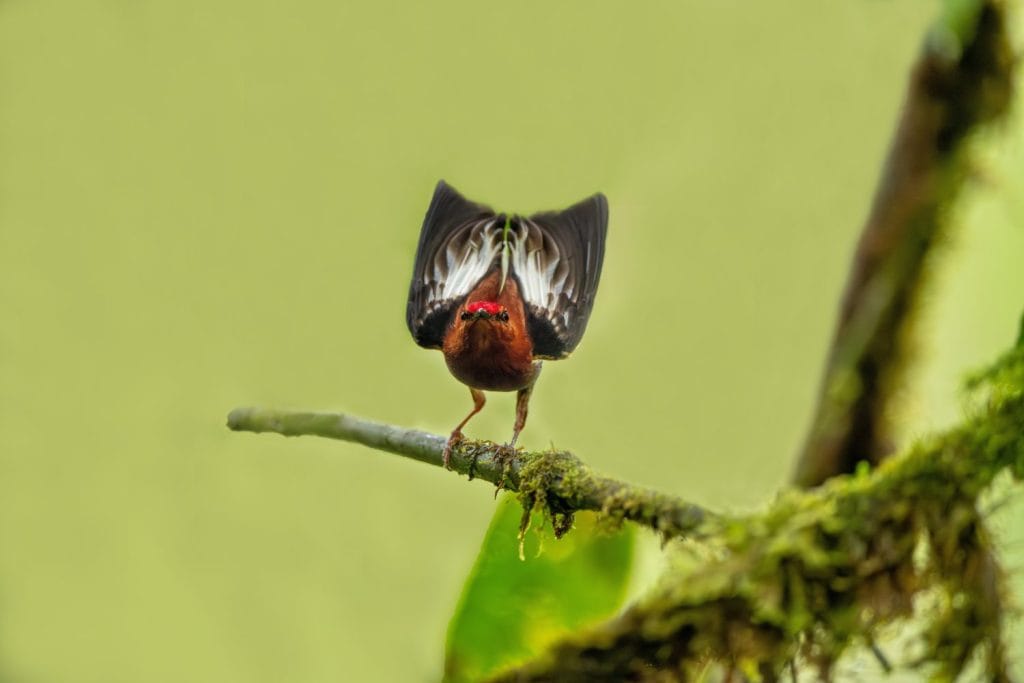
Male club-winged manakins have bold maroon-red bodies, scarlet heads, and unique white-edged wing feathers.
©ibrahim kavus/Shutterstock.com
However, that speed alone isn’t quite fast enough to produce a high-pitched note, especially one at around 1,500 Hz. Achieving that pitch requires the feathers’ unique construction. Each time the wings move back and forth, the specialized pick feather scrapes across seven ridges on the adjacent feather in both directions, resulting in 14 tiny strikes per wing movement.
Multiplying 107 wing movements per second by 14 strikes per movement results in about 1,500 vibrations per second. This frequency produces the bird’s unmistakable metallic “ting.” The rapid strikes cause the rigid feathers to vibrate together like a single acoustic instrument, turning tiny scrapes into one continuous, high-pitched violin note.
Built Like a Living Instrument
Producing that unique sound takes more than just special feathers. It has also required the club-winged manakin to fundamentally alter the typical rules of bird anatomy.
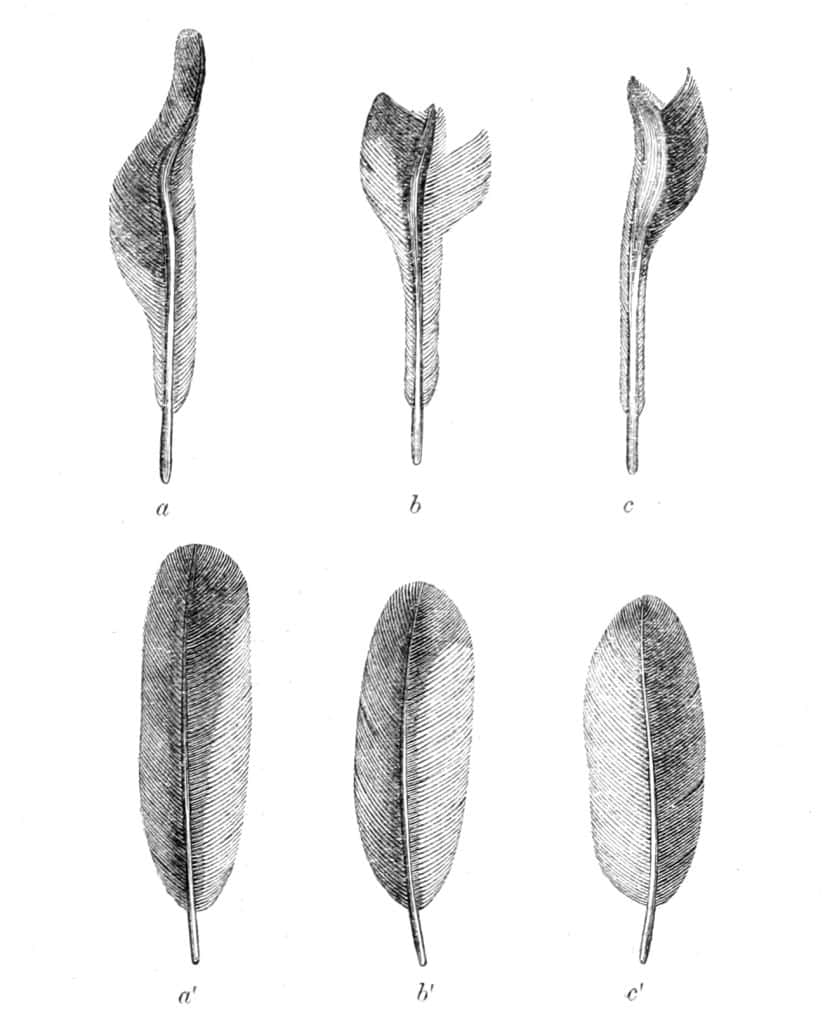
The male club-winged manakin produces its unique courtship sounds using three heavily modified wing feathers.
©Philip Sclater / Public domain / Wikimedia Commons – Original / License
Most flying birds have lightweight, hollow wing bones to reduce body weight and make flying easier. The male manakin is a rare exception. Scans show that its forearm bone (the ulna) is completely solid and heavily mineralized, containing roughly three to four times more mass than that of related species of similar size. The bone’s surface is also sculpted with deep grooves that firmly anchor the instrument-feathers in place. This adaptation allows the bird to control its incredibly rapid wing movements with precision.
This dense bone also serves an acoustic purpose. While a hollow bone would absorb vibrations and muffle the sound, the club-winged manakin’s dense ulna reflects that energy back into the feathers. Powered by the bird’s enlarged wing muscles, this rigid bone acts like a soundboard, amplifying those rapid scrapes into a loud, clear ringing note.
How Courtship Reshaped an Entire Skeleton
The club-winged manakin’s finely tuned musical process took millions of years to evolve. Early manakins likely made simple wing clicks to get attention. As females consistently chose males with louder sounds, sexual selection drove the transformation of their feathers—and eventually their bones—into dedicated musical instruments.
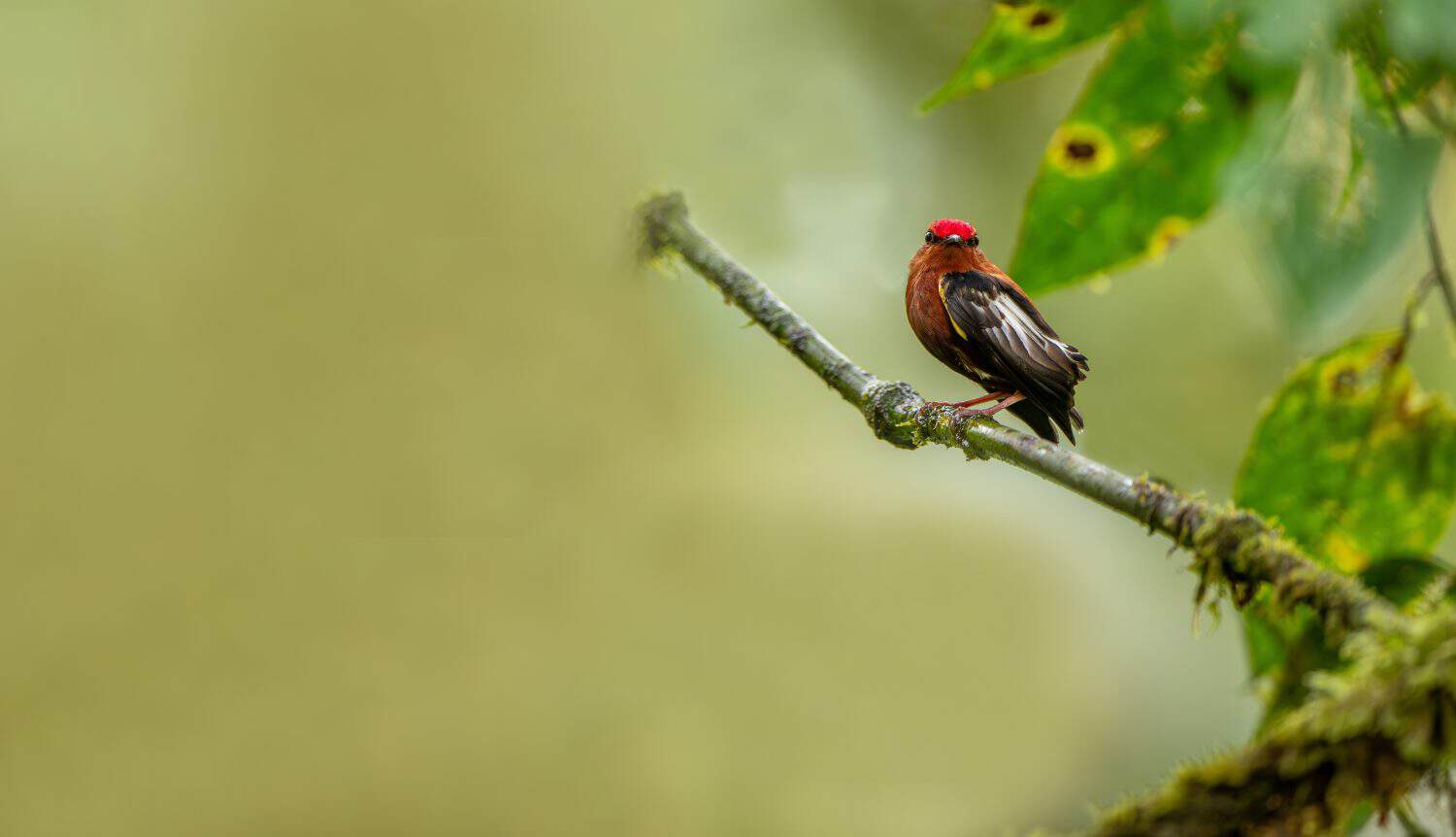
Club-winged manakins are found in foothill forests along the Pacific slope of the Andes.
©ibrahim kavus/Shutterstock.com
This resulted in a rather fascinating evolutionary trade-off. Heavy, solid bones and unusually shaped feathers make flying less efficient. However, those same features give males a better chance of attracting a mate. In 1871, Charles Darwin proposed that sexual selection could drive animals to evolve traits purely for mating, even if it hindered their basic survival. Few creatures illustrate that idea more dramatically than the club-winged manakin. Driven by the pressure to impress females, evolution transformed ordinary feathers into a musical instrument and even reshaped the entire wing skeleton—all so that one tiny bird could perform a song without ever using its voice.