
Quick Take
- Outside mating season, male purple sunbirds are dull in color, until they undergo an amazing transformation. See their off-season look →
- A specific biological trigger flips the switch from dull to dazzling, and the process involves more than just growing new feathers. Discover the hormonal trigger →
- The secret behind the iridescent glow is not pigment alone. It is a structural trick happening at a microscopic level. See the structural science →
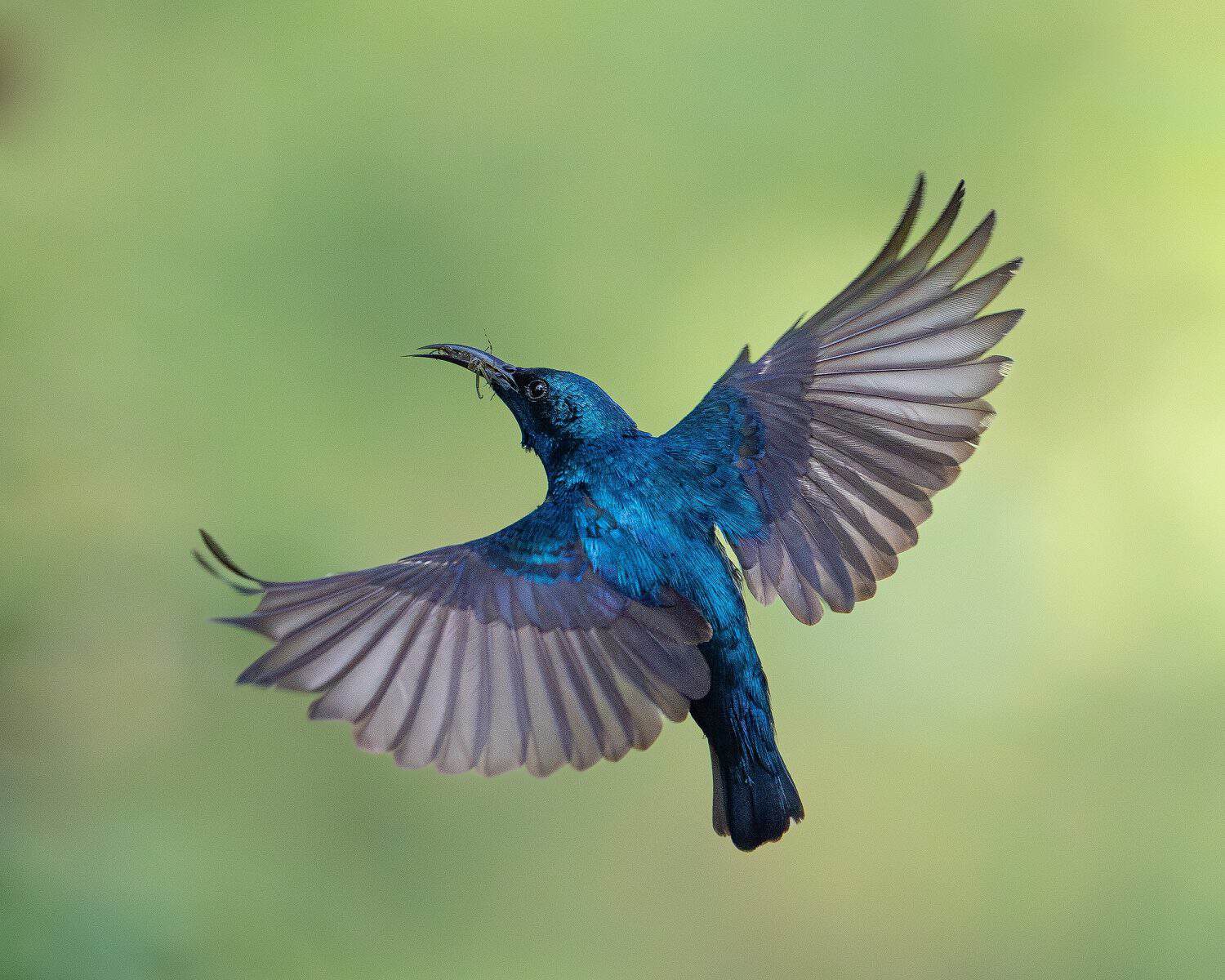
Birds have one of the widest varieties of appearances in all of the Animal Kingdom. With so many species, each offers unique colors and patterns. Today, we’re taking a look at the purple sunbird; males of this species become extra shiny to attract mates. This YouTube video by Wildlife SOS features a male purple sunbird flying in the sun as its feathers glisten under the light. Read here to learn more about why their feathers reflect so much light.
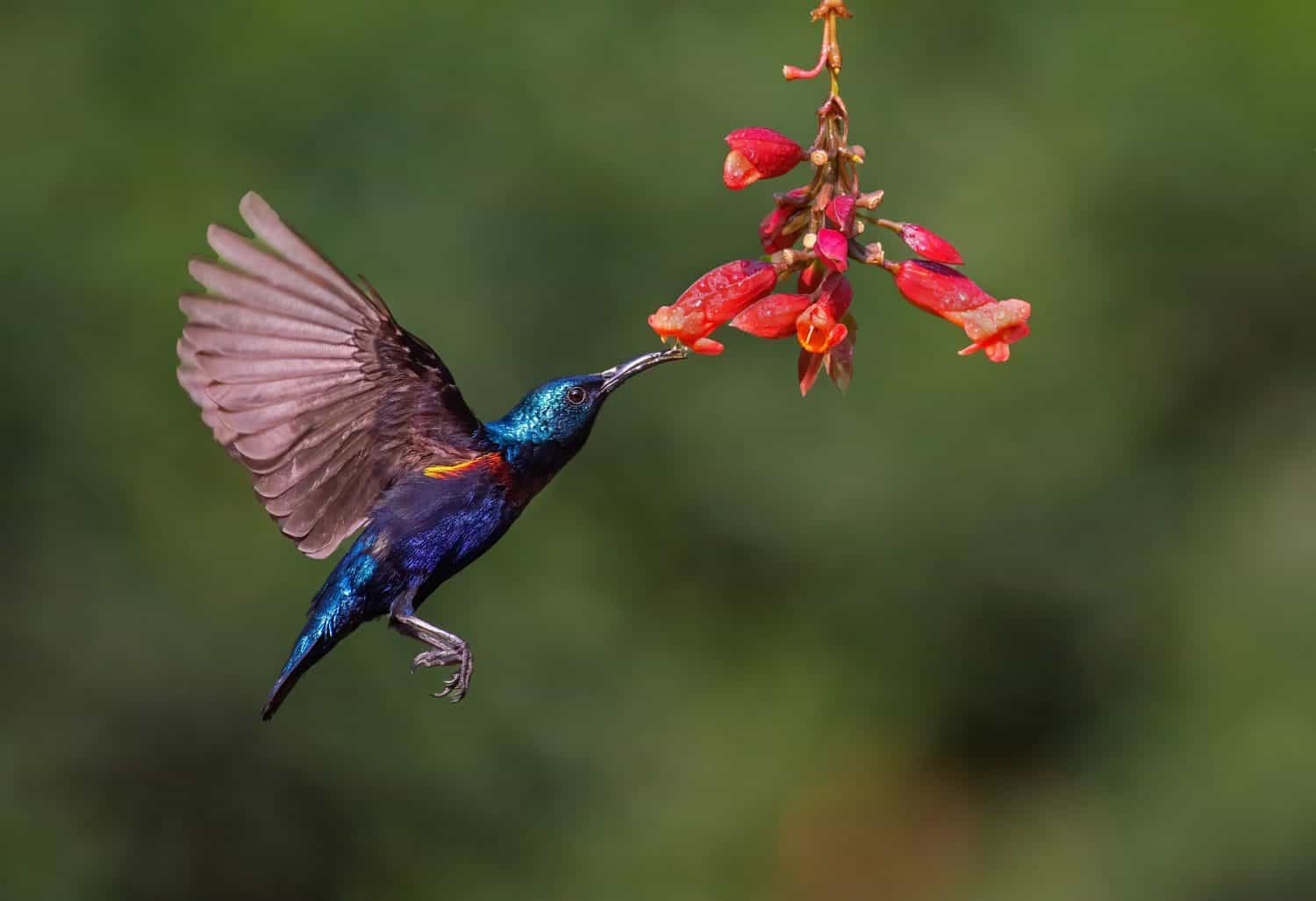
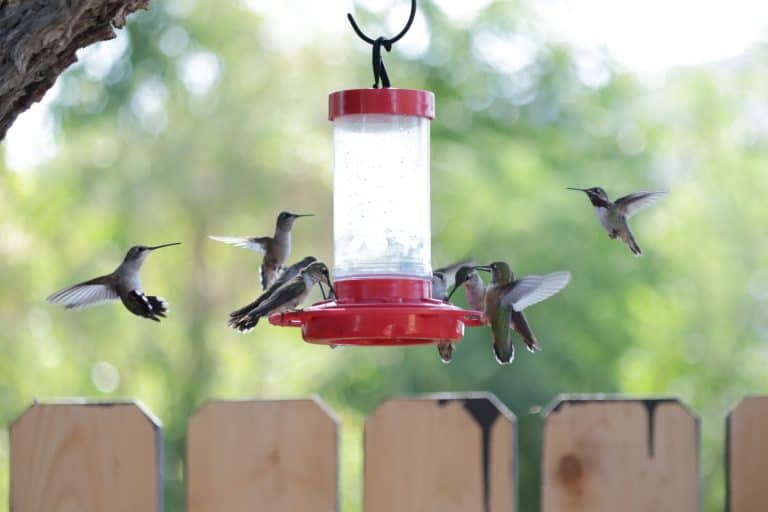
Similar to hummingbirds, purple sunbirds get their energy from nectar.
©DebashisK/Shutterstock.com
About Purple Sunbirds
The purple sunbird inhabits a tropical belt throughout the Indian subcontinent, including India, Sri Lanka, and Nepal. Their range also extends east into parts of Southeast Asia and west into the Arabian Peninsula. Within this region, they live in gardens, forests, or any other place that has an abundance of flowering plants. Like hummingbirds, purple sunbirds rely heavily on nectar for consistent energy. Just as their name suggests, they are a dark metallic purple color. The Sunbird family is named for their plumage that shimmers under the sun; in fact, they are one of the shiniest birds in nature. Male purple sunbirds use this beautiful trait to their advantage to attract mates, but how do they do so?
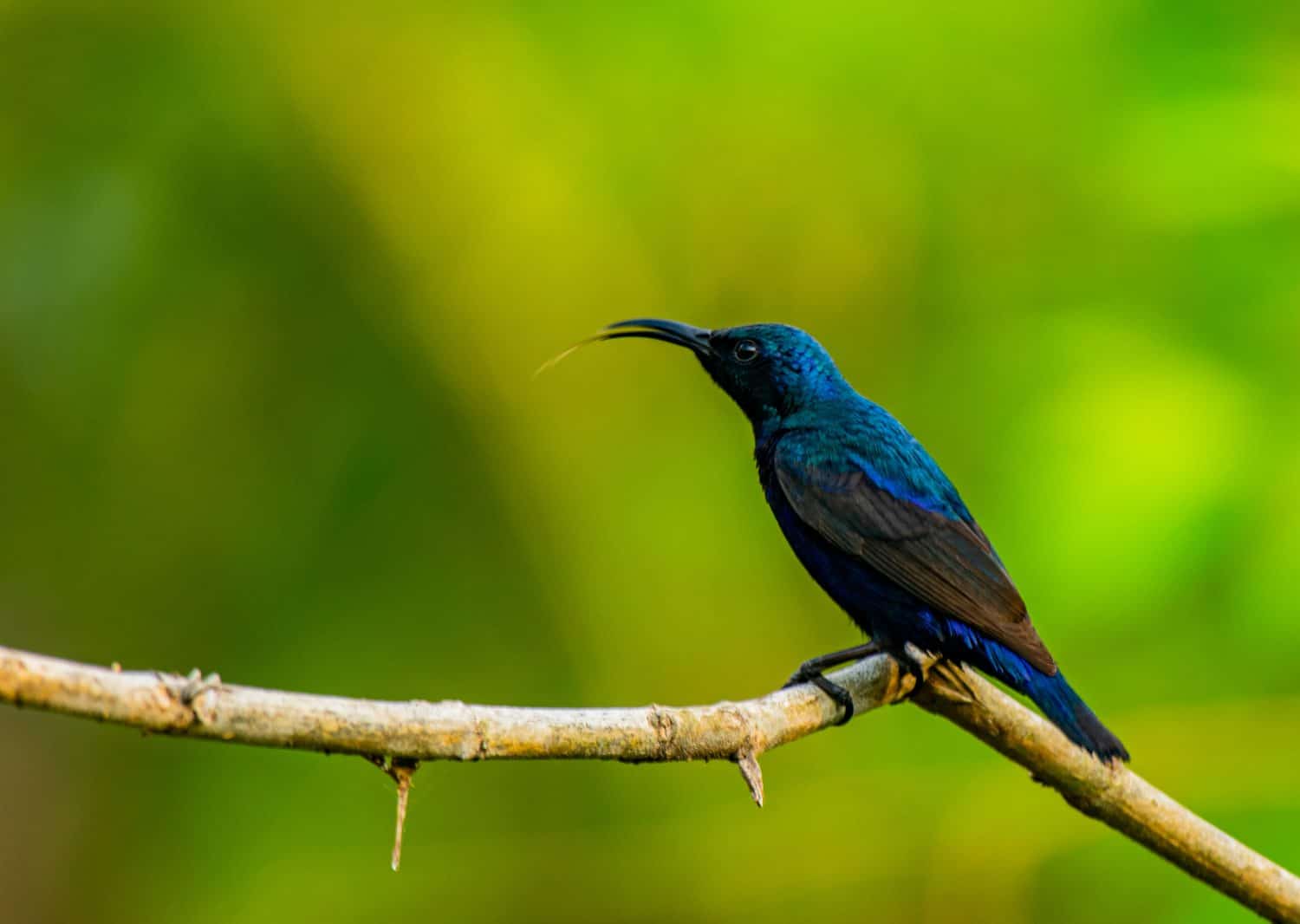
While their shimmering blue and purple colors are beautiful, it opens up males to potential predation.
©MIB24/Shutterstock.com
Why So Shiny?
During the mating season, male purple sunbirds purposefully make themselves even shinier to attract mates. In India, mating season starts in April and ends in June, while in other places it may start as soon as January. Timing relies on peak flowering conditions and the availability of nectar, which provides the energy needed for breeding and raising chicks. Outside of mating season, male purple sunbirds are duller in color and less shiny and may look similar to females, with a yellowish color and dark stripe. However, mating season highlights the species’ sexual dimorphism.
Males go through hormonal changes, specifically increases in testosterone, which trigger the growth of new feathers before the breeding season. As molting progresses, the dull feathers are slowly replaced by iridescent ones. Their shine is the result of a unique structure within the feathers, including microscopic keratin layers and pigment-containing melanosomes. The gorgeous feathers reflect light in amazing ways, creating the blue-purple shimmer seen in the video above. Bright and iridescent plumage signals good health and genetics to potential mates. Males also sing to females and fan out their tails, but their flashy colors are the real showstopper.