
Quick Take
- Kea parrots don't kill sheep the way you'd expect. The wounds are often minor, yet the sheep still die. See why sheep still die →
- This bird's taste for mutton wasn't instinct. Something specific triggered it, and the answer is stranger than you'd think. Discover what triggered it →
- A bounty wiped out 150,000 of these parrots, yet the species survived. Their unusual intelligence may be the reason why. Read about the bounty era →
- The biggest threat to kea today isn't hunters or habitat loss. Conservationists say it's something that could finish the job quietly. See today's quiet threat →
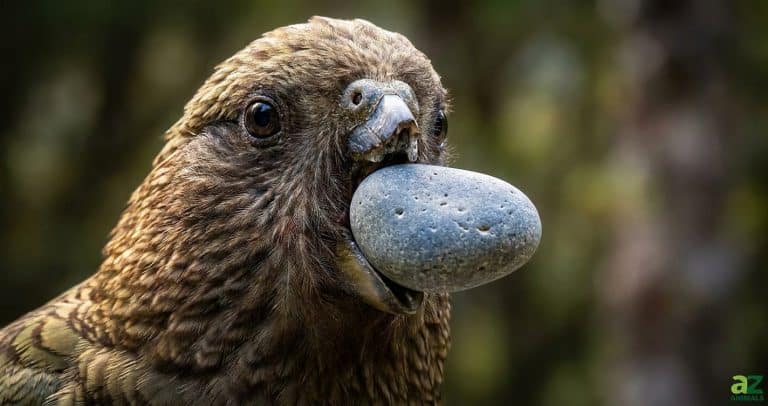
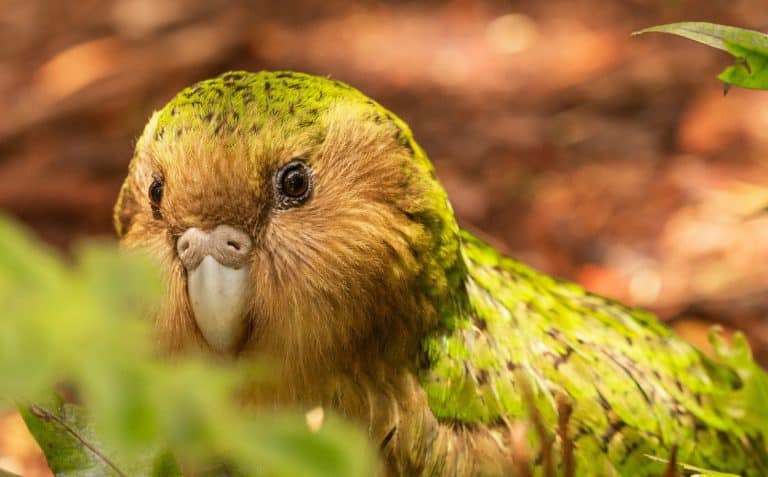
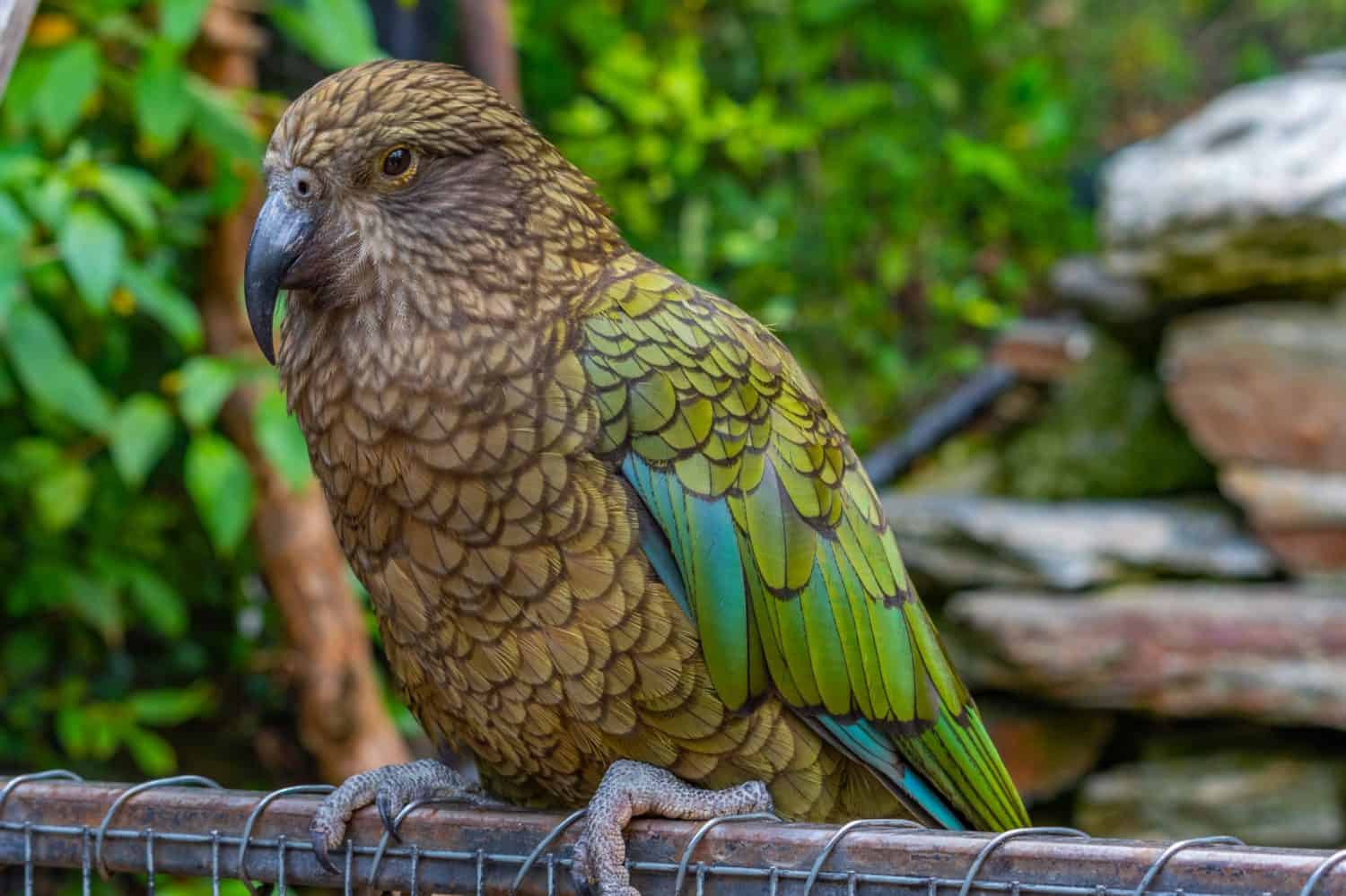
Parrots, by and large, are herbivores. They eat things like nuts, fruit, and nectar to sustain themselves. Occasionally, when these foods are scarce, some species turn to insects and grubs. However, one exception to this rule exists. A parrot in New Zealand prefers a diet of mutton. The kea parrot, known as the sheep-eating parrot, has caused ranchers problems for well over a century. As a result, the kea population has declined dramatically, leaving conservationists wondering whether the birds can avoid extinction.
Kea Parrots Kill Sheep for Their Fat
On New Zealand’s South Island, a population of sheep-eating parrots exists. Although they are the largest terrestrial bird in the country, measuring about 19 inches long with a wingspan of just over 3.2 feet, they are still significantly smaller than sheep. Yet, thanks to their incredibly strong and sharp beaks, these parrots can inflict severe damage.
As shown in the Animal Planet YouTube video, kea parrots target sheep at night. They fly onto the sheep’s backs and meticulously rip away wool near the lower back. The parrots do not choose this area by chance. They target the area directly over the sheep’s kidney region.
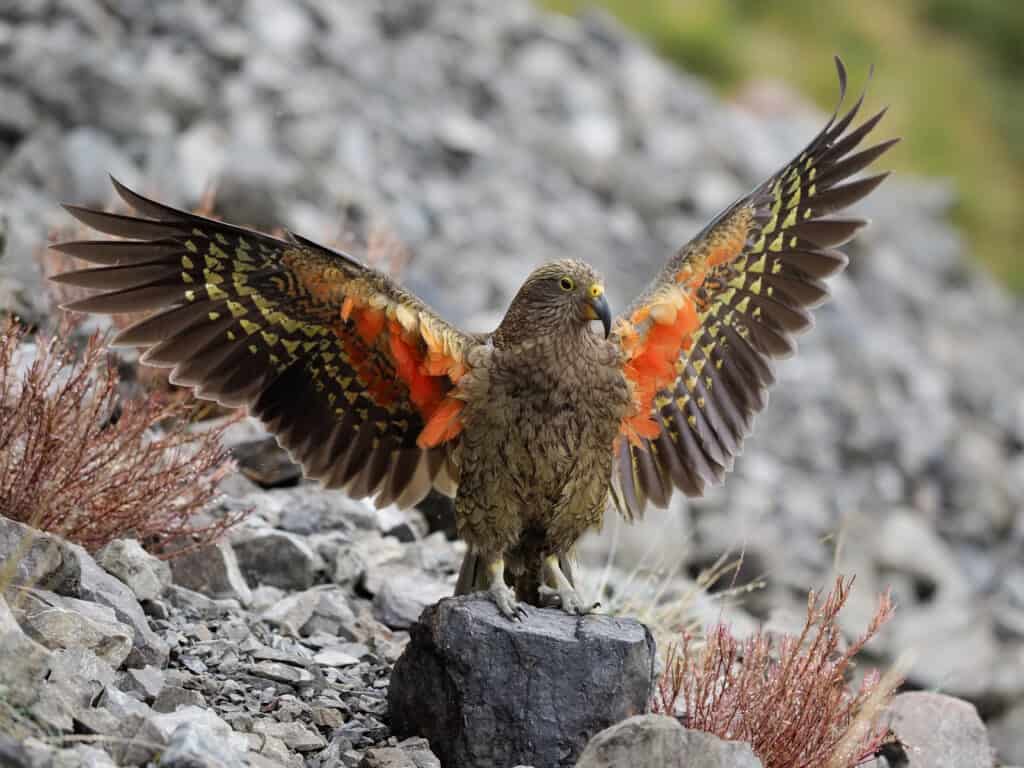
Kea parrots will land on sheep’s backs to remove wool with their sharp beaks and target fat around the sheep’s kidneys.
©Robert L. Sanson/Shutterstock.com
Kea parrots are drawn to the fat that surrounds the sheep’s kidneys. The fat provides the kea with the calories it needs to survive in an alpine environment. Unfortunately, the carnage the parrots cause can kill the sheep. This has led to problems between ranchers and parrots for decades.
Interestingly, before European ranchers brought sheep to New Zealand, kea parrots had no sheep to feed on. Instead, they followed a more traditional parrot diet. Only after they learned that sheep fat sustained them better did attacks on sheep become the norm.
It should be noted that kea parrots do not attack sheep year-round. They also enjoy an herbivorous diet when such food is available. They target sheep when food becomes scarce.
Wounds on Sheep Are Often Minor, so Why Do They Die?
The wounds that kea parrots cause are usually not directly life-threatening. This raises the question of why sheep die after a kea attack.
Should a sheep be able to escape the powerful bill of the kea parrot before it has reached the fat surrounding the kidneys, there will still be an open wound. Whether the wound is large or small, it can become infected. If left untreated, the infection can become septic. Therefore, blood poisoning becomes the reason the sheep die, rather than the wound itself.

Sheep in New Zealand do not die directly from attacks by kea. Things like sepsis or stress contribute to their deaths.
©Tori_Thetraveler/Shutterstock.com
Additionally, stress can lead to a sheep’s death. This occurs when kea parrots are relentless in their plucking of the sheep’s wool to get to the fleshy parts of its body. To escape the kea, sheep will run. Unfortunately, being so focused on escaping the attack from the kea parrot can leave the sheep disoriented. The disorientation has led to sheep falling off cliffs. Ultimately, the sheep perish from the fall, rather than from the wound.
Kea Parrots Have the Intelligence of a Four-Year-Old Child
Kea parrots are incredibly intelligent. What was once seen as mischievous behavior is, for kea, a thirst for knowledge via tactile investigation. People have described these parrots as neophiles, given their interest in all things new.
The desire to keep learning stems from the fact that kea parrots have the intelligence of a four-year-old child. Some say their intelligence may be even higher. Thanks to generations of kea passing down information, each generation becomes smarter than the last.
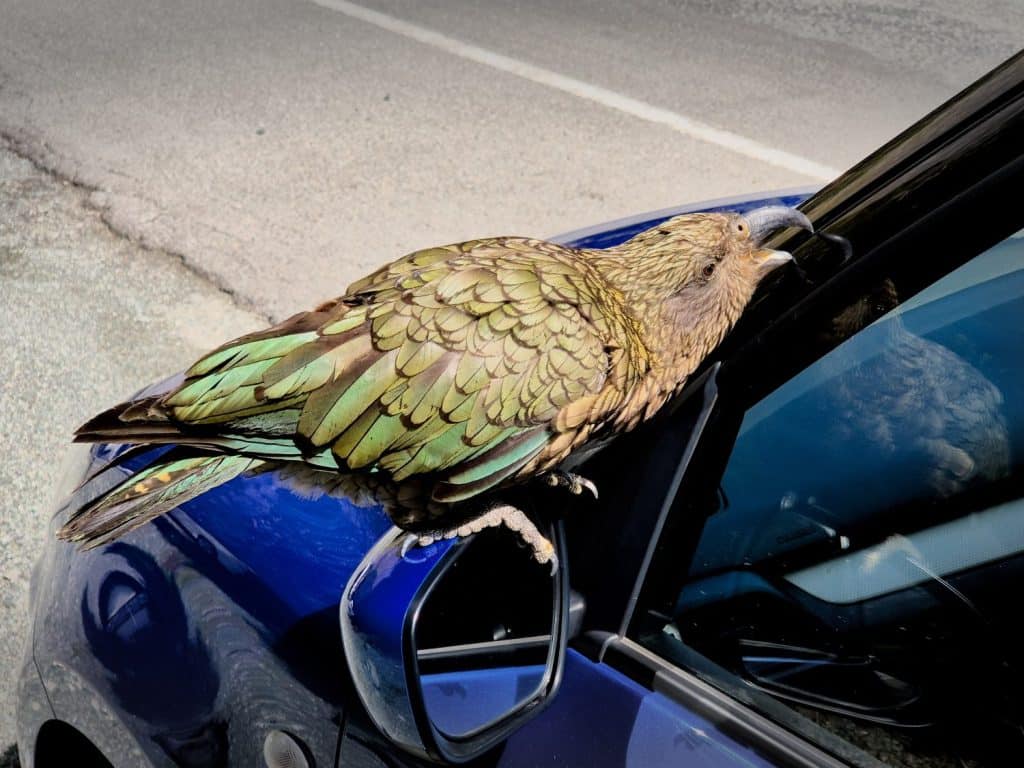
Kea parrots have a thirst for knowledge and an intelligence said to rival that of a four-year-old child.
©Immer Weiter/Shutterstock.com
What helps kea continuously learn is that they observe one another. This happens during both play and problem-solving. If a kea sees another member of its flock develop an easier way to solve a problem, it has no trouble abandoning the old method and trying the new one. They too will tackle problems using the more effective approach.
With kea parrots living up to 30 years in the wild, they can pass down decades of knowledge to younger generations. With an impeccable memory and the desire to continuously learn, kea parrots have overcome and avoided extinction, despite the odds being stacked against them in the past.
Kea Parrots Nearly Went Extinct
Kea parrots are endemic to New Zealand. They have been part of New Zealand’s alpine and forested regions for at least 10,000 years. During that time, they inhabited both the North and South Islands. While Māori first impacted their population by taking birds for their feathers, damage to the kea population became devastating only after Europeans settled in New Zealand.
It is indisputable that kea parrots target sheep for their fat. However, the extent to which the birds target livestock has been consistently exaggerated for decades. Beginning in the 1860s, people blamed the parrots for any sheep deaths occurring in New Zealand. To combat the parrots, a bounty was placed on their heads.
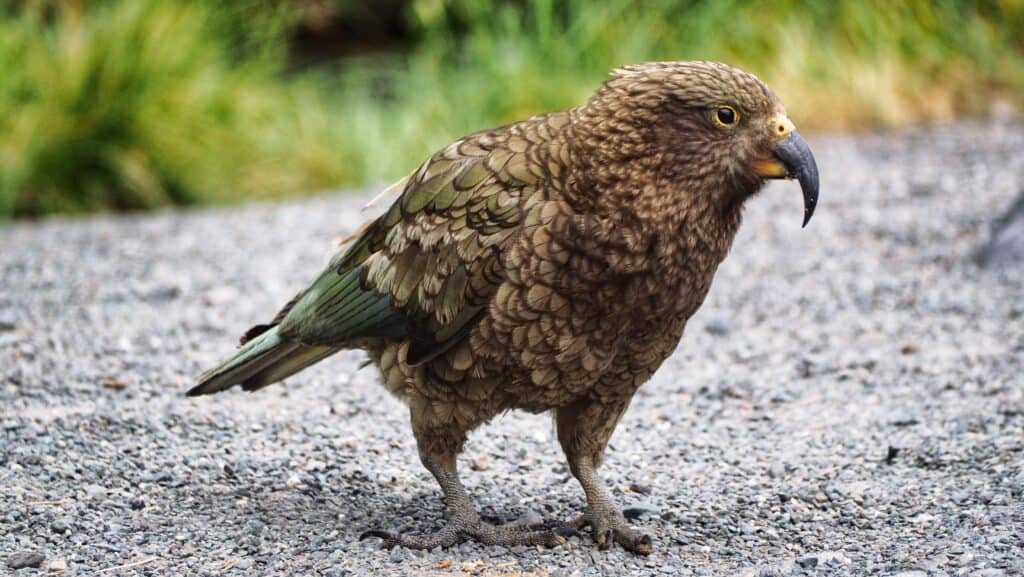
Kea parrots nearly went extinct after a bounty was placed on them in the 1860s.
©SAKARET/Shutterstock.com
For each kea killed, a person could receive a bounty of up to $75.00. By the time the bounty was outlawed in the 1970s, there were only a few thousand kea parrots left. Approximately 150,000 had been killed in just a century.
It was not until 1986 that kea parrots became a protected species. Today, it is believed that only 4,000 mature parrots remain. Unfortunately, the population continues to decline. This has led the IUCN to list the kea parrot as an endangered species in need of conservation to avoid extinction.
What Threats Do Kea Parrots Face Today?
Legislation passed nearly four decades ago aimed to save kea parrots from extinction. Despite this legislation, kea parrots still face threats that endanger their existence. Consequently, the future of these carnivorous birds remains unclear.
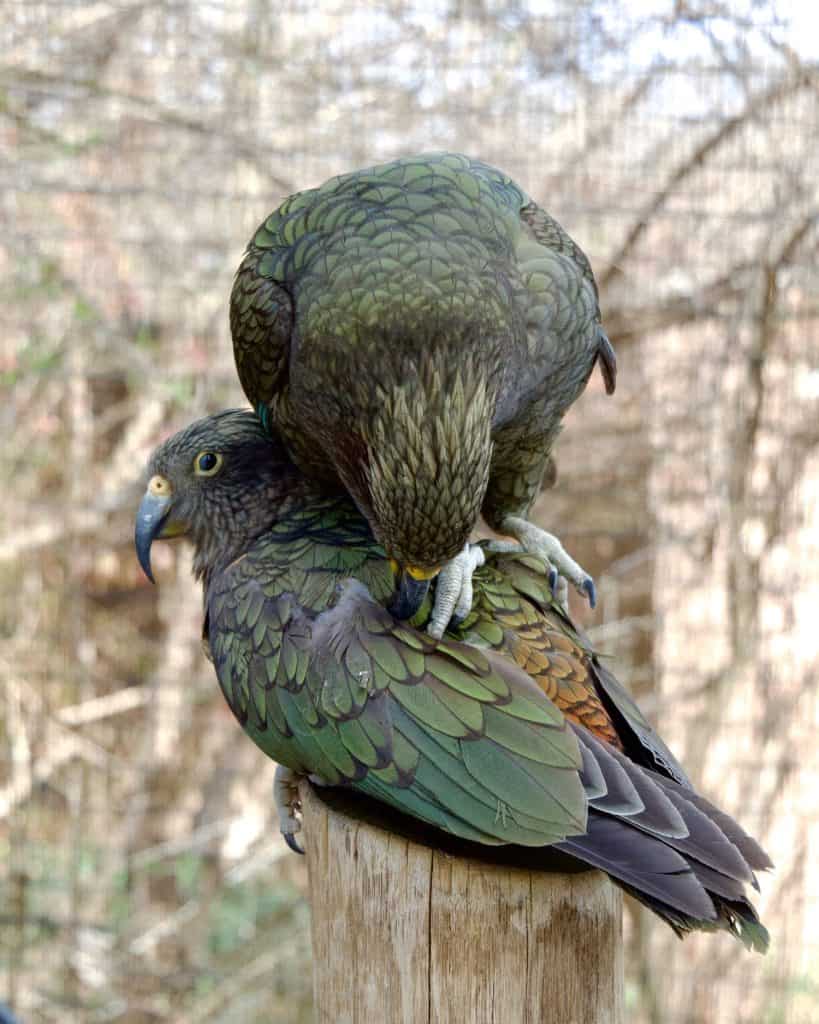
Kea parrots are protected, but they still face threats such as lead poisoning, avian flu, the illegal pet trade, and more.
©iampaese/Shutterstock.com
Some of the biggest threats kea parrots face today include:
- Predators being introduced to New Zealand
- Lead poisoning
- Poison baits and pest control
- Avian flu
- Climate change leading to more predators and less food options
- Illegal and legal removal of kea parrots from their habitat
- Illegal pet trade
Another massive issue that conservationists point to is the introduction of 1080, a pesticide used to kill rodents. It is believed that if 1080 continues to be used in the kea parrots’ habitat, it will be the biggest factor in eventually causing the parrots to go extinct.