
Quick Take
- The body of America's last native parrot was promised to the Smithsonian, but it vanished without a trace. The missing body story →
- The last breeding pair had 32 years together and still couldn't save their species, a failure whose reason is more bizarre than you'd think. Incas and Lady Jane's fate →
- The Carolina parakeet's own social instincts turned into the most efficient weapon against it. How social instincts backfired →
- Farmers eventually reversed course and let the parakeets roam free, though that change of heart came with a cruel twist. The farmers' change of heart →
Flocks of free-flying non-native parrots can be spotted in several areas of the United States. In California alone, there are at least a dozen different species of naturalized parrots. Amazons are thriving in Florida and have established populations in New York, while macaws are primarily thriving in Florida and Texas. The fate of the U.S.’s native parrot, however, is tragic. The last Carolina parakeet died at the Cincinnati Zoo on February 21, 1918, having been housed in the same enclosure as Martha, the last Passenger Pigeon, who died in September 1914. We throw some light on this tragic episode of U.S. ornithology and examine what lessons we can take from it to protect our precious bird species.
The Sad Death of the Last Carolina Parakeet
The very last Carolina parakeet was called Incas, and he was purchased by the Cincinnati Zoo in 1885 along with 15 other birds for $40, which is around $950 in today’s money. The aim was to try to save the declining Carolina parakeet population. He was paired with a parakeet called Lady Jane, forming a 32-year-long bond. He died just over a year after she did. The cause of his death was never certain. It may have been simply old age, he may have had an illness, or he may have been heartbroken over Lady Jane’s death.
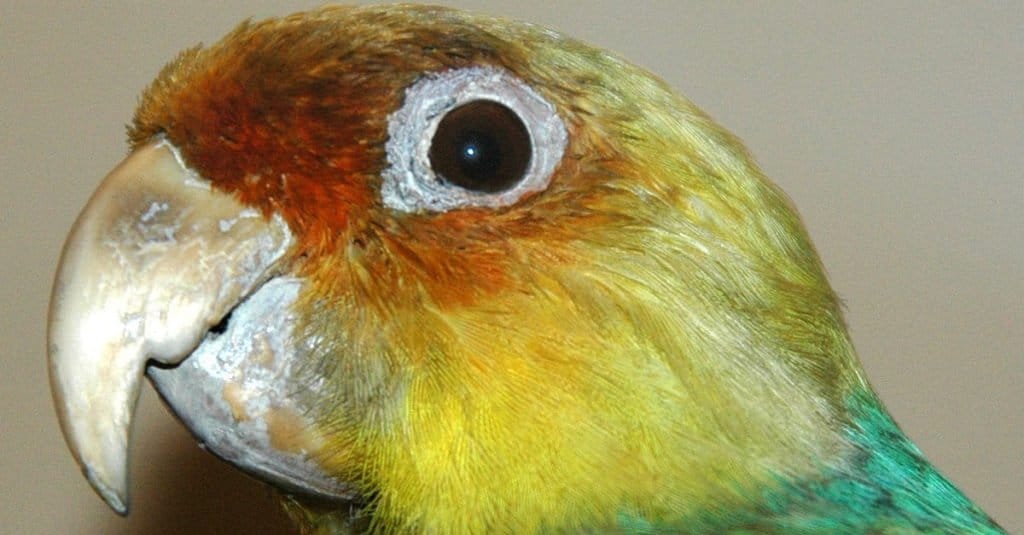
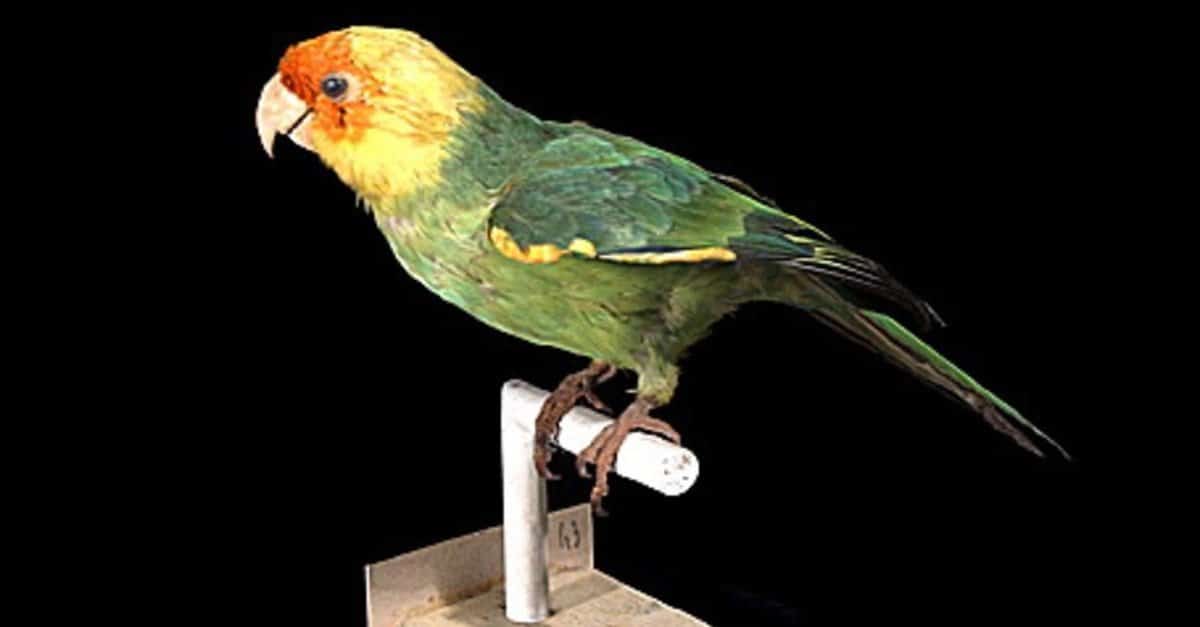
The Carolina parakeet was a colorful, medium-sized parrot.
©James St. John, CC BY 2.0, via Wikimedia Commons – Original
Adding to the mystery, Incas’ body has gone missing! It was promised to the Smithsonian Museum, but it never arrived. While the body of Martha, the Passenger pigeon, arrived safely and is still on display, Incas has never been found! His body may have gone missing in transit, or perhaps it is still languishing in the Cincinnati Museum of Natural History, waiting to be discovered.
Sadly, Lady Jane and Incas’ poor parenting skills did not help the species. Despite being together for over 30 years, they failed to produce a single surviving offspring. Lady Jane laid many eggs. However, before they hatched, the parents kicked them out of the nest! This is not unheard of in parrot species, and experts think they may do it because of inexperience at nesting, improper nest depth, or stress. It may also be because they simply find it fun. That said, the zookeepers could have tried to rescue the eggs and incubate them artificially, but there is no record of this ever being done.
What Was the Carolina Parakeet Like?
There were actually two subspecies: Conuropsis carolinensis ludovicianus and Conuropsis carolinensis carolinensis. These brilliantly colored, medium-sized parrots gathered in flocks of around 300 birds. Their preference was for old, swampy forests, and they were once widespread across eastern North America, from the Gulf of Mexico all the way to southern Ontario.
The Demise of America’s Last Parrot
The Carolina parakeet is one of the four forest-dependent bird species to go extinct within the continental United States since the arrival of Europeans. Historically, it had a range stretching from the mid-Atlantic coast to Nebraska and south to Florida.
They were declared extinct in 1939. Records of the final wild sighting of a Carolina parakeet vary, with some reports stating it was 1904 and others saying 1910.
Some bird watchers claimed to have seen them in the wild as late as the 1930s and even into the 1950s, but these were largely dismissed as sightings of non-native parrots. Some new research, however, has revealed that these sightings may have been accurate! The two subspecies populations went extinct at different times, around 30 years apart.
Targeted by Farmers
European settlers cleared the forests to make way for homes and agricultural settlements. This was not an issue for the adaptable and gregarious birds, who were quite happy to live alongside humans. Sadly, humans were not willing to live with them. The large, noisy flocks upset the settlers, and they began to shoot the birds for sport. The fact that the birds had a diverse diet should have made them more robust, but when they started feeding on cultivated fruits and crops, it brought them into further conflict with humans. When one bird was shot, the others would gather around it, making them easy targets for hunters.
Fashion Victims
At the same time, it became fashionable for middle-class women to wear feathers as ornaments on their clothing. The so-called ‘plume boom’ resulted in thousands of parakeets being slaughtered. By the early 1900s, the Carolina parakeet was a rare bird, with the last confirmed wild populations persisting in Florida.
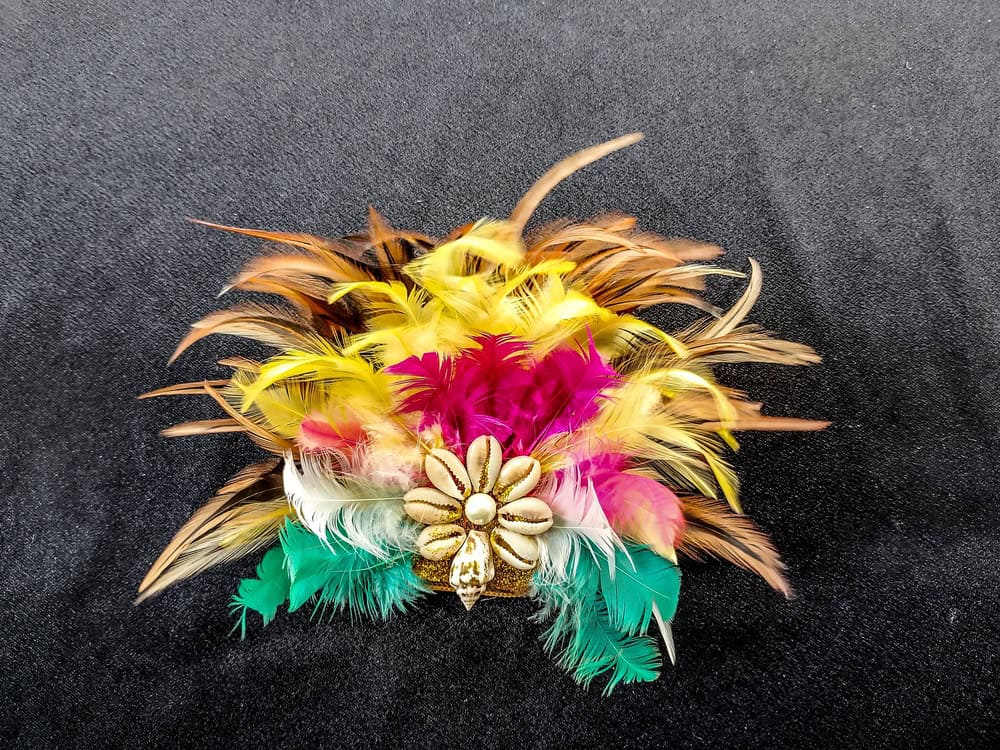
Feathers as ornaments were popular in the late 1800s.
©yopie_popoy/Shutterstock.com
In a dramatic change of heart, farmers decided that the parakeets were useful because they ate cockleburs, an invasive and poisonous plant. The parakeets were allowed to roam freely once more, but by then it was too late.
Their final decline is still a matter of debate because the remaining Florida population seemed healthy. Yet, suddenly, they disappeared. It’s speculated that this may have been because of competition for food with other birds, habitat loss, competition with introduced European honey bees for nesting and roosting sites, or disease.
What Can We Learn From This?
The story of the Carolina parakeet extinction has important lessons for parrot conservation today. If we can understand what happened to them, we may be able to protect the extant parrot species alive today. This is important because parrots are among the most threatened bird orders. Around 43 percent of them are listed as near-threatened or worse by the IUCN. At the same time, they are considered keystone mutualist birds, meaning they provide many important ecosystem functions. Therefore, the loss of parrots would contribute to ecosystem instability. We must do all we can to save them from the same fate as the poor Incas and their kind.