
Quick Take
- Bull terriers are stubborn by nature, but the secret to getting them to actually want to train has nothing to do with discipline. See how to motivate them →
- Most bull terrier owners who struggle with bad behavior are solving the wrong problem entirely. Find the real fix →
- One common training shortcut with bull terriers does not just fail. It can actually make aggression significantly worse. Avoid this aggression mistake →
If you’ve just adopted a bull terrier, you might wonder how to train them. Bull terriers require training because their high intelligence, physical strength, and stubbornness make structured guidance necessary to prevent behavioral issues. Because they get bored easily, training should involve patience, short and engaging sessions, and high-value rewards. Early and consistent socialization and obedience training are essential to manage their natural intensity and ensure they grow into well-adjusted, well-behaved companions.
Are Bull Terriers Easy to Train?
Bull terriers are independent dogs, which can make training difficult. They can be stubborn, especially if you don’t approach training in the right ways.
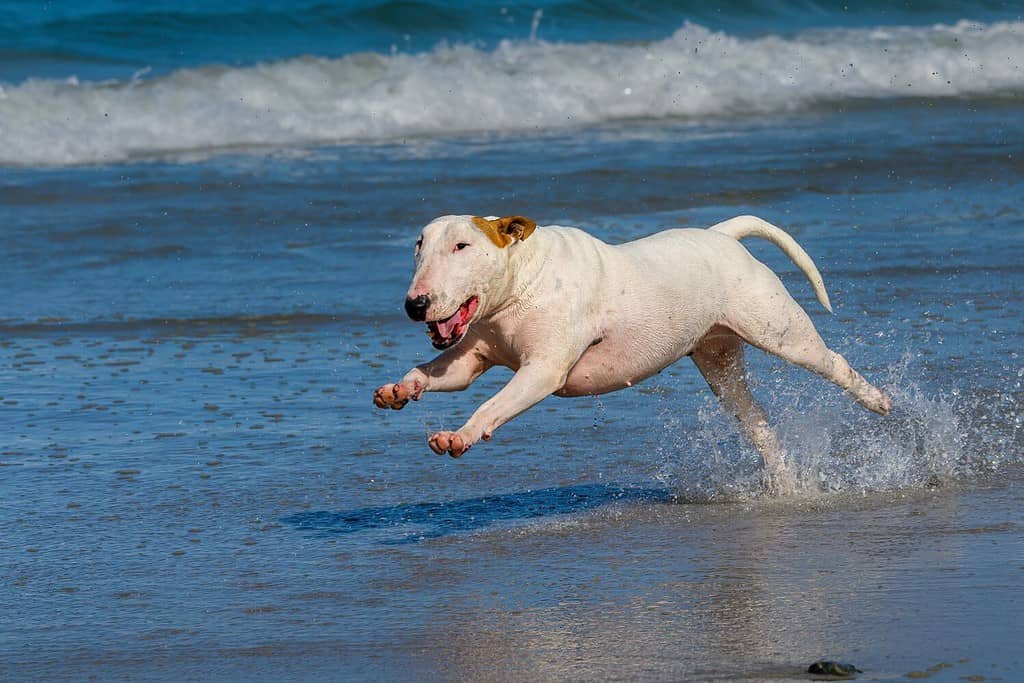
Bull terriers are playful dogs that do best when training is fun.
©Robby Holmwood/Shutterstock.com
Make training sessions fun and rewarding, and your bull terrier will always want to come back for more. It might take some creativity and some high-value treats, but you can make them want to participate.
How do You Discipline a Bull Terrier?
When training a bull terrier, focus on rewarding good behavior, redirecting misbehavior, and searching for the root of any behavioral problems.
For example, if your bull terrier is urinating in the house, have you been to the veterinarian to rule out medical problems? Are there any stressors in your dog’s life that can be eliminated or reduced? Have you tried going back to housebreaking basics, bringing them outside every hour or so, and using constant supervision?
Another way to prevent misbehavior is through management, which means changing our actions to prevent our dogs from having the opportunity to misbehave.
f your bull terrier jumps up on guests, using baby gates to block their access to the front door or keeping your dog in a playpen until they’re a bit calmer can help.
Of course, this process also involves giving your bull terrier treats for their good behavior, even if you are the one guiding them. This helps the dog associate the desired behavior with receiving a treat.
Socializing Your Bull Terrier
It’s important to expose your bull terrier to a wide variety of experiences at a young age. This includes different types of people, environments, animals, and sounds.
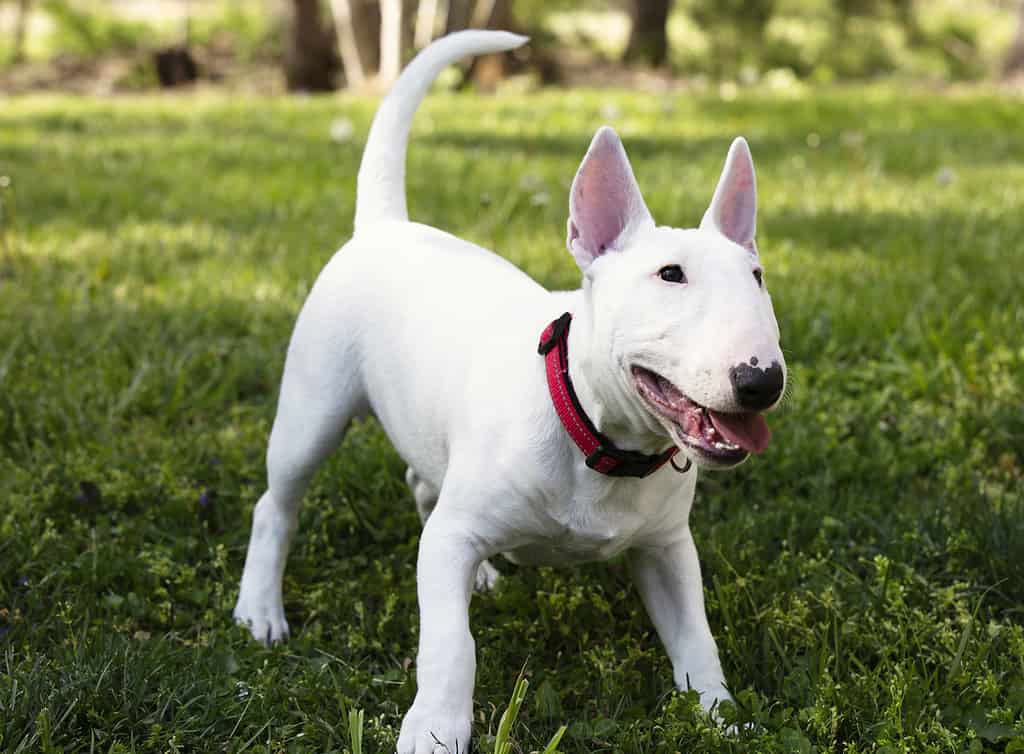
The best way to raise a well-adapted adult bull terrier is to socialize them well as a puppy.
©iStock.com/cindygoff
Bull terriers can be dog-selective or aggressive, but with proper socialization and training from a young age, many can learn to get along well with other dogs.
However, introductions should always be done carefully and supervision is recommended. It’s important to learn dog body language, take any introductions slowly, and keep your dog separated from others when necessary.
Basic Cues for Bull Terrier Puppies to Learn
Training should start as soon as your bull terrier comes home. Begin with basic cues and house training.
Make sure to train at your dog’s pace and avoid rushing the process. Have patience and remember that learning takes time.
Here are some basic cues to start you on your training journey:
- Sit
- Stay
- Down (to lie down)
- Leave it / Drop it
- Recall (coming when called)
- Wait (for their food dish, before darting out the front door, etc.)
- Off (when jumping on people)
- Leash manners
Common Bull Terrier Training Mistakes
Bull terriers are intelligent, independent dogs that require a thoughtful and consistent training approach. To ensure successful training that will result in a well-adjusted dog, avoid these training pitfalls:
- Not meeting your dog’s exercise and mental enrichment needs. A dog with untapped energy and boredom isn’t going to do well during training.
- Training your bull terrier to be aggressive. Your bull terrier will likely already have strong guarding instincts and doesn’t need to be taught to defend you or your home. Training for bite work or guarding can go terribly wrong, especially if you don’t have experience.
- Using aversive training tools or methods. Aversive training methods promote fear and aggression and worsen your relationship with your dog. They also have a high risk of fallout, which is when the poor behavior returns, often worse than before.
- Setting them up for failure. Many people expect too much from their dogs without proper training. For instance, any pup is going to eat food left out on the coffee table. To set your dog up for success, keep temptations well out of reach.
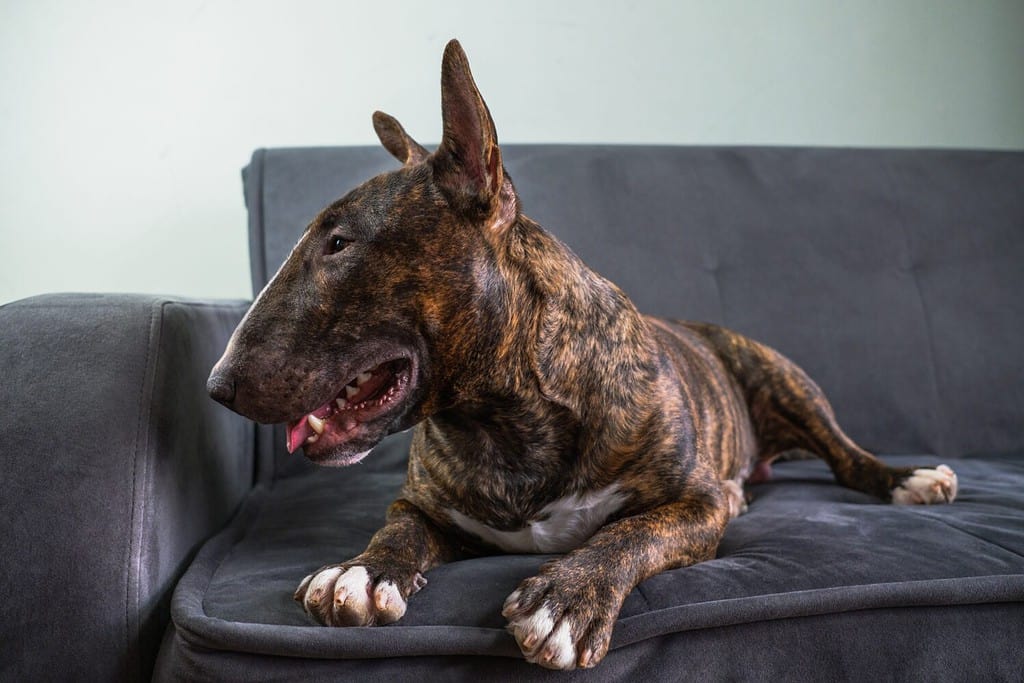
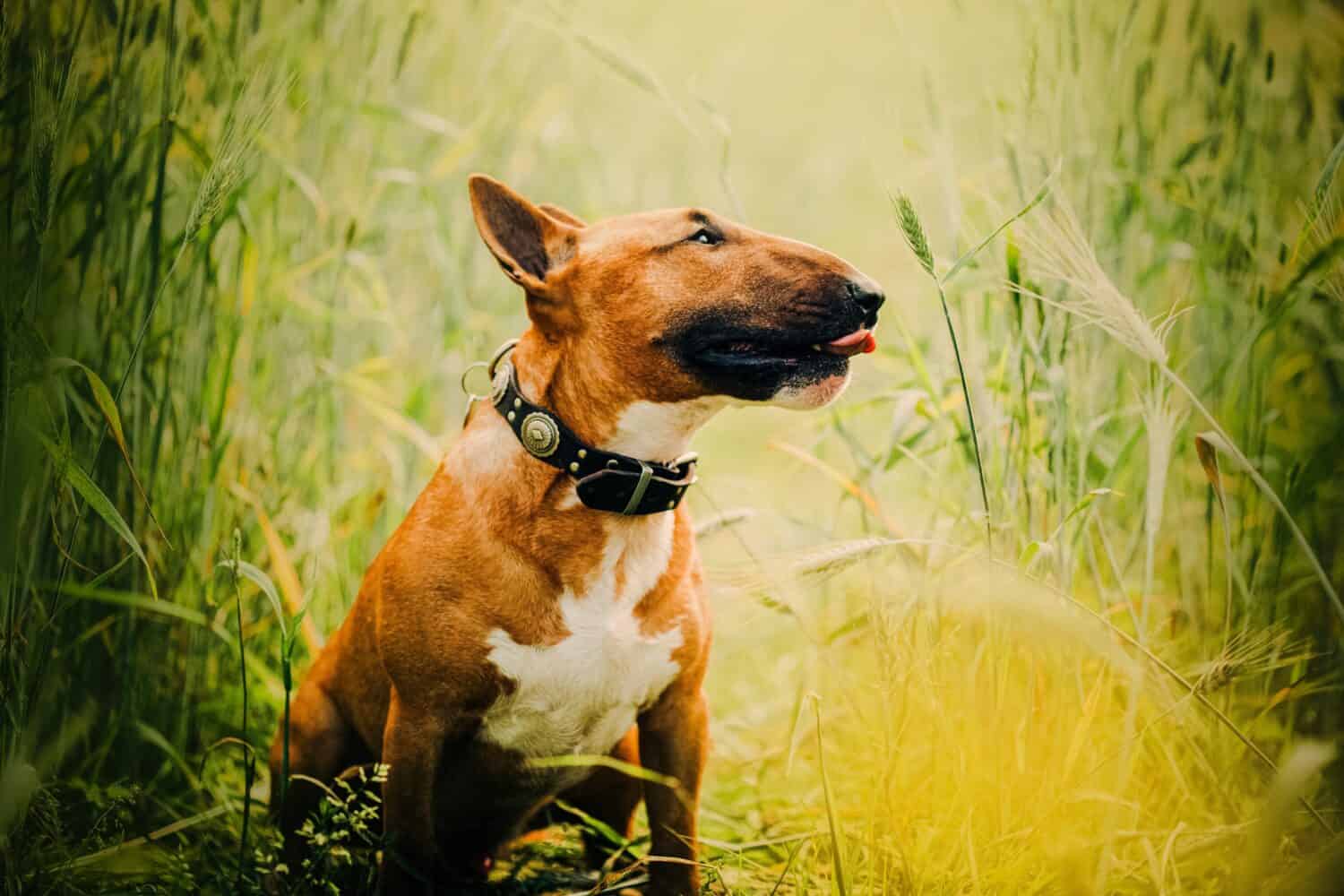
With strong dogs such as bull terriers, it’s extra important to avoid common training mistakes and raise a well-behaved pooch.
©Georgiy M/Shutterstock.com