
Quick Take
- Pigs and humans share more physiology than most people realize, a fact that explains exactly what happens when a pig raids fermented feed. See the physiology →
- 'Teacup pig' sounds adorable, but the adult reality catches most new owners completely off guard. Learn the adult reality →
- Corn is one of the most common ingredients in pig feed, a fact that makes this pig's misadventure a lot easier to understand than it first appears. Explore pig diet basics →
- Some foods that pigs will eagerly eat can seriously harm them, and some of these foods might surprise you. See harmful foods to avoid →
Viewer discretion is advised for strong language. This little pig appears to be sleeping off quite an adventure. The clip is presented as showing a pig that got into fermented corn, although the video alone cannot confirm what the animal ate or whether it was actually intoxicated. Fermentation can produce ethanol when yeast breaks down sugars, including sugars derived from corn. There is even a traditional Andean drink called chicha, which can be made by fermenting corn. If this pig really did consume fermented corn containing enough alcohol, the drowsiness seen in the clip would be consistent with signs that have been documented in ethanol-intoxicated pigs. Hopefully, the little guy recovered without any lasting problems.
Watch the Action Now
What Exactly Are Micro Pigs?
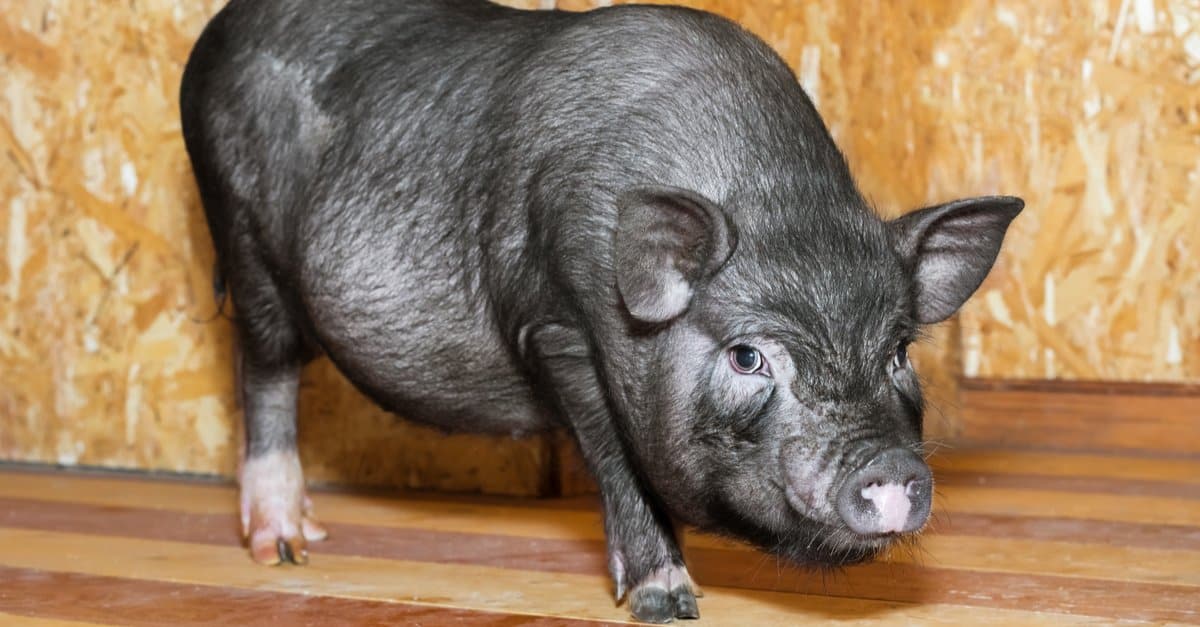
Terms such as micro pig, mini pig, and teacup pig are commonly used for smaller domestic pigs, but they do not describe one specific breed. Miniature pigs include Vietnamese potbellied pigs and several other breeds and lines. Purpose-bred miniature swine have been developed for biomedical research since the late 1940s, with the Minnesota minipig developed in the United States in 1949. Vietnamese potbellied pigs arrived in the U.S. pet market in 1985 and later became popular as companion animals.
Their adult size can vary considerably. Vietnamese potbellied pigs typically weigh about 70 to 150 pounds, although some can reach around 200 pounds. Other miniature pig breeds can be smaller or larger, and pigs marketed as tiny “teacup” pets do not necessarily stay tiny as adults. Mini pigs can live indoors and can be trained to use litter boxes. Local zoning and animal ordinances may restrict pigs as pets in some parts of the United States and Canada. Miniature pigs have also been used in animal-assisted interventions, including rehabilitation programs.
Do Pigs Get Drunk?
Pigs share a number of anatomical and physiological similarities with humans, which is one reason they are widely used in biomedical research. They can also become intoxicated by ethanol. Documented signs of acute alcohol intoxication in pigs include poor coordination, stumbling, falling, drowsiness, and deep sleep. While a stumbling or sleepy pig may look amusing at first, significant alcohol exposure can be dangerous. There are reports of pigs becoming intoxicated after getting into fermented feed. Researchers have also studied pigs fed remnants from the production of the Japanese distilled liquor shochu. Those pigs showed lower levels of a stress marker and some differences in meat quality, but importantly, they were fed the remnants left after distillation rather than alcohol itself.
What Do Domestic Pigs Normally Eat?
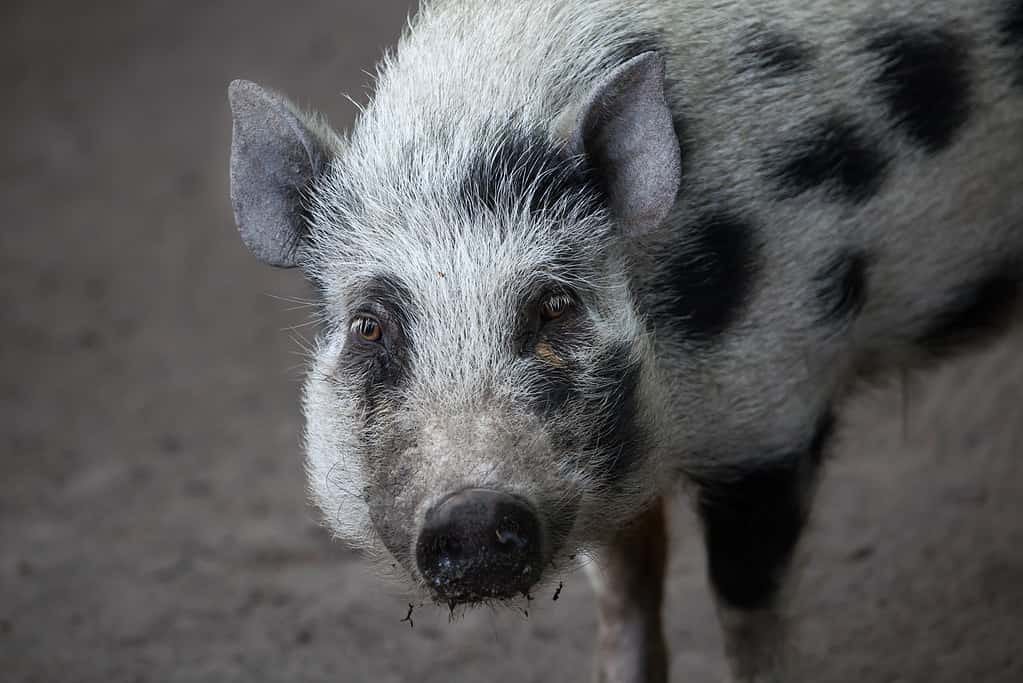
Domestic pigs will eat just about anything!
©iStock.com/wrangel
Domestic pigs are enthusiastic eaters, but that does not mean everything they are willing to eat is good for them. Pigs are omnivores and can consume both plant and animal material. Depending on their environment, their diet can include grasses and other vegetation, fruit, roots, grains, insects, eggs, and other animal matter. Pet miniature pigs should receive a balanced diet formulated for pigs rather than simply eating table scraps or whatever they can find.
On farms, pigs are typically fed carefully formulated diets designed to meet their nutritional needs at different stages of growth. Corn and soybean meal are two of the most common ingredients in U.S. swine diets, with corn supplying much of the energy and soybean meal providing protein and essential amino acids. Other grains, including barley and wheat, can also be used. The exact ration depends on factors such as the pig’s age, weight, and stage of production.
Pigs should not be allowed access to alcohol, moldy or spoiled feed, toxic plants, or other foods that could make them sick. Large quantities of oak leaves or green acorns can also cause poisoning. For pet pigs, the safest approach is a nutritionally balanced pig feed supplemented with appropriate vegetables and other foods recommended by a veterinarian.