
Quick Take
- Big tracks in the mud or snow don't automatically mean elk. A specific set of clues separates them from other large deer, and most people overlook the most obvious one. See the distinguishing features →
- Elk are social animals, which means the tracks they leave behind create a problem that makes field identification far trickier than you'd expect. See how herds complicate tracks →
- The way an elk eats reveals its presence just as clearly as its footprints, and it all comes down to a gap in their anatomy most people don't know about. Spot the ragged feeding signs →
- For just a few weeks each fall, bull elk leave behind a completely different kind of evidence that has nothing to do with their feet. Discover fall rutting evidence →
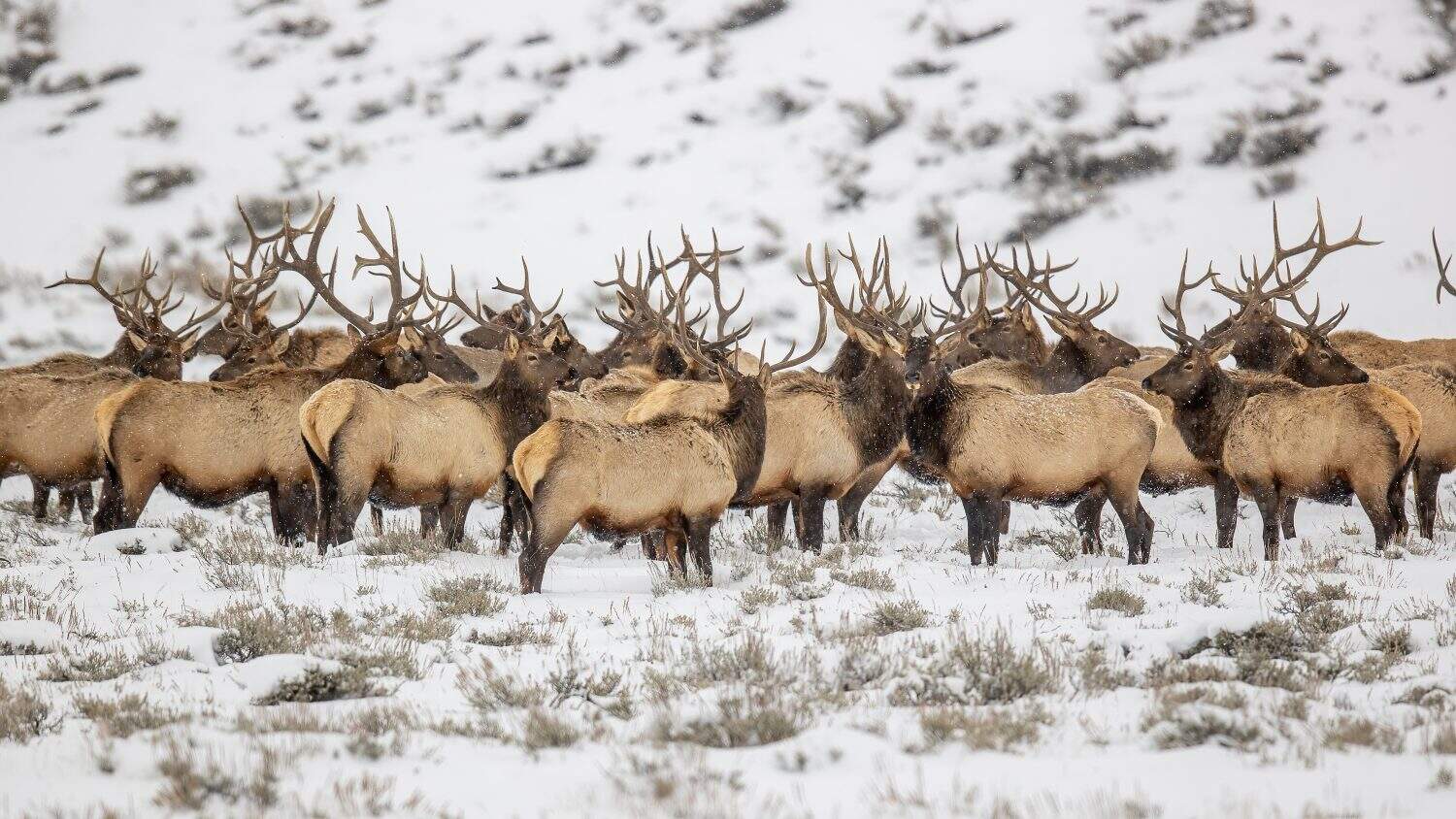
One of the largest members of the deer family is the elk. They are very similar to deer when it comes to their tracks and signs. However, elk have larger hooves, larger scat, and longer strides. Aside from their tracks, elk leave other signs of their presence. Read on to learn how to identify elk tracks in snow and mud, and discover other signs that elk have been in the area.
Elk Tracks
Elk have rounded prints with two toes on each foot. They make deep impressions in the snow and mud due to their weight. For example, in Yellowstone, bull elk can weigh around 700 pounds, while a female can weigh up to 500 pounds. When running, tracks and dewclaw imprints are more noticeable. The front tracks of males are typically wider and more rounded than those of females. Larger, deeper impressions likely mean the track was made by a heavy, mature bull.
The front tracks of an elk generally measure 4-4.75 inches in length and 3-4 inches in width. The rear track is approximately 3.5 inches long and 3 inches wide. Elks have an alternating walking pattern. They have a stride of 3 to 5 feet when walking and up to 15 feet when running. They also have a trail width of 7 to 13 inches. However, it is rare to find a clear pattern made by one elk, as they are social animals and frequently travel in groups. As a result, the prints they leave are often overlapping tracks from multiple animals.
Elk Tracks in the Snow
In the snow, you can see that the heart-shaped tracks of the forefeet show visible hoof prints. The hind print is usually situated on the front track or slightly behind it. They often create a trench because they don’t lift their feet in deep snow. Two small indentations from their dewclaws behind the print are also often visible in snow.
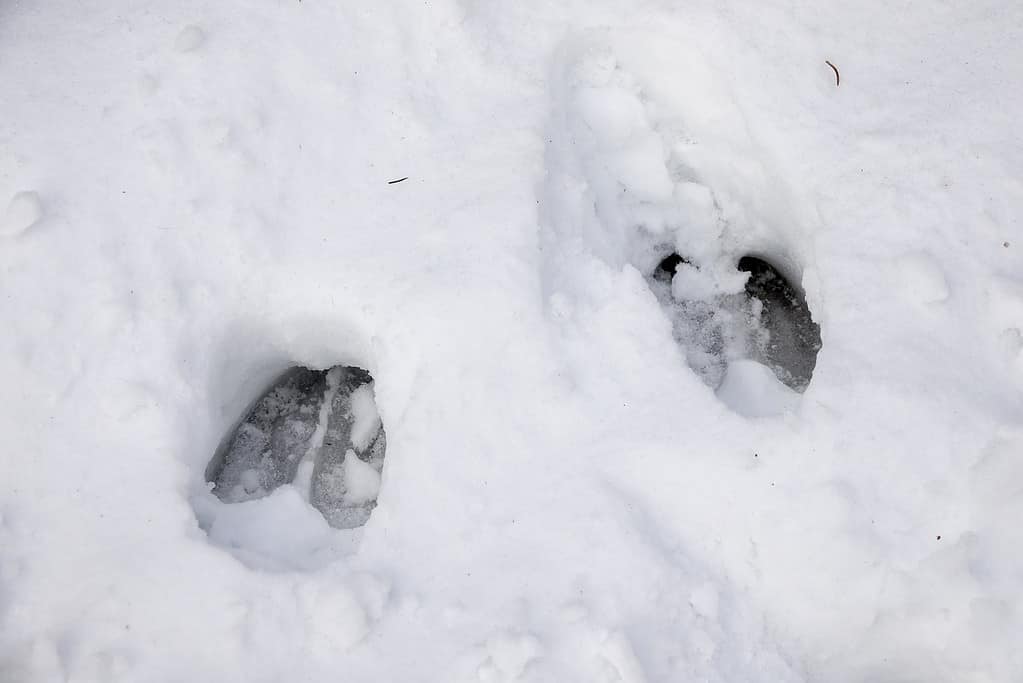
Elk tracks in the snow show the visible walls of the hoof prints.
©iStock.com/Björn Forenius
Elk Tracks in the Mud
Elk tracks in mud are typically deeper impressions and may have two small, round imprints for the dewclaws behind the main hoof print. Fresh tracks in the mud also have crisp edges and a clear cleft. If the animal was moving quickly, the toes would be splayed.
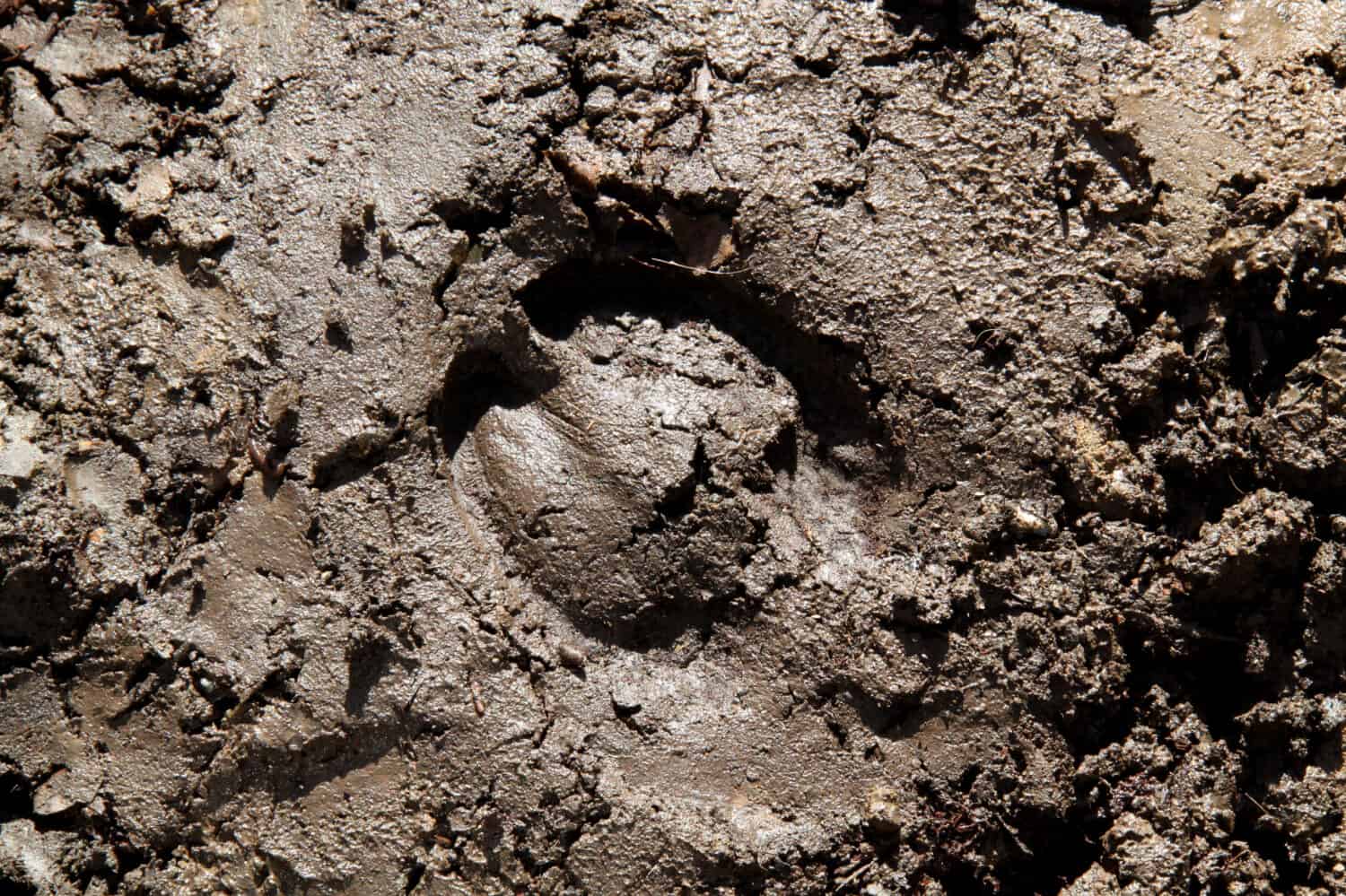
Elk tracks in mud often leave deeper impressions.
©Jerry-Rainey/Shutterstock.com
Other Ways to Identify Elks
Tracks are a good way to identify elk, but other signs also reveal their presence. These include scat, signs of rutting, and signs of feeding. Each of these signs is explored in detail below.
Scat
Elk scat is black to dark brown and is in the shape of a 0.5 to 1 inch long pellet. When they feed on dry forage in the winter, it results in hard pellets. However, when they consume higher-moisture vegetation during the summer, their scat turns into clumped pellets or pies.
Rutting Signs
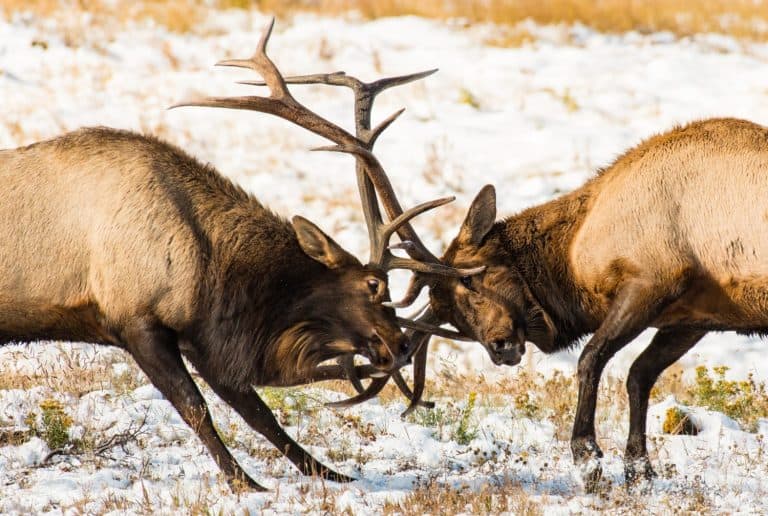
Elk rut during a short window from September to October. This is when bulls rub and thrash their foreheads and antlers on shrubs and trees. As a result, they leave behind stripped bark, broken branches, and and occasionally hair. Elk also leave their scent behind, which is a form of communication. They are particularly fond of conifer saplings. Rutting signs are typically range from 3-7 feet above the ground. Bulls also churn up the mud with their hooves, creating wallows.
Feeding Signs
Elk consume sedges, grasses, aquatic plants, forbs, tree leaves, and shrubs like willows, aspens, chokeberries, and serviceberries in the warmer months. However, elk paw through the snow in the colder months to find food like grass, twigs, and bark.
So, when looking for their signs of feeding, keep an eye out for vegetation with ragged ends. Because elk don’t have upper incisors, they cannot bite through plants with a clean cut like rabbits or rodents can. Elk use their lower incisors and upper palate to tear vegetation, which leaves frayed edges. They also use their lower incisors to scrape bark upward and free it from the tree, leaving frayed bark at the upper end.