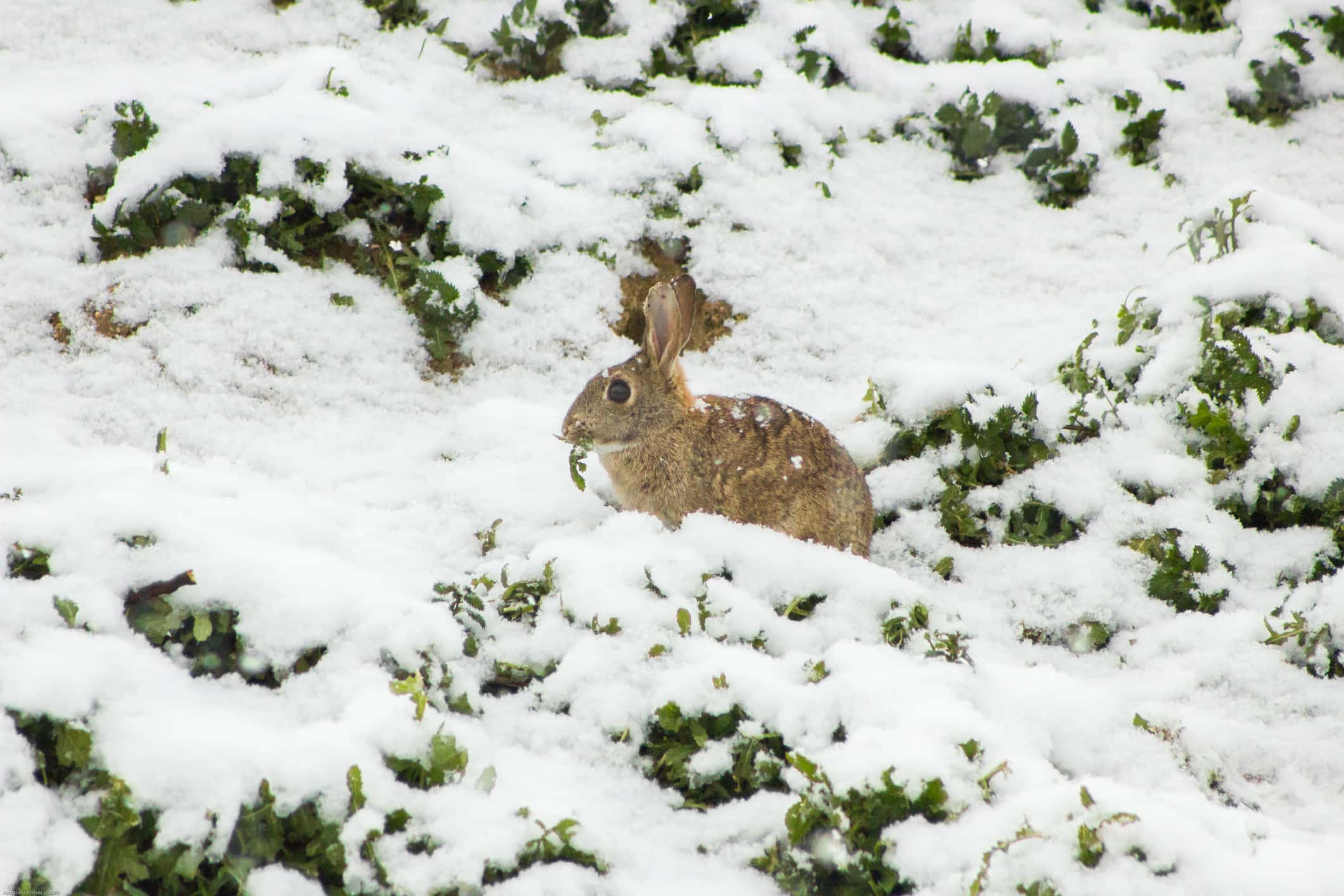

Rabbits are so soft and fluffy, much like a beloved stuffed animal. Seeing them outside in the winter, facing off against the cold temperatures and the elements, one might wonder how they survive. Rabbits do not hibernate, so they have to keep eating throughout the winter. But what do rabbits find to eat, when all the fresh, green grass has disappeared and vegetable gardens lie fallow? Oh, poor bunnies! Let’s take a look at some of the foods rabbits typically eat in the winter, and how they make it through until spring.
Bark
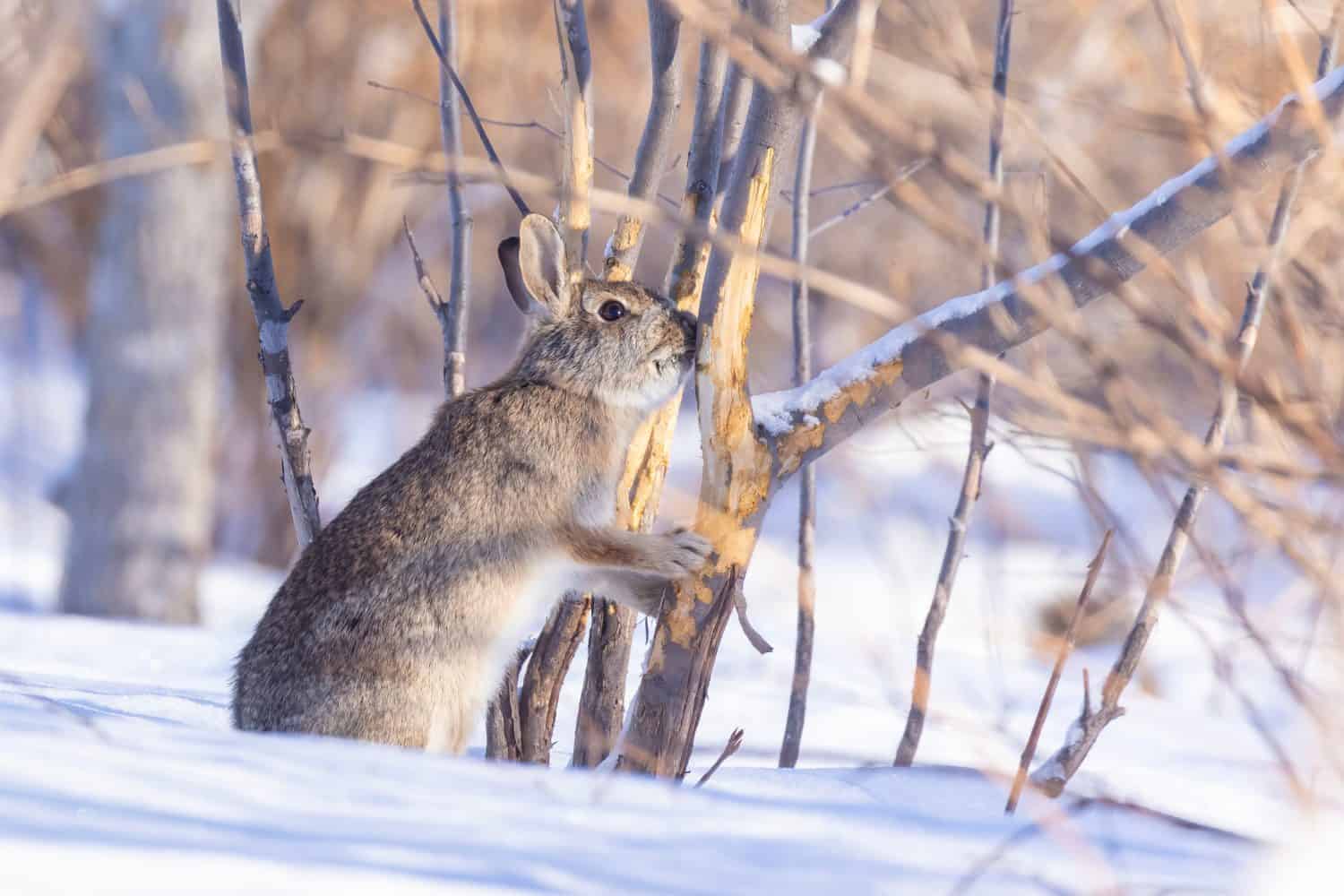
Rabbits may peel and eat the bark from the lower parts of trees and shrubs in the winter.
©Mircea Costina/Shutterstock.com
Rabbits often eat tree bark to get through the cold winter months. They have tough teeth that they can use to peel bark from the lower parts of trees and saplings. Fortunately, the digestive system of rabbits can handle this sort of food, as they already exist on a very high-fiber diet. Tree bark lacks many of the nutrients that rabbits would find in the fresh greenery and vegetables or fruits that they might prefer. However, freshly stripped bark supplies enough nutrition to help keep them alive.
Twigs
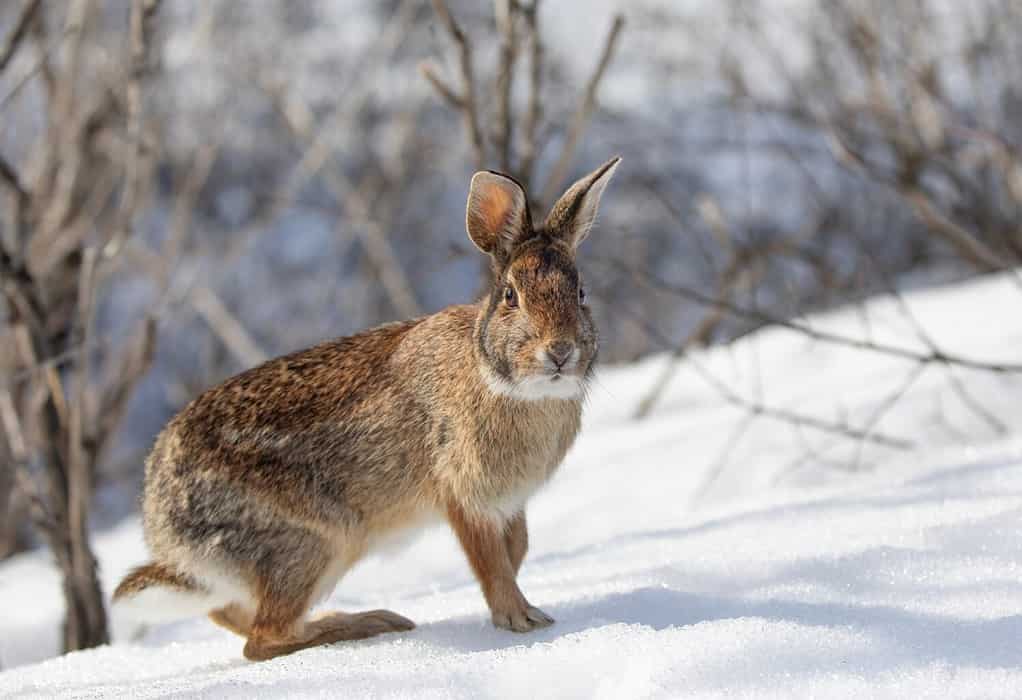
Although twigs may be difficult to digest, they can provide nutrition when resources are scarce.
©Jim Cumming/Shutterstock.com
Twigs may not seem like a very tasty treat, but they exist in ample supply even through the darkest days of winter. Some fallen twigs are completely dead and dried out, but others still have tender, green centers. Rabbits can munch on twigs, just like tree bark, to get some of the necessary nutrients they must have to survive. And if they don’t get quite enough nutrition from this type of food the first time, they may get more when they digest it again later.
Pine Needles
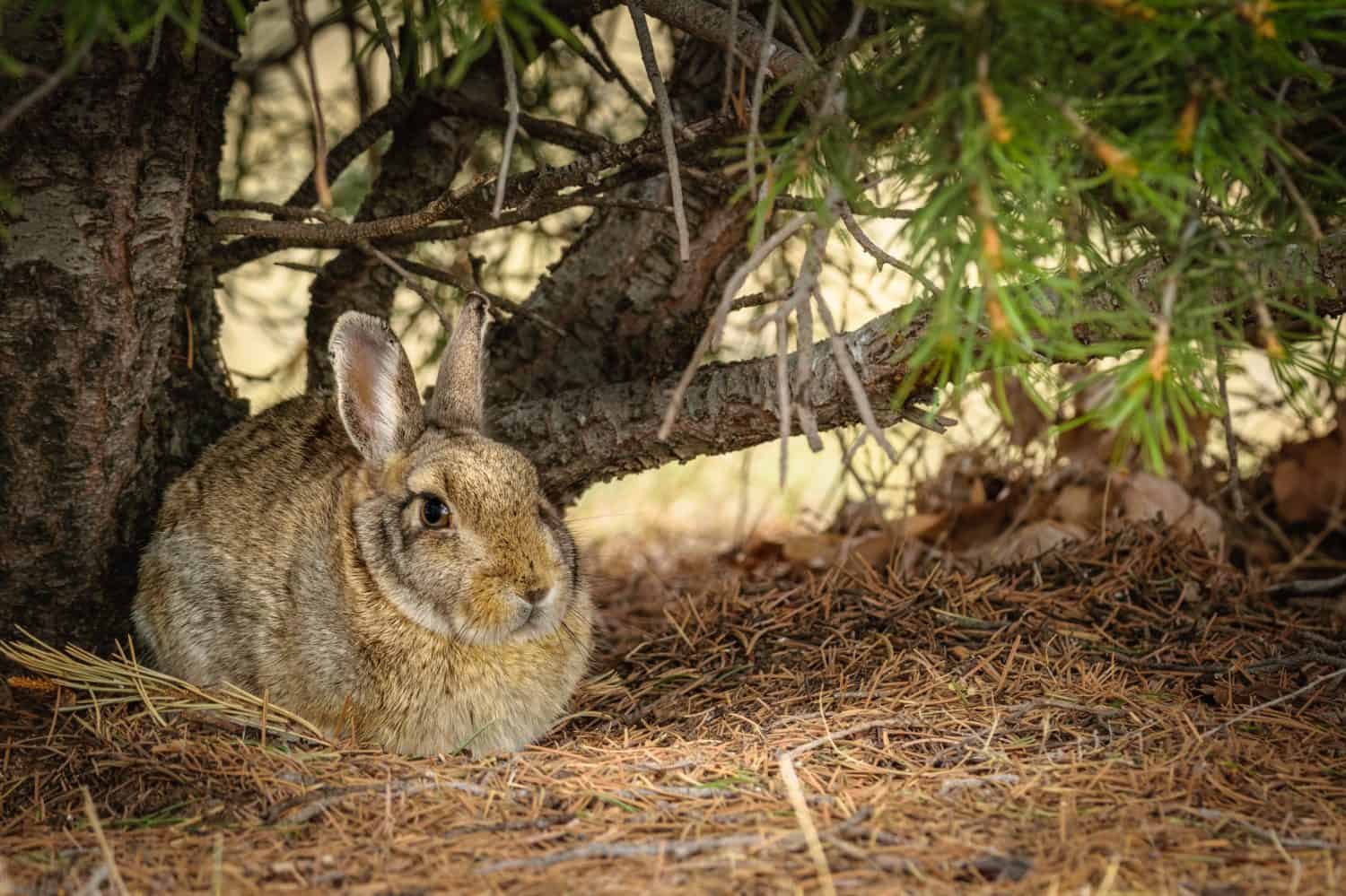
Pine needles can provide much-needed nutrients during the winter.
©Mendenhall Olga/Shutterstock.com
You may notice a trend here. Rabbits often survive winter by eating tough materials that they might not touch during warmer months. They simply do what they have to do to get by. That is, until the foods rabbits usually eat reemerge in the spring. For instance, you might spot rabbits munching on pine needles, which tend to remain available in abundance in the winter. Though these needles may be tougher to digest than leafy green foods, rabbits can squeeze nutrients from them to survive until new plants emerge in the spring.
Buds
Rabbits often consume buds later in the winter, when they begin to emerge. Many trees and shrubs put forth buds early in the year, well before leaves and grasses appear. These early buds can be a lifesaver to rabbits that have managed to stay alive through the winter. Any low-lying buds will provide fresh sources of nutrients to hungry rabbits as the winter months wane on.
Exposed Grass or Hay
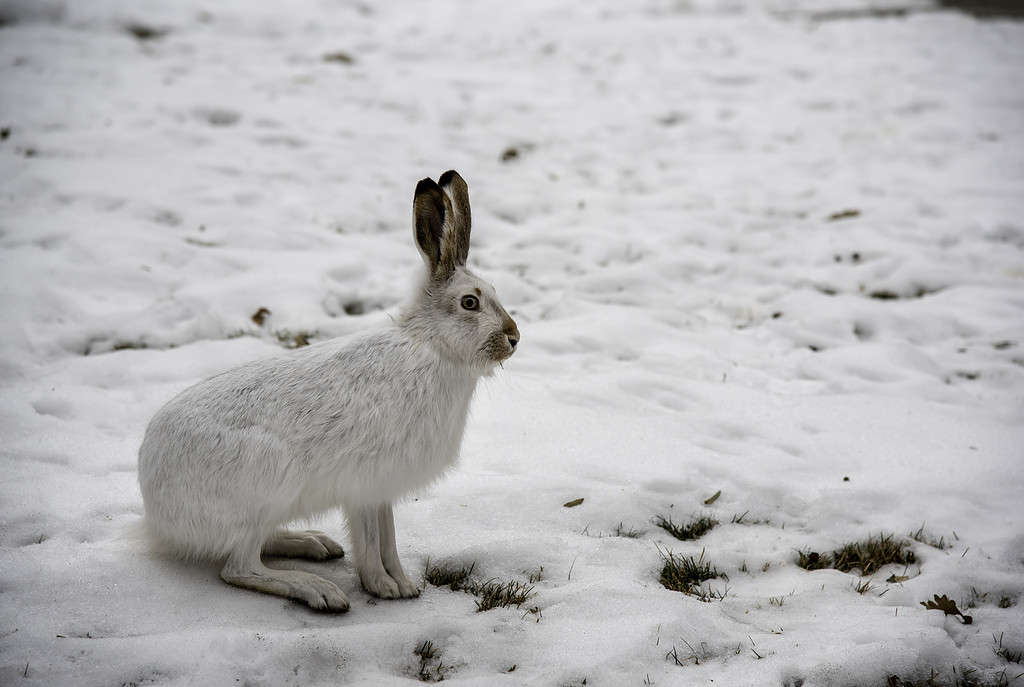
Even in snowy areas, exposed patches of grass can be a good source of nutrition.
©Irina Babina/iStock via Getty Images
Rabbits can still eat dry grass or hay from yards and fields, even after it has turned brown. Those rabbits living in snowy winter habitats may have a harder time finding exposed grasses, but in drier climates they can keep eating grass and hay wherever they find it.
Rabbit Pellets
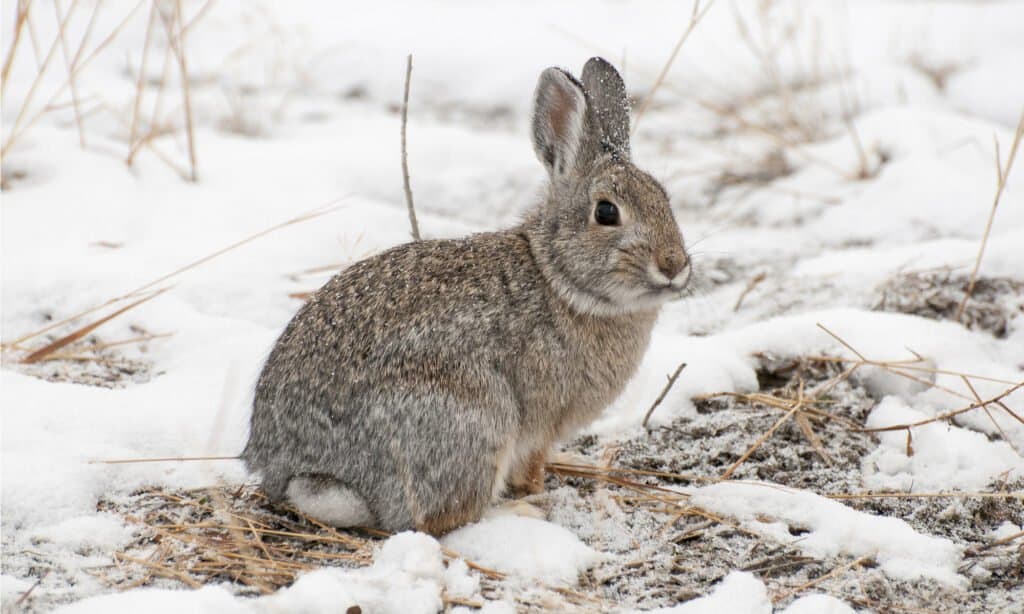
Like many other animals, rabbits sometimes ingest their own poop to get extra nutrients.
©moosehenderson/Shutterstock.com
Rabbits eat their own poop, especially in the winter. They make a softer type of pellets, called cecotropes, that they eat readily. Rabbits can break down these cecotropes further and obtain more nutrients from the foods they contain than they did the first time around.
Winter Plants
Most winter plants that retain their leaves can be a great source of nutrition for rabbits. That is, as long as the plant is not toxic to them. Some ornamental bushes, as well as hostas and other garden plants, may retain leaves in the winter, depending on what region you live in. These plants may provide both food and cover to rabbits when most other shrubs and trees have gone bare.
How Rabbits Survive the Cold
Rabbits do not hibernate, but instead stay active all winter long. Therefore, they must find plenty of food to sustain them until spring. In addition to finding enough food to eat through the winter, rabbits must survive plummeting temperatures in many areas. One thing that helps them to survive the cold is their thick winter coat. Rabbits build up a lush coat of fur before the winter arrives. This fur protects them from cold temperatures all the way down to freezing. They also make underground burrows, that they line with fur and plant materials to insulate against the bitter cold. Rabbits retreat to these burrows, not only to hide from the cold, but from predators as well.