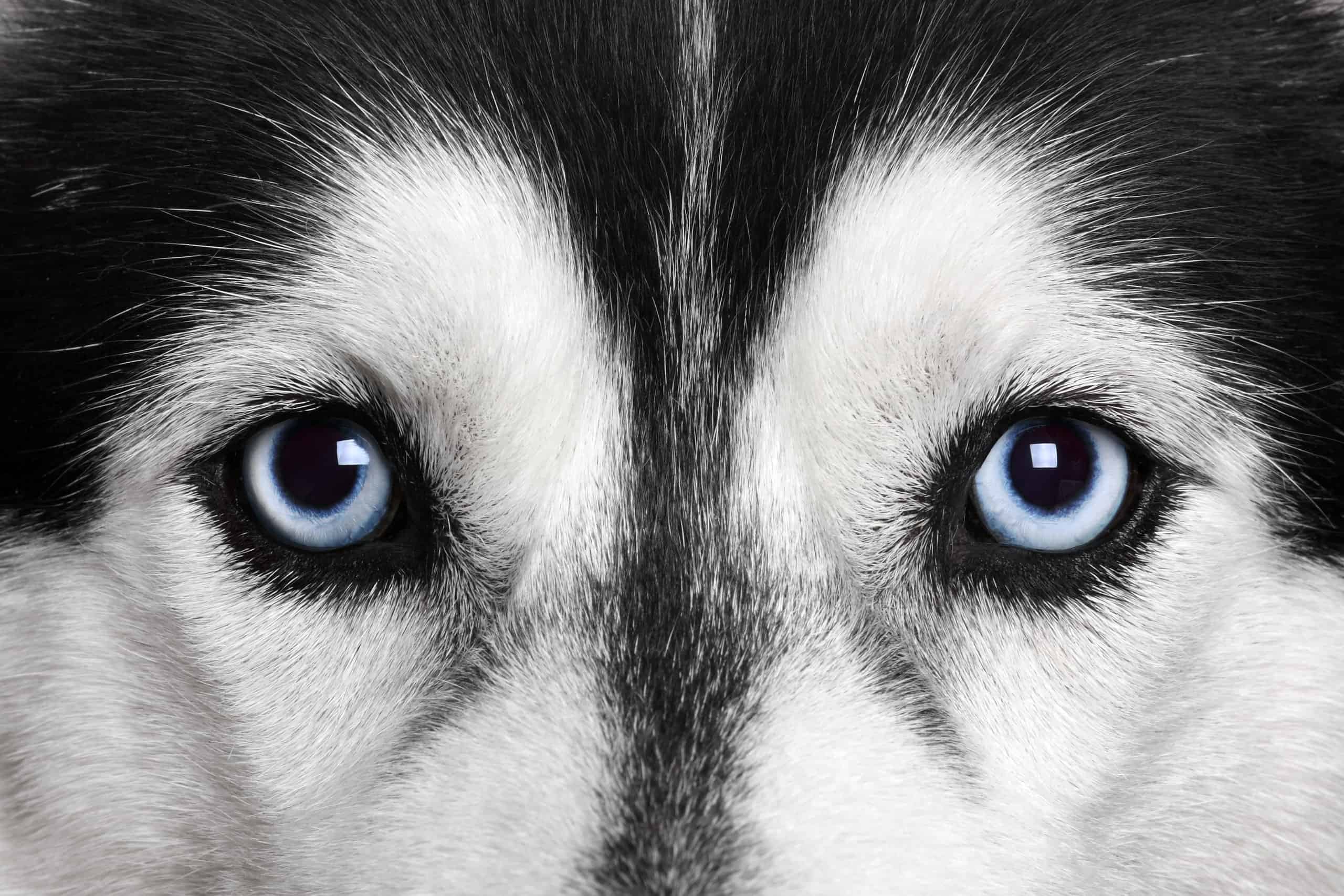

It’s no surprise that cats can see pretty well in the dark. We know cats are predators and remain very much in tune with their predatory skills. Dogs, on the other hand, have undergone a few evolutionary changes. Dogs are genetically farther from wolves, which do have night vision. So, the question is: Can dogs see well at night, or have they lost that ability through evolution?
Why Can Dogs See So Well at Night?
Dogs are genetic descendants of wolves. Wolves and other wild canines prefer to hunt at dusk or dawn, which is why their eyes evolved to see well with minimal light and spot movement, even in the dark. Even though dogs have adapted to humans’ sleeping patterns and now sleep at night and play during the day, they still retain their ability to see at night.
Canines see so well at night because they have an extra layer of cells called the tapetum lucidum. This tissue lies beneath the retina, which is the secret to a dog’s night vision.
How Do Dogs’ Eyes Work?
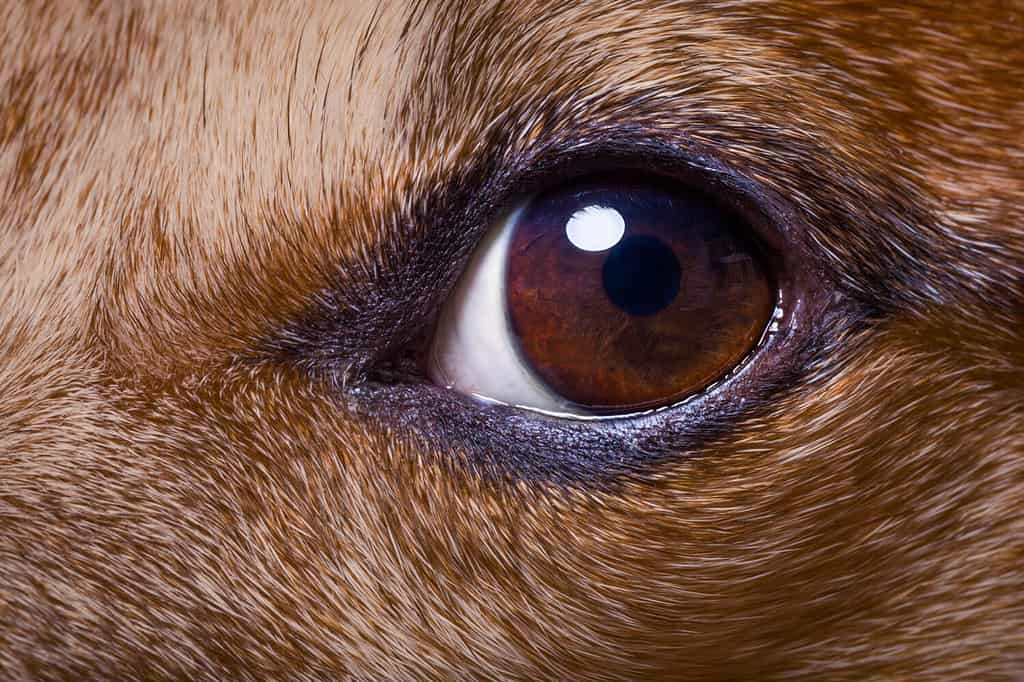
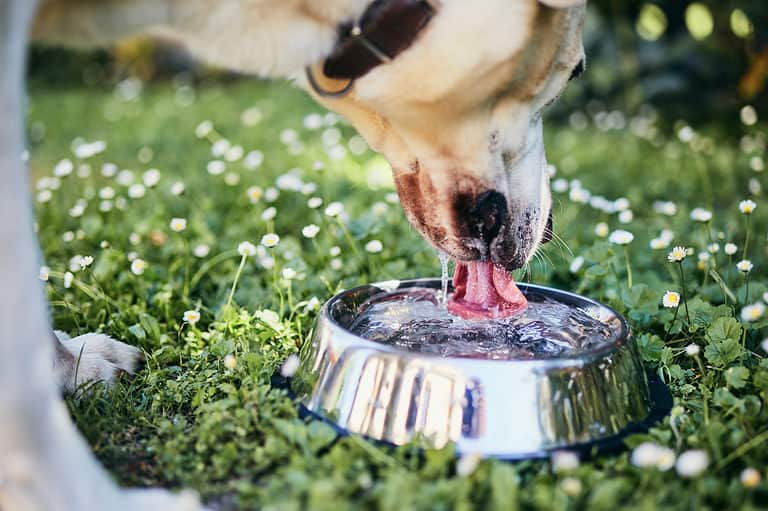
Dogs have more rods than cones in their eyes.
©Javier Brosch/Shutterstock.com
To understand why dogs can still see at night when humans can’t, we must analyze the differences in our eye structures. Like humans, dogs’ pupils can dilate or constrict, depending on the intensity of the light. In bright light, your pup’s pupils become smaller to allow in less light. In dim light or semi-darkness, their pupils become wider to allow in as much light as possible.
Dogs also have rods and cones in their retina, just like we do. However, unlike humans, they have more rods than cones, whereas we have more cones than rods. Cones detect color, while rods help us detect light. You may have heard a rumor that dogs are color blind. Dogs have cones, so they can see colors. Unfortunately, they do not have many cones, so they can’t tell colors apart as well as we can. Dogs can see blues and yellows better than other colors.
As dogs have more rods, they are more sensitive to light than humans. Another advantage dogs have is that their eyes are usually bigger than an average human’s. Those large puppy eyes are not just good for begging and being cute, they’re for hunting at night, too.
What Does the Tapetum Lucidum Do?
The tapetum lucidum is made up of chromatophores, which are cells that produce color. Most chromatophores have distinct colors of their own. The tapetum lucidum does not. It is a leucophore, which has white pigment.
In a dog’s eye, the tapetum magnifies and acts as a mirror. It magnifies the light it receives from the pupil, then focuses it on the retina. This significantly improves light perception, although it may slightly blur the images produced.
Why Do My Dog’s Eyes Shine in Pictures?
Taking a dog’s picture with a flash is like trying to take a mirror selfie with your flash on. When excess light falls on the tapetum, it reflects that excess. This creates the characteristic eerie glow that happens when you photograph a dog’s eyes. The color of the light you see depends on a few factors.
For example, a dog with blue eyes will likely have a red glow. This has nothing to do with the tapetum. Dogs with blue eyes usually have no tapetum, so that red color comes from the blood vessels behind the retina, where the tapetum would have been if it existed.
The color of your dog’s fur, the source of light, and the distance between your dog and the light source may also influence the color of your dog’s eyeshine, which may be greenish, yellowish, orangish, or reddish.
Is My Dog’s Vision Better Than Mine?

Dogs have a better field of vision than humans, but humans have better visual acuity.
©Jolanta Beinarovica/Shutterstock.com
The right answer may be yes or no, depending on the criterion you’re using. Dogs have a better field of view than humans because their eyes are placed at the sides of their heads, not in front. They can also sense light and motion better. These features benefit a hunting animal that doesn’t need to know specific details before identifying its prey.
In terms of visual acuity and depth perception, humans have dogs beat. Humans have much better visual acuity than dogs. A dog must be 20 feet away to see what a human would see from a 75-foot distance. This is called 20/75 vision.
Dogs also fall short in the depth perception department. The ability to depict depth varies by breed. Breeds with longer snouts have more trouble judging depth. If you notice that your dog hesitates before going downstairs, it’s probably because it’s trying to determine how steep the stairs are. Inability to sense depth and color can make stairs your dog’s nemesis.
Bottom line? In most situations, you can see better than your dog. But when the lights go out, you can trust your dog to do the navigating.
Cats vs. Dogs: Which Has the Better Night Vision?
Cats generally have better eyesight than dogs. One speculation is that it may be because cats have larger eyes. This may help them absorb more light and see better. Cats also have better night vision than dogs. This may also be because, as earlier mentioned, cats are more in tune with their predatory nature than most dogs are.
Some people think that cats’ slit eyes may have a thing or two to do with their superior vision. There is no evidence to support this claim. Oddly, lions do not have slit pupils. Their pupils are round, like dogs. Foxes, on the other hand, have slit pupils.