Quick Take
- Hundreds of cameras barely caught a glimpse of this ghost of the forest. What changed the odds so dramatically?
- Some Georgia records had gone silent for over thirty years. Where did these weasels finally turn up?
- Weasel activity surges at two surprising times of year. The reasons are more intimate than you'd guess.
- The dogs' real payoff goes beyond finding weasels. Humans can learn from their noses, too.
Spotting a wild long-tailed weasel is no easy task — these small and elusive predators are so good at hiding that wildlife biologists often say finding one is like looking for a needle in a haystack. However, researchers in Georgia have discovered a secret weapon that is dramatically improving their success: detection dogs.
Detection dogs help guide trail camera placement, allowing researchers to uncover weasels in places where they haven’t been seen in decades. In fact, with the help of these highly trained detection dogs, researchers have increased their ability to detect weasels from a measly 1.5 percent to an astonishing 81 percent.
How Detection Dogs Help Researchers Find Weasels
Long-tailed weasels (Neogale frenata) are notoriously hard to study. Because they are small, fast, and have low population densities, traditional wildlife surveys rarely detect them. In Georgia, some records have gone without a confirmed sighting for more than three decades, leaving major gaps in scientific knowledge about the species.

Long-tailed weasels are typically 1 to 2 feet long with a 3- to 6-inch long tail.
©Griffin Gillespie/Shutterstock.com
Standard wildlife camera surveys typically place equipment on fixed grids or in random spots. This approach works poorly for weasels because they move unpredictably across the landscape. During an initial survey, researchers set up 599 randomly placed cameras across 30,000 acres. After almost 300 nights, only nine cameras caught a weasel, resulting in an extremely low 1.5 percent detection rate.
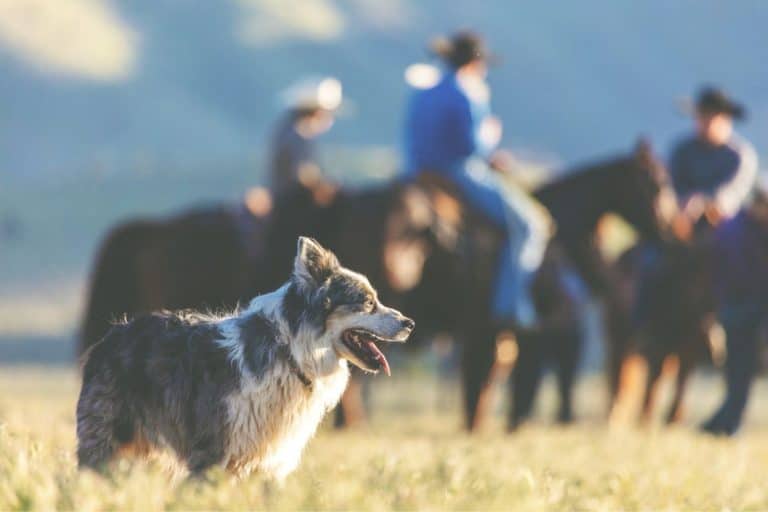
To solve this problem, researchers at the University of Georgia combined motion-activated trail cameras with trained scent-detection dogs. Instead of guessing where to set their equipment, the team placed cameras strictly where the dogs picked up fresh weasel scent.
Across 16 dog-guided locations, the cameras recorded 77 weasel sightings over 200 nights, driving the detection rate up to 81 percent. By letting the dogs lead the way, researchers spent less time searching empty patches of forest and more time gathering crucial data.
81
%
detection rate for long-tailed weasels
- random cameras
- 1.5
- dog-guided cameras
- 81
- Change
- up 5300%
Finding Weasels in Places They’d Been Missing for Decades
The dog-guided surveys produced important discoveries about where long-tailed weasels actually live in Georgia:
- Southeastern Plains: At Flat Tub Wildlife Management Area, researchers confirmed weasels in a region where they hadn’t been seen in over 30 years.
- Southern Coastal Plain: For the first time in history, the team recorded weasels at Dixon Memorial Wildlife Management Area near Okefenokee Swamp.

Detection dogs are trained to identify even the smallest traces of an odor.
©Marko25/Shutterstock.com
A broader survey using 756 cameras across 20 wildlife areas confirmed that weasels were present in four of the five major ecological regions tested. These findings emphasize how easily these elusive animals can go undetected, even in landscapes where researchers have conducted surveys before.
What the Cameras Revealed About Weasel Behavior
Beyond finding the weasels, dog-guided camera placement provided a rare look into where and how these elusive animals live and hunt. Weasels were most active near water and in dense forests with heavy canopy cover, brush, and fallen logs. These features offer essential protection from larger predators while allowing the weasels to safely pursue prey.
Researchers also identified seasonal activity patterns. Weasel activity peaked in April and May, likely because nursing mothers hunt more intensely to feed their young. A second, smaller spike occurred in autumn as weasels increased foraging and food storage for winter.

Long-tailed weasels eat small mammals, including gophers, voles, mice, and chipmunks.
©Ghost Bear/Shutterstock.com
As active small-mammal predators, weasels play a vital role in balancing prey populations across southeastern forests and farmland.
A Better Way to Monitor Elusive Wildlife
A major challenge in wildlife conservation is telling the difference between failing to detect an animal and assuming it simply is not there. When sightings are missed, wildlife managers struggle to establish accurate protective regulations or safeguard critical habitats.
Pairing scent-detection dogs with trail cameras offers a powerful solution to this challenge. Compared to traditional camera grids, placing cameras where dogs signal an active scent reveals far more than just weasels. Cameras set at these locations capture footage of bobcats, coyotes, opossums, and raccoons. This gives scientists a much clearer view of the broader local predator community. Additionally, shadowing detection dogs helps human researchers recognize the specific microhabitats weasels prefer. This helps improve their ability to position cameras effectively on future surveys even when working without a canine partner.

Long-tailed weasels live alone except during breeding season.
For animals as secretive as long-tailed weasels, better monitoring methods can make the difference between decades of uncertainty and meaningful new discoveries. By allowing detection dogs to guide camera placement, researchers have found a more efficient way to document elusive wildlife, learn where animals live, and gather the evidence needed to support conservation efforts.