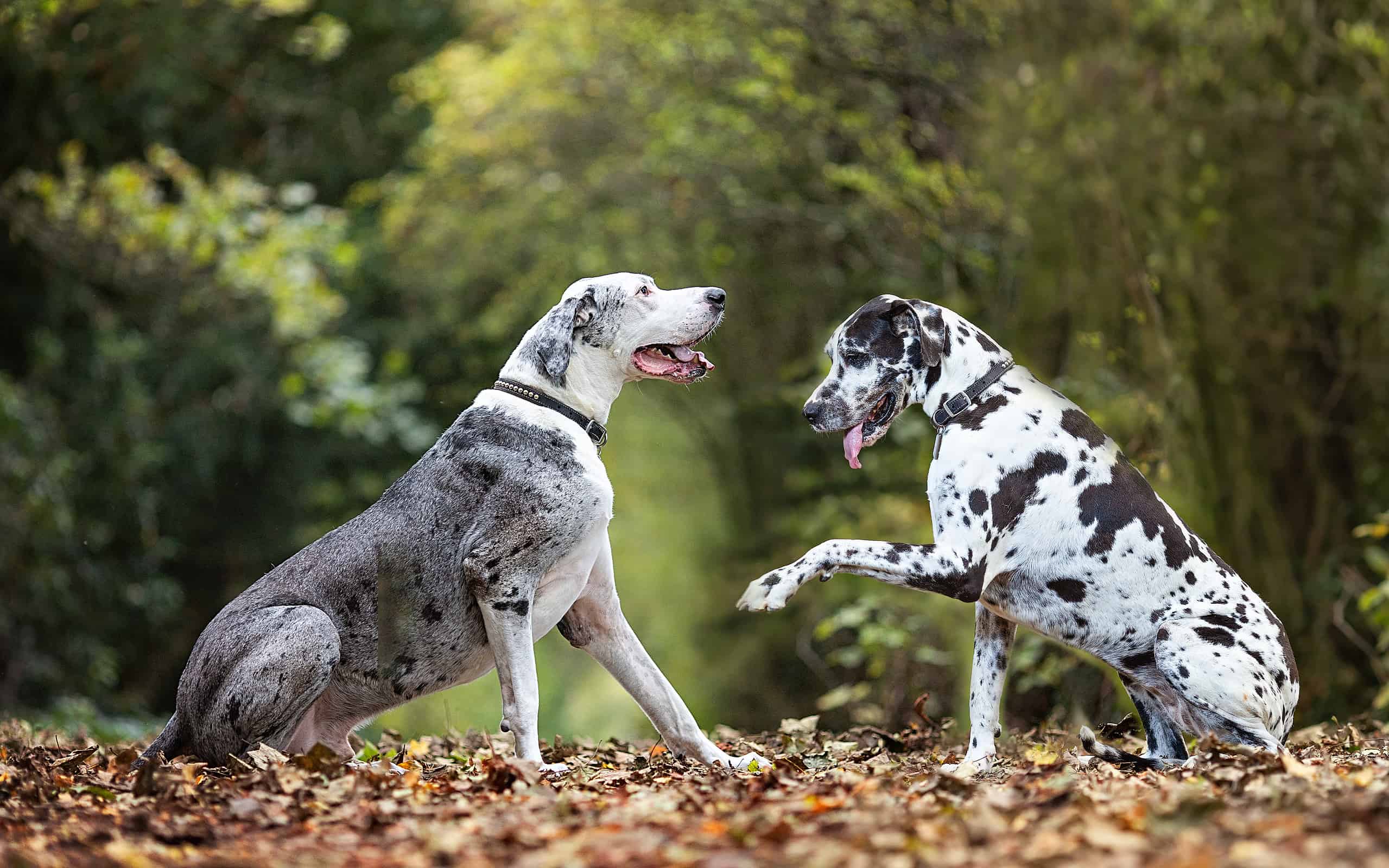

Many people have owned or known big dogs, from the gentle giant Great Danes to the sweet-tempered, bear-sized Newfoundlands. Some of these ancient breeds were originally developed as working dogs. Whether they’re guarding livestock and people or training for police and rescue work, large dogs still have a place in modern life. But what makes a dog “big?” Generally, dogs that weigh between 50 and 100 pounds and stand at least 24 inches in height at the shoulder are considered to be large dogs. Pups over 100 pounds and 27 inches at the shoulder are considered to be giant dogs. Read on to learn more about different breeds of big dogs.
#8. Saint Bernard
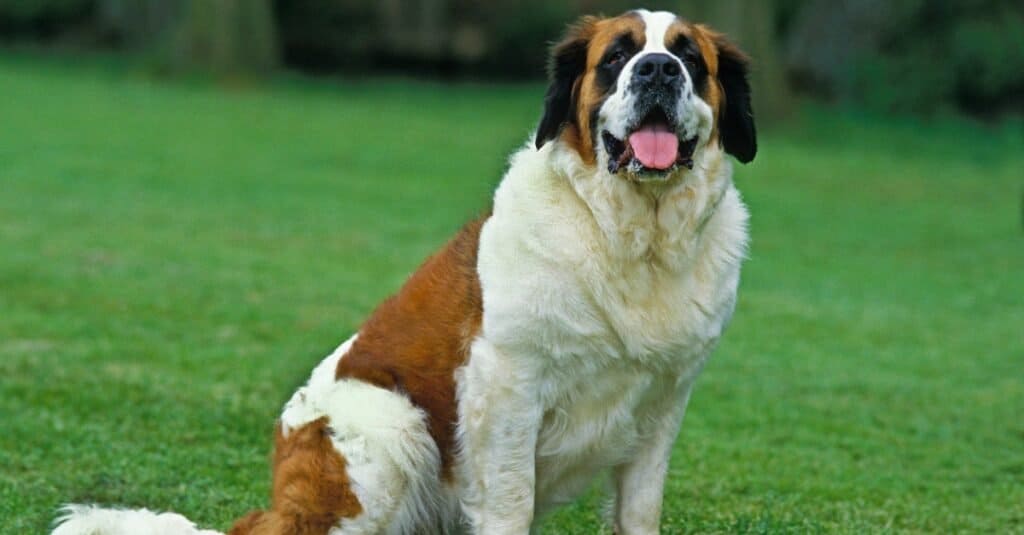
The Saint Bernard is well-known for its rescue work in the Swiss Alps.
©iStock.com/slowmotiongli
Gentle, slow, and good with children, the Saint Bernard originated in Switzerland about 1600 years ago. The Saint Bernard is believed to be a descendant of an Asian Molosser dog that ancient Romans brought to the Swiss Alps in the first two centuries AD. The dog has famously been bred by the monks of the St. Bernard hospice to rescue people who have gotten lost or injured in the mountains. The Saint Bernard is also notorious for drooling.
Saint Bernards have huge heads, muscular necks, and deep chests. Its patterned coat can be long-haired or smooth, and although it sheds its undercoat twice a year, it is easy to care for. The dog stands 24 to 28 inches in height and weighs between 110 and 200 pounds. Very intelligent and biddable, the Saint Bernard can be trained to be a good watchdog, and it is intimidating due to its size alone. Like other big dog breeds, the St. Bernard is subject to health problems such as bloat, heart trouble, and hip dysplasia.
#7. Newfoundland
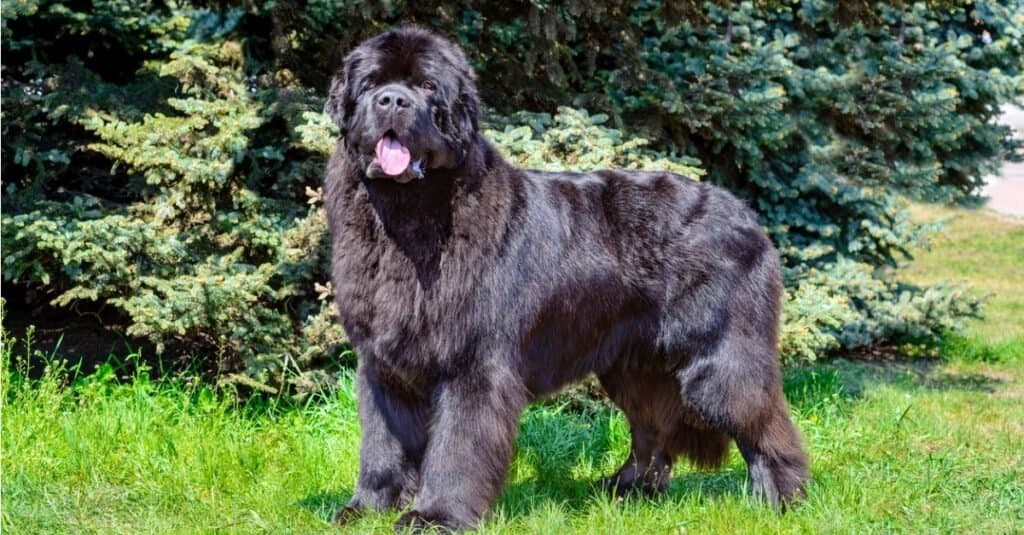
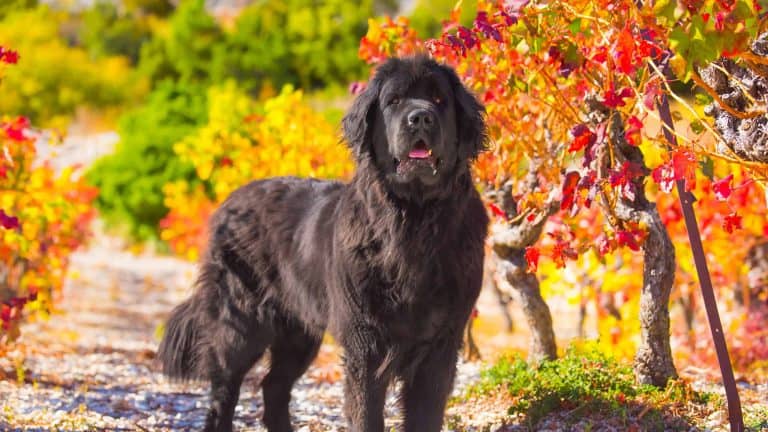
Newfoundlands are well-suited to work on land or in the water.
©iStock.com/volofin
Although the Newfoundland looks a bit like a bear, this gentle giant is good with people and animals when properly socialized. Developed in 18th-century Canada to help fishermen haul in their nets and perform daring rescues in icy water, this dog is still trained in water rescue today.
The Newfoundland stands between 26 and 28 inches high at the shoulder and weighs between 110 and 150 pounds. Its coat is most commonly dark brown or black. The dog has a short muzzle, a huge skull set on a powerful neck, and powerful hindquarters and feet. The feet, as is the case with many dogs that do water work, are webbed. There is also some feathering on the legs and the tail. Because this big dog is subject to hip dysplasia, it is important to watch its weight. The dog’s thick, double coat also means it fares better in cooler environments.
#6. Neapolitan Mastiff
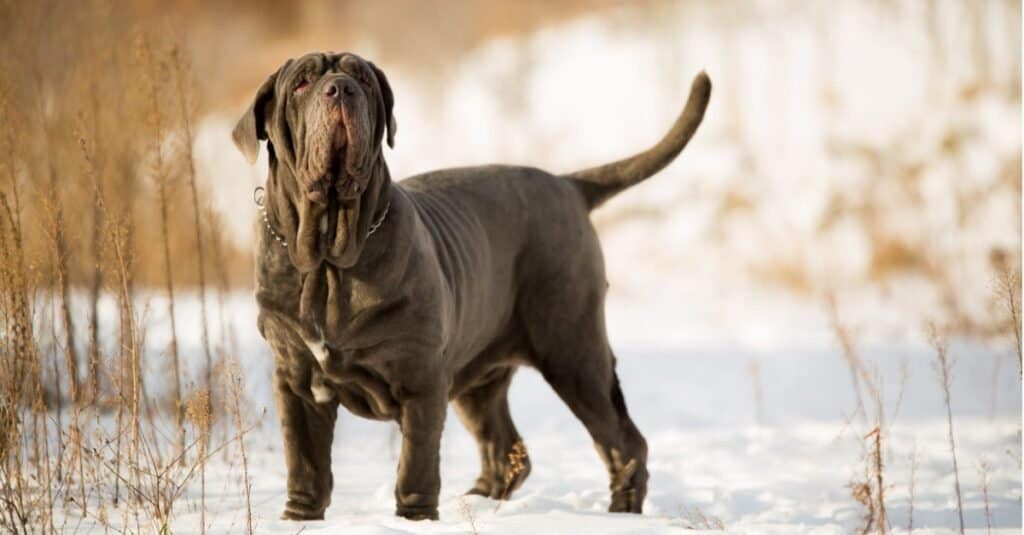
The Neapolitan mastiff was developed in southern Italy as a guard dog.
©iStock.com/Okikukai
Remember Fang, Hagrid’s dog in Harry Potter? He was played by a Neapolitan mastiff. This is a huge, solidly built dog with an enormous head and a face full of folds, dewlaps, and wrinkles. This gives the dog a melancholy look, but it is affectionate, docile, protective, and good with children. It does drool a great deal, and because of its huge head, puppies are born by Caesarean section. The Neapolitan mastiff is believed to be descended from the Molossar war dogs of ancient Rome and has historically been trained as a guard dog.
The dog stands between 26 and 29 inches high at the shoulder and weighs between 110 and 150 pounds. The grey, black, mahogany, or tawny coat is dense, short, and glossy. If the tail isn’t docked, it curves over the dog’s back. Health problems may include hip and elbow dysplasia, bloat, and heart conditions. Despite its short coat, the Neapolitan mastiff must also be protected from overheating.
#5. Mastiff
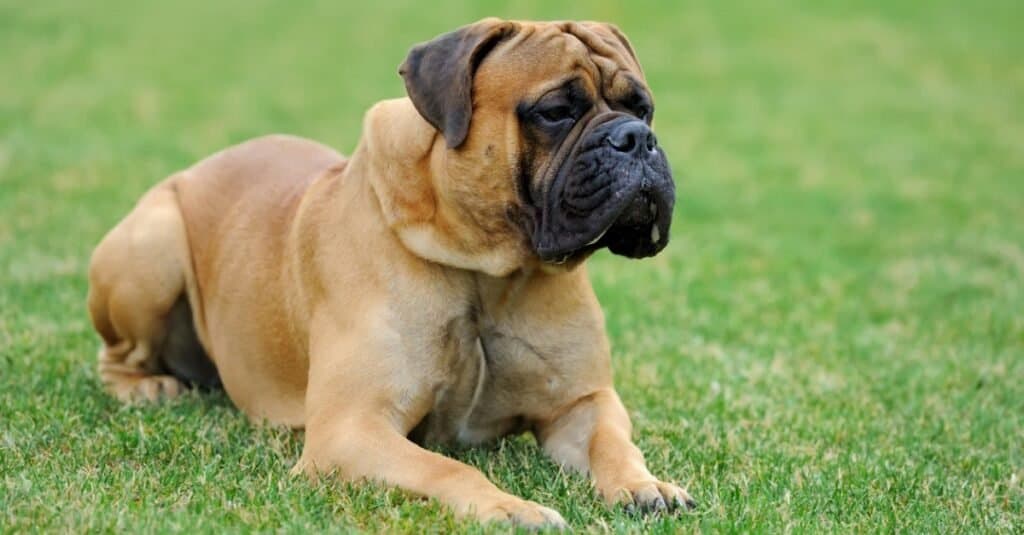
Mastiffs are particularly protective of their families.
©Volodymyr Burdiak/Shutterstock.com
Believed to have originated in Great Britain in the first century, the mastiff was bred as a guardian and hunting dog. This breed was praised for its bravery by no less a personage than Julius Caesar. Every aspect of the dog is big, well-muscled, and powerful. It has a huge head, a deep chest, and flanks and legs that are strong and straight. The dog always has a black mask on its face, no matter the color of the rest of its coat. Its coat is short and lies close to the body.
The mastiff stands 27.5 to 30 inches in height and weighs between 175 and 190 pounds. The mastiff is considered an excellent pet, as it is friendly, loyal, and protective of its family. Its natural distrust of strangers makes training and socialization extremely important. Mastiffs are prone to health problems such as bloat, heart disease, and hip and elbow dysplasia.
#4. Leonberger
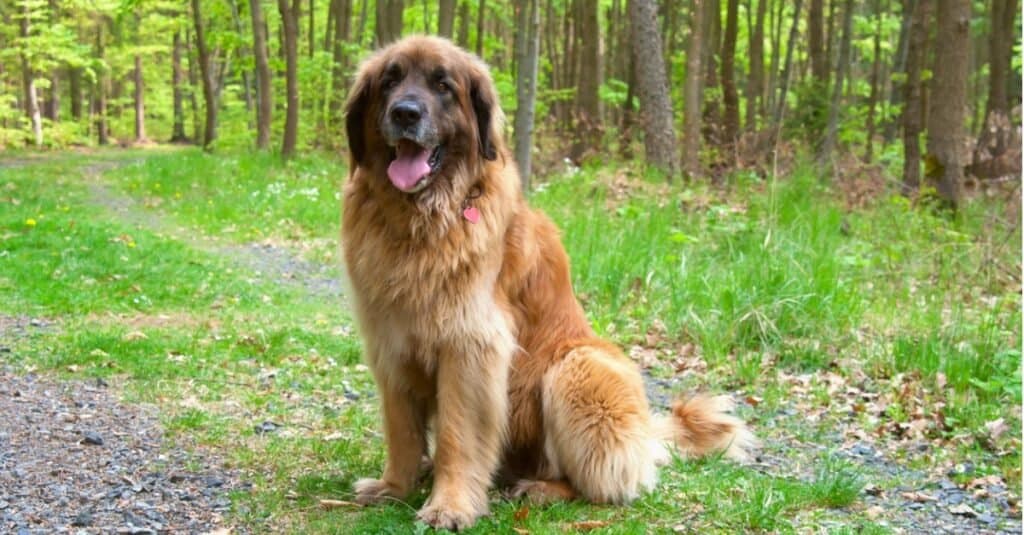
Leonbergers are bred as companion dogs and enjoy being in the company of their owners.
©Kaca Skokanova/Shutterstock.com
Originating in Germany in 1846, the Leonberger is believed to be a cross between a Newfoundland and a St. Bernard. Like the Newfoundland, it loves water and has webbed toes. The dog always has a black mask, and its coat is always shades of brown, reddish-brown, or yellow if it is to be shown. The Leonberger has medium to long hair on its tail and around its neck and shoulders, and feathering on its legs.
This big, friendly dog stands 26 to 31.5 inches at the shoulder and weighs between 75 and 110 pounds. Because of its thick, fluffy coat, the dog prefers cooler temperatures. Like other big dogs, the Leonberger is prone to hip and other bone problems. They are also subject to neurological issues and certain cancers.
#3. Komondor
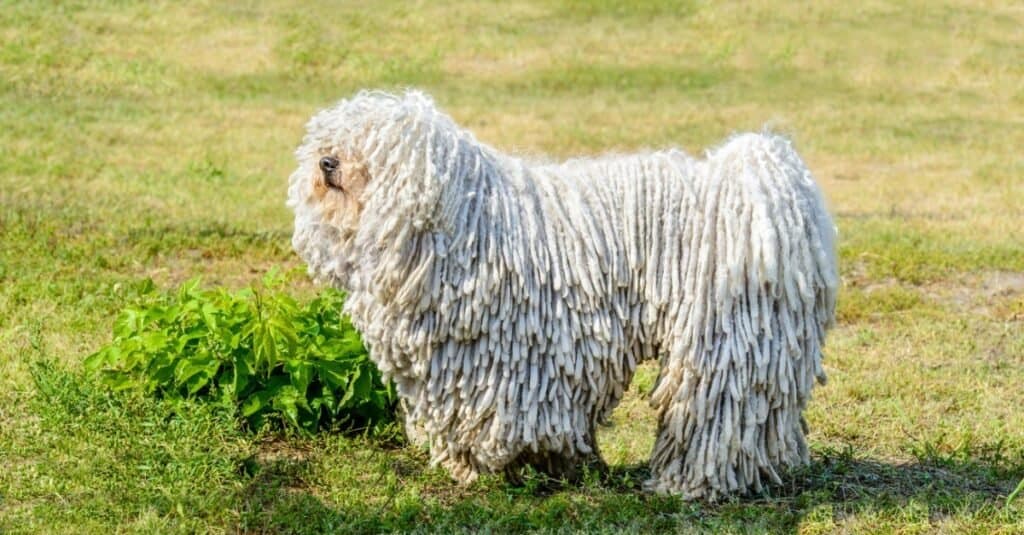
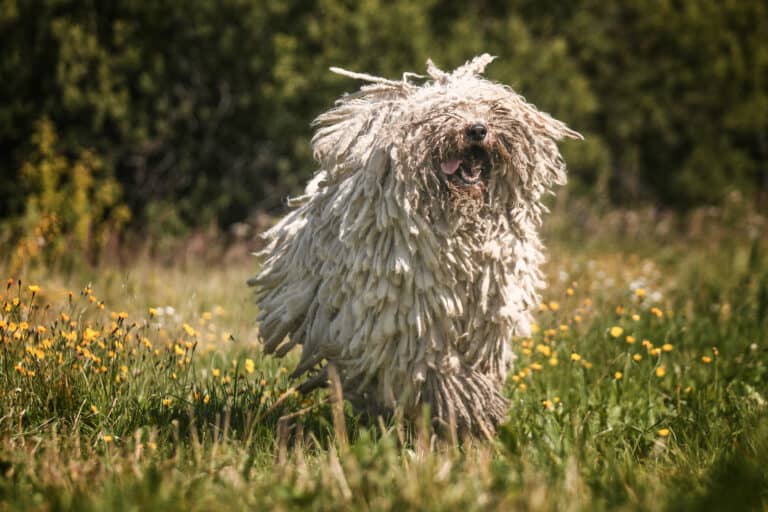
Komondor puppies have soft, fluffy coats that begin to become matted between 12-24 months.
©iStock.com/volofin
The long hair of this big dog naturally grows cords like an oversized mop. The hairs grow so long that they cover the animal’s feet. The komondor originated in Hungary in the 9th century and was bred to guard sheep, which it resembles. Though much of the dog is hidden under its long hair, the komondor has a large head, a short muzzle, and a large, black nose. The tail falls to the hocks, but in a fully grown dog, both the tail and hocks are hidden beneath the long coat. The unique coat takes about two years to form cords and about five years to reach the ground.
A komondor stands about 26 to 32 inches in height and weighs between 80 and 135 pounds. It does best out in the country and is a perfect outdoor dog. The dog is intelligent and protective, especially of children. As for grooming, the komondor does not shed, but its hair should never be combed. The dog also needs frequent bathing to keep its coat clean. As a large breed, the dogs may have issues with hip dysplasia and bloat, as well as eye conditions.
#2. Great Dane
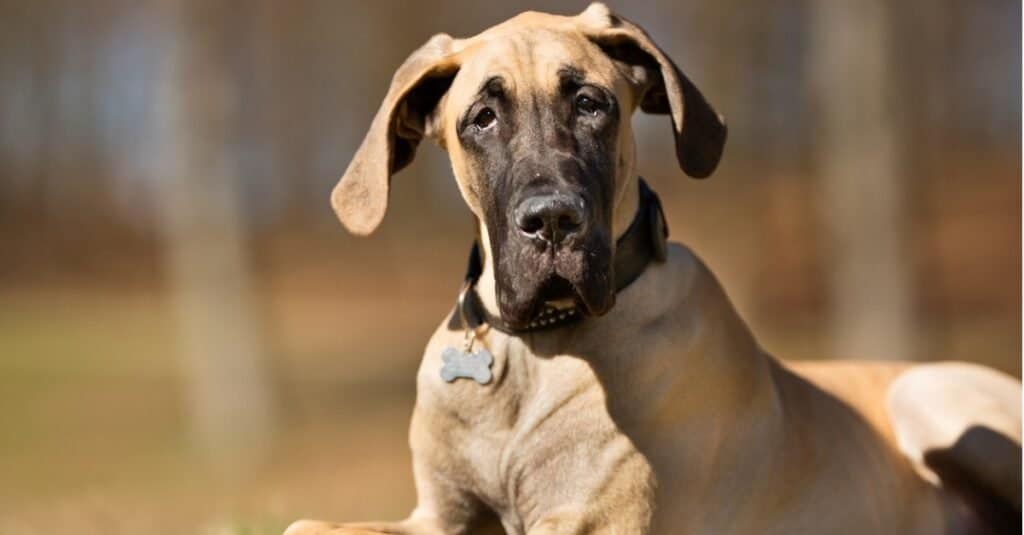
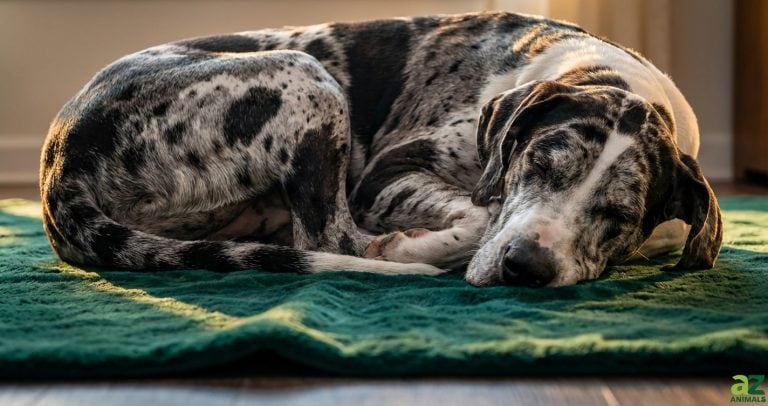
Great Danes are known to have calm, friendly temperaments.
©iStock.com/Bigandt_Photography
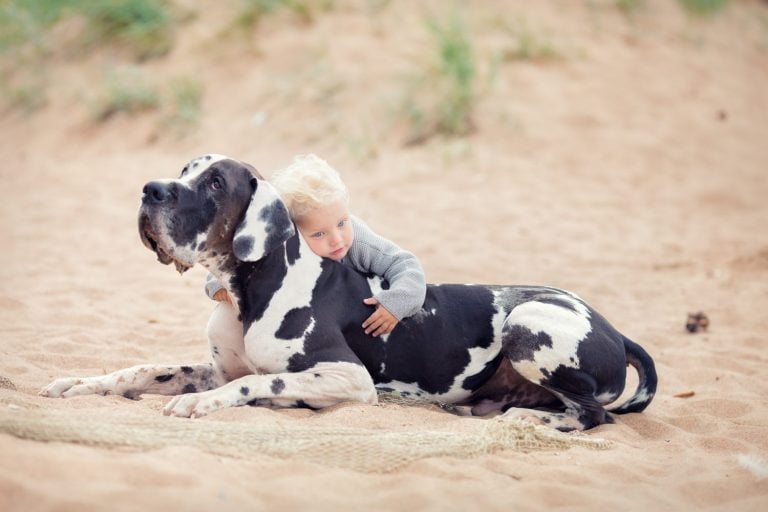
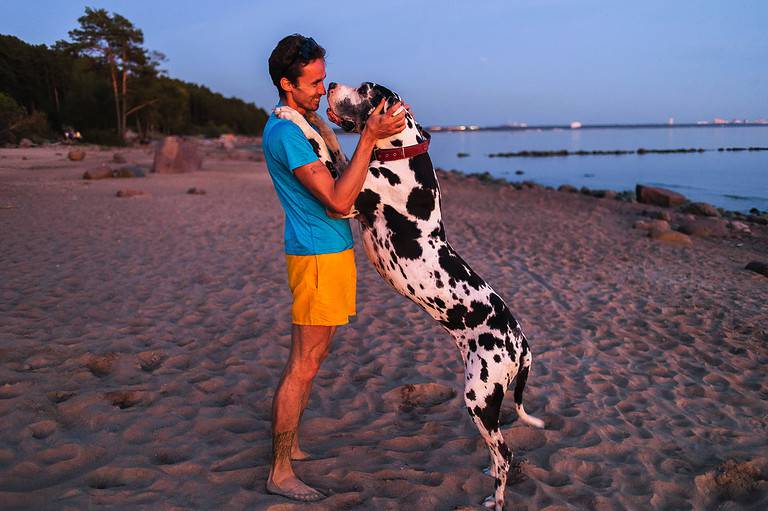
This famously huge and sweet-natured dog did not originate in Denmark, but in Germany. The breed was developed from German hunting dogs at least 400 years ago. However, some fanciers suspect an older bloodline due to images resembling the dog on ancient Egyptian artifacts. Great Danes are known to be friendly, gentle, and calm, making them an excellent addition to a family with young children.
Despite its incredible size, the Great Dane is a graceful dog, with a muscular body, a long neck, and straight front legs. They have short, glossy coats of black, brown, grey, or the black and white harlequin pattern. Males stand about 30 to 34 inches high at the shoulder and weigh between 120 and 200 pounds, while females are shorter and lighter. In addition to some orthopedic issues, Great Danes are also prone to bloat, heart conditions, cancer, and autoimmune diseases.
#1. Irish Wolfhound
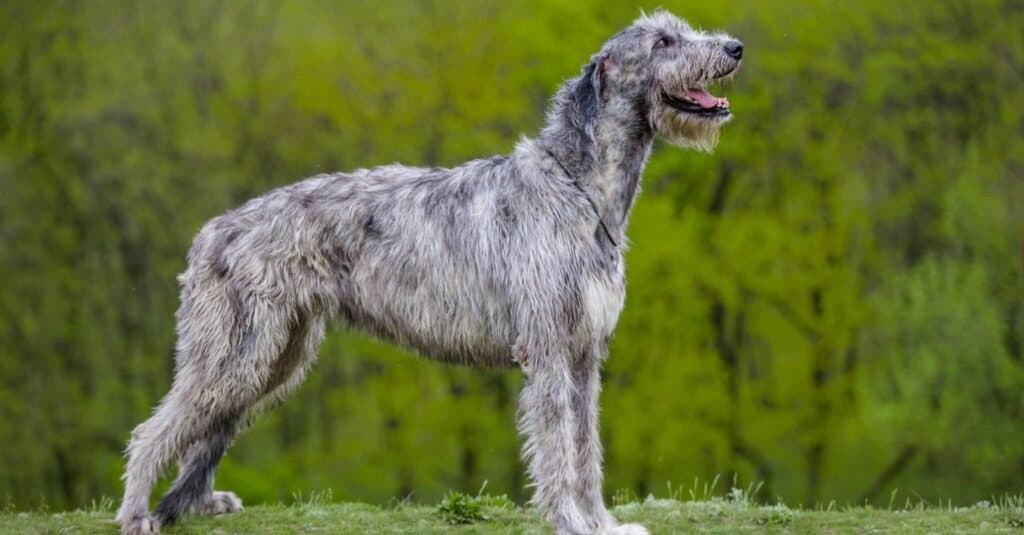
The Irish Wolfhound’s name originates from its purpose of hunting wolves rather than its appearance.
©iStock.com/Ashva
Another ancient breed, the Irish wolfhound, originated in Ireland during Roman times. The breed is even believed to have been mentioned in a letter by Quintus Aurelius Symmachus around 391 AD. The dog was originally developed to guard livestock, but they also hunted boar, elk, and, of course, wolves. Despite their early breeding, these dogs are generally gentle, calm, loyal, and sweet.
The Irish wolfhound stands between 28 and 35 inches high at the shoulder and weighs between 90 and 120 pounds. When it stands on its hind legs, it can reach about 7 feet tall. The dog has strong shoulders, a long back, and a tightly drawn-in belly that gives the body an elegant silhouette. The Irish wolfhound has a rough coat, a wiry beard, and long, hairy eyebrows. Like other big dog breeds, the Irish wolfhound is vulnerable to hip dysplasia, as well as bone cancer, bloat, and heart disease.