
Quick Take
- One breed can outlive the other by several years, and the scientific reason behind it will likely change how you think about choosing a large dog. See the lifespan science →
- A hidden health risk affects both breeds and can turn fatal within hours if you miss the early signs. Spot the fatal warning signs →
- Both breeds shed heavily, but their grooming demands are completely different, and picking the wrong routine could actually make things worse. Compare grooming routines →
- The breed that looks more intimidating may actually be the easier one to train, which matters more than most first-time owners realize. See trainability compared →
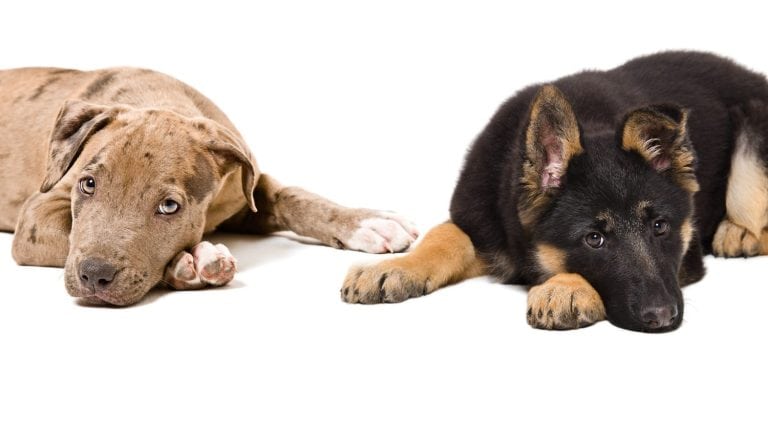
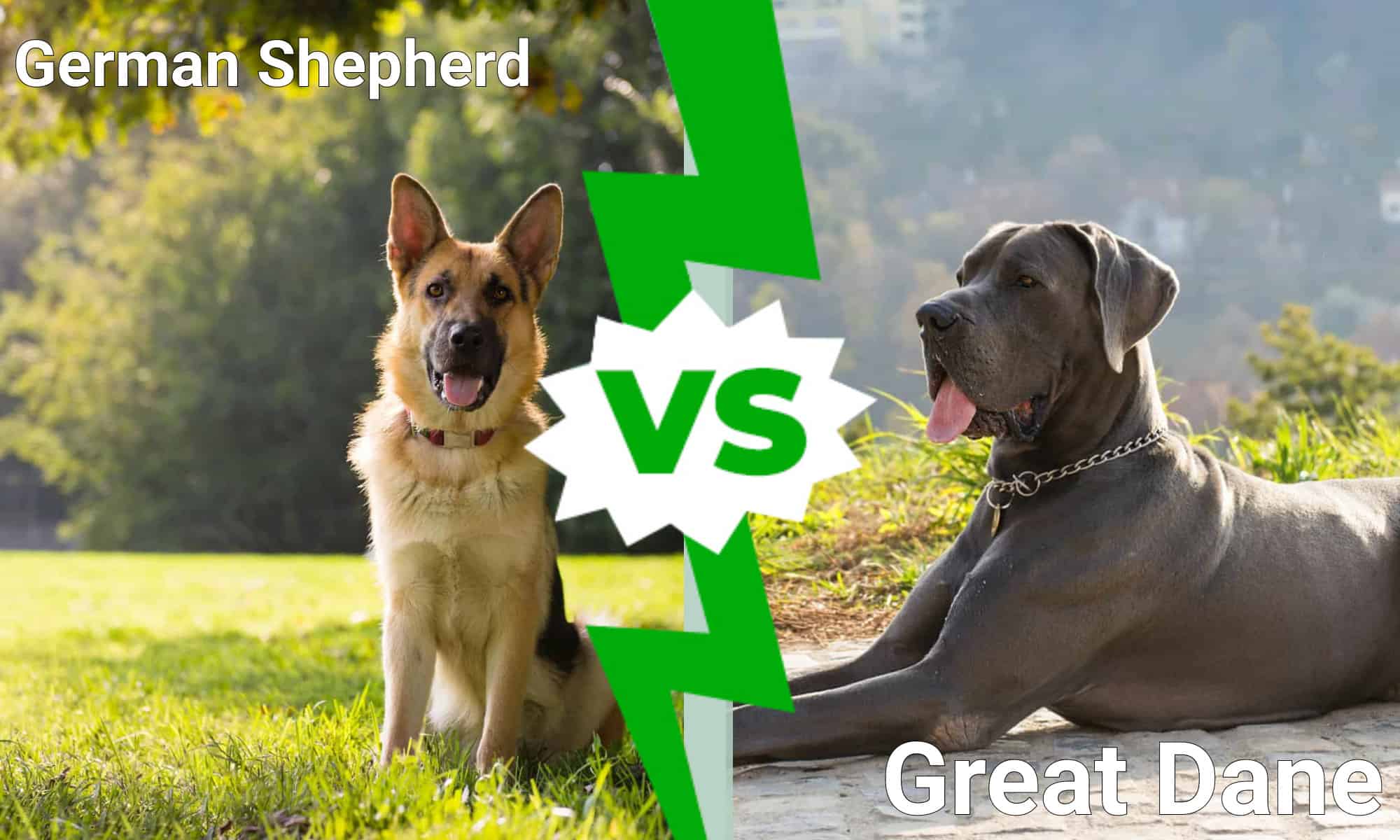
Are you trying to decide between a a German Shepherd and a Great Dane? Both of these large breeds are affectionate, devoted companions and excellent guardians, but what sets them apart? In this article, we’ll take an in-depth look at the differences between German Shepherds vs. Great Danes to help you determine which breed is best for you.
German Shepherd vs. Great Dane Comparison
| Key Differences | German Shepherd | Great Dane |
|---|---|---|
| Size | Height: 22-26 inches Weight: 50-90 pounds | Height: 28-32 inches Weight: 110-175 pounds |
| Coat | Mid-length double coat that sheds heavily | Short-haired single coat that sheds heavily |
| Temperament | Affectionate, devoted to family, protective, playful | Affectionate, gentle family pet, watchful guardian |
| Activity Level and Trainability | Very high; easy | High; intermediate |
| Life Expectancy | 7-10 years | 7-10 years |
| Health Problems | Prone to joint problems, spinal issues, and GDV | Prone to GDV, joint problems, heart disease, and thyroid disease |
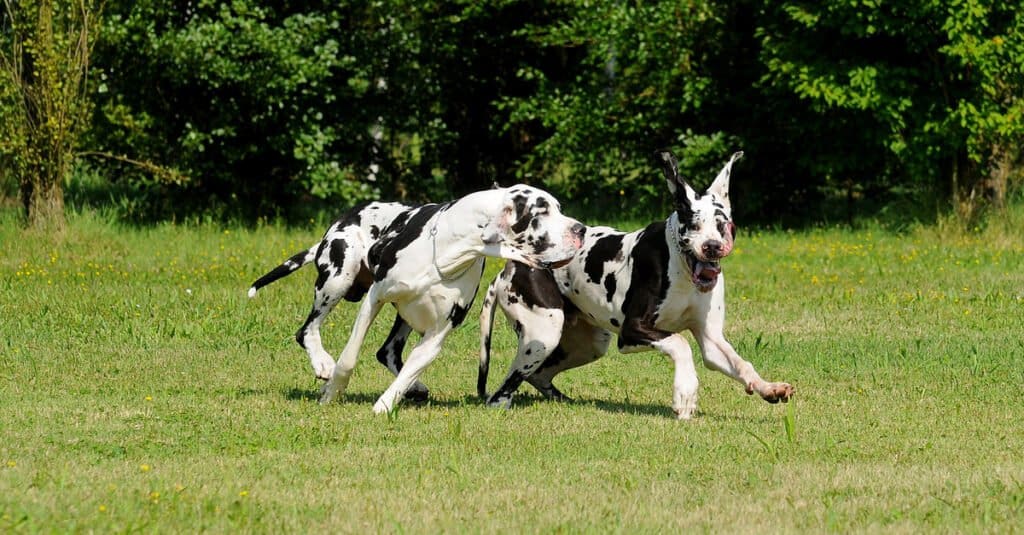
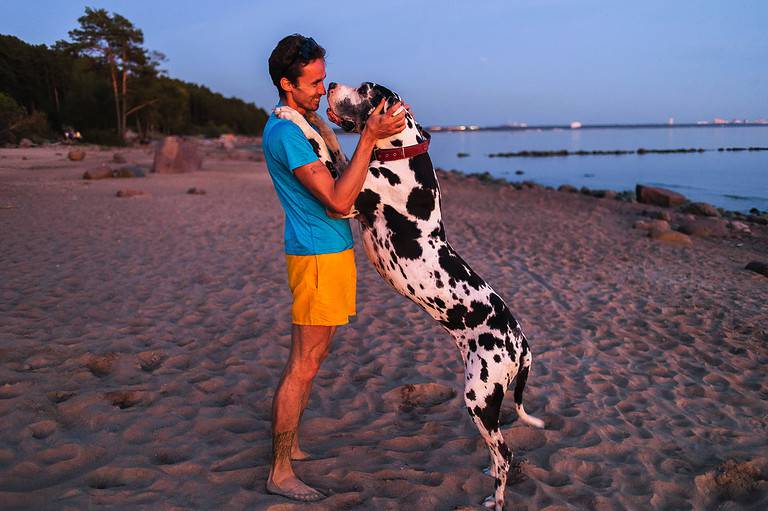
Great Danes are exceptionally large dogs that were originally bred to hunt wild boar.
©Ricantimages/Shutterstock.com
Key Differences Between German Shepherds and Great Danes
Key differences between German Shepherds and Great Danes include their sizes, coats, activity levels and trainability, lifespan, and health issues. Take a closer look at all of their differences below to learn more about each breed and how they compare.
Size
German Shepherds are large dogs, but they are much smaller than Great Danes. German Shepherd females stand 22-24 inches tall at the shoulder and weigh 50-70 pounds, while males stand 24-26 inches tall and weigh 65-90 pounds.
Great Danes are giant dogs, with females standing 28-30 inches tall at the shoulder and weighing 110-140 pounds. Males reach 30-32 inches tall at the shoulder and weigh 140-175 pounds.
Coat
German Shepherds have medium-length fur that sheds heavily year-round, especially during shedding season in the spring and fall. Brush them once every two to three days throughout most of the year, and daily during shedding season. This will reduce the amount of shed fur around your house and also prevent painful mats from developing in the coat.
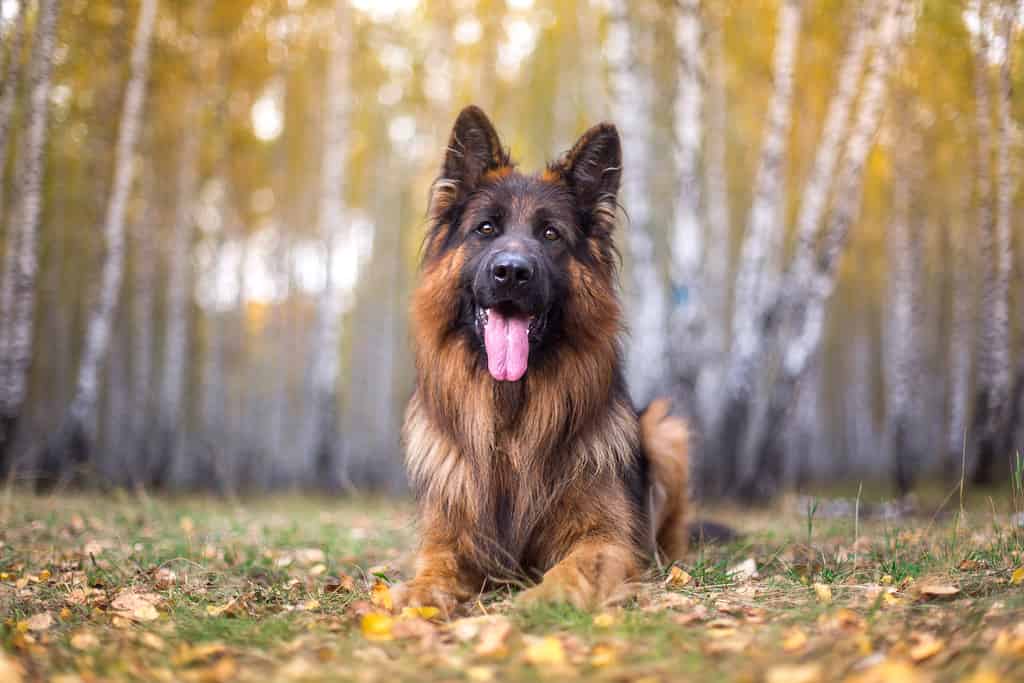
German Shepherds have medium-length coats that shed year-round.
©Korneeva Kristina/Shutterstock.com
German Shepherd coat colors include:
- Black
- Black and cream
- Black and red
- Black and silver
- Black and tan
- Gray
- Sable
- White
- Liver
- Blue
- Bi-color
Great Danes have short, single coats, but they still shed heavily year-round. Frequent brushing isn’t necessary to prevent matting, but it can help distribute oils for healthy skin and coat, and it will reduce the amount of fur they shed.
Great Dane coat colors include:
- Black
- Black and white
- Blue
- Brindle
- Fawn
- Harlequin
- Mantle
- Merle
- White
- Silver
They may also have black or white markings, or a black mask.
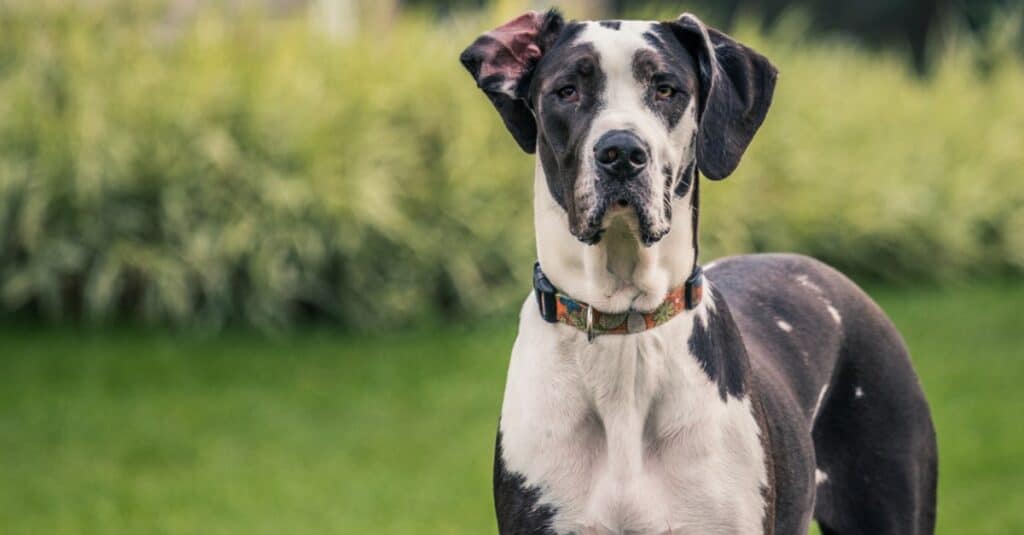
Great Danes can have a black and white coat pattern called harlequin.
©iStock.com/Earl-Wilkerson
Temperament
German Shepherds and Great Danes have a few similar characteristics. They’re very loyal, protective of their families, and make great guard dogs. They are affectionate companions and love to snuggle up with their favorite people. Both animals are gentle family pets, but they have strong guarding instincts, so they may take a while to warm up to strangers. Early socialization is important so that your dog learns to be confident and fear-free in social settings.
However, German Shepherds tend to have higher prey drives than Great Danes. Both breeds should be watched closely around new animals and never left unsupervised with prey animals like rodents or birds. Introduce new pets slowly and with all dogs leashed until they can be trusted around one another. Both breeds can do well with smaller dogs and cats, but this won’t be the case for every individual, as each dog has its own personality and some may have higher prey drives than others.
Activity Level and Trainability
German Shepherds are more active and athletic than Great Danes. However, Great Danes still require plenty of exercise, and it can be difficult to get their energy out indoors since they’re so large. Both breeds are intelligent and require adequate mental stimulation alongside physical exercise. Puzzle toys, sniff games, dog sports, and training on new tasks are just a few options available to work your dog’s mind and body.
German Shepherds learn new cues very quickly. They want to please their owners, and reward-based training yields great results. Early obedience training is especially recommended for Great Danes because they are such large, powerful dogs. Great Danes are eager to please but can be stubborn, so firm, consistent training is required.
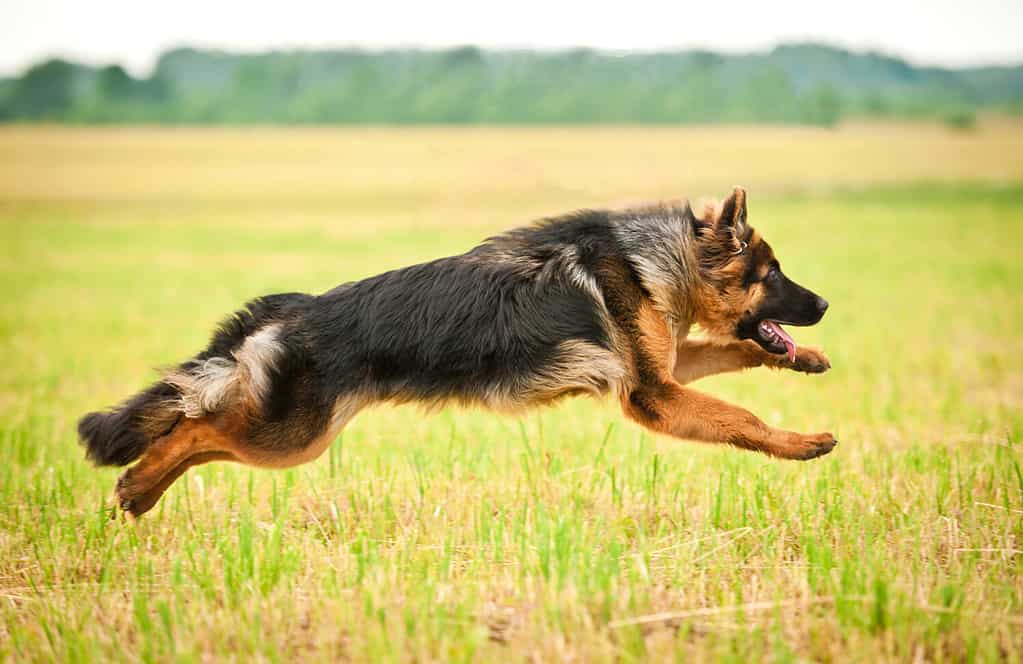
German Shepherds are very active and require more exercise than Great Danes.
©Rita_Kochmarjova/Shutterstock.com
Life Expectancy
German Shepherds have a life expectancy of 12-14 years, while Great Danes have a life expectancy of 7-10 years. Larger dogs tend to have shorter lifespans. Scientists are not entirely sure why, but they conclude that large dogs die younger because they age more quickly.
Health Problems
The most worrying health problem in these breeds is gastric dilatation-volvulus, also known as GDV or bloat. German Shepherds are prone to bloat due to their large size and deep chests, but it is extremely common, and particularly dangerous, in Great Danes.
Before adopting either breed, it’s important to know how to prevent bloat and what symptoms to watch for. A dog with bloat can die within hours if not treated, so catching it in time and bringing your dog to the emergency vet can literally save its life.
Other conditions common in German Shepherds include joint issues and degenerative myelopathy. Great Danes are prone to joint problems, heart disease, and thyroid disease. Reputable breeders will screen their dogs for all recommended genetic health conditions. The OHA lists recommended tests by breed and is an excellent resource.