Quick Take
- Norwich and Norfolk terriers were considered a single breed until 1979.
- Norfolk terriers have floppy or drop ears.
- Norwich terriers have prick, or upright ears.
Norwich terriers and Norfolk terriers are typical short-legged terriers with compact bodies. They share the same background, originating in the Eastern counties of Britain as general farm dogs. These terriers were introduced to the U.S. in 1914, but the American Kennel Club (AKC) did not officially recognize the Norfolk terrier as a distinct breed until 1979. Before 1979, these terriers were registered as either prick-eared or drop-eared Norwich terriers. While these two types of terriers look very similar, the AKC designated them as separate breeds with good reason. Although the Norwich terrier and the Norfolk terrier are similar in appearance, size, and personality, there is one major difference: their ears, and a few minor differences that set them apart. Continue reading to learn about the differences between Norwich and Norfolk terriers.
Ears
The primary difference between these two breeds is their ears. Breeders prioritized dogs with good temperaments and strong instincts to hunt rodents, without being overly concerned about a dog’s appearance. This led to prick-eared and drop-eared dogs being frequently crossbred in the early years.
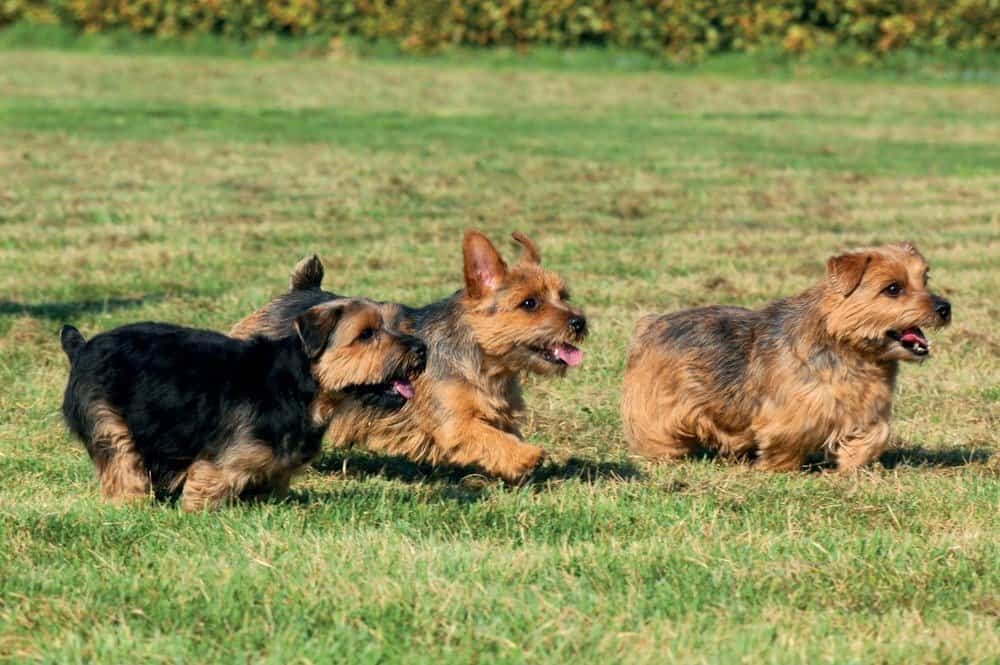
Norfolk terriers have small, V-shaped ears that are slightly rounded at the tip and drop forward close to their cheeks.
©Ricantimages/Shutterstock.com
Norwich terriers have what are called prick ears, which stand erect and alert. Breed standards call for medium-sized, erect ears that stand upright when the dog is alert. The ears should have pointed tips and be set well apart.
Norfolk terriers have drop ears. Breed standards require small, dropped ears that fold at the point where the ear meets the skull. They should lie close to the dog’s cheek and should not hang lower than the outer corner of the eye. The ears should be V-shaped with slightly rounded tips, with a smooth and velvety appearance.
Are There Color Differences in Norwich Terriers and Norfolk Terriers?
Both Norwich and Norfolk terriers have wiry double coats that shed moderately. They have soft undercoats with coarser guard hairs. Wire coats require regular grooming, specifically hand-stripping, to maintain their shine and rich color. However, the coat should be presented as naturally as possible, without excessive trimming or styling.
Norwich terriers and Norfolk terriers have nearly the same coat colors. However, the colors listed for registration and breed standards differ slightly between the two breeds. According to the AKC, Norwich terrier breed standards are black and tan, grizzle, red, and wheaten, but all shades are acceptable. White markings are considered undesirable.
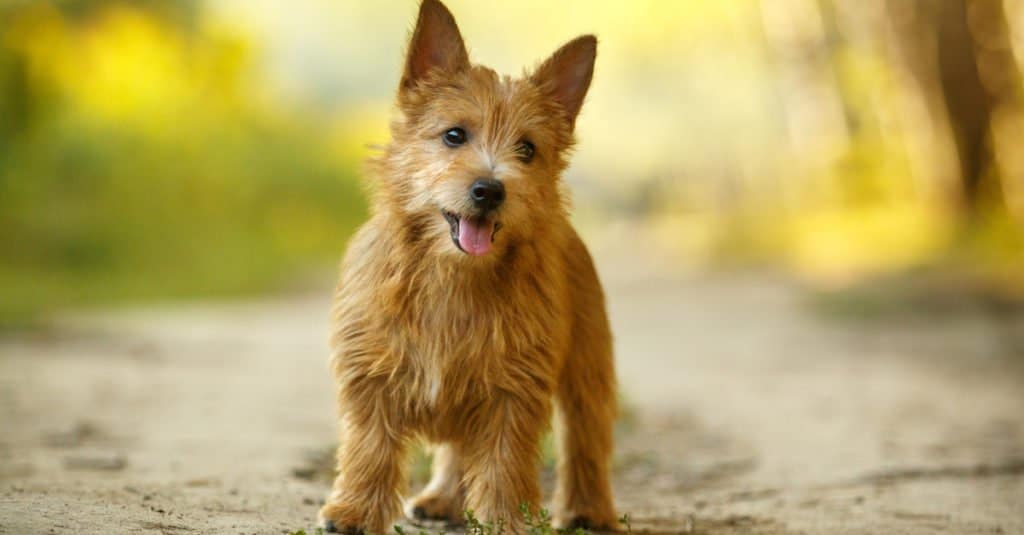
Norwich terriers have a combination of wiry guard hairs and soft underhair.
©Natalia Fedosova/Shutterstock.com
Norfolk terriers have additional colors that may be registered according to the AKC breed information page. These include black and tan, grizzle, red, and wheaten. All shades of these colors are acceptable. While white markings are also undesirable in Norfolk terriers, dark points are permissible.
Temperament
There are also some slight differences in temperament between the two breeds, although this will vary by the individual dog. Norwich terriers are known for being energetic, fearless, and affectionate. They are good with children and can be friendly to strangers, but they are also protective. They are very adaptable and make excellent companions, but they need mental stimulation and can be vocal and stubborn.
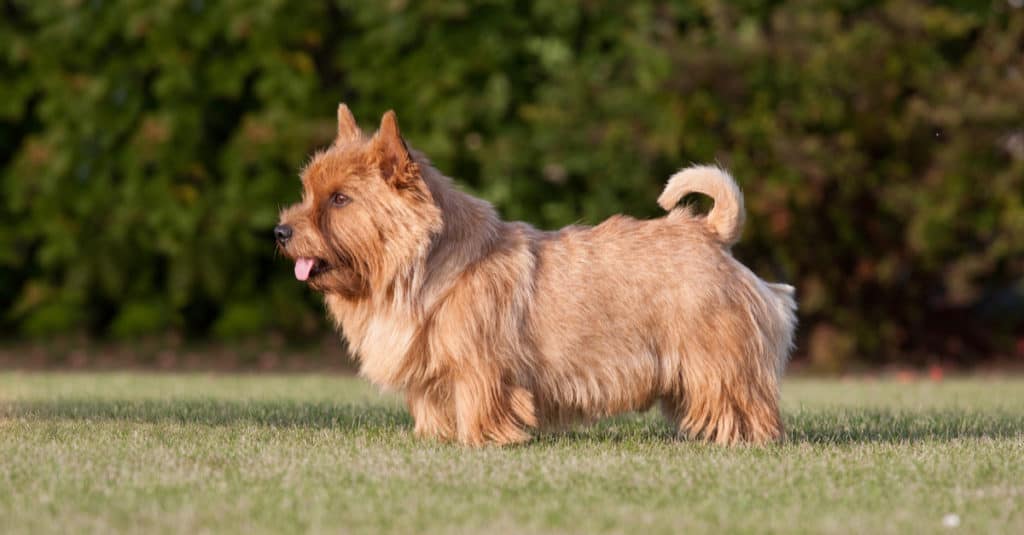
Norwich Terriers are known for being energetic and affectionate.
©Lenkadan/Shutterstock.com
Norfolk terriers are feisty, affectionate, and up for adventure. They are good with children and strangers, but they are also protective. These dogs bond well with their owners but can sometimes be jealous. They are also vocal and require mental stimulation.
Are Norwich Terriers and Norfolk Terriers Easy to Train?
Norwich terriers are intelligent and respond well to training. They are usually eager to please their owners. However, as noted above, they can sometimes be stubborn. They learn best during short training sessions with positive reinforcement, such as treats and rewards.
Norfolk terriers are also smart, but they can sometimes challenge their owners’ limits, so obedience training is very important. They also have a strong prey drive and will chase small animals, such as squirrels. They may also pose a danger to small pets, like hamsters and gerbils. Norfolk Terriers should not be allowed off-leash unless they are indoors or in a securely fenced yard.
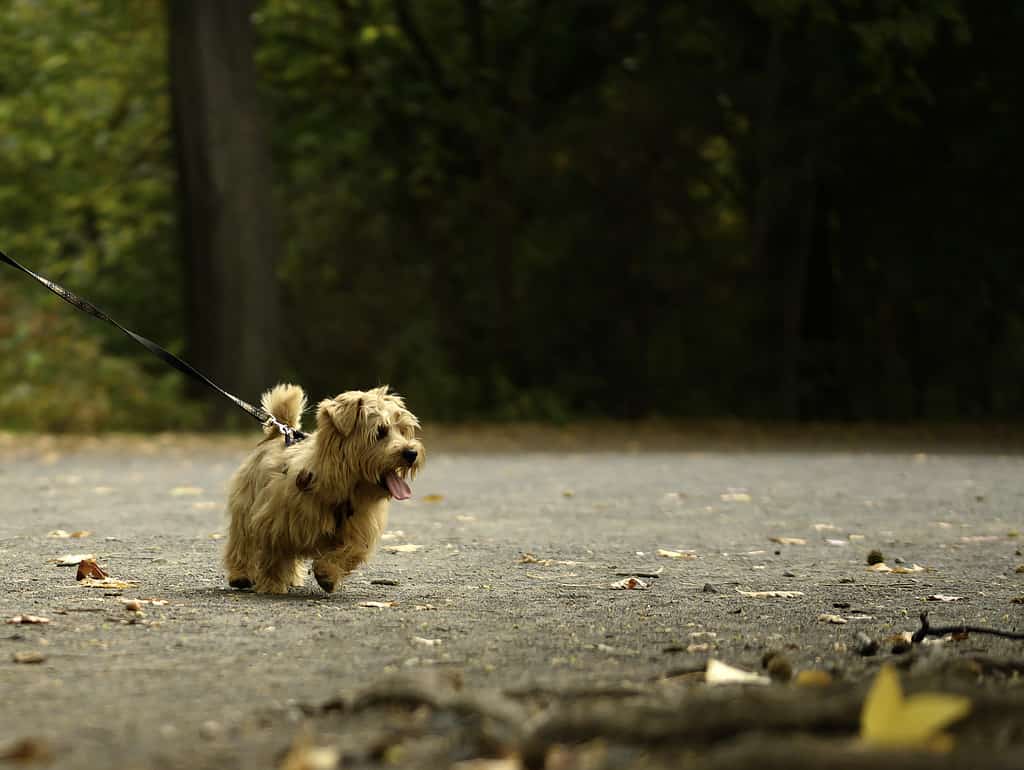
Norfolk terriers have a strong prey drive so should always be leashed unless in a securely fenced area.
©Christine McCann/iStock via Getty Images