
Methocarbamol is a medication that’s used to help with muscle pain and spasms. It isn’t a common one for dogs and is often used as a last resort.
Most medication for dogs requires very specific doses. Where people can just pop a couple of pills when they feel pain from their cabinet, it doesn’t always work the same for your pets. They aren’t able to tell you when something feels wrong until it’s too late and they’re showing severe symptoms. For this reason, you should always talk to a vet before you give your dog something, even to cut the pain.
Whenever you are looking to give your dog new medication, it’s a good idea to understand what you’re giving them and what to look out for. That way, if your dog starts having side effects or symptoms, you know immediately. Your vet should provide you with most of this information, but this article offers a quick written reference in case you forget, or can’t get a hold of them.
While there are ways to get methocarbamol that don’t involve a vet prescription, it’s not recommended. Many drugs bought from other parties aren’t regulated, and you never know if you’re giving them the right amounts or even the right drug.
Learn all about methocarbamol in this article below.
When Do Dogs Need Methocarbamol?
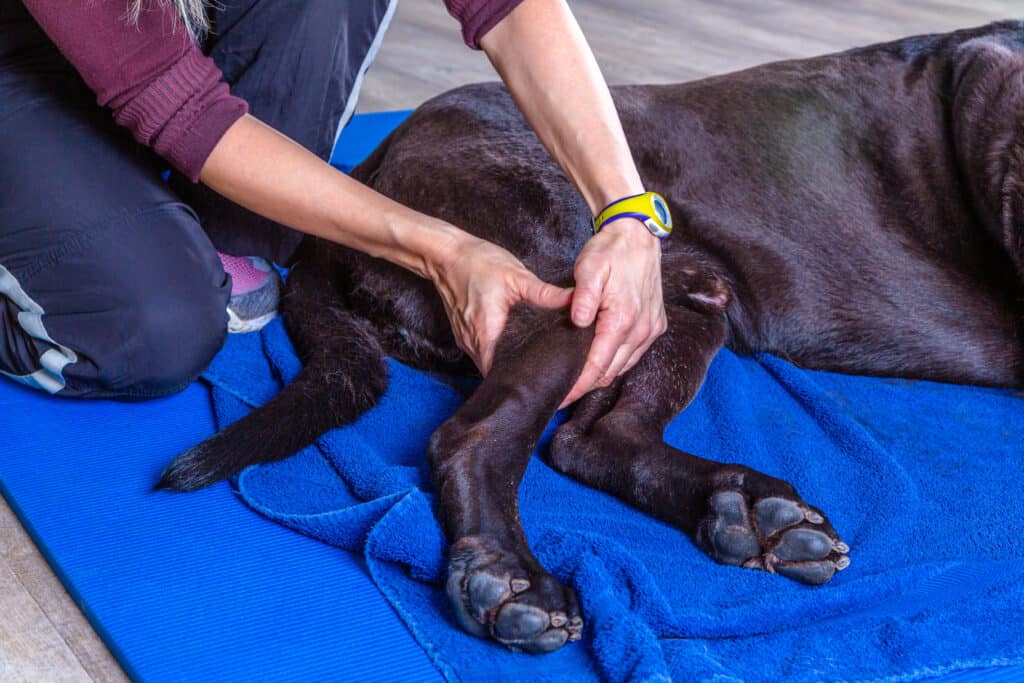
Injuries to do with muscle strain and sprains can benefit from methocarbamol.
©msgrafixx/Shutterstock.com
Methocarbamol, commonly known as Robaxin, is used as a skeletal muscle relaxant. It’s often used to help with trauma, myositis, strains, sprains, disc disease, tetanus, some poisonings, and some neurologic disorders.
It’s most often used to treat intervertebral disc disease and traumatic muscle strains. Often, unless the situation is very serious, other medications will be tried before methocarbamol.
Side Effects of Methocarbamol on Dogs
The main side effect you’ll likely see in your dog is sleepiness. Most muscle relaxants cause some sedation or sleepiness. Sometimes, the medication will also lead to unusual urine colors. The urine may simply be a darker yellow than normal, but blue-green urine is also common. These symptoms are perfectly normal and not harmful.
Other side effects are drooling, weakness, and incoordination. If your dog is doing any of these excessively, you may want to talk to your vet. They might be nothing but could be signs that something isn’t working as it should or that your dog is reacting to the medication.
Signs of Methocarbamol Overdose in Dogs
Because methocarbamol affects the central nervous system, the symptoms of an overdose are often readily apparent. The first signs are excessive sedation, slowed or depressed reflexes, stumbling, and the inability to stand. If the symptoms get worse, your dog may end up vomiting, showing signs of weakness weakness, and excess salivation.
When is Methocabamol Not an Option For Your Dog?

Pregnant dogs can be given methocarbamol, but it should be done with care.
©Nina Buday/Shutterstock.com
Since methocarbamol has the potential to make dogs very sleepy and sedate, it’s not always a good idea to give a working dog this medication. This is especially the case for dogs actively working with someone who has no other alternatives for their safety.
Of course, if a dog has shown signs of being allergic to the medication in the past, it’s not recommended that it is ever tried again. Allergies can get serious very quickly, and what has only been a mild reaction before can become life-threatening the next time.
While dogs that are pregnant, nursing, or have kidney disease can take methocarbamol, it needs to be used with caution. It’s a good idea to stay on the lower end of the dosage and keep a careful eye on the dog in question in case it starts to cause complications.
Additionally, if your dog is on any other medication that depresses the central nervous system, you need to bring this up with your vet before they prescribe the medicine. It should never be taken alongside other central nervous system depressants. Your vet will likely take you off of the other one and prescribe methocarbamol instead.
Methocarbamol Dosage
There are two doses to think about when giving your dog methocarbamol. The first is the load dose. This is the amount you give them on the first day. After that, you drop to the maintenance dose.
The load dose is 30 mg per pound of body weight divided into two to three daily doses. The maintenance dose is somewhere between 15 to 30 milligrams per pound of body weight divided into two to three daily doses.
For maximum effect, you shouldn’t give your dog all of the medicine at once. It’s instead best to break the daily dosage amount into two or three smaller amounts. For example, if you’re supposed to give your dog 1,800 milligrams for the day, break it up into two 900-milligram doses or three 600-milligram doses for the day. Depending on your chosen method, the dosage should be broken and given to your dog every 12 or every 8 hours.
How Long to Give Your Dog Methocarbamol
Though studies have shown that dogs do fairly well on this medication for up to 26 weeks without signs of toxicity, it’s generally best to go for no more than 14 to 21 days at a time.
After this period, consider taking your dogs off of the medication for a while and see how they do. If they’re not showing signs of improving, it’s best to go back to your vet and talk to them.
Also, it’s important to note that although these numbers are based on toxicity studies, it’s still best to listen to your vet first and foremost. Since you can only get this medication from licensed veterinarians, they will likely go over how much you should give your pet and for how long.
Methocarbamol Dosage Chart
| Dog’s Weight in Pounds | Methocarbamol Load Dose | Methocarbamol Maintenance Dose | Dog Breeds Include |
|---|---|---|---|
| 1 – 5 | 30 to150 milligrams | 15 to 150milligrams | Pomeranian and Chihuahua |
| 5 – 10 | 150 to 300 milligrams | 75to 300 milligrams | Boston Terrier and Pekingese |
| 10 – 20 | 300 to 600 milligrams | 150 to 600 milligrams | West Highland Terrier and Pembroke Welsh Corgi |
| 20 – 30 | 600 to 900 milligrams | 300 to 900 milligrams | Beagle and Cardigan Welsh Corgi |
| 30 – 40 | 900 to 1200 milligrams | 450 to 1200 milligrams | Vizsla and Samoyed |
| 40 – 50 | 1200 to 1500 milligrams | 600 to 1500 milligrams | Irish Setter and Airedale Terrier |
| 50 – 60 | 1500 to 1800 milligrams | 750 to 1800 milligrams | Labrador and Golden Retrievers, and Staffordshire Terrier |
| 60 – 70 | 1800 to 2100 milligrams | 900 to 2100 milligrams | Chow Chow, American Staffordshire Terrier, and Dalmatian |
| 70 – 80 | 2100 to 2400 milligrams | 1050 to 2400 milligrams | Cane Corso, Rottweiler and Akita |
| 80 – 90 | 2400 to 2700 milligrams | 1200 to 2700 milligrams | Chinook, Bloodhound, and German Shepherds |
| 90 – 100 | 2700 to 3000 milligrams | 1350 to 3000 milligrams | Great Dane, Saint Bernard, and Bullmastiff |
Alternatives to Methocarbamol for Dogs
There are a few other medications that are usually tried out before methocarbamol.
©Shane Maritch/Shutterstock.com
Most of the similar medications to methocarbamol are also by prescription only. However, methocarbamol is often only given when no other medication has helped. Generally, by the time you reach this option, there aren’t many alternatives left.
Some of the ones your vet should try to prescribe first include cyclobenzaprine and tizanidine. Both are muscle relaxants. Metaxalone and orphenadrine are also options that your vet may try.
How to Treat Methocarbamol Overdose in Dogs
Methocarbamol overdoses are very dangerous. This drug is a muscle relaxant, which keeps your dog breathing properly and their heart beating.
Because of that, it’s important to react quickly. You want to call or drive to a vet right away. It’s not a good idea to induce vomiting unless your vet says so. Sometimes, vomiting can make the situation worse.