

Quick Take
- Stopping Clavacillin® early can make the next infection far harder to treat, even when your dog looks fully recovered. See treatment duration →
- Not every dog can safely take Clavacillin®. Certain health histories make it the wrong choice entirely. Check safety and contraindications →
- The dosage isn't as simple as following the label, and your dog's weight is just the starting point. View the dosage guide →
- One of Clavacillin®'s two active ingredients exists solely to fight the drug itself being destroyed. Without it, the antibiotic would often fail. Explore the ingredients →
Has your dog just been prescribed Clavacillin® by your vet? This is an antibiotic medication used to treat infections in both dogs and cats. As is the case with all veterinary medication, Clavacillin® must be taken in the correct dosage and there can be risks and side effects associated with it. If you have any questions or concerns, you should consult your vet right away. Here, we take a closer look at the Clavacillin® dosage chart for dogs and some other common questions that owners ask.
What Is Clavacillin®?
Clavacillin® is a trademarked brand name for an antibiotic medication used in veterinary medicine for the treatment of dogs and cats. Antibiotics are drugs that are used to treat bacterial infections. The drug is supplied as tablets in blister packs for oral administration.
Clavacillin® is a combination of amoxicillin trihydrate and clavulanate potassium. Amoxicillin is a semisynthetic antibiotic that kills several different types of bacteria that cause infections in dogs. It works by stopping bacteria from being able to build their cell walls. Clavulanate potassium is a beta-lactamase inhibitor that acts as a chemical shield to protect amoxicillin from being destroyed by drug-resistant bacteria.
In the United States, Clavacillin® is a prescription drug that is not available over-the-counter and should only be given at the direction of your vet.
Is Clavacillin® Safe for Dogs?
The US Food and Drug Administration has approved the use of Clavacillin® in dogs and cats. However, only your vet can decide if it is safe for your dog.
If your dog has ever had an allergic reaction to penicillin or cephalosporin, or is pregnant or nursing, Clavacillin® is not safe for your dog. If your pup has other health conditions or is taking any other medication, including over-the-counter health supplements, your vet needs to know so that they can make an informed decision.
When treating your dog with Clavacillin®, it is critical to follow your veterinarian’s instructions and the package directions. You must always administer the exact dosage prescribed for your dog’s specific weight and complete the entire course of medication, even after your pet seems completely recovered. Stopping the treatment early can allow surviving bacteria to mutate, causing an even tougher, antibiotic-resistant infection.
Because the clavulanate potassium component can cause mild stomach upset, the directions will typically advise giving this medication with a small meal to protect your dog’s digestive system. Store the medication packet out of your dog’s reach to avoid accidental ingestion.
Clavacillin® is also safe for puppies, but it requires a precise veterinary prescription and weight-based dosage. Your vet will decide if Clavacillin® is appropriate for your puppy depending on their age, size, breed, and the severity of the infection.
What Are the Potential Side Effects of Clavacillin®?
When administering Clavacillin®, owners should be aware of common side effects, including gastrointestinal issues such as vomiting, diarrhea, and a decreased appetite, which can often be managed by giving the medication with food.
Because this antibiotic contains penicillin, it can trigger serious allergic reactions; owners must monitor for sudden signs of distress such as facial swelling, hives, breathing difficulties, severe skin rashes, or extreme changes in behavior.
If you notice any signs of an allergic reaction or if gastrointestinal issues become severe and persistent, stop the medication and contact your veterinarian.
When Do Dogs Need Clavacillin®?
Your vet may prescribe Clavacillin® for your dog if your dog has a bacterial infection. It is used to treat skin and soft tissue bacterial infections. This could be a wound, an abscess, or cellulitis (a potentially serious infection of the deeper layers of the skin).
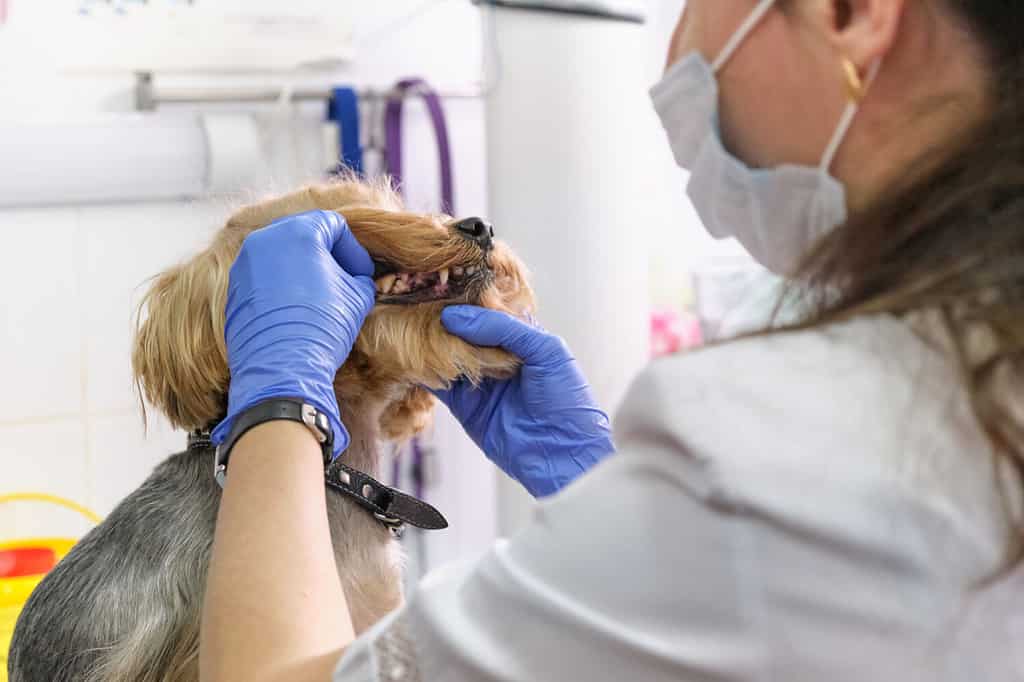
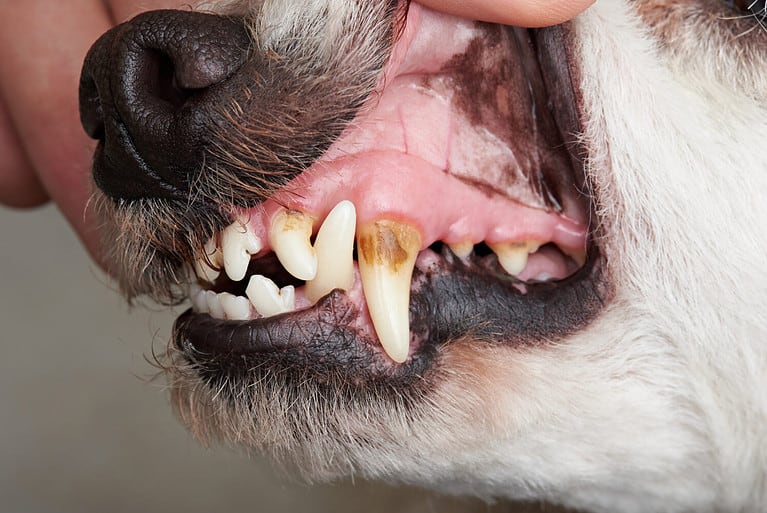
Clavacillin® can be used to treat periodontal disease in dogs.
©Yavdat/Shutterstock.com
It may also be used to treat pyoderma, which is a type of skin infection in dogs that presents as pimple-like lesions on the skin. This often occurs when the skin has been broken or exposed to moisture over a long period. It can develop in the skin folds of some dogs such as the Shar-pei. However, it is also often a secondary complication of allergic dermatitis.
For Clavacillin® to be successful in treating a condition, it must be caused by bacteria that are susceptible to it. For example, infections caused by some strains of Staphylococcus aureus, Streptococcus and E. coli can be successfully treated with Clavacillin®.
Clavacillin® is also used to treat periodontal infections in dogs. Periodontal disease is a very common canine condition, but it is more common in older dogs and in smaller breeds. In severe cases, it can lead to bone infections, liver problems, heart problems, and kidney problems.
Clavacillin® Dosage Chart
Clavacillin® should only be given to your dog with veterinary approval. The recommended dosage for Clavacillin® in dogs is 6.25 mg per pound of body weight given twice a day. To calculate the exact dose that your dog needs, your vet will weigh them during the consultation but may also take other factors into account when prescribing. Here is a rough guide to Clavacillin® dosage based on approximate weights for some common breeds.
| Dog’s Weight | Breed Examples | Dose (the exact dose can only be determined by a licensed veterinarian) |
|---|---|---|
| 5 pounds | Chihuahua | (5 x 6.25 mg) twice a day |
| 20 pounds | Beagle | (20 x 6.25 mg) twice a day |
| 50 pounds | Labrador | (50 x 6.25 mg) twice a day |
| 100 pounds | Great Dane | (100 x 6.25 mg) twice a day |
To obtain the correct dose for your dog, your vet will select the right number and type of tablet that should be given at each dose. There are 62.5-mg, 125-mg, 250-mg, and 375-mg tablets available.
How Long Is the Treatment?
Your vet will decide the most appropriate length of treatment depending on the exact infection that your dog has. Your dog must complete the entire course. Bacteria can re-establish the infection if the treatment course is not long enough. A rough guide to treatment durations your vet may recommend is provided in the table below.
| Condition | Approximate treatment period (the exact period can only be determined by a licensed veterinarian) |
|---|---|
| Abscesses, cellulitis, wounds | 5-7 days or for 48 hours after all symptoms have subsided |
| Superficial/juvenile pyoderma | 5-7 days or for 48 hours after all symptoms have subsided |
| Periodontal infections | 5-7 days or for 48 hours after all symptoms have subsided |
| Deep pyoderma | 21 days |