
At first, it may seem surprising to question what has long been considered standard veterinary practice. Most shelters require spay and neuter programs to ensure adopted dogs cannot reproduce, and many people view skipping the procedure as careless or even irresponsible. Yet, there are circumstances and health considerations that may give some owners pause before committing to surgery. With that in mind, here are ten reasons why some dog owners choose not to spay their pets.
This post was updated on August 23, 2025 to clarify information regarding vaccine reactions and breed specifics regarding cancer and tumors.
What Happens During Spay Surgery?
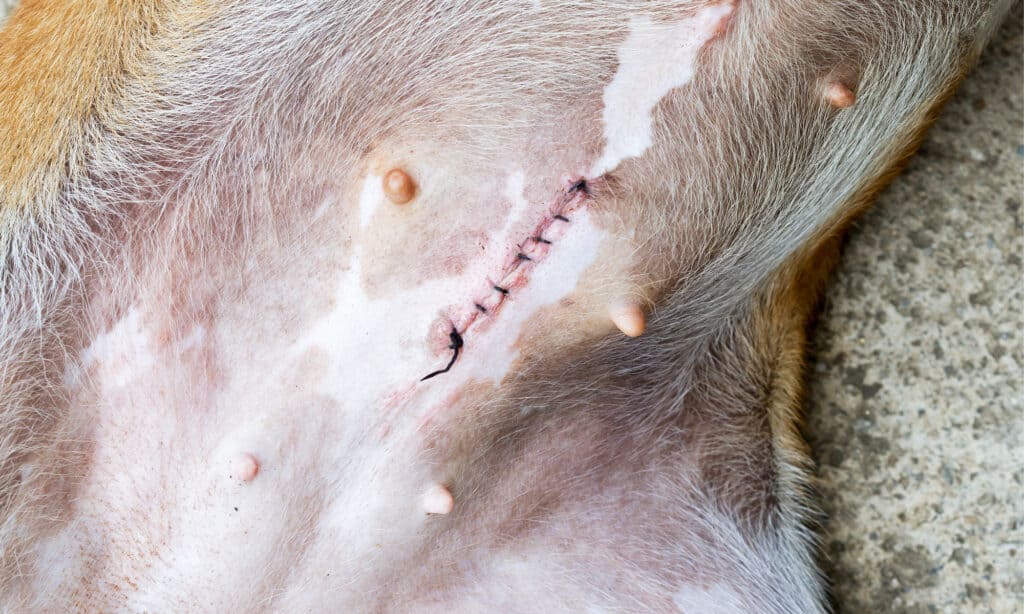
Veterinarians make an incision under your dog’s belly button to perform a spay surgery.
©iStock.com/akwitps
A spay surgery is officially known as an ovariohysterectomy. Whereas male dogs are neutered, female dogs are spayed. When this procedure is completed, your female dog has both her uterus and ovaries removed to ensure she is unable to reproduce. She’s effectively sterilized. Once her reproductive organs are removed, she does not go into heat. When female dogs are in heat, they are driven by a natural instinct to mate. This could result in attempts to escape the home. There are both advantages and disadvantages to this surgery, which is considered major.
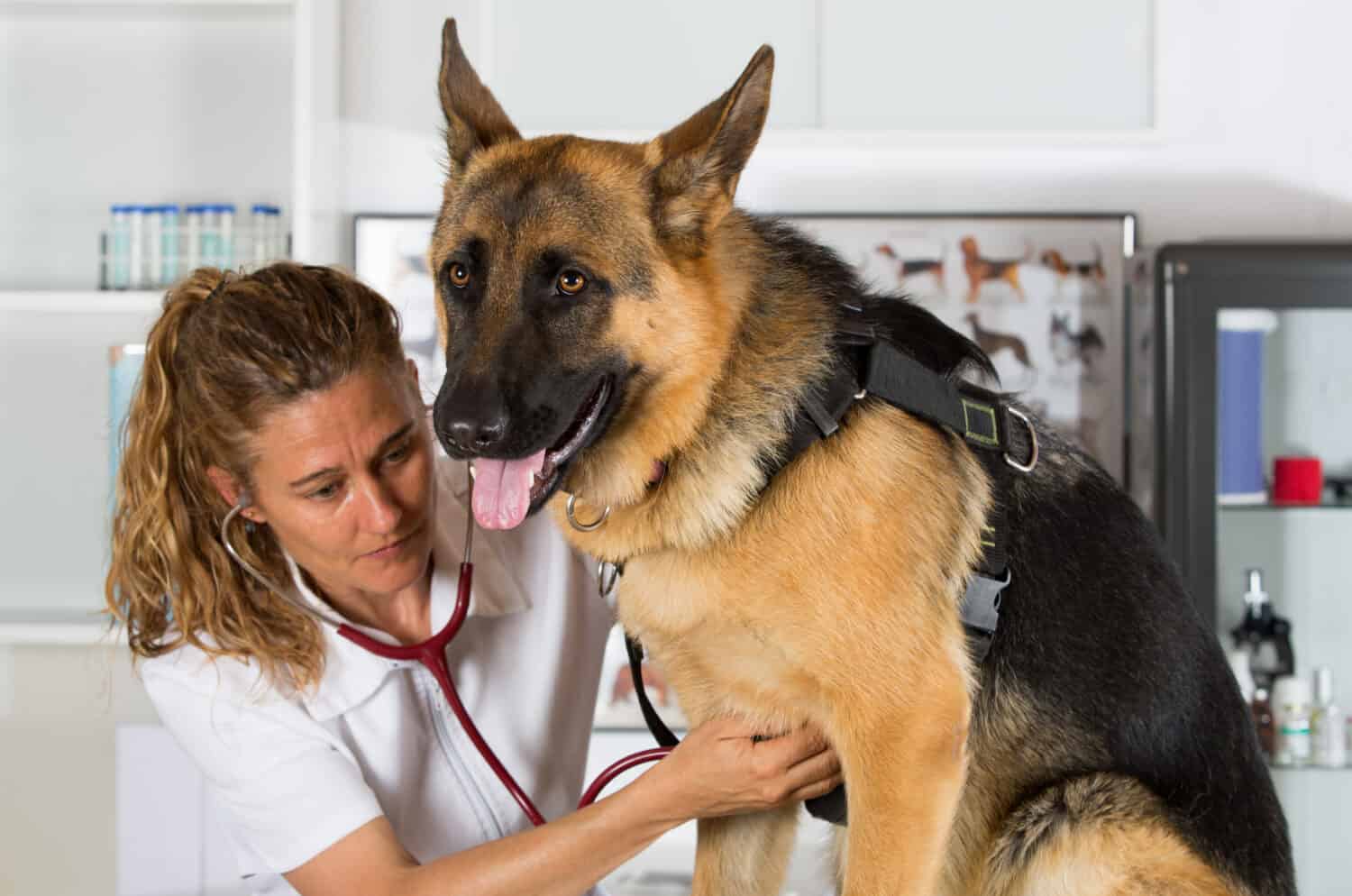
When you take your dog in for spay surgery, your veterinarian first performs pre-anesthetic blood exams. As long as everything comes through with a green light, your pup goes under anesthesia. Typically, the anesthetic is supplied via an intravenous catheter. Once under, your pup gets oxygen support via a breathing tube. Once all is in place, your veterinarian moves forward with making an incision right under your dog’s belly button. Then, they move forward with removing the uterus and ovaries. Some procedures only call for the removal of the ovaries, but it’s something you should clarify with your veterinarian as it depends on the technique they use.
10 Reasons Not to Spay Your Dog
1. The Lack of Estrogen
Estrogen is a crucial hormone that spayed dogs no longer produce. This means they get hungrier and their metabolism decreases, which increases their weight, requiring careful management. Without keeping your pup at a healthy weight, the issue that later becomes a concern is arthritis. Plus, overweight dogs deal with other health issues in adulthood and during their senior years. Another effect of the lack of estrogen is that your dog may become incontinent. Their urethral sphincters may relax, which leads to this condition.
2. The Possibility of ORS
There is a known mistake that is not so common. But it still happens and is worth mentioning. Sometimes, veterinarians leave a piece of ovary inside the dog they perform the surgery on. This has occurred often enough that it has a name. It’s called ovarian remnant syndrome (ORS) and it primarily happens in overweight dogs. The issue is that the surgeon makes what appears to be a normal incision, but the overweight pup needs a bigger cut. So, the vet might miss some pieces. This results in a swollen vulva, changes in your dog’s behavior, and even urine marking. The longer your pup is left like this, the higher the risks. A second operation to remove the remaining tissue is in order if this occurs.
3. The Possibility of Developing Cancer
Although it is recommended to spay dogs to avoid getting mammary cancer, in some dogs, spay surgeries have been linked to the development of certain cancers. Dr. Benjamin Hart of the University of California, Davis wrote a paper about this correlation after researching spay surgery in dogs for over a decade. He found that when golden retrievers are spayed, they are three or four times more likely to develop cancers like hemangiosarcoma and lymphosarcoma when compared to intact females. They are also more likely to develop other conditions that affect their joints. However, this increased risk is breed-specific and may not apply to all dogs.
4. The Possibility of Tumor Development
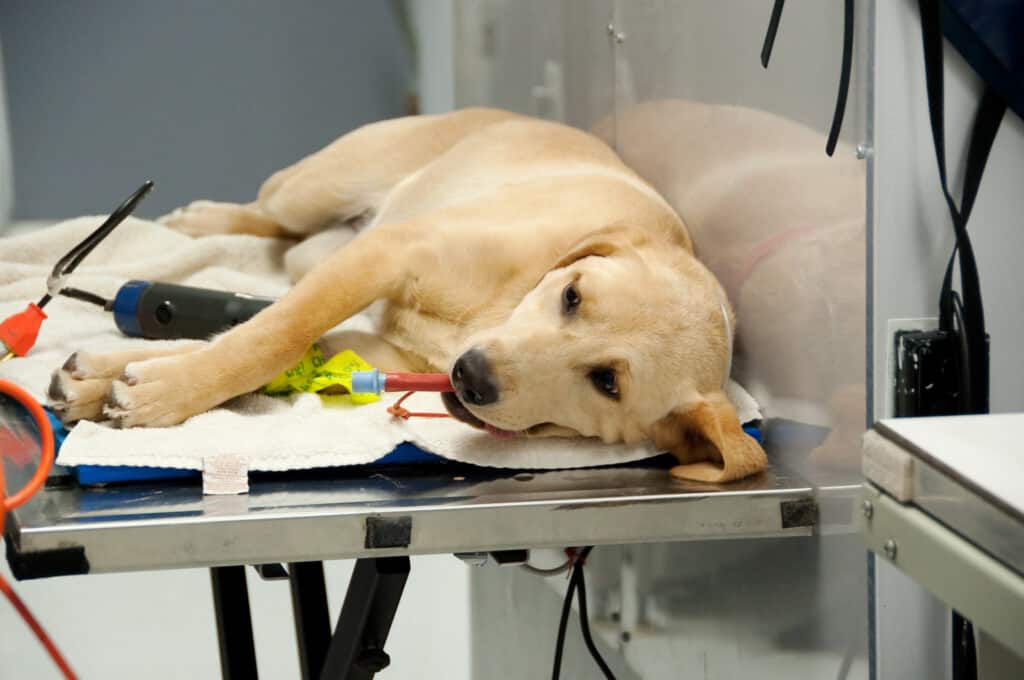
Spay surgeries may have complications that develop later in your pup’s life.
©aspen rock/Shutterstock.com
Some studies suggest that spayed dogs of certain breeds may have a higher risk of developing tumors such as lymphoma, mast cell tumors, and osteosarcoma, but this risk is not universal and varies by breed. Whereas golden retrievers have a higher chance of developing certain cancers, other pups may not face these consequences following surgery. The research also points to correlations regarding size, but there are no definitive outcomes.
5. The Shift in Behavior
When it comes to behavior, spaying can change your dog’s personality. In some cases, this may be a welcome change, particularly if you have a high-energy pup that displays overly determined tendencies. Some owners are concerned that spay surgery might render a guard dog too docile, which would be counterproductive for its purpose. Hormones dictate a female dog’s behavior, which shows up as defensive behavior. Without the constant flow of her reproductive hormones, this innate behavior shifts.
6. If You’re a Breeder
Breeding high-quality purebred dogs is a valid reason not to spay or neuter. However, there needs to be an ethical way of following through with these practices. According to the ASPCA, a responsible breeder is one who takes care of their dogs with a high standard, which includes providing “quality food, clean water, proper shelter, exercise, socialization, and professional veterinary care.” Additionally, responsible breeders handle puppies safely and socialize them early on. They accept dogs that are returned. Their focus is on health and appearance so they can enjoy long lives alongside their owners.
7. The Disruption to Natural Development
Hormone development is important to allow the dogs to take their course naturally. If dogs are spayed at a very young age, their bodies immediately feel it. The price to pay for not waiting long enough could result in new, potentially preventable health and behavioral issues. For example, spaying too early can result in noise phobia, which is when your pup displays fearful behavior following a range of noises. This could look like panting or pacing or could be more severe and lead to agitation and panic.
8. The Inevitable Pain
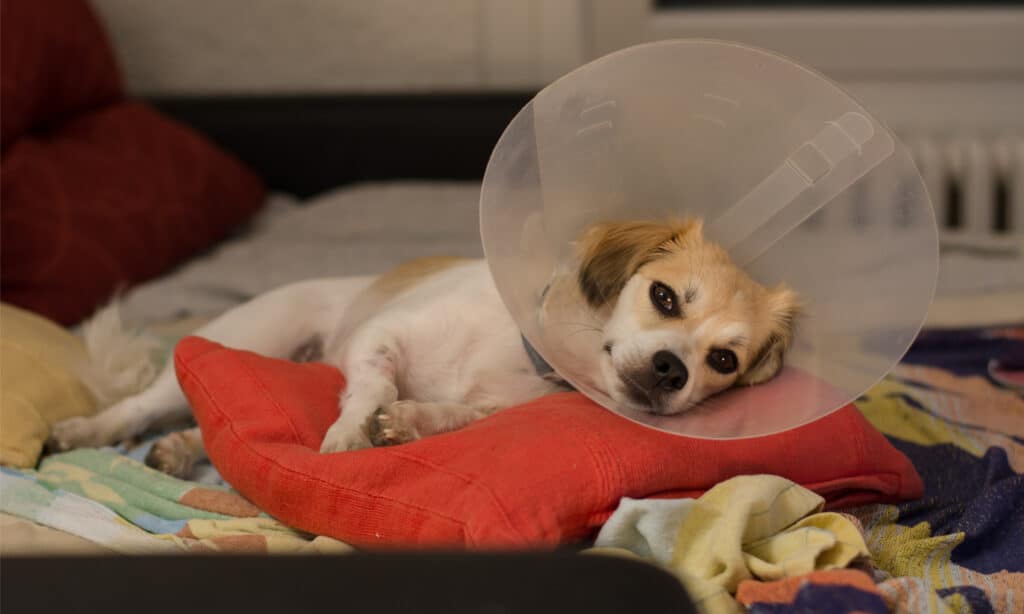
Pain is an inevitable consequence of a spay surgery.
©iStock.com/Daniel Besic
Dogs, like humans, experience pain after a major surgery. This is a fact. Veterinarians may prescribe pain medication for your pup to help ease the discomfort. However, with pain medications, there may be some uncomfortable side effects. For example, your pup may experience constipation with certain pain medications, which creates a new set of problems. Each action taken has a consequence, which may lead you to make multiple trips to the veterinarian’s office. If this is a procedure you choose to move forward with, you should consider pet insurance to offset medical expenses.
9. The Possibility of Simple Yet Costly Mistakes
While it is not very common for a dog to get a hernia on the surgery table, the possibility is there, especially if the suture line is weak. This is just one of the risks of spay surgery. Chances are that your dog will feel just fine after the surgery even if this is the case. There is a recovery period to expect but you may not notice anything is wrong. However, sometime later, your pup may start having problems due to the hernia created post-surgery. Not only that but there are also times when a sponge is left behind by accident. Vets use them to absorb blood, but they sometimes get lost or forgotten. These mistakes happen when pups go in for surgery.