
There’s something charming about an ornamental plant that looks like something else—and the bear paw succulent is no exception.
This fan-favorite succulent is arguably one of the most adorable and rare additions to any plant collection. In this article, we’ll cover how to grow and care for a bear paw succulent.
Bear Paw Succulent: Origins
The bear paw or bear’s paw, scientifically known as Cotyledon tomentosa is native to South Africa. Like its cousin, Cotyledon orbiculata (or pig’s ear), this is a perennial, evergreen, shrub-like succulent that’s used to a harsh environment.
Cotyledon tomentosa is the subject of much debate over its classification history. It was originally classified as Cotyledon heterophylla in the early 1900s. However, this was argued as another plant was classified under this species in the mid-1800s.
The debate raged on in the mid-1930s, at which point this ever-changing succulent was renamed Cotyledon ladysmithiensis. The case was brought up once again in the late 1970s when renowned botanist Hellmut R. Toelken settled the matter and dubbed the bear paw Cotyledon tomentosa subsp. ladismithiensis.
Bear Paw Succulent: Appearance
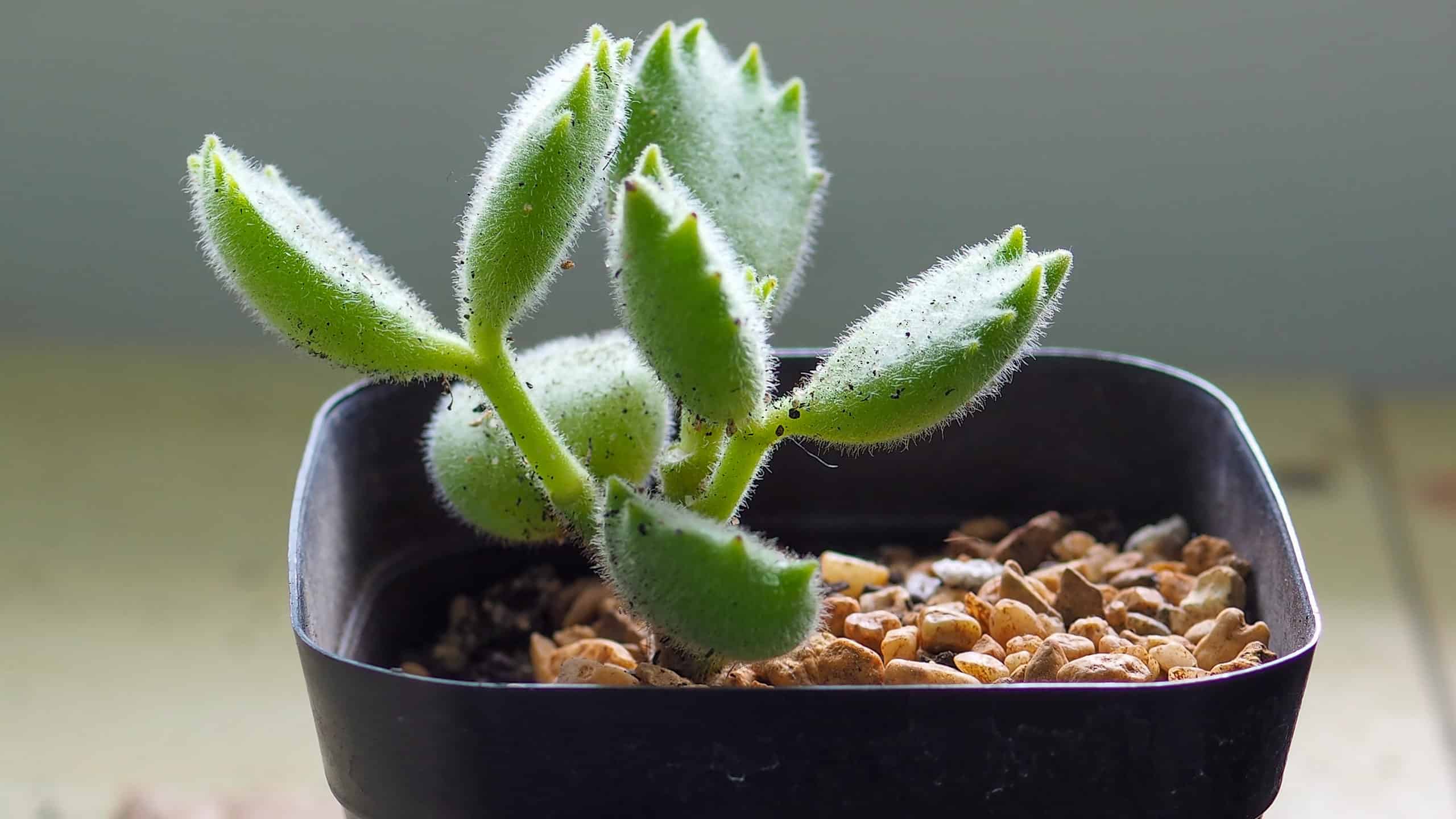
The bear paw boasts small, plump, ovaline leaves with triangular ridges along the top edge. The fragile leaves are covered with a soft, silver fuzz, adding to the resemblance to a teddy bear’s paw.
With proper care, Cotyledon tomentosa will grow 18-20 inches tall in vertical clusters. The blooms are orange and tubular, fitting with other members of the Cotyledon genus.
Some bear paws have a red to purple edge along the “claws.” However, if your succulent deepens into a red or purple tone, it could be a sign of stress.
How to Care for a Bear Paw Succulent

The bear paw has a soft, fuzzy coating. Handle its fragile leaves with care.
©Pavaphon Supanantananont/Shutterstock.com
Bear paws are more cold-hardy than most other succulents, thriving outdoors in USDA zones 9-11. However, overwintering is important in USDA zone 9.
These succulents are easy to care for. However, they are fragile, so you should handle it with care.
1. Soil Selection
Cotyledon tomentosa does not like water. Plant this succulent in well-draining earth, opting for cactus soil over succulent soil.
This sensitive succulent is prone to root rot. Choose a pot with ample drainage to prevent this issue.
2. Watering
Water this mountainous plant sparingly. It’s better to forget to water this plant for a month than to water it too much.
Water every 2-3 weeks during the active growth season, reducing the frequency to monthly during the winter.
3. Sun Exposure
Cotyledon tomentosa loves the sun but is sensitive to intense, direct sun. Place this adorable succulent near a sunny South or east-facing window.
If you notice signs of stretching, move it to a sunnier spot. If you notice shades of purple or scorching, move it away from peak sunlight hours.
4. Maintenance and Care
This cute succulent is sensitive to the same pests that generally attack succulents: scale insects, mealybugs, and spider mites. It may also be susceptible to aphids if planted outdoors.
If you notice these pests, wipe them away with dish soap and a warm, damp cloth. Use neem oil if the issue comes back.
5. Fertilization and Repotting
Bear paws don’t require fertilization, but it can help promote blooming. Provide a succulent-friendly fertilizer at the start of the growing season.
Repot your plant every two years or when the pot gets too crowded.
6. Overwintering
While Cotyledon tomentosa will grow outdoors in USDA Zone 9, they should be brought indoors or covered for the winter. Apply a layer of mulch to protect the roots and cover the plant in burlap when frost warnings start.
How to Propagate a Bear Paw
Unlike most succulents, bear paws don’t respond well to leaf-cutting propagation. Instead, opt for a stem cutting.
- Use clean, sharp scissors or a knife to cut the stem, leaving a few leaves intact at the top of the cutting. Leave foliage on the remaining stem to promote new growth.
- Leave the cutting in a warm, dry spot to develop a callous. This process should take 2-3 days.
- Dip the sealed over cutting end in rooting hormone and place it in a well-draining pot with cactus soil.
- Leave the cutting to develop roots for 2-3 weeks before watering. Give the cutting a gentle tug—if it shows resistance, it has roots.
Bear paws take years to mature when grown from seed. This method is the best option for growing your collection.
Are Bear Paw Succulents Rare?
Bear paw succulents are listed as vulnerable in their natural environment. While it’s rare to see these adorable succulents in a plant collection, they can be sustainably sourced from nurseries.
Are Bear Paw Succulents Toxic to Pets?
Bear paw succulents are listed as non-toxic to pets, but there is anecdotal evidence shared by pet owners indicating the contrary. As this succulent is a member of the Cotyledon family, it may produce trace amounts of Cotyledontoxin. Play it safe by keeping this plant in a safe place from pets and children.