
Quick Take
- Nepal’s reforestation policies may have unintentionally contributed to its monkey conflict. Explore possible causes →
- When the sun goes down, a second wave of raiders takes over, and farmers admit there is nothing they can do to stop it. Meet the nighttime raiders →
- Most affected farmers are entitled to financial relief, though there is a catch that almost all of them don't know about. See the compensation details →
- The fewer people who farm, the worse the raids get. The cycle feeding this crisis is harder to break than it looks. Understand the vicious cycle →
Nepalese farmers have worked the mid-hill farmlands of the Himalayas across the sloping hillsides for thousands of years. Terraces are cut into the hills to prevent erosion. Farmers raise livestock and rely on rotating crops such as legumes, maize, millet, and rice for their livelihoods. Farming here is challenging due to the unpredictable subtropical highland climate, which brings seasonal monsoons and dry spells. However, agricultural communities face even greater challenges than the weather: rhesus macaques, wild boars, and porcupines frequently raid crops, causing significant damage.
Continue reading

Step-like fields carved into the mountain slopes create farmland in Nepal’s mid-hill region.
©saiko3p/Shutterstock.com
Rhesus Macaques Take a Major Toll
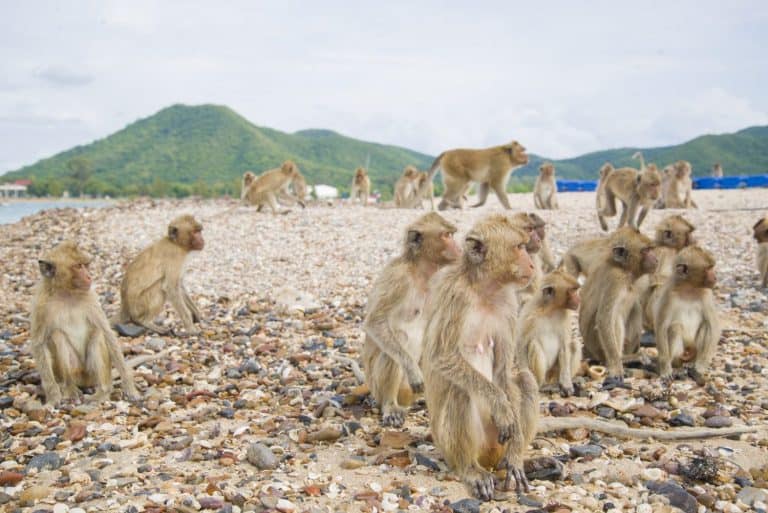
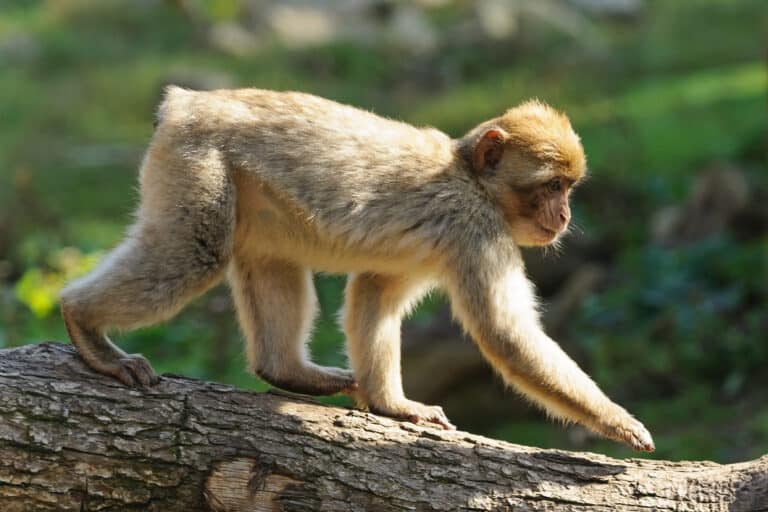
The rhesus macaque (Macaca mulatta) is a curious and intelligent species of Old World monkey that roams widely across Nepal. Beyond their intelligence and close family bonds, these little monkeys are also highly adaptable. Some macaques live deep in forests, but others have grown accustomed to life in and near cities full of people.
Macaques live in noisy and active troops of up to 200 monkeys, which can cause significant disturbances when they encounter humans. The troops are not only boisterous but also constantly searching for food. They primarily eat a plant-based diet of fruit, nuts, seeds, grasses, vegetables, and roots. However, they will also sometimes eat insects, small animals, and food scavenged from humans, including crops. A 2026 study found that cultivated crops make up 49% of wild macaques’ annual diet in central Nepal.
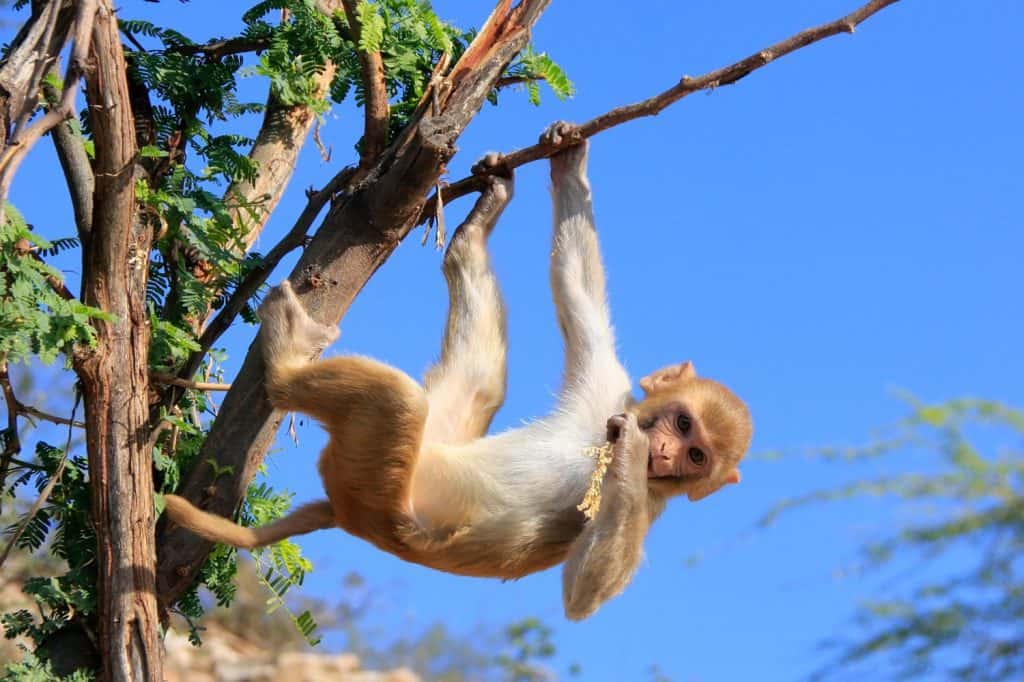
Rhesus macaques live in hierarchical ranking social groups of around 20 to 200 individuals.
©Don Mammoser/Shutterstock.com
A recent study by the National Trust for Nature Conservation (NTNC) directly counted 20,395 rhesus macaques across 44 highly affected areas. The report projected a minimum population of more than 104,000 rhesus macaques across Nepal’s wider mid-hill region. It also found significant crop losses due to the monkeys’ foraging. Researchers estimated annual crop losses of about $327,000 among 1,846 surveyed households. Further, the average household reported losing about half of their maize production to monkey raids per year.
It’s Not Just Monkeys
Nepalese farmers must deal with more wildlife problems than monkey raids. Ram Prasad Paudel of Maramche village told Mongabay, “During the day, it’s the monkeys that raid the field, at night it’s the turn of the porcupines. Villagers guard their crops during the day to drive away monkeys. But when it’s dark, the porcupines come and eat the crops and we can’t do anything about it.” Indian crested porcupines (Hystrix indica) are nocturnal. They forage for food at night, with farmers reporting that they eat maize and potato crops.
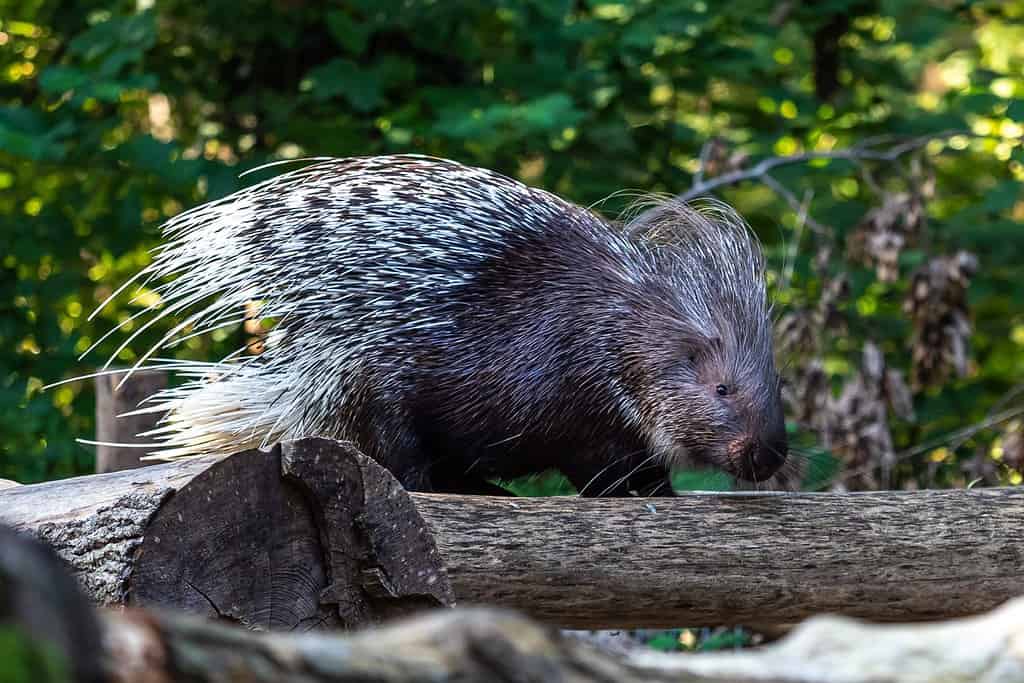
The Indian crested porcupine is a nocturnal animal that sometimes raids crops overnight.
©RudiErnst/Shutterstock.com
A case study from the Palpa district surveyed 73 randomly selected farmers and found that, besides macaques, rabbits and deer caused the most crop damage. Also, the study found that 85% of the farmers said wildlife damage had increased over the previous five years.
Additionally, wild boars (Sus scrofa) are known to trample through fields, damage growing plants, eat standing crops like maize, and root in the ground for potatoes and tubers.
Why Is Wildlife Conflict Getting Worse?
Fewer young people in the mid-hills of Nepal are continuing the family tradition of farming the land. A case study conducted by researchers at the Southasia Institute of Advanced Studies found that people listed various reasons for migrating, with some of the reasons including better education, employment opportunities, and access to roads and healthcare.
Another small study looking at the Mangalsen Municipality in Achham District found that monkey and wild boar-human conflict was associated with lower agricultural productivity, declining rural livelihoods, and an increase in out-migration. An AP story from Nepal reports that farmers spend hours each day trying to protect their fields from wildlife.
As more farmland is abandoned, fewer people remain to guard the fields. The boundaries between farms and wildlife habitats blur, potentially increasing human-wildlife interactions. This creates a difficult cycle: wildlife damage makes farming less productive, and out-migration leaves fewer people to deter the animals.
Farmers Are Fighting Back
The farmers who remain are not giving up on their crops and land. According to the AP report, each day people arm themselves with slings, sticks, and homemade noise cannons and head to the treeline to watch for the invaders. The NTNC report also outlined more dangerous and inhumane methods, including mass drownings and high-voltage traps.
Although the government has programs to compensate farmers for crop losses, the NTNC report found that 80% of surveyed farmers were unaware they could seek compensation for wildlife damages.
Nepal Is Searching for Solutions
A government task force is seeking solutions to minimize crop damage. Some possible approaches include growing crops that animals are less likely to damage, implementing crop guarding systems, organizing community patrols, managing habitats, and improving compensation programs.
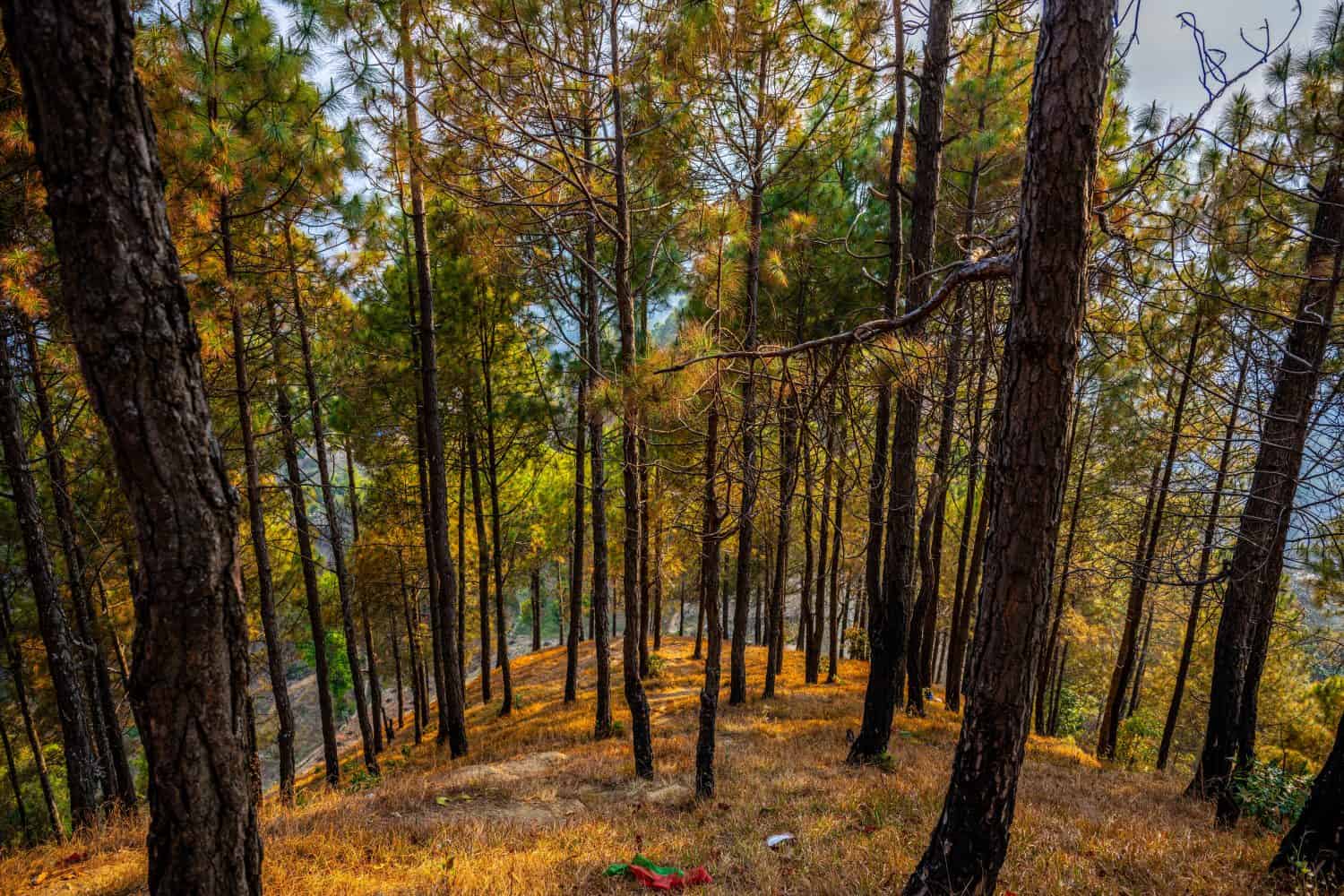
Beginning in the late 1970s, the Nepal-Australia Forestry Project planted millions of hardy, fast-growing pine trees in an effort to reforest the country’s overlogged and barren mid-hills.
©Emad Aljumah/Shutterstock.com
Sabina Koirala, who holds a PhD in human-monkey conflict, told Mongabay that part of the problem may have originated from Nepal’s reforestation policies in the 1970s. “Pine trees native to Australia were the government’s choice as they would remain green throughout the year and grow very fast. They could show the progress real quick.”
Koirala hypothesized that once the fast-growing pine trees spread across the forest, monkeys may have been forced to venture near human habitats in search of food. She believes habitat enrichment programs, such as planting fruit-bearing native trees, may help reduce the problem. However, many of the studies in the area are case studies or have small sample sizes. Further research is needed to determine whether planting native fruit-bearing trees can effectively reduce crop damage from wild animal raids.