
Succulents come in various shapes and sizes, often bearing the name of the real-world item they resemble—the string of bananas and hoya heart, to name a few.
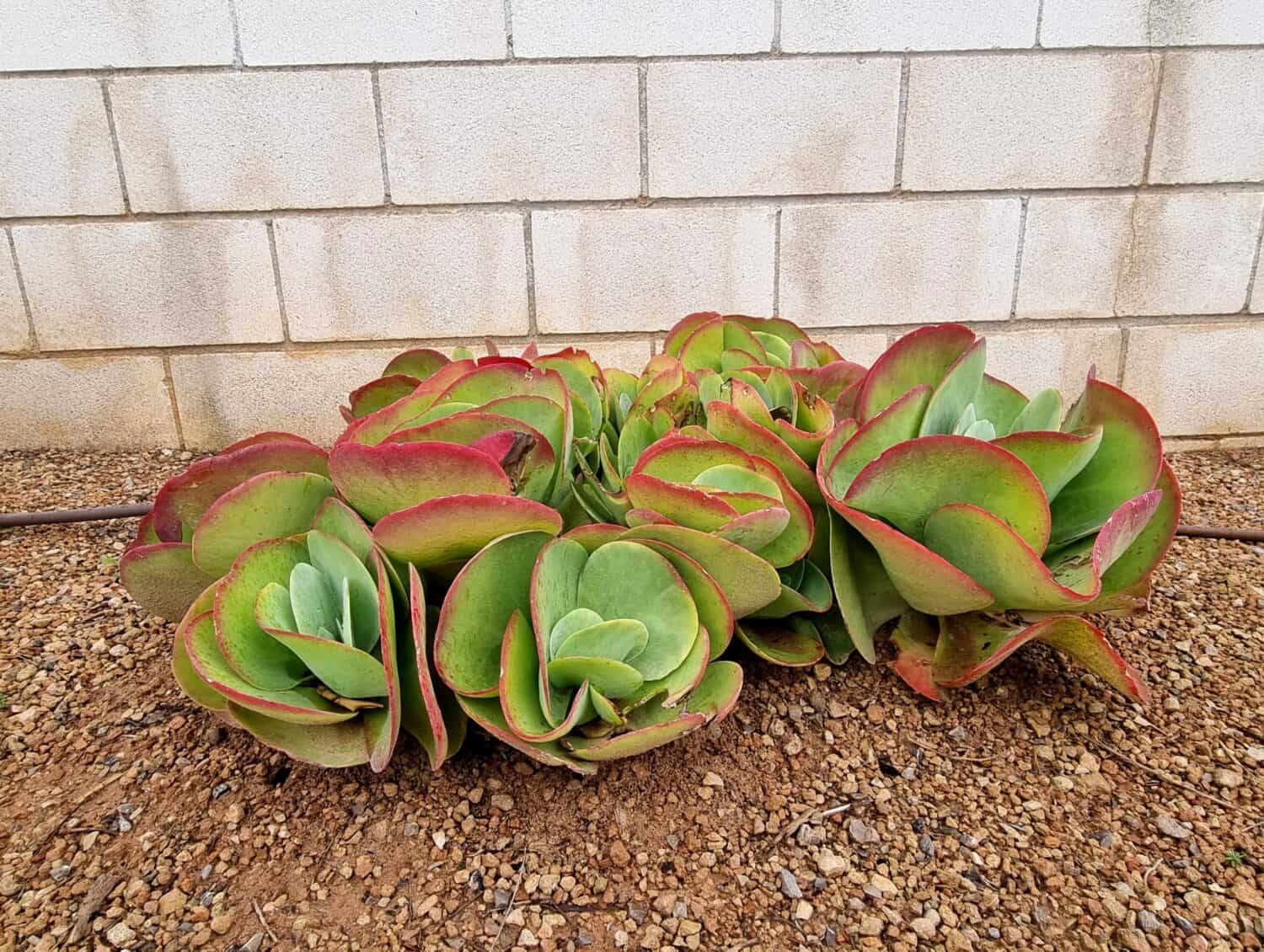
The pig’s ear succulent is another popular succulent among collectors, named for its adorable resemblance to—you guessed it— pig ears.
In this article, you’ll discover more about this cold-hardy succulent and how to care for it.
Let’s dig in!
Pig’s Ear Succulent: Origins
Cotyledon orbiculata grows naturally in South Africa, spanning up into Namibia. Also known as Round-leafed navel-wort, it was historically used in traditional medicine as a topical salve for skin conditions. While studies have proven its potency, Cotyledon orbiculata can be toxic and should not be consumed or used medicinally.
There are several naturally occurring varieties of Cotyledon orbiculata, lending to variances in size, coloration, and cold hardiness. However, they all share the flat, coin-like leaves and tubular flowers of the Cotyledon genus.
Cotyledon orbiculata lives in several mountainous regions, contributing to its cold hardiness that sets it apart from other succulents.
Pig’s ears are primarily grown indoors as ornamental, potted succulents in North America. However, they are invasive in New Zealand.
Pig’s Ear Succulent: Appearance
The pig’s ear succulent is a low-growing, shrub-like succulent. Its leaves are smooth and round or ovaline and often a shade of vibrant green with a red-purple border. Some varieties have darker green or silvery tones.
The leaves grow upward in clusters to form a loose rosette. The stems are woody, as are the flower stalks that grow high above the foliage with tubular orange, bell-shaped blossoms.
While this succulent is a low grower, the flower stalks can reach 12 inches tall and higher with ideal conditions.
During growth periods, you may notice a fine white powder on your plant’s foliage. Don’t worry; this isn’t a pest or infection! This substance is a natural sunscreen and moisture retention layer called “farina.” The pig’s ear produces this substance in volatile environments or during intense temperature fluctuations.
How to Care for a Pig’s Ear Succulent

With proper care, the Cotyledon orbiculata will produce lovely bell-shaped blooms.
©Darkydoors/Shutterstock.com
Pig’s ear succulents are relatively easy to care for. You can grow this cold-hardy succulent outdoors in USDA zones 9-11. However, if you live in an area that drops below freezing, you should cover them or overwinter them indoors.
1. Soil Selection
Like many succulents, the pig’s ear is sensitive to root rot and overwatering. Choose a well-draining succulent soil or even a cactus soil for this hydrophobic plant; do not plant this succulent in regular potting soil.
Choose a pot with plenty of drainage so water moves away from the sensitive roots.
2. Watering
Let the soil dry completely before giving your pig’s ear a good soak. It’s better to forget to water this plant over giving it too much.
Water your pig’s ear every 3-4 weeks. Increase the frequency if you notice your pig’s ear wilting or wrinkling.
3. Sun Exposure
Place your Cotyledon orbiculata in bright, indirect sunlight. While it prefers 6-8 hours of sunlight each day, it will get scorched in direct sunlight during peak hours.
Unlike many succulents, the pig’s ear will tolerate dim conditions. However, proper sun exposure is a must for growth and blooming.
4. Maintenance and Care
The pig’s ear is susceptible to the usual suspects with succulent pests: scale insects, mealybugs, and spider mites. If you place your Cotyledon orbiculata outdoors, watch out for aphids.
Wipe these pests away with a damp cloth and dish soap. Use a succulent-friendly pesticide like neem oil if the issue continues.
5. Fertilization and Repotting
The pig’s ear doesn’t require fertilization to thrive, though a light feeding at the beginning of the growing season can promote blooming.
Repot this succulent every 2-3 years to prevent overcrowding and to replenish soil nutrients.
6. Overwintering
If you live in USDA zone 9 and wish to grow your Cotyledon orbiculata outdoors, overwintering is essential. Move your plants indoors or cover them with a layer of mulch and burlap during the winter months.
An established pig’s ear will tolerate temperatures as low as 30°F (-1°C), but covering is recommended.
How to Propagate a Pig’s Ear
Propagating an established plant is the best way to grow a pig’s ear, as growing from seed can take years for the plant to mature and become established.
Leaf cuttings are the preferred propagation method for this succulent:
- Water your pig’s ear a few days before propagating.
- Gently pull and twist an established leaf from the stem.
- Place the leaf in a warm, dry area away from direct sunlight for 2-3 days. This rest period allows the cutting to callous over.
- Dip the calloused end in rooting hormone and lay atop a shallow dish of cactus soil. Gently cover the end with soil.
- Mist the tray and cover with plastic wrap.
- Set the tray in indirect sunlight, misting it regularly to preserve moisture.
- Once roots are established and the original cutting withers, transfer to a new pot.
Wait for the newly potted succulent to establish roots for 2-3 weeks before giving a good soak.
Are Pig’s Ear Succulents Toxic to Pets?
Pig’s ears produce a substance coined Cotyledontoxin. While studies on this toxin are limited, it’s believed to be toxic to pets, causing gastrointestinal distress and heart arrhythmias when consumed. Play it safe and keep this plant out of reach of pets and children.