
There are many intriguing varieties of bonsai trees, from the attractive hawthorn bonsai to the brush cherry, an evergreen shrub or tree that grows bright red fruits. The type of bonsai you choose should be based on the care required, the climate needed, light and watering needs, placement suggestions, and your level of commitment. Some species are easier to care for than others or require less attention than others.
The brush cherry bonsai is one of the species that requires a bit of attention without being a total “attention hog” like some other species. During hot months, they do require daily watering and the occasional placement adjustment, but they work in both warm and temperate climates, as long as they have plenty of light.
To help you decide if the brush cherry is an appropriate choice for your circumstances, read the directions below.
What Makes Brush Cherry Good for Bonsai?
The evergreen brush cherry is naturally a fairly large shrub or medium tree. They are aesthetically pleasing and moderately easy to grow as bonsai, requiring specific care but not hefty work. They’re an excellent plant for intermediate bonsai enthusiasts or beginners with the ability to keep them watered and healthy as prescribed below. They are somewhat drought resistant, need a warm climate, and generally grow well indoors or outdoors, as long as they are protected in winter and watered properly with plenty of light.
Classification and Varieties of Brush Cherry
Brush cherries come in two primary varieties: Syzygium paniculatum and Suzygium australe. Both species belong to the myrtle family and are evergreen, native to eastern Australia’s rain forests. However, most often when you hear of brush cherries, the Syzygium paniculatum is what is being referenced. Originally, they were both classed as Eugenia austalis and thought to be the same plant, but botanists revised this classification. For the purpose of these care instructions, we are discussing Syzygium paniculatum.
Brush Cherry Bonsai Description
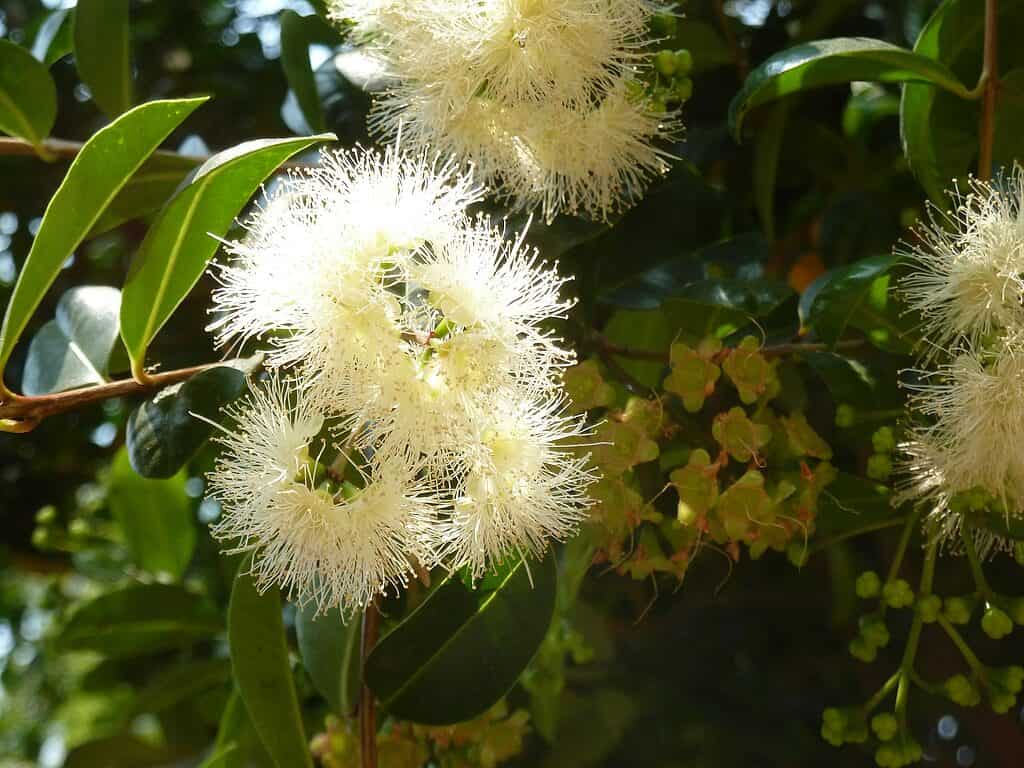
The blossoms are fluffy and white, sort of feathery in appearance.
©JMK, CC BY-SA 3.0, via Wikimedia Commons – Original / License
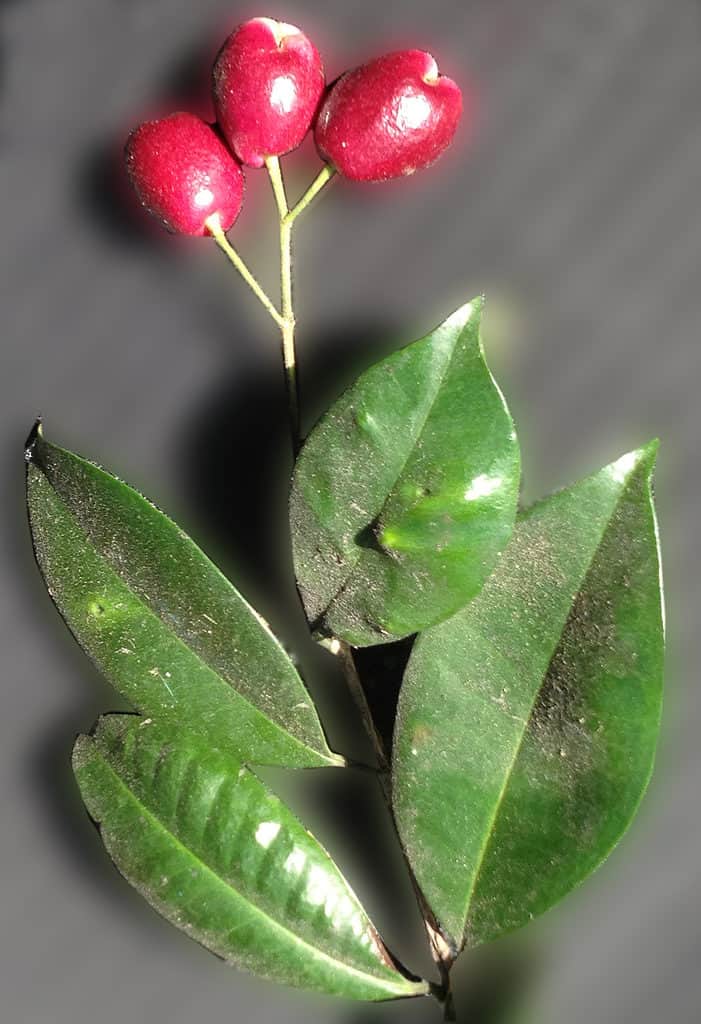
Brush cherries are evergreen trees or shrubs, with lance-shaped leaves in dark green. The leaves are glossy and solid, growing in opposite leaf pairs. They produce white flowers in spring, and red fruit in late summer.
When left to nature, they grow between 9 and 45 feet tall and 6 to 30 feet across.
How to Grow Brush Cherry Bonsai Trees
There are several things you’ll want to keep in mind as you grow your brush cherry bonsai, whether indoors or out.
Planting Location
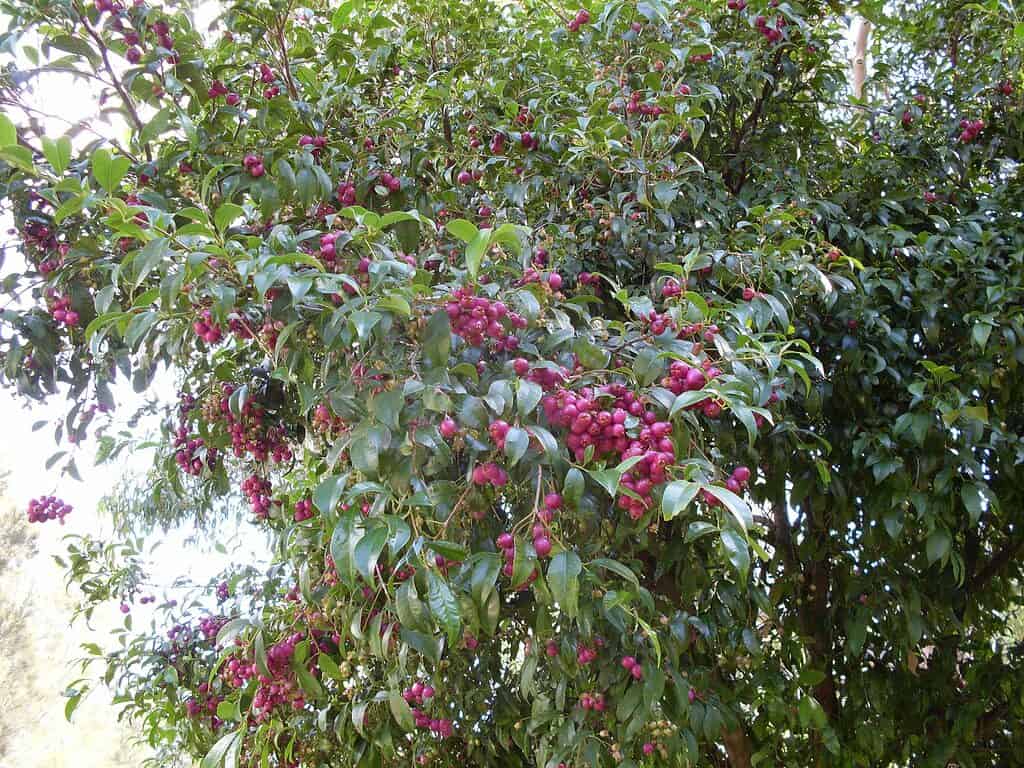
The trees in the wild are fairly large and quite often heavily loaded with fruit.
©John Tann from Sydney, Australia, CC BY 2.0, via Wikimedia Commons – Original / License
Brush cherry are tropical plants who do best when grown outdoors, assuming the climate is hot enough. They should be placed where they will get the most direct sunlight possible in the cooler to warm months, with some partial shade provided on the hottest days. Many folks opt to move the plant midday to guarantee this need of loads of sunshine and partial shade during hot months is maintained.
If you decide to grow your brush cherry indoors, you must place it in a space where it will receive plenty of light and will not be near any drafts or air vents. When you move the plant outdoors, give it partial shade for the first two weeks as it adjusts to the uptick of sunlight provided to it.
Lighting
Brush cherry bonsai do well as indoor or outdoor bonsais, though most folks recommend growing any type of bonsai outdoors most of the time. Bonsai should only ever be kept indoors if you have a proper lighting rig, including full spectrum lights. We recommend using LED, full spectrum grow lights.
This particular bonsai loves sunny, warm weather, being a tropical plant. They do best in full sun, but can tolerate partial shade during the hottest days. They should always be placed in the shade for part of the day if the weather is particularly hot and dry.
Temperature
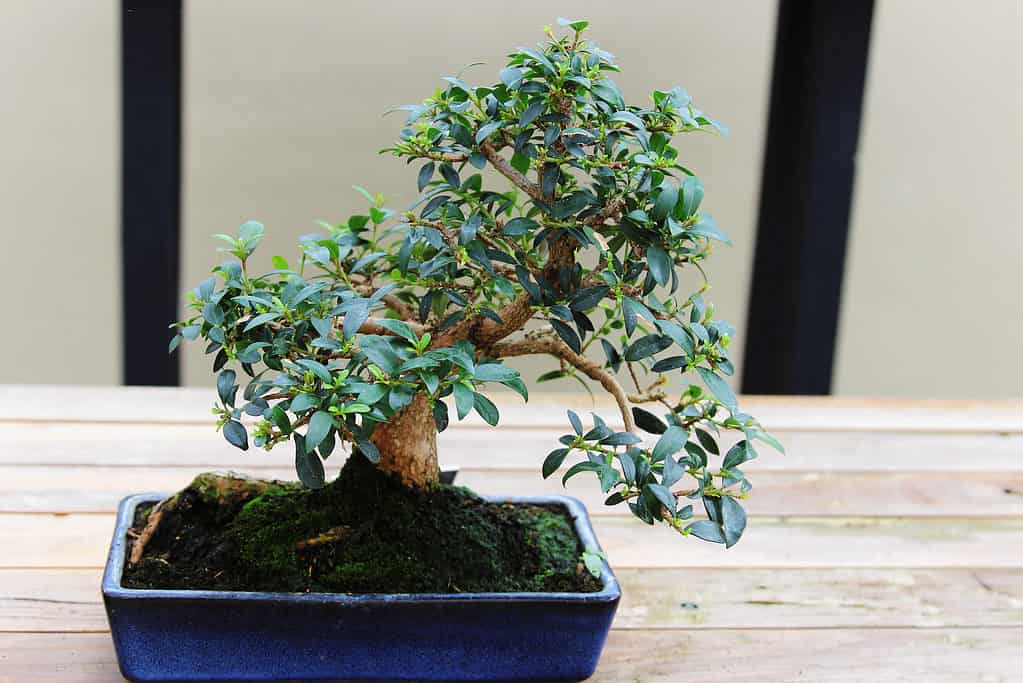
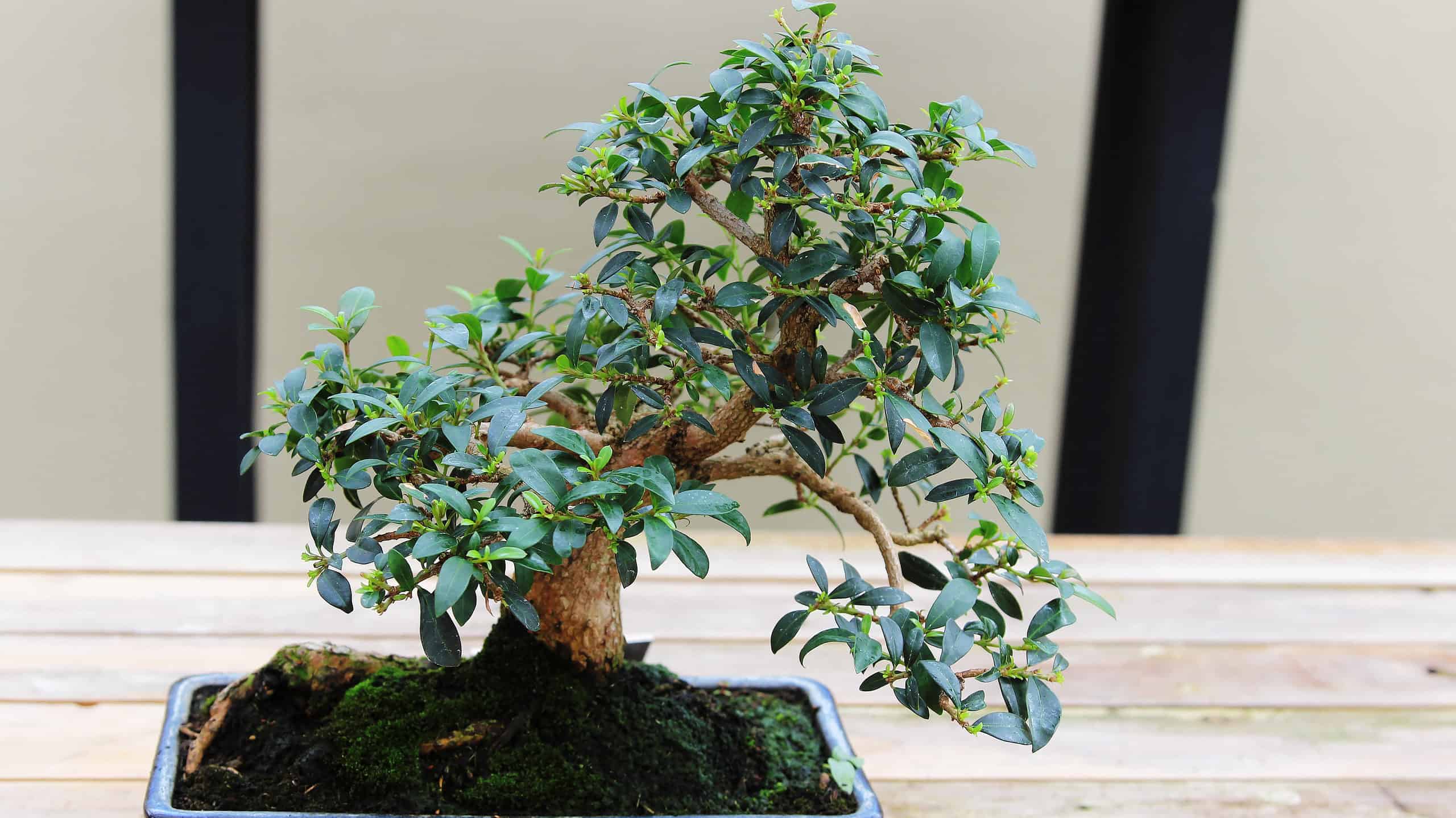
Brush cherry bonsai are stunning bonsai trees year-round.
©Aquafina2015/Shutterstock.com
Brush cherry prefer outdoor life, as long as the temperatures remain above 45 degrees F. Once the temperatures drop below this, they should be overwintered or brought indoors until the temperatures will rise again.
Watering
Watering needs for the brush cherry bonsai changes depending on the season.
- During growing season, water the plant every day in cooler weather, twice daily in hot weather.
- During winter months, water the bonsai two to three times a week, when the soil is dry to the touch.
- Ensure the root ball is slightly dry on the surface before watering. The plant is somewhat drought tolerant, meaning you don’t want to over water, but they do require a lot of water nonetheless.
- If your brush cherry receives a lot of direct sunlight, check the soil daily to maintain the water levels.
- If your tap water is at all hard, use distilled or rainwater, if at all possible. Brush cherry do not tolerate minerals or salt.
- If you keep the brush cherry indoors, avoid placing it near vents or in particularly dry areas of the home. Mist the leaves with water regularly.
Feeding
You will primarily want to fertilize your brush cherry bonsai during growing season between early spring and early autumn. Ideally, use a bonsai fertilizer that’s recommended for evergreens. If you plan to eat the fruit, make sure the fertilizer is organically safe, and always make sure any kind of fertilizer you use is nontoxic.
You may use liquid or pellet fertilizer, applying about twice the amount recommended during growing season and the regular amount during non-growing season. If the fertilizer contains a lot of nitrogen, however, feed the regular amount during growing season and just half the amount in the off-season.
You do not need to fertilize brush cherry during winter.
Pruning
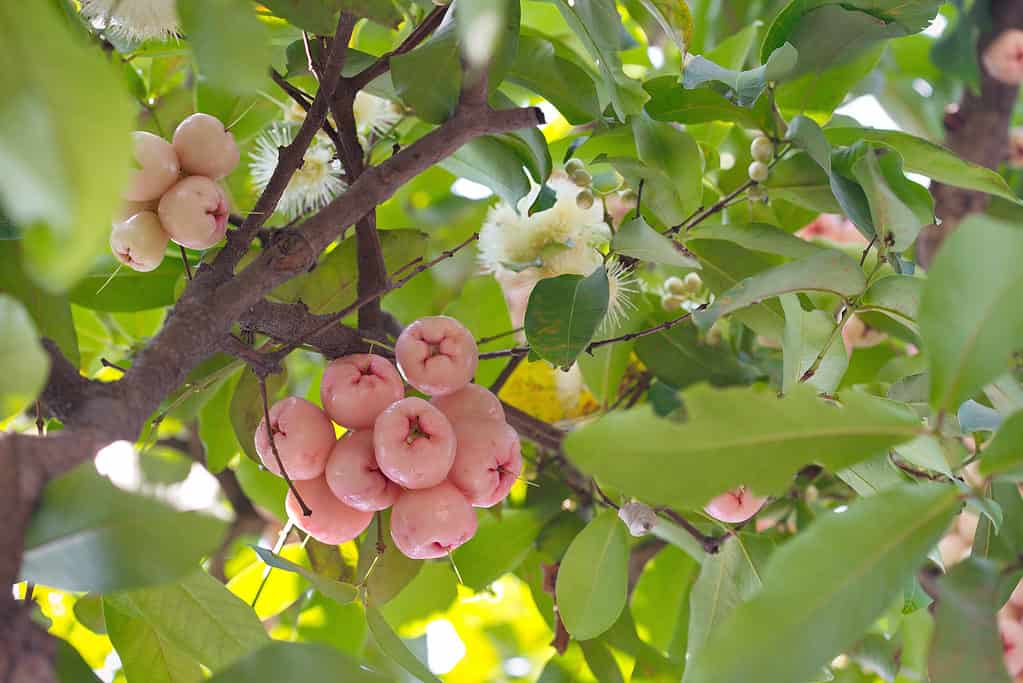
The fruits are a bit larger on a full-sized tree.
©Marie Shark/Shutterstock.com
Your brush cherry bonsai will need to be pruned as it grows, meaning it will likely need this pruning year-round, since it is an evergreen plant. As new shoots appear, cut them back to 2 to 3 small leaf pairs during non-flowering season (i.e., early spring to mid-to-late summer). Begin pruning again after flowering has ended.
Use pruning shears or scissors for small pruning projects (we recommend bonsai shears) and trim the canopy as needed to maintain the size of the plant desired.
If you wind up making larger cuts or any damage occurs, apply wound paste to the injury and keep an eye on it. Protect with loose wraps, if needed, to help the healing process.
Shaping
The brush cherry is a flexible tree for shaping, despite having rather brittle branches. This does mean you have to use special care in its shaping, but it doesn’t take as long as some species to maintain the shape directed in.
Prune the canopy of the brush cherry throughout its growth, shaping as you go and regularly trim back offshoots to keep the tree tidy and shapely. Avoid trimming between early spring and the end of its flowering season, though, as this will not just shape the tree, but it will prevent the full flowering.
Wiring
The branches of brush cherry trees tend to be brittle and break easily. Because of this, it’s important that you carefully plan ahead of time what you plan to do to avoid causing damage from sustained movements of the branches.
The wires for brush cherry may be laid year-round, since the plant is evergreen, but late summer months are usually the best times, after flowering has ended. You should also do a stronger pruning at this time before applying the wire. The branches don’t thicken as quickly in autumn as in spring, either, which makes this an easier time for pruning, shaping, etc., as well.
Additional tips:
- Use the thinnest wire gauge to train your brush cherry
- Do not wire until at least 2 months after re-potting
- Wire the branches in the directions they are already growing
- Avoid wrapping the wire too tightly, as this will cause scarring
- Remove the wire after about 6 weeks – the branch should hold its shape on its own by this time
Re-potting
You’ll know your brush cherry is ready to be re-potted when you can see the roots growing out the sides of their pot. This will likely be every other year, as the roots seem to do best when pruned every 2 years. Brush cherry bonsai should be re-potted in early March, if you live in the northern hemisphere. They require slightly acidic soil mixes like Akadama or even azalea bonsai soil blends. The pH needs to be slightly lowered, however, for these mixes. Many bonsai enthusiasts create a blend of 70% Akadama and 30% Kanuma for this purpose.
When you’re ready to re-pot, remove the old soil with a root claw or hook, prune the roots as required, and place in the new pot. Attach the root ball with bonsai wire to the bottom of the bonsai pot, through the drainage holes. Fill in the pot with the growing medium and water immediately.
Do not feed the freshly re-potted bonsai for four weeks.
Overwintering
Brush cherry are not winter hardy plants, so they need to be protected from anything more severe than a light frost, that is, any time it will drop below 23 F, the plant will need to be protected. We’d recommend protecting it before the temperatures reach this, however, as the plant cannot endure these cold conditions for long.
Overwintering with temperatures of 41 to 50 F is ideal in wintertime for brush cherries. Many folks keep them in a cool greenhouse for this period of time, with brief permafrost heating throughout the season.
If you have warmer winters, that is where temperatures don’t drop below 59 F consistently, daytime temperatures ought to be kept to 66 F for a balance. Anything warmer, and your brush cherry won’t need the winterization.
Common Problems of Brush Cherry Bonsais
Brush cherry bonsai may be susceptible to a number of problems, including aphids, Caribbean fruit flies, scale, meal bugs, and red spiders. In most cases, these can be dealt with by using a gentle fungicide and pesticide monthly. Always ensure you only spray any of these on when the soil is moist.
Aphids
Aphids plague many plants, including brush cherry, showing up with their pear-shaped bodies and clustering on the leaves, shoots, and buds of the plant. They feed on the internal nutrients of the plants, draining them of life.
You may notice them either by visually seeing the aphids on the plants or by seeing the plant has distorted leaves and stunted growth. If you notice these, look beneath the leaves to see if you spot the insects.
To get rid of aphids, use a gentle insecticide spray to directly attack the insects, spraying on them. If you prefer, you can use insecticidal soaps instead.
Spider Mites
Spiders and spider mites can also be a challenge for these bonsai. They look like tiny pinpoints of moving brown or red dots, typically on the branches of the tree. If there are major infestations, you’ll notice branch tips look webby and the leaves turn yellow.
To treat for them, use a gentle soap or spray pesticide according to the package instructions.
Scale
Brown or black bumps on your bonsai branches may appear over time. They are flaky or waxy and clearly aren’t “right.” These are scales, which are actually insects that have moved in and protected themselves with waxy shells, excreting stickiness, discoloring the branches.
To treat, find a gentle pesticide that’s nontoxic, and spray or apply as directed.
Mealy Bugs and Others
Mealy bugs and other insects may also appear on your bonsai. In most cases, a systemic pesticide treatment monthly, using soapy rinses or sprays, will treat the issue. If you use soapy rinses, they should be left on for one day, then rinsed off the next.
How to Propagate Brush Cherry Bonsais
The flexible, flowering tropical trees often produce fruits when properly cared for, but when you want to ensure that you propagate at the right time to avoid stunting that growth. This is done, ideally, in early autumn after fruiting, when the fresh growth begins to appear.
- Figure out where the front side of the tree is for the placement you plan on for the current bonsai.
- Mark the 1/3 point of the main branch you’ll trim, then the second branch, and upward.
- Trim the branches accordingly, leaving behind that one third of each branch you’re trimming.
- Ensure you leave much of the new growth or you’ll discourage fruit production.
- Take the cuttings and prepare as usual, with soaking the cuttings first in water for a few weeks in a cool location with plenty of light.
- Dip the cut ends into hormone powder and then plant into new pots for your new brush cherry bonsai.
Brush Cherry Bonsai Tree FAQs
Do brush cherries lose their foliage in autumn?
Depending on your locale, brush cherries may or may not lose their leaves. In areas with lower light and humidity, the leaves will likely crispen up and fall off. If the plant is moved from a warmer location to a cooler location, this may also happen. This triggers a false expectation of winter for the plant, which is why it will drop its leaves.
Can you eat the fruit of brush cherry bonsai trees?
In the springtime, brush cherry bonsai trees may produce white flowers that then become red fruit when ripe. These fruits are favorites with birds and yes, may be eaten by humans.
Up Next:
- Lilac Bonsai Tree
- Jasmine Bonsai Tree
- Boxwood Bonsai Tree
- The 10 Best Outdoor Bonsai Trees