
S
Species Profile

Sable German Shepherd

Canis lupus familiaris

Sable style, shepherd smarts.
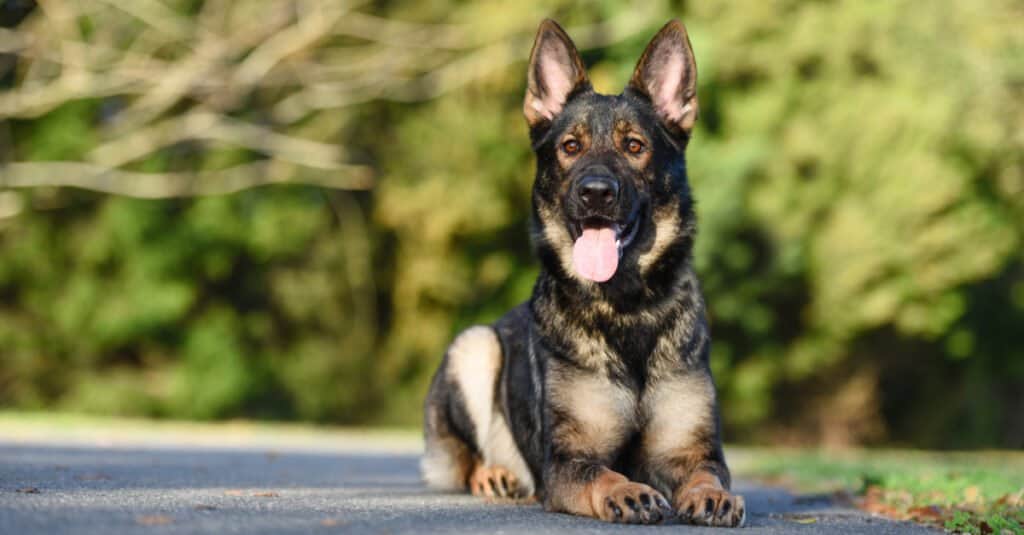
TanyaCPhotography/Shutterstock.com

Sable German Shepherd Distribution

Click a location to explore more animals from that region

Origin Location

This map shows the native origin of the Sable German Shepherd. As a domesticated species, they are now found worldwide.

Loading map...

Found in 1 country

Size Comparison

Human 5'8"
Sable German Shepherd 1 ft 12 in

Sable German Shepherd stands at 35% of average human height.

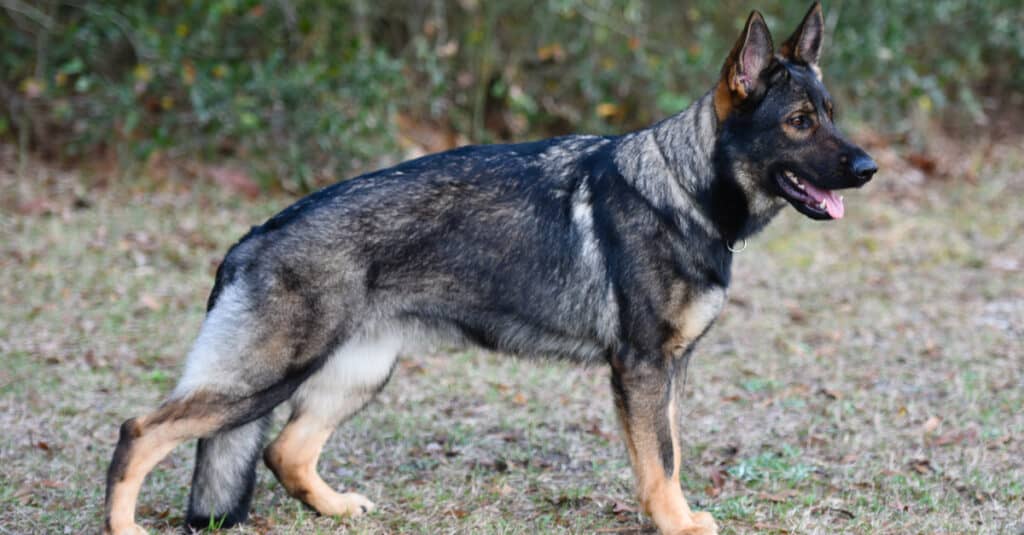
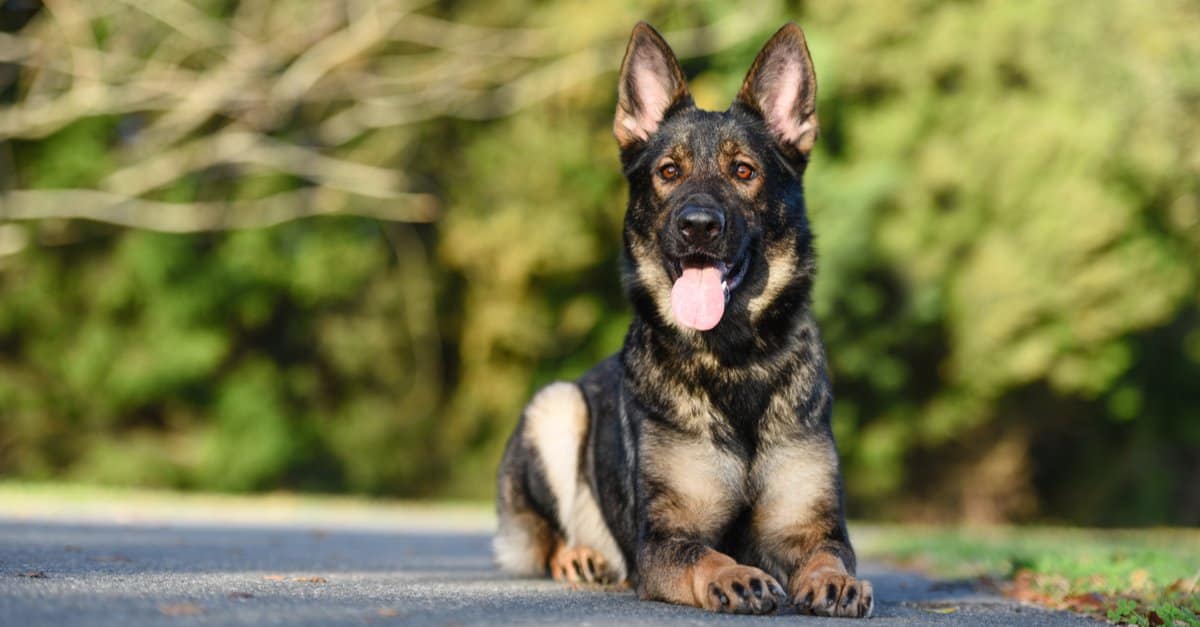
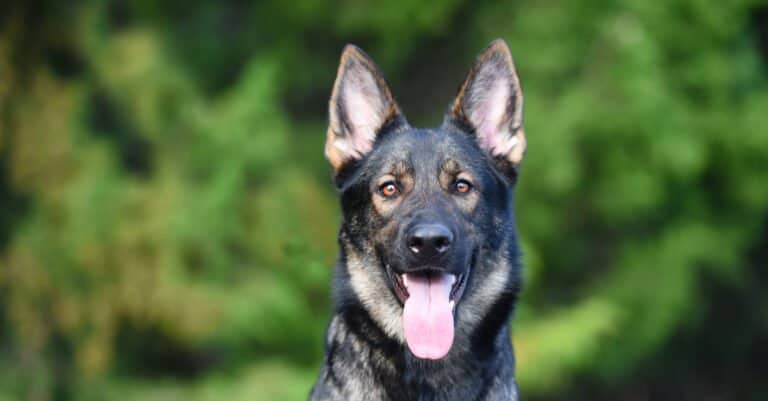
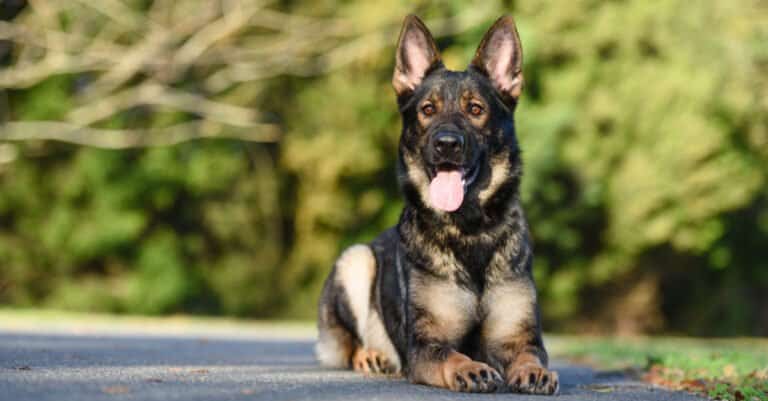
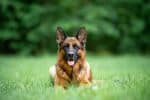
Sable Black German Shepherd with ears up and tongue out

At a Glance

Domesticated
Diet Omnivore
Activity Diurnal+
Lifespan 4 years
Weight 40 lbs
Status Not Evaluated
Did You Know?

"Sable" is a coat pattern (agouti), not a separate breed-individual hairs are banded with darker tips.

Scientific Classification

A sable German Shepherd is a German Shepherd Dog (domestic dog) expressing the sable/agouti coat pattern, where individual hairs are banded and darker tipping creates a shaded appearance. It is a phenotype within the breed rather than a distinct taxon.

Kingdom
Animalia
Phylum
Chordata
Class
Mammalia
Order
Carnivora
Family
Canidae
Genus
Canis
Species
Canis lupus

Distinguishing Features

  • Sable (agouti) coat: banded hairs with black tipping; overall color can range from light (tan/gray) to dark (black-overlay)
  • Typical German Shepherd conformation: athletic, medium-large build, erect ears, long muzzle
  • Working-dog behavioral profile: high trainability, strong drive, and protective/alert tendencies (varies by line and training)

Physical Measurements

Males and females differ in size

Height
♂ 2 ft 1 in (1 ft 12 in – 2 ft 2 in)
♀ 1 ft 11 in (1 ft 10 in – 1 ft 12 in)
Length
♂ 3 ft 10 in (3 ft 7 in – 4 ft 1 in)
♀ 3 ft 10 in (3 ft 7 in – 4 ft 1 in)
Weight
♂ 75 lbs (66 lbs – 88 lbs)
♀ 60 lbs (49 lbs – 71 lbs)
Tail Length
♂ 1 ft 6 in (1 ft 4 in – 1 ft 8 in)
♀ 1 ft 4 in (1 ft 2 in – 1 ft 6 in)
Top Speed
30 mph
running

Appearance

Primary Colors
Secondary Colors
Skin Type Mammalian skin with pigmented nose/eye rims; dense double coat (harsh outer guard hairs over thick undercoat) with heavy seasonal shedding.
Distinctive Features
  • Agouti (sable) coat pattern: individual hairs are banded with a lighter base and dark (often black) tipping, creating an overall shaded or "salt-and-pepper" look rather than a solid color.
  • Sable pattern is produced by agouti banding on each hair plus black tips; appearance can shift with seasons and coat length.
  • Erect, triangular ears; long muzzle; almond-shaped dark eyes; black nose typically.
  • Athletic, slightly elongated body with deep chest and strong hindquarters; level-to-sloping topline varies by lineage.
  • Bushy tail carried low at rest; thick ruff around neck, especially in longer coats.
  • Common breed health concerns: hip/elbow dysplasia, degenerative myelopathy, gastric dilatation-volvulus (bloat), exocrine pancreatic insufficiency, chronic skin/allergy issues.
  • Care needs: high daily exercise and structured training; strong mental stimulation to prevent anxiety/reactivity.
  • Grooming: frequent brushing (especially during "blow coat" seasons); undercoat can mat if neglected.
  • Behavior/handling: early socialization and clear reinforcement-based training; protective instincts require management, not assumed from color alone.

Sexual Dimorphism

Males are typically taller, heavier, and more broad-headed with a thicker neck and chest. Females are usually lighter-framed with a more refined head and slightly less overall muscle mass, though both are athletic.

♂
  • Heavier bone and muscle; broader skull and muzzle
  • More pronounced neck/chest ruff in full coat
  • Larger overall body mass and head width
♀
  • More streamlined build; narrower head and shoulders
  • Often slightly finer coat texture and ruff
  • Generally lower body mass with comparable agility

Did You Know?

"Sable" is a coat pattern (agouti), not a separate breed-individual hairs are banded with darker tips.

Sable can range from pale tan with light overlay to deep red-brown with heavy black "saddleless" shading.

Many working-line German Shepherds are sable because the color is common in traditional herding/working stock.

Puppies often change shade as they mature; the black overlay may intensify or redistribute over time.

Sable is produced by an agouti allele (ASIP gene) that controls where dark pigment appears on each hair.

A well-groomed sable coat can show a "salt-and-pepper" or "wolf gray" look depending on pigment distribution.

Because sable is just pigmentation, it doesn't inherently predict temperament-training, lineage, and environment do.

Unique Adaptations

  • Double coat built for weather: dense undercoat plus harsher topcoat helps insulation and shedding of rain/snow-common to the breed and many canids.
  • Agouti (sable) hair banding: alternating pigment bands on single hairs create camouflage-like shading reminiscent of wild canids (a pattern seen across wolves/foxes too).
  • Athletic, efficient gait: a trotting endurance style developed for covering ground while herding and for modern working roles.
  • High trainability with impulse to cooperate: selectively bred in domestic dogs vs. the wild-type wolf-enhanced responsiveness to human cues.
  • Sensory strengths: keen hearing and olfaction typical of Canidae, leveraged in detection, tracking, and search-and-rescue.

Interesting Behaviors

  • Focused "job-seeking": many German Shepherds naturally look for tasks-carrying, tracking, patrolling, or problem-solving games.
  • Alert scanning and perimeter checks: a tendency to monitor entrances and movement, shaped by centuries of guarding/herding work.
  • Herding-style body blocking: may arc around people/pets to guide motion, especially in young dogs without outlets.
  • Strong handler orientation: frequent check-ins and quick responsiveness when bonded and trained.
  • Scent-driven engagement: excels at nosework and tracking; often shows sustained concentration on odor trails.
  • Vocal communication: can be talkative with barks, grumbles, and "woo-woos," especially during play or guarding.
  • Mouthy play in adolescence: retrieving, tug, and controlled bite sports appeal to natural gripping instincts (requires guidance).

Cultural Significance

Sable German Shepherd Dog (Canis lupus familiaris) is known worldwide for many working jobs—police and military K-9s, search-and-rescue, guide dogs, and farm guardians. The sable coat links to herding and working lines and shows loyalty, courage, and service.

Myths & Legends

Early enthusiasts repeated romantic "wolf blood" stories-tales that the German Shepherd's wolfy look (especially in sable) came from secret wolf crossings, adding mystique to the breed's origins.

In Germany, the breed's founding narrative centers on Captain Max von Stephanitz and his ideal herding dog, Horand von Grafrath-often retold as a near-legendary 'prototype' from which the modern German Shepherd sprang.

Classic European "faithful dog" motifs-dogs that guard homes, guide travelers, or remain devoted to a fallen master-frequently feature shepherd-type dogs in regional retellings, reinforcing the German Shepherd's cultural image as the steadfast guardian.

Modern service-dog folklore includes widely shared anecdotes of German Shepherds sensing danger-tracking lost children, warning of intruders, or staying with injured handlers-stories that have become part of the breed's living tradition among working communities.

Conservation Status

NE Not Evaluated

Has not yet been evaluated against the criteria.

Population Stable

Life Cycle

Birth 6 pups
Lifespan 4 years

Lifespan

In the Wild
2–8 years
In Captivity
7–14 years

Reproduction

Mating System Polygyny
Social Structure Managed Domestic
Breeding Pattern Serial
Fertilization Managed Selective
Birth Type Managed_selective

In sable German Shepherd Dogs, mating is typically human-managed: selected stud males may sire multiple litters with different females, with no enduring pair bond. Breeding commonly includes health screening (e.g., hips/elbows) and controlled timing of estrus.

Behavior & Ecology

Social Pack Group: 4
Activity Diurnal, Crepuscular, Cathemeral
Diet Omnivore Meat-forward foods (e.g., beef or chicken), often preferred as high-value rewards during training.

Temperament

Species context (domestic dog): highly social, human-oriented, flexible pack-like relationships vs. wild wolf packs.
Breed distinction (German Shepherd Dog): handler-focused working breed; intense trainability, vigilance, and territorial/guardian tendencies.
Confident, loyal, courageous; often aloof with strangers but affectionate with family.
High drive for task engagement (tracking, herding-style control, protection sports); needs structured outlets.
Can be dog-selective, especially same-sex or pushy dogs; best with early, ongoing socialization.
Potential behavioral risks: fear/reactivity if under-socialized; frustration/overarousal without clear boundaries and decompression.
Care requirements: daily aerobic exercise plus mental work (obedience, scent games, problem-solving) to prevent nuisance behaviors.
Care requirements: consistent reward-based training; avoid harsh corrections that can increase defensive responses.
Health concerns affecting behavior/activity: hip/elbow dysplasia and arthritis can reduce tolerance for play/handling.
Health concerns: degenerative myelopathy risk; monitor mobility changes and adjust activity.
Health concerns: gastric dilatation-volvulus (bloat) risk; manage feeding/exercise timing, watch for anxiety around meals.
Health concerns: allergies/skin disease and GI issues (e.g., EPI) can impact comfort and irritability.

Communication

alert barking Stranger/property approach
deep warning bark and growl Boundary enforcement
whining/whimpering Appeasement, attention-seeking, discomfort
howling Social contact, sirens, excitement
play barks and grumbles Rough-and-tumble play
upright ear and forward-lean posture Alert assessment
tail carriage and wag speed changes Arousal, confidence, uncertainty
direct stare/head-high stance Control/guarding intent; can escalate if challenged
play bow and loose, bouncy gait Friendly invitation
muzzle nudge, pawing, leaning Affiliative contact with handler
lip lick, head turn, sniffing ground Appeasement and stress signals
scent marking and investigative sniffing Information gathering; common across dogs
body blocking/"herding" circling Control movement of people/animals; breed-typical

Habitat

Biomes:
Temperate Forest Boreal Forest (Taiga) Tundra Alpine Temperate Grassland Mediterranean Savanna Desert Hot Desert Cold Tropical Dry Forest Tropical Rainforest Wetland Freshwater Marine +8
Terrain:
Plains Hilly Mountainous Valley Coastal Island
Elevation: Up to 16404 ft 3 in

Ecological Role

Human-associated omnivorous canid; primarily a companion and working/utility dog rather than a wild predator.

guarding and deterrence of intruders herding and livestock management search-and-rescue and tracking detection work (scent detection: narcotics, explosives, medical) human companionship and assistance roles (service/therapy)

Diet Details

Main Prey:
Small mammals Birds Fish Carrion and meat scraps
Other Foods:
Berries Fallen fruit Vegetables Grains and starches Grasses

Human Interaction

Domestication Status

Domesticated

Sable German Shepherd Dog (Canis lupus familiaris): Domestic dogs came from gray wolves and were bred by people to be tame and work. German Shepherds were made a breed in Germany in 1899 by Max von Stephanitz. "Sable" is a coat pattern, not a separate breed. They are companions and workers and need training; poor care can cause behavior problems.

Danger Level

Moderate
  • Bite risk due to size/strength and guarding/territorial tendencies, especially with poor socialization or mishandling
  • Fear-based or defensive aggression if stressed, in pain, or improperly introduced to strangers/animals
  • Higher potential for serious injury than small breeds if incidents occur
  • Increased risk around children when unsupervised due to herding/chasing and arousal behaviors
  • Public-safety issues from inadequate containment, lack of training, or intentional protection training without control

As a Pet

Suitable as Pet

Legality: Sable German Shepherd Dog (Canis lupus familiaris) is usually legal as a pet in most U.S. areas, but some places, landlords, or insurance companies may ban or restrict German Shepherds. Check local laws, landlord rules, and your insurance.

Care Level: Experienced

Purchase Cost: $800 - $3,500
Lifetime Cost: $20,000 - $60,000

Economic Value

Uses:
Companion animal Working dog (police/military/security) Service/assistance prospect Sport and competition (obedience, IGP, agility, scent work) Breeding and conformation/working-line programs Training, boarding, grooming, and veterinary services demand
Products:
  • trained working dogs and detection/patrol contracts
  • service-dog candidate placement (only for suitable temperaments)
  • puppies from health-tested lines
  • training services (behavior modification, protection sport coaching)
  • equipment sales (crates, leashes, harnesses, muzzles, bite-work gear, enrichment toys)
  • veterinary expenditures (screening radiographs, orthopedics, allergy management)

Relationships

Ecological Equivalents 6

Animals that fill a similar ecological role in their ecosystem

German Shepherd Dog
German Shepherd Dog Canis lupus familiaris Sable German Shepherd Dog (Canis lupus familiaris): same breed and working role; primarily differs by a coat pattern of banded hairs with dark tips. Bred to be easy to train and to work with handlers; commonly prone to joint, nerve, pancreatic, stomach, and skin issues.
Belgian Malinois
Belgian Malinois Canis lupus familiaris Occupies a very similar modern working niche—protection, police/military roles, and sport. Typically has higher intensity and endurance and a shorter coat; requires comparable daily training, enrichment, and controlled outlets for strong drive.
Dutch Shepherd
Dutch Shepherd Canis lupus familiaris Close ecological analogue as a versatile herding, guarding, and working dog with similar size, athleticism, and training demands; commonly used in the same deployment roles.
Bohemian Shepherd Canis lupus familiaris Herding and guardian niche with shepherd-type behavior and high biddability. Shares family-level relation and working aptitude with other domestic dogs, though typically has a somewhat smaller frame and a different genetic background.
Gray Wolf
Gray Wolf Canis lupus Closest wild ecological reference for the domestic dog lineage. Shares canid social cognition and predatory motor patterns, but differs strongly due to domestication, including reduced flight distance, increased human social attunement, and selection for controllable behavior rather than autonomous hunting.
Sable
Sable Martes zibellina Not an ecological peer (a forest-dwelling mustelid), but frequently confused due to the shared common-name word "sable." Included as a context relative to clarify that "sable German Shepherd" refers to a coat pattern, not the species sable.

Sable German Shepherds are known as the classic German Shepherd, believed to closely resemble the original Shepherds. This eager-to-work herding dog boasts a beautiful sable double coat, which means that its hair strands contain multiple bands of colors like tan, red, silver, or brown and have black tips. The Sable German Shepherd is a rare variation of the more popular standard German Shepherd that is just black and tan in color. The original German Shepherds were believed to be sable-colored, and this coloring changes constantly throughout the dog’s life.

Despite their reputation as vicious dogs who bite at the slightest provocation, German Shepherds are one of the best dogs you could ask for. They are a highly intelligent breed, easy to train, fun-loving, and people-oriented. These sweet pups are guaranteed to put a smile on your face every day.

3 Pros and Cons of Owning a Sable German Shepherd

ProsCons
They are gorgeous pets. Sable German Shepherds are considered very beautiful dogs because of their unique fur coloring. They are also a rare variation; therefore, they can be quite expensive to buy. Touting this dog on your block during a walk may make all your neighbors jealous.They have separation anxiety. Sable German Shepherds grow to be very attached to their owners. They do not like to be left alone for very long and exhibit destructive behavior when this happens. If your daily routine involves long periods of time away from home, then this isn’t the dog for you.
They are protective of their family. If you are in the market for a great guard dog, then look no further. This dog was bred to be a protector that doesn’t trust strangers easily. Sable German Shepherds love to have a job to do, so you can rest easy knowing your house is in safe hands.They face discrimination. Because of their fiercely protective nature and their intimidating size and appearance, these loving dogs get a bad rap as aggressive dogs. This isn’t totally true, but your society might surely think so. This means limited access to public spaces with your canine, as your locality might deem them unsafe to be around.
They are affectionate and adoring dogs. German Shepherds have a negative reputation as aggressive canines, but in actuality, they are people-oriented and form deep bonds with their families.They shed profusely. Sable German Shepherds are pretty furry dogs, and they shed a lot of hair and even more so during their shedding seasons twice a year. They are not good for people who suffer from allergies or who don’t like their furniture covered in dog fur. If you can manage this, then go for it.
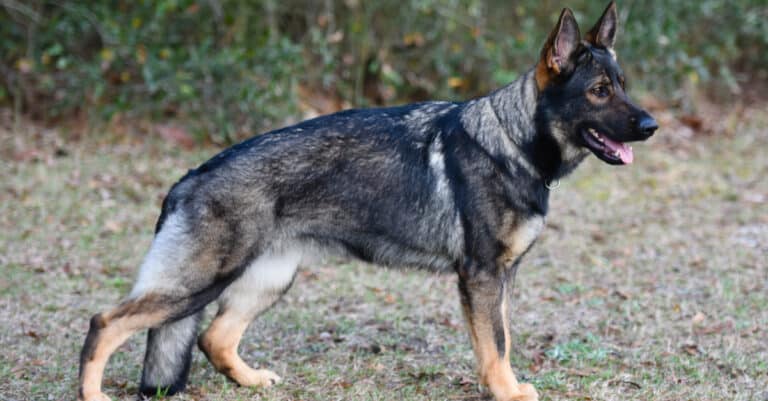
side view of a Sable Black German Shepherd

Sable Black German Shepherds are beautiful dogs with unique coloring.

Size and Weight

Sable German Shepherds are identical in size and weight to other German Shepherds. They are medium-sized to large dogs. The males are 24 to 26 inches tall and weigh 65 to 95 pounds, while the females grow up to 24 inches tall and weigh 50 to 70 pounds.

Common Health Issues

Sable German Shepherds are generally healthy dogs. However, they are prone to some health conditions.

One of the most common disorders that may plague these dogs is hip dysplasia. This is a hereditary condition that causes malformation of the hip ball-and-socket joint. This condition can be helped by making sure your fur baby works out properly to toughen up their legs.

Other conditions that can affect your pup are bloat, diabetes, bladder stones, cataracts, and thyroid issues. You must take your dog to the vet regularly for checkups to detect any signs of poor health before they escalate. Also, when purchasing a Sable German Shepherd puppy, be sure that the breeder is reputable and that the health of the mother is guaranteed.

Temperament

Sable German Shepherds are even-tempered dogs. They are very energetic, playful, silly at times, but turn serious once they notice their owner is being serious. These dogs are people-oriented and love to follow their owners everywhere like a shadow. They tend to grow so attached to their families that they suffer from separation anxiety when left alone.

Their temperament is a sharp contrast to their reputation as aggressive dogs. All dogs can become aggressive if they are frightened or harmed in any way. They are not more aggressive than other breeds.

Sable German Shepherds are great with kids as well and can be very playful. However, the kids should be instructed on how to handle these big dogs, and the dogs should be well-trained on how to exercise restraint during play sessions.

How To Take Care of Sable German Shepherds

Raising any dog requires work and effort. The Sable German Shepherd is easily trained, groomed, and you get the reward of a devoted, heartwarming companion for the rest of its life.

The Best Dog Food

Sable German Shepherds should be fed a diet that will support their active lifestyle. Since they are large dogs, they will need large food portions to sustain them. If you’re not sure how much to feed your dog, then you can check on the back of the food bag. It should contain instructions on how much to feed your dog by its weight.

Because your furry friend is in danger of bloating, you should make sure not to let it exercise too close to mealtime. Your Sable German Shepherd needs food that is high in protein, moderate in carbs, and low in fat.

Maintenance and Grooming

Sable German Shepherds have double coats and shed a lot. However, frequent brushing helps keep their loose hairs manageable. These dogs have shedding seasons twice a year, which means they shed even more profusely than at any other time. Some Sable German Shepherds have medium-length coats, and some have long coats, so if you are bent on getting this type of dog and suffer from allergies, then you can opt for one with a medium coat to minimize the amount of shedding and brushing you would have to do every week.

Don’t forget to trim your dog’s nails regularly to avoid injury. If you can hear the light tapping of your pup’s nails on the floor as it walks by, then it’s time for a trim. Usually, if your dog is active enough, their nails will wear down on their own. In addition to this, it is important to clean your dog’s ears and teeth to prevent infection.

Training

Due to their brilliance, Sable German Shepherds are easy to train. The best part is that they love it, too. They are working dogs, so they get excited when there is something new for them to do or learn. These dogs pick up cues quickly and with ease, which is why they are used in the police force, the military, and as therapy and disability aid dogs.

Exercise

If you love to exercise and go on fitness expeditions, then this is the right dog for you. Sable German Shepherds are agile dogs who love to exercise. They need about 60 to 90 minutes of exercise every day, which is pretty high. If you are the couch potato type, then you won’t have the time or energy to keep up with these active pups. They love to swim, jog, play, run, and hike. Not only is it good for their health, but it also makes them happy and keeps them entertained.
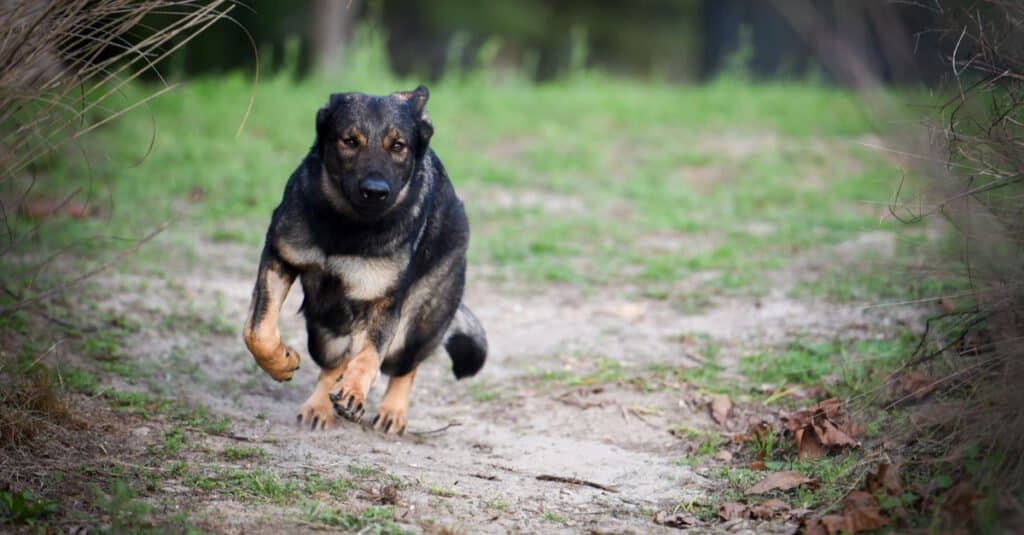
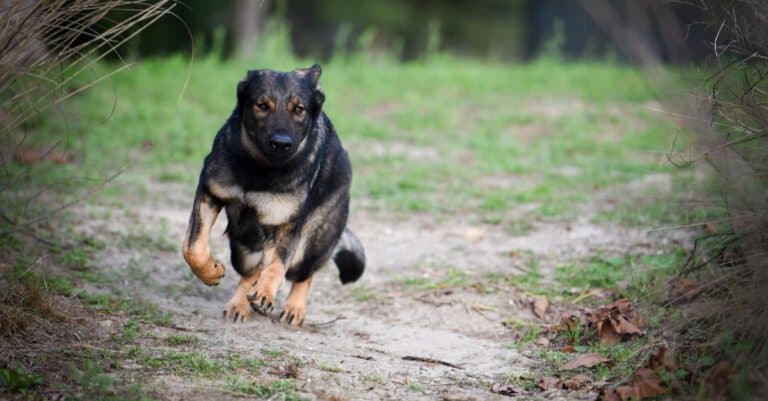
Sable Black German Shepherd running

Sable German Shepherds need lots of exercise each day.

Puppies

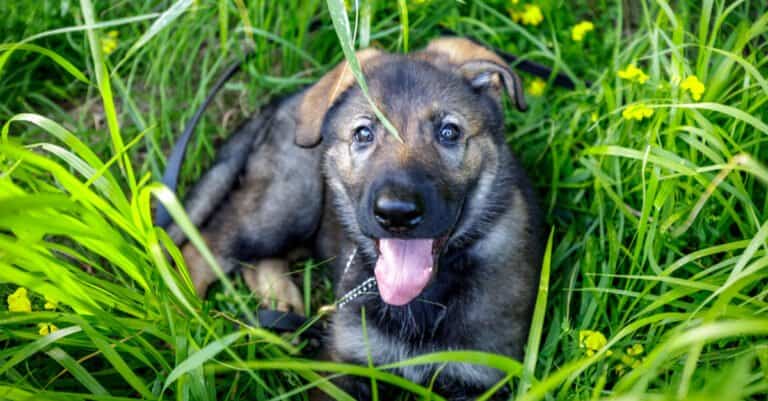
Sable German Shepherd puppies need socialization. These dogs were bred for protective roles, and having their guard up is basically in their genes. They can be taught to be more open and tolerant of other people. They also have a very high prey drive, so they need to grow up around other animals of all sizes to understand what is food and what isn’t.

It is also vital to allow your pup to experience unfamiliar situations to get it accustomed to them. Allow them to be around strangers and strange places so they can explore for themselves. This will let them know that the unfamiliar doesn’t always spell danger.

Dogs Similar to Sable German Shepherds

  • Belgian Malinois: This dog is similar to the Sable German Shepherd in that they are both used as police dogs. They also have some similarities in appearance, though the Belgian Malinois is generally lighter, more agile, and has a shorter, fawn-colored coat compared to the German Shepherd.
  • Belgian Shepherd: Though this dog is hairier than the Sable German Shepherd, they are both hard-working shepherding dogs.
  • Australian Shepherd: These darling dogs are herding dogs, just like the Sable German Shepherd. They also have a gorgeous coat and are one of the most beloved dog breeds in the United States.
View all 391 animals that start with S

Sources

  1. American Kennel Club / Accessed January 9, 2023
  2. Wikipedia / Accessed January 9, 2023
Rose Okeke

About the Author

Rose Okeke

Hi! I am a writer, actor, and filmmaker. Reading is my favorite hobby. Watching old movies and taking short naps are a close second and third. I have been writing since childhood, with a vast collection of handwritten books sealed away in a duffel bag somewhere in my room. I love fiction, especially fantasy and adventure. I recently won the James Currey Prize 2022, so now, naturally, I feel like I own words. When I was 11, I wanted to be a marine biologist because I love animals, particularly dogs, cats, and owls. I also enjoy potatoes and chocolate in all their glorious forms.
Connect:

Thank you for reading! Have some feedback for us?


Sable German Shepherd FAQs (Frequently Asked Questions)

They can live for 9 to 13 years, and sometimes longer if well taken care of.