
Quick Take
- Deer look peaceful, yet a leaked government report compares them to one of Australia's most destructive pests. Which one, and why, will change how you see them. See the leaked report →
- One state quietly cracked the feral deer problem while every other failed, doing so through a method that isn't what you'd expect. Explore the control strategies →
- Australia's native plants never evolved to survive what deer do to them, and the damage goes far beyond overgrazing. See the ecological damage →
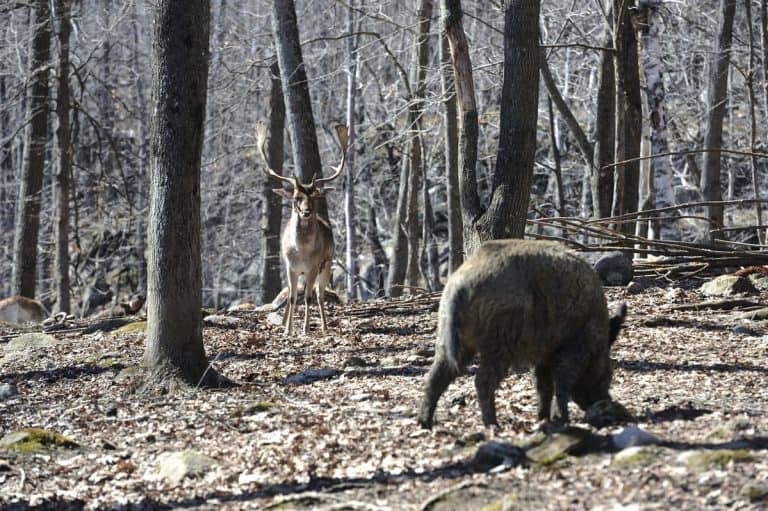
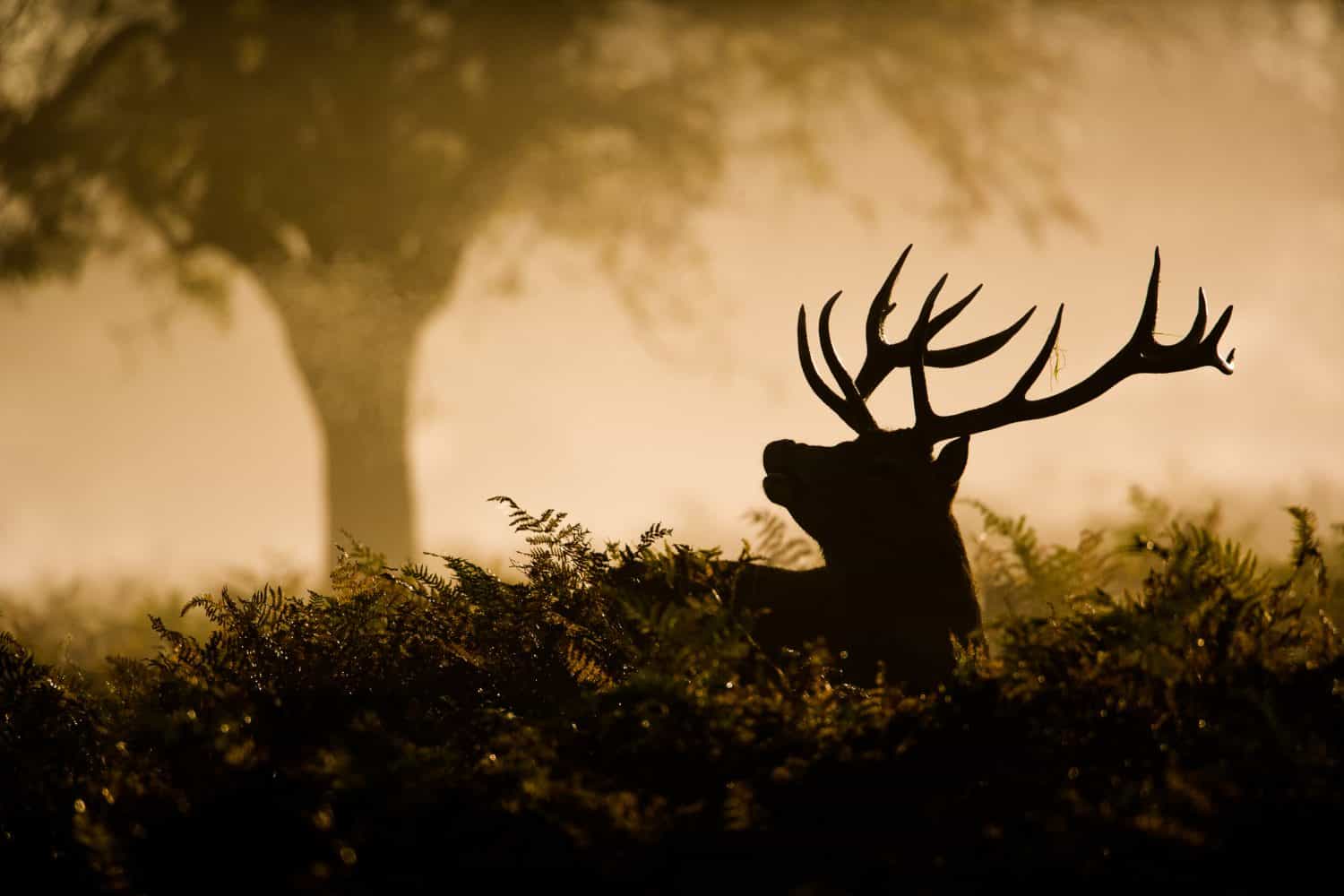
A leaked report card, prepared by state, territory, and federal governments, has raised concerns about the control of feral deer on the continent. These large mammals have been compared to feral pigs and, despite their serene appearance, they are wreaking havoc on Australia’s natural vegetation and farmland. Many fear that the more established they get, the harder the animals will be to control.
Which Deer Are Invasive in Australia?
There are six species of feral deer living in Australia. They are the chital, fallow, hog, red, rusa, and sambar deer.
Deer are an indigenous species on all continents except Australia and Antarctica. The feral deer you see in Australia today were introduced from Europe and Asia as game animals in the mid-1800s. It was part of a movement to replicate England in Australia. Many are farmed for venison, which is not a problem. The same cannot be said of the feral deer! A succession of both deliberate and controlled releases has made feral deer one of Australia’s worst emerging pest problems.
Here, the deer are mainly living in grassy forests. That includes rainforests, eucalypt forests and farmlands. Even though they would prefer to eat grass, they will also consume shrubs, trees and herbs, bark and some fruit. Their social behavior varies between species. Some live in herds of up to 30 individuals, but others live a solitary life.
Deer Expanding Their Populations
Their populations have expanded significantly in recent years. For example, in 1995, there were only four populations of red deer in Australia, but by 2007 there were 65, and the problem continued to get worse. According to the Invasive Species Council, feral deer populations can grow by 34 to 50 per cent every year when uncontrolled. Their range is expanding by around 1 million hectares every year.
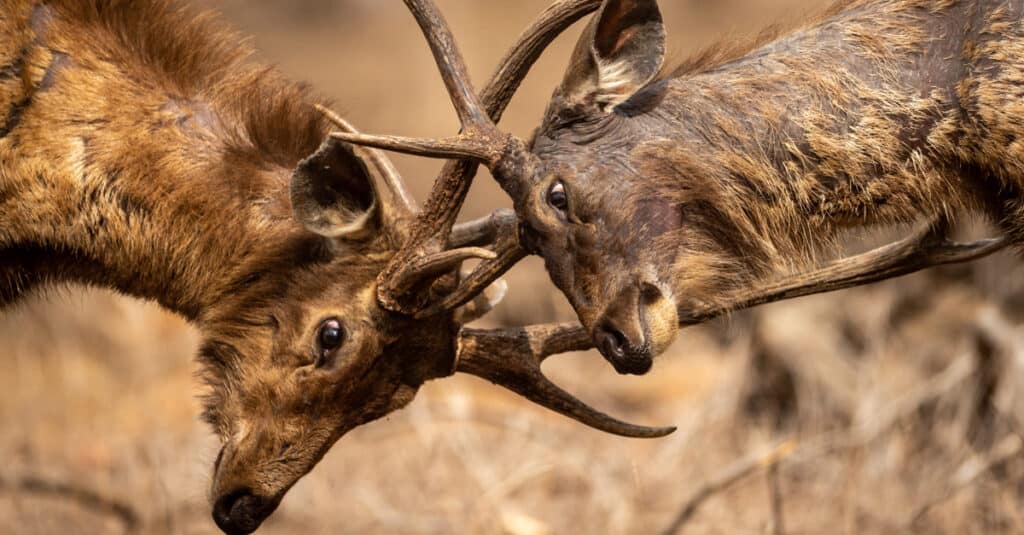
Feral deer populations can rapidly expand.
©Sourabh Bharti/Shutterstock.com
Their densities are highest across south-eastern Australia. However, there are smaller populations in South and Western Australia and the Northern Territory.
Why Are Deer a Problem in Australia?
So, why is this such a problem? The answer is connected to native Australian plants. Native Australian vegetation did not evolve to cope with hard-hoofed creatures such as deer. Their weight and their huge appetites lead to overgrazing of native grasslands and shrublands. Ringbark native shrubs and trees are lost. This, together with physical damage by hooves, leads to erosion. The runoff from bare soil, together with their trampling on stream banks, leads to water pollution. Male deer have antlers, and all deer have scent glands which they use to mark their territory. This behavior can cause a lot of damage to saplings.
Places where deer live at higher densities experience a loss of plant diversity. Weeds flourish and spread to other areas. It’s not great news for kangaroos and wallabies either because deer compete with them for food.
Deer are equally willing to browse on trees planted by foresters, farmers, and local councils. Importantly, they also hinder post-fire recovery by eating new growth. Their impact on agriculture has also been severe. Given the chance, deer will eat fruit trees, grapevines, crops and pastures. They will also destroy fences.
The risk of disease transmission should also not be overlooked. The deer would be a potential transmission vehicle for diseases such as foot and mouth disease should they arrive in Australia.
They even cause issues in urban areas, including Sydney, Canberra, Melbourne, and Brisbane. They have destroyed gardens, contaminated water catchments, and damaged urban bushland. Additionally, because deer are large creatures, they present a hazard to motorists on the roads.
Report Card and Control
The report card, produced by the National Vertebrate Pest Coordinators, has been leaked but not officially published. A media article states that the report described feral deer as one of the country’s “most rapidly increasing invasive pests”. The cost is put at $91million in Australian dollars every year, which is US $63,954,800.
Overall, the message is that the problem is not controlled. Agriculture, native wildlife, the environment, and road users are the ones paying the price. No single state is to blame, and the failure to control wild deer is widespread.
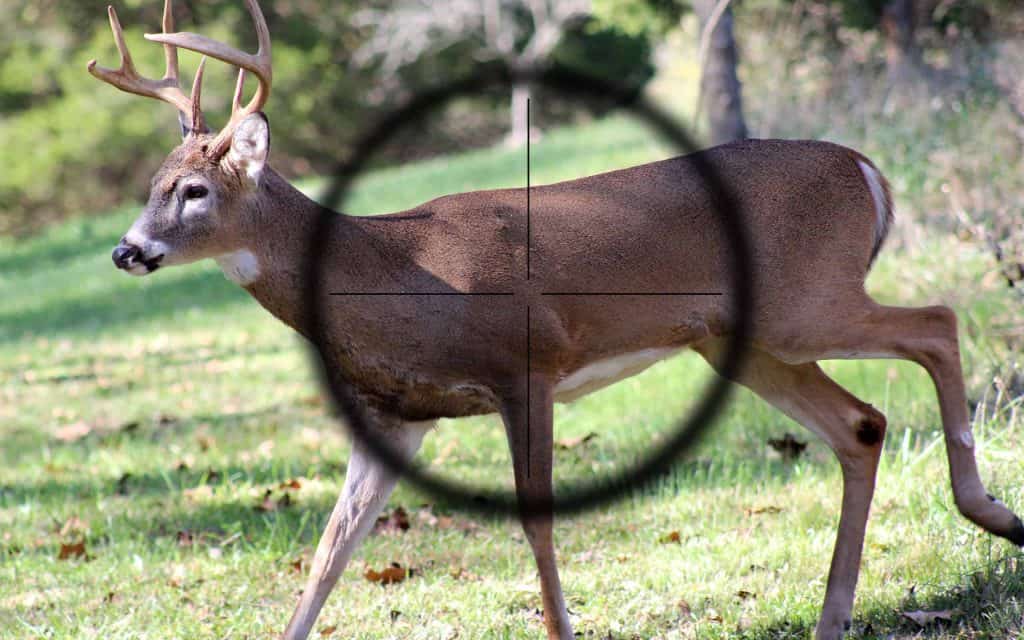
Ground shooting is an acceptable control method.
©AdamLongSculpture/ via Getty Images
The only success story is South Australia. The report gives the statewide eradication plan a ‘green’. Here, the authorities have been successful in reducing the abundance, distribution and environmental and agricultural impacts of deer. At the opposite end of the scale were New South Wales and Tasmania, which received reds for all four.
Speaking to The Guardian, Invasive Species Council advocacy manager Reece Pianta described the deer as the “next feral pig,” and said, “The difference with deer is that an intervention now could make a significant difference to the population numbers and contain, or even reverse, that spread.”
National Feral Deer Action Plan
The National Feral Deer Action Plan advocates a number of control strategies to effectively manage deer populations while prioritizing welfare. For example, ground shooting is effective for small to moderate numbers of feral deer, particularly in peri-urban and urban areas. The national Code of Practice must be adhered to. Aerial culling (shooting) from helicopters is preferable for rapidly reducing large numbers of feral deer across an extensive area, while humane traps are used where shooting is impractical. Exclusion fencing is also useful for safeguarding environmental or agricultural assets.