

Types of Trees in Illinois
Illinois is also known as the Prairie State, as tallgrass plant species cover nearly two-thirds of its territory. But it isn’t all grass. Nearly 4.4 million acres are forested, mainly in the southern region of Illinois. That means almost 12% of Illinois is trees! About 250 different types of trees can be found, representing 29 families and distributed almost entirely in a couple of national forests.
1. Black Maple
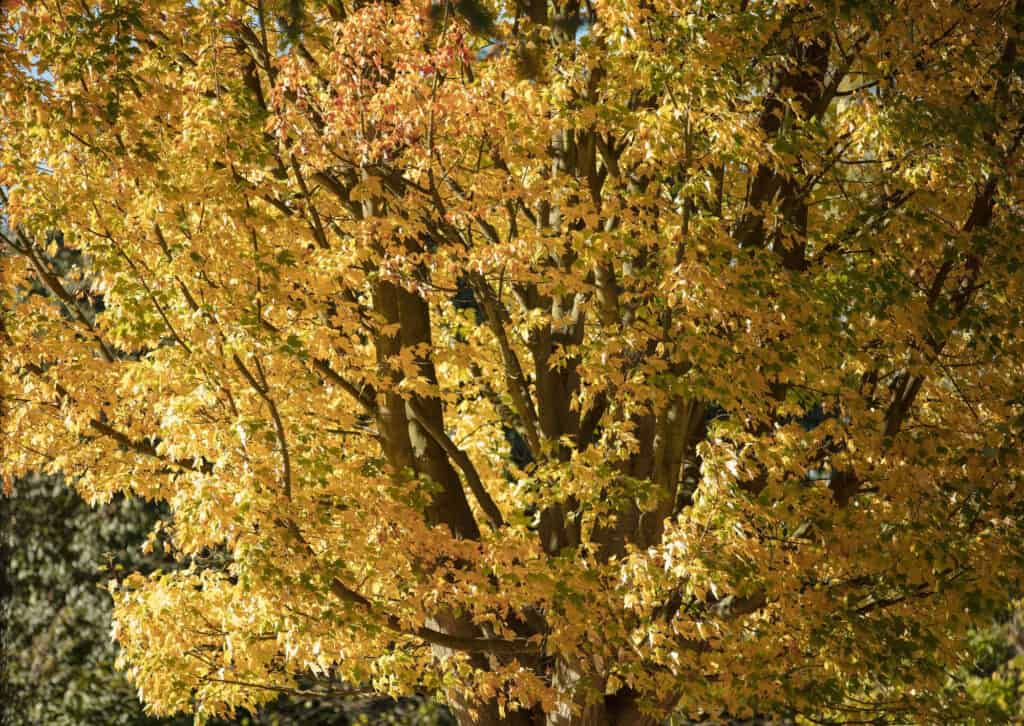
The black maple tree is so closely related to the sugar maple that many people consider the black maple a subspecies.
©Joe Kuis/Shutterstock.com
Black maple (Acer nigrum) is a deciduous tree native to the Great Lakes region and eastern Canada, including Illinois. It typically grows to be around 65-100 feet tall, with a trunk reaching up to 2 feet in diameter.
The black maple tree, native to Illinois, produces a fruit known as samaras. This fruit is consumed by various animals, such as squirrels and birds while providing food for insects like bees. The samaras are often used to create syrup or molasses due to their sweet flavor. Additionally, the canopy of the black maple tree provides shelter and shade for many species of wildlife.
2. PawPaw
Pawpaw (Asimina triloba) is a native tree species to Illinois and can be found in moist areas, such as the edges of streams or swamps. The tree typically grows between 10-30 feet tall. Pawpaws bear fruits that look similar to mangoes or bananas. In fact, many people call this the Indiana banana tree! These fruits have an intense sweet flavor that makes them popular for eating fresh or making desserts like pies and ice cream!
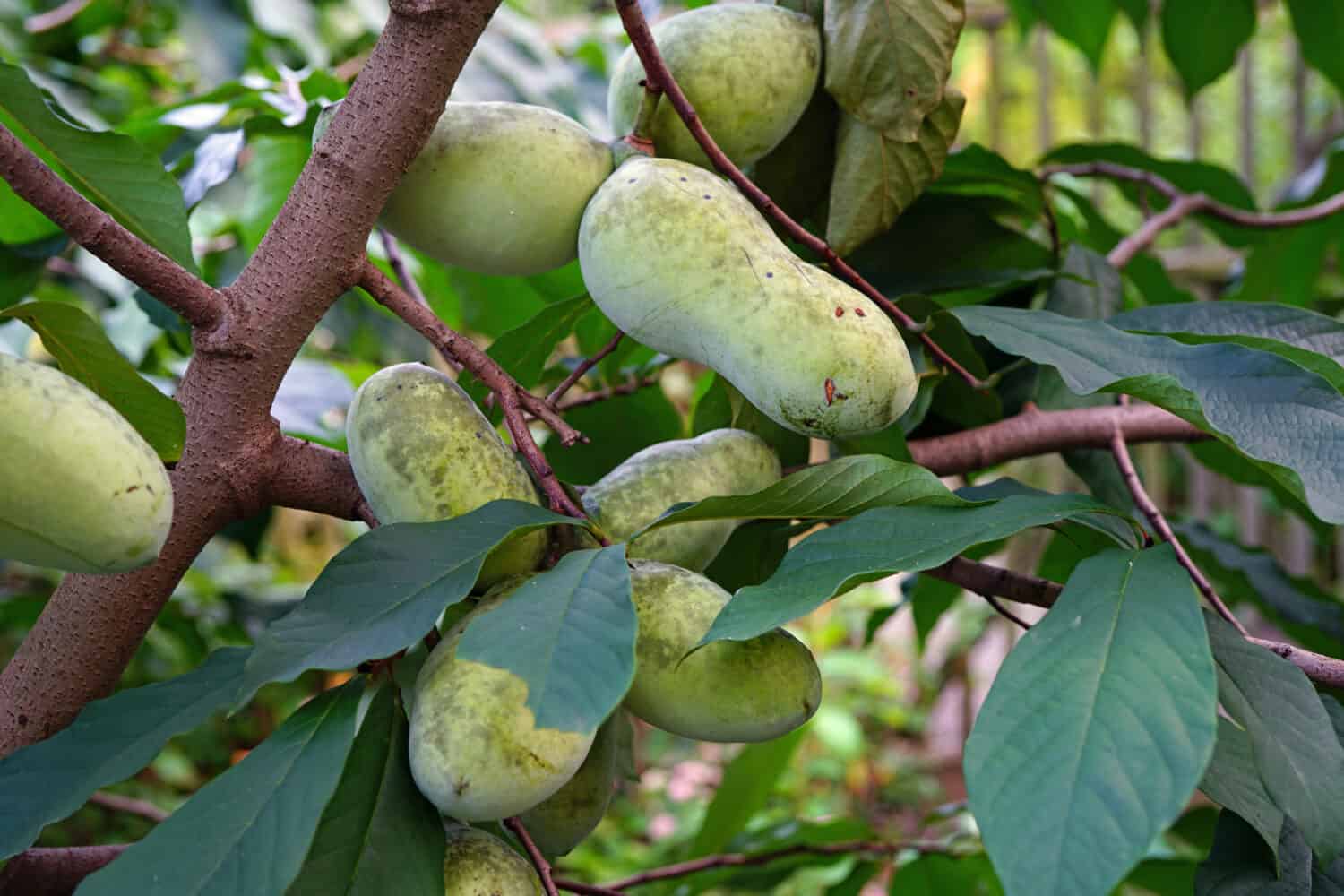
Pawpaw trees bear a sweet fruit used in pies and ice cream.
©EQRoy/Shutterstock.com
3. River Birch
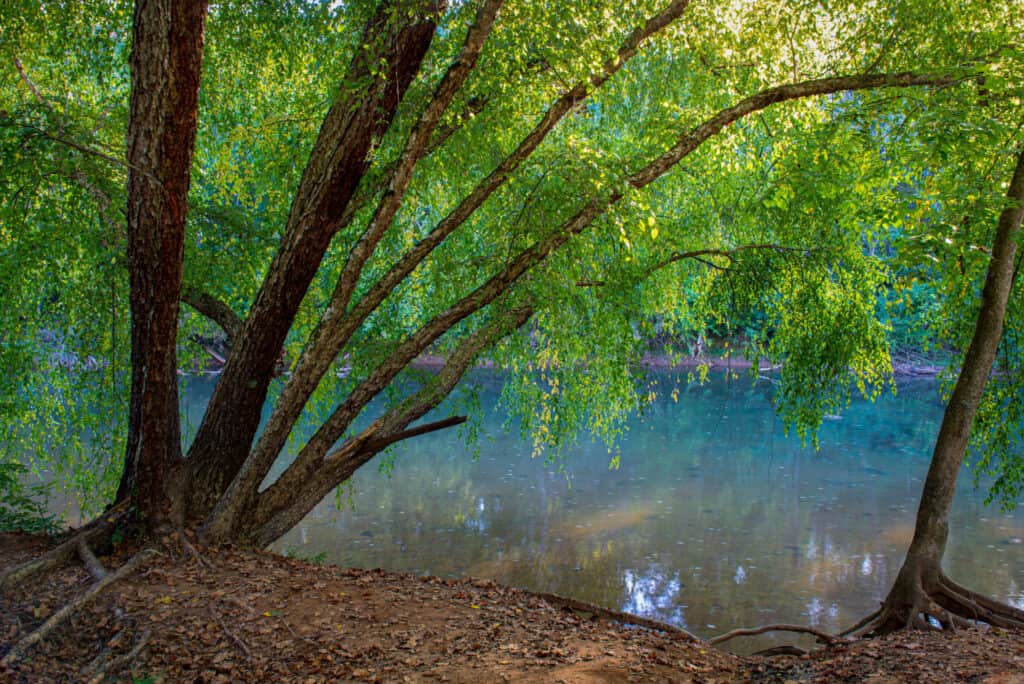
Also known as black birches, river birch trees thrive in wet conditions.
©Gerry Bishop/Shutterstock.com
River birch (Betula nigra) is a deciduous tree native to Illinois. It grows up to 100 feet tall, with an upright pyramidal form and reddish-brown bark that peels off in thin sheets. In the springtime, its small yellow flowers appear before the leaves come out, followed by catkin-like fruits full of tiny winged seeds.
River birch benefits many animals, birds, and insects across Illinois. Its fragrant flowers attract bees, butterflies, and other pollinators, making it an important nectar source for these species. Additionally, its seeds provide food for squirrels, chipmunks, and many birds.
4. American Hornbeam
American hornbeam (Carpinus caroliniana) is a deciduous tree native to Illinois and can reach heights of up to 30-50 feet. It has smooth grey bark and oval green leaves that turn red and orange in the fall.
The American hornbeam is an important host plant for the caterpillars of several species of butterflies, such as the eastern tiger swallowtail, striped hairstreak, and red-spotted purple. Its nutlets and buds are an important food source for gray squirrels and wild turkeys. In addition, its sturdy trunk makes it a great choice for hedges or windbreaks due to its ability to tolerate trimming well.
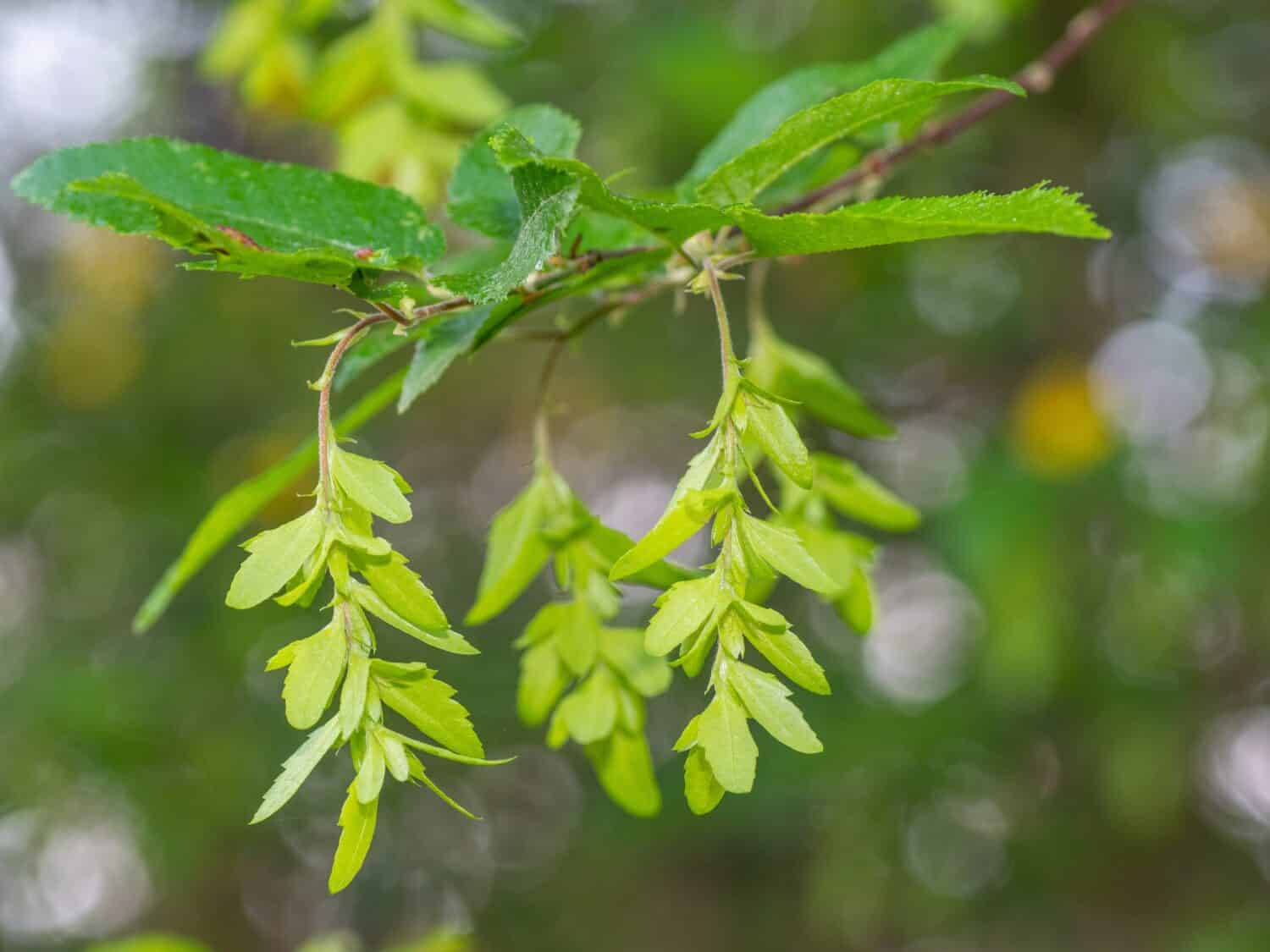
American hornbeam (Carpinus caroliniana) is a deciduous tree native to Illinois and can reach heights of up to 30-50 feet.
©Marianne Pfeil/Shutterstock.com
5. Shagbark Hickory
Shagbark hickory (Carya ovata) is a beautiful tree with stunning fall foliage in shades of yellow and golden brown. Its most distinguishing feature is its loose-plated bark, giving it the name shagbark hickory.
Not only does this beautiful tree provide edible sweet nuts for wildlife, but it also provides shelter to bats seeking roosting areas. In addition, shagbark hickory is a host plant for butterflies. The nuts are particularly popular among squirrels, being eaten from early August until the supply runs out each year. Hickory nuts make up 5 to 10 percent of the diet of eastern chipmunks and other animals such as black bears, gray and red foxes, rabbits, and white-footed mice. Many bird species, including mallards, wood ducks, bobwhites, and wild turkeys, have also been known to eat small amounts of hickory nuts.
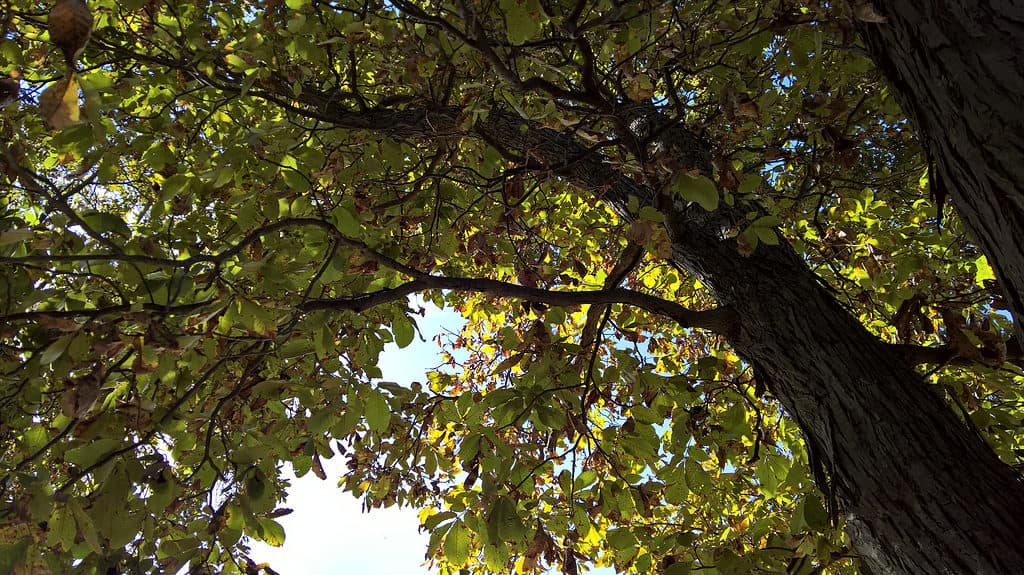
Shagbark hickory trees (Carya ovata) provide nuts for chipmunks, squirrels, black bears, and rabbits.
©iStock.com/Ethan R.
6. Eastern Redbud
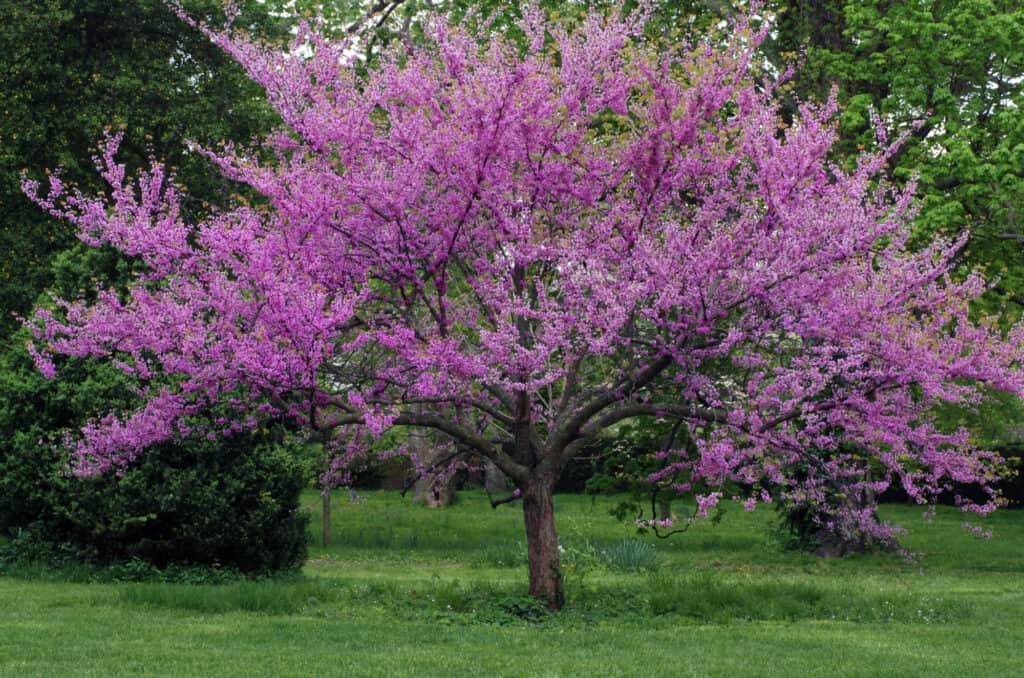
Eastern redbud trees reach up to 30 feet high.
©Marie C Fields/Shutterstock.com
The eastern redbud (Cercis canadensis) is a deciduous tree native to Illinois and much of the east United States. It is popular among gardeners because of its showy pink flowers in spring, which open before the leaves emerge. These flowers are an important source of nectar for hummingbirds and Henry’s elfin butterfly (or Callophyrus henrici).
Honey bees also benefit from its abundant pollen supply, allowing them to collect more resources than usual at this time of year when others haven’t yet flowered. The leaves and twigs offer an additional food source for whitetail deer throughout the spring, summer, and fall. Eastern redbud trees make great additions to any landscape due to their versatile nature. They not only provide beauty but also serve as a useful resource for pollinators.
7. Flowering Dogwood
Flowering dogwood (Corus florida) is an attractive deciduous tree that can often grow in the understory of wooded areas and along forest edges. They are most known for their small flowers blooming in early spring. However, they provide much more than just a pretty sight!
Dogwoods are important to wildlife because all parts of the tree provide food for many animals. The bright red drupes that grow on these trees ripen in fall and contain high fat concentrations — making them popular among 75 species of birds, including many migrating birds. Chipmunks, foxes, and skunks eat the flowering dogwood seeds. Rabbits, deer, and beavers love twigs and bark. Black bears and squirrels enjoy devouring dogwood fruits! Finally, dogwood trees serve as a host plant for Azure butterflies allowing them to feed off its nectar while providing essential shelter from predators.
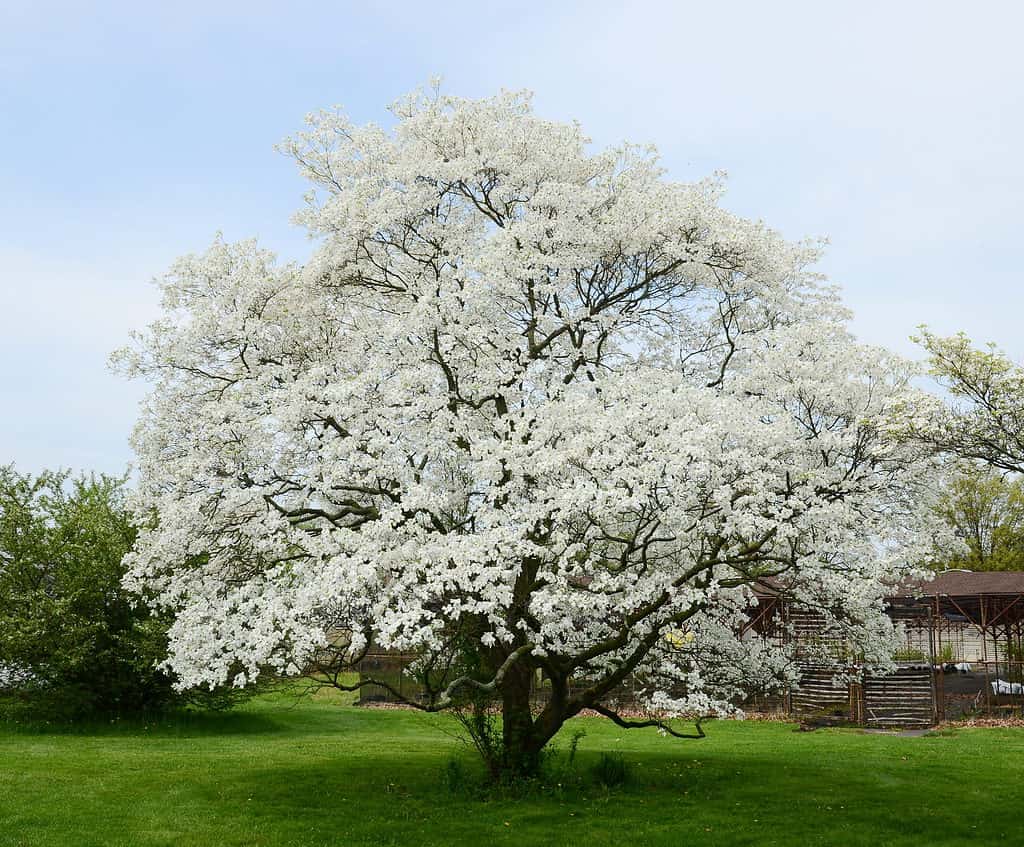
Humans love dogwoods for their spring blooms while wildlife enjoys their seeds, twigs, and bark.
©Virunja/Shutterstock.com
8. Slippery Elm
Slippery elm (Ulmus rubra) is native to the deciduous forests of the Eastern United States and can be found in various habitats such as woodlands, steeps, and riverbanks.
Over 125 species of insects feed on the slippery elm leaves and use them as a host for their larvae. Numerous bird species eat seeds and buds, such as ducks and finches. The trees also provide nesting sites for Baltimore orioles, while beavers rely on them as a food source. Thus, slippery elms are essential in local ecosystems across Illinois providing sustenance to various animals.
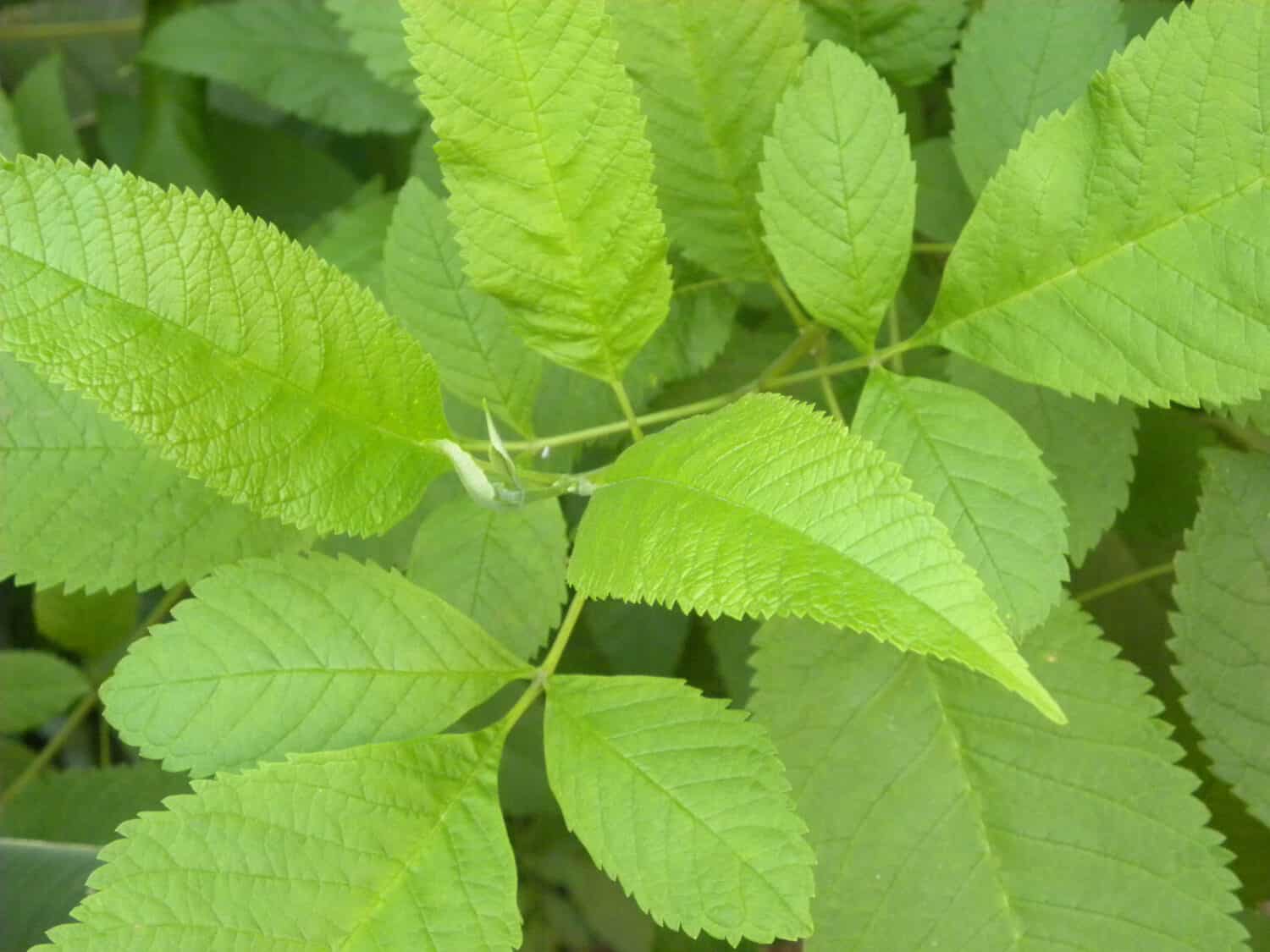
Over 125 species of insects feed on the slippery elm leaves and use them as a host for their larvae.
©ManeeshUpadhyay/Shutterstock.com
9. American Bladdernut
American bladdernut (Staphylea trifolia) is a wonderful addition to any Illinois garden. It can be grown as a thicket-forming shrub or small tree, with branches near the top and an open canopy. Springtime produces clusters of bell-shaped white flowers that attract bees, butterflies, and other pollinating insects – making it important for both biodiversity and crop production.
Later in the year, the plant produces unusual air-filled capsules that turn papery and persist into winter. These seeds are valuable food sources for small animals like birds and squirrels. All these features make American bladdernut an ideal choice for wildlife gardening projects in Illinois!
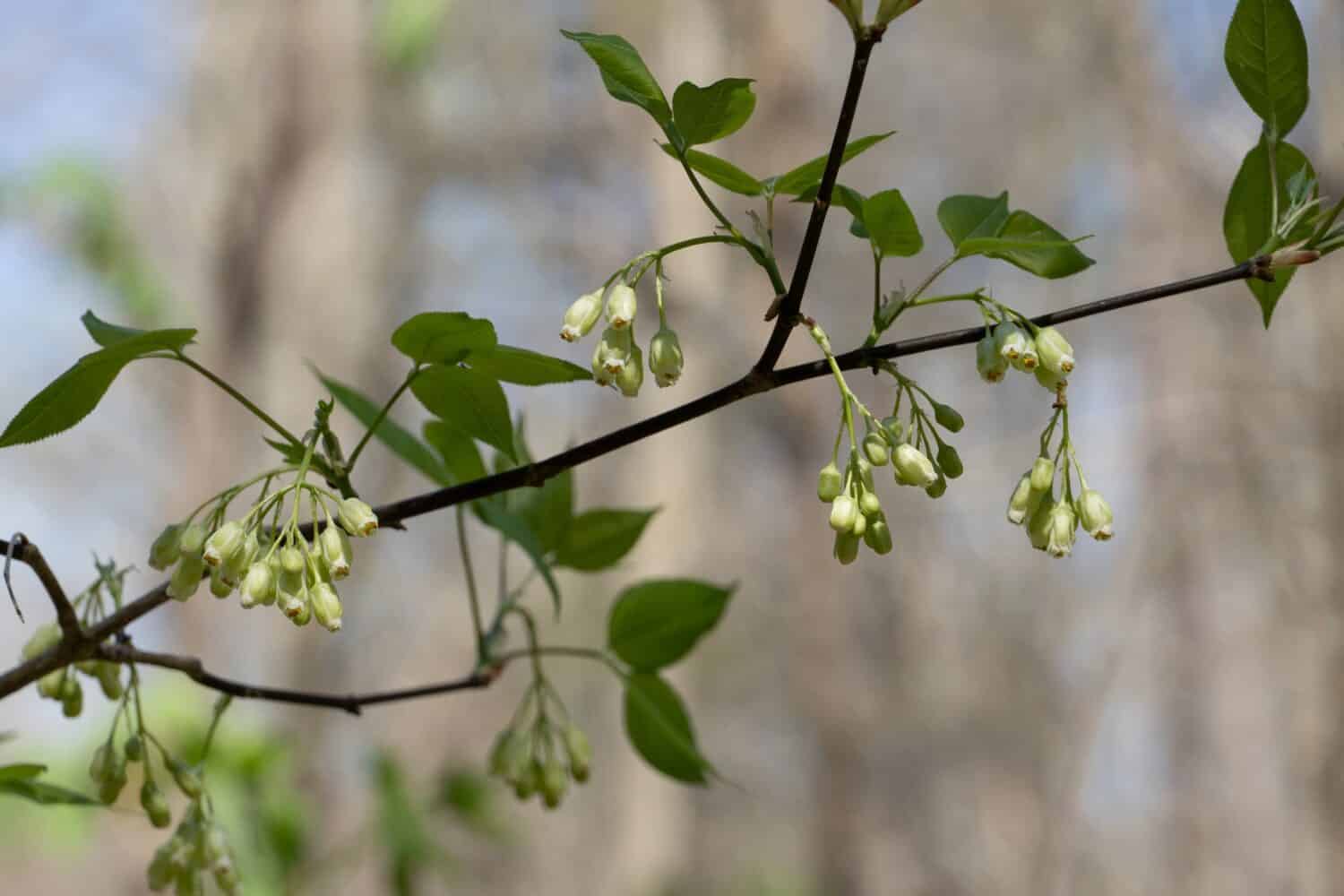
American bladdernut trees produce clusters of bell-shaped white flowers that attract bees, butterflies, and other pollinating insects
©Donna Bollenbach/Shutterstock.com
10. Black Willow
Black willow (Salix nigra) is a small to medium tree that can reach heights of 30-60 feet. It is adaptable and can grow in many different types of soil.
These trees are important for honey bees, providing them with nectar and pollen after long winters. Domestic grazing animals also benefit from black willows since they browse on the leaves during the summer months, then switch to twigs in the wintertime. Additionally, elk and beaver rely on these trees for their sustenance throughout all seasons of the year.
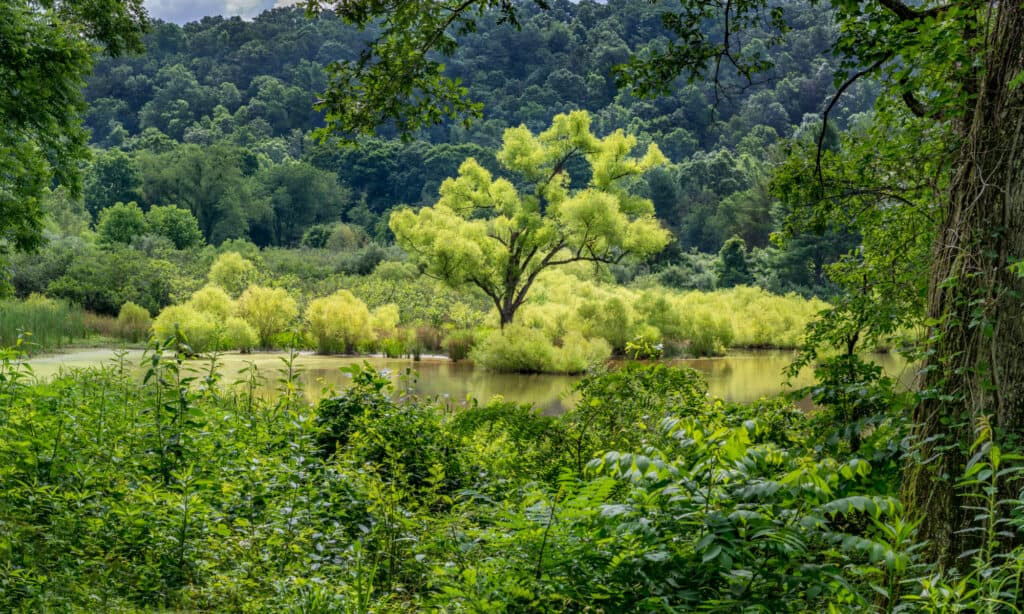
Black willows (center) are important to honey bees, elk, and beaver.
©Gerry Bishop/Shutterstock.com
11. Black Oak
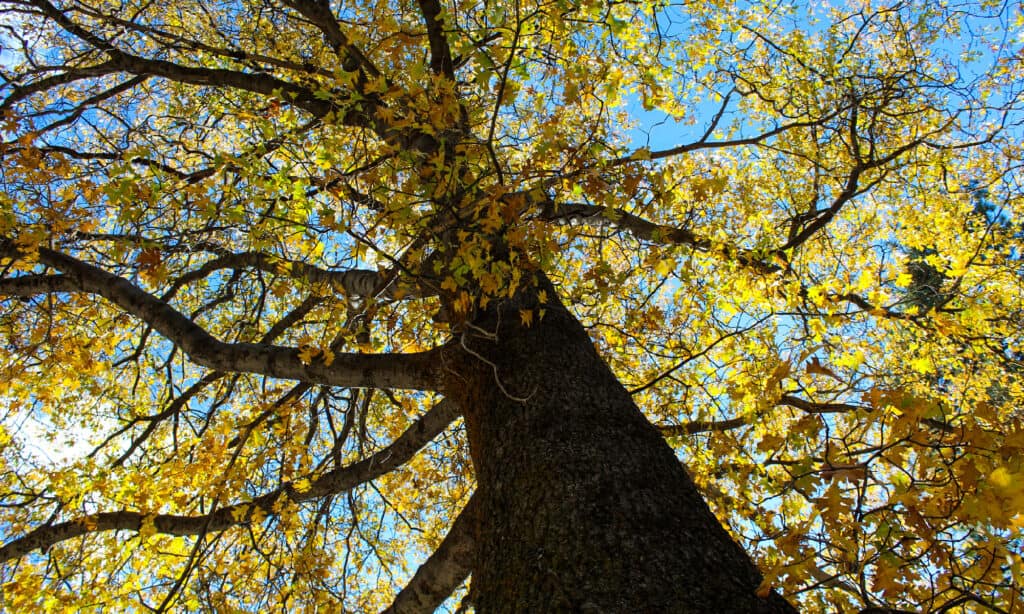
Black Oak actually belongs to a subcategory of Oaks as a Genus (Quercus) termed Red Oaks, formally Lobatae.
©iStock.com/Jared Quentin
The black oak is an important native tree in Illinois, providing a food source for many wildlife animals. Its acorns are highly sought after by birds, rodents, deer, and bears. Fluctuations in the deer population can often be linked to the availability of black oak acorns.
Fox squirrels have been spotted feeding on black oak catkins. It has a high value in cavities that provide shelter or nesting sites for animals like northern flickers. Therefore, black oak is an extremely beneficial specie to the Illinois ecosystem and should be protected and conserved whenever possible.
12. White Oak – Illinois State Tree
The white oak (Quercus alba) is an integral part of Illinois’ landscape, and it is no surprise that it has been chosen as the state tree. These majestic trees can live for centuries, providing continuous shelter and sustenance to numerous species.
The shade provided by oak trees creates a habitat for understory plants, creating an interactive ecosystem. This interconnected web of life includes many small interactions between different species. Birds nest in the protective canopy and eat insects. These same insects also help pollinate the flowers on these trees so they may continue to bear fruit year after year. Large mammals like deer, turkey, boar, and squirrels feed on white oak acorns. White oaks truly are nature’s guardians in Illinois!
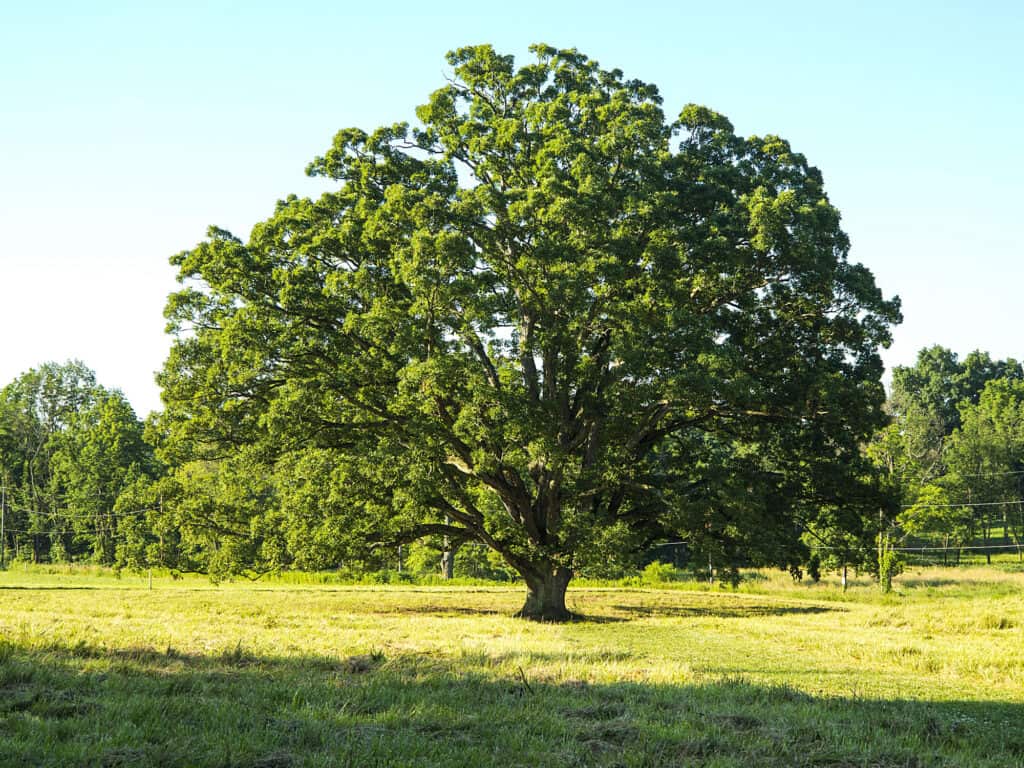
Some white oak trees have been known to live for over 450 years!
©iStock.com/Cris Andrei
Summary of 12 Trees Native to Illinois
| # | Tree | Animals it Supports |
|---|---|---|
| 1 | Black Maple | Squirrels, birds and bees |
| 2 | PawPaw | Opossums, foxes, squirrels, raccoons, birds and more |
| 3 | River Birch | Birds, butterflies, bees, squirrels, and chipmunks |
| 4 | American Hornbeam | Squirrels, wild turkeys, and several species of caterpillars |
| 5 | Shagbark Hickory | Butterflies, bats, squirrels, chipmunks, black bears, foxes, white-footed mice, and birds |
| 6 | Eastern Redbud | Hummingbirds and butterflies |
| 7 | Flowering Dogwood | Butterflies, birds, black bears, foxes, skunks, squirrels, beavers, rabbits, and chipmunks |
| 8 | Slippery Elm | Insects and birds |
| 9 | American Bladdernut | Bees, butterflies and squirrels |
| 10 | Black Willow | Honey bees, elk, and beavers |
| 11 | Black Oak | Deer, rodents, birds, and bears |
| 12 | White Oak | Birds, insects, deer, turkey, boar, and squirrels |