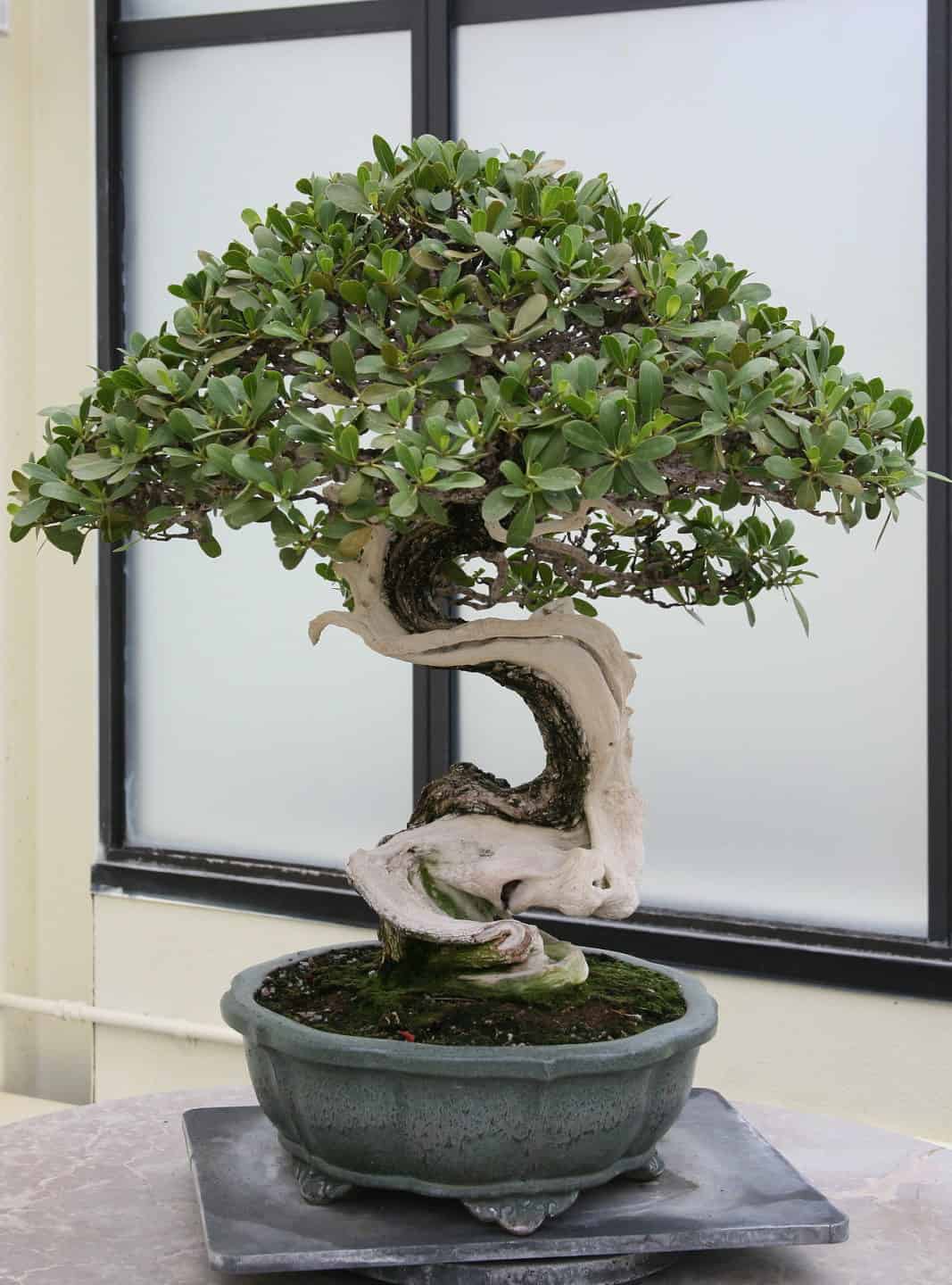

Did you know buttonwood trees are technically shrubs? They might look like trees but are considered shrubs since they grow relatively small. These shrubs can be found across the world in tropical and subtropical places. Generally, they grow along the coast in brackish water. Despite an average appearance, buttonwood trees make lovely Bonsai tree specimens.
Read on to discover everything you need to know about growing a buttonwood tree as a Bonsai tree.
| Botanical Name | Conocarpus erectus |
| Common Types | green buttonwood, silver buttonwood |
| Sunlight | Buttonwood trees love the sun! Give direct sunshine for at least 4-6 hours a day. |
| Soil | Buttonwood Bonsai trees are not inclined towards any particular soil pH. Rocky or sandy Bonsai soil mixtures would suit these trees well. |
| Water | Frequent watering means fuller growth. Buttonwood trees tolerate drought and do not have to be watered daily. |
| For Beginners? | Beginner to intermediate. Caring for a buttonwood Bonsai tree can be simple. The real challenge is pruning, which must be done frequently due to these trees’ quick growth. Styling can be simple or challenging, depending on the artist’s skill level. |
| Indoors or Outdoors? | This tree prefers outdoors if conditions are warm and humid and indoors when temperatures drop below 50 degrees Fahrenheit. |
| Pairs Well With? | Rocks and other natural ornaments. |
Common Types of Buttonwood Bonsai Trees
Since buttonwood trees are so widespread, it has been difficult to pinpoint precisely where they originated! They can be found in many tropical and subtropical regions around the globe. From the state of Florida to the country of Brazil, from Africa to Polynesia, buttonwood trees are prolific. They are recognizable by the vivid color of their leaves and the shape of the fruit that grows. The fruits often look like buttons, which is where the name came from!
There are two varieties of buttonwood trees — green buttonwood and silver buttonwood — but they are sometimes considered the same by certain experts. For the purposes of this article, we’ll count them as two distinct varieties.
Green Buttonwood
Green buttonwood is also known as simply buttonwood. As the name suggests, the leaves on these trees are shades of green. These shades range from light green to dark. They grow much taller than their silver counterpart, often reaching around 50 feet or more. Green buttonwood shrubs grow into trees more often than silver buttonwood shrubs.
Because these trees are native to warm, coastal regions, they tolerate salt and drought. To really thrive, a green buttonwood tree needs lots of sunshine. They prefer to be planted in soil that is more alkaline than acidic.
Because of the “normal” color of their foliage, green buttonwood trees are often overlooked, especially when compared to their silver-colored siblings. But these beautiful trees are still capable of producing great Bonsai tree art.
Silver Buttonwood
SIlver buttonwood gets its name from the appearance of its foliage. Leaves are light green and tinged with silver and gray. Sometimes the leaves are even wholly silver and gray.
Smaller than their green counterpart, silver buttonwood trees make wonderful Bonsai tree art candidates. When planted naturally and allowed to grow tall without clipping or cutting, they usually only reach around 20 feet. They are also used to being pruned and clipped when planted in gardens.
These fast-growing trees love sunshine. They prefer full sun to partial sun but can also be grown in partial shade. Though, if grown in shady conditions, they may not grow as quickly or thoroughly. Like their green sibling, silver buttonwood trees also tolerate drought and salt. Watering them often has no adverse side effects; it helps these trees grow fuller!
Caring for Your Buttonwood Bonsai Tree
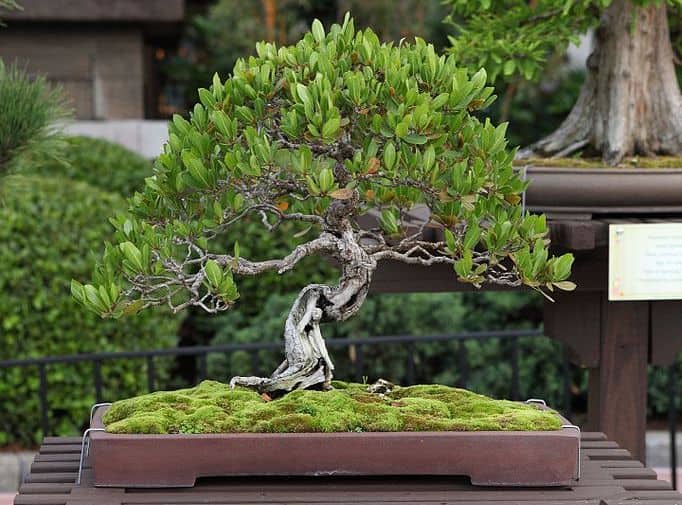
Buttonwood Bonsai trees need at least 4-6 hours of sunshine daily.
If grown in the right conditions, buttonwood trees are easy to care for. It is the same if they are being planted as Bonsai trees. This means that buttonwood Bonsai trees are great for beginners.
This article has you covered from sunlight and knowing where to place your buttonwood Bonsai tree to soil preferences and how to water it.
Sunlight
Since buttonwood trees are native to tropical and subtropical regions, they are used to plenty of sunshine. They love it. Because of this, keeping your buttonwood Bonsai tree somewhere where sunshine is plentiful is a good idea. It needs at least 4-6 hours of sunshine daily, though it shouldn’t complain if it receives more.
Growing a buttonwood Bonsai tree in shady conditions is possible. The tree will grow but won’t be as complete as if grown beneath direct sunlight. If lack of sun becomes an issue, grow lights can substitute.
Soil Type
Choosing the right kind of soil for your Bonsai tree can be tricky. Soil, of course, is an important part of a plant’s growth. Bonsai trees generally need a specialty mixture. These mixtures are designed to be well-draining to compensate for how much water Bonsai trees often require and can be personalized to a specific type or species of Bonsai tree. Sometimes, for certain species, it is also important to keep in mind soil pH preferences.
Thankfully, buttonwood Bonsai trees don’t have particular inclinations to soil type or pH. They are often found in rocky or sandy soil conditions when grown in the wild. This can be easily replicated with Bonsai soil mixtures. You can purchase premade mixes, preferably with components like sand or pumice, or make your own at home.
Water
Learning to water a Bonsai tree properly can be another challenging aspect of growing one. Every Bonsai tree species is different. Some prefer the soil to be constantly wet or soggy. Others can handle less and only need their root ball to stay moist.
Buttonwood trees fall under the latter category. They naturally tolerate drought, which carries over into their growth as Bonsai trees. This means they only need to be watered every two or three days. Of course, this isn’t a strict schedule; it depends on how dry the soil is.
Frequent, daily watering can lead to more leaves and a fuller appearance. If this is the appearance you want for your buttonwood Bonsai tree, feel free to water it daily.
Buttonwood trees are also generally tolerant of salt. However, it is a good idea to water your buttonwood Bonsai tree with water that is not hard. You can use rainwater and tap water if it isn’t hard. Too much hard water has the potential to harm these little guys.
Placement
Another component of growing Bonsai trees that can be hard is knowing where to place them. Different plants have different needs and requirements. Certain plants are more adaptable than others, while others can only grow in conditions that replicate what they are used to in the wild.
Buttonwood Bonsai trees can often be found in the latter category. Since they are used to growing in tropical and subtropical climates, it is essential for their growth that they be grown in similar environments. This, of course, can be tricky to reproduce, depending on where you live.
If temperatures are warm and conditions temperate, incredibly humid, buttonwood Bonsai trees can be kept outside. To ensure fuller growth, they should be placed beneath direct sunlight for a portion of the day. They can tolerate some shade, too, though their foliage won’t be as complete.
A buttonwood Bonsai tree should be brought indoors if outdoor temperatures reach 50 degrees Fahrenheit or lower. Their leaves can wilt and fall off if exposed to less than-warm temperatures at any time. Grow lights can replicate sunshine if there is a lack of sunlight.
Pruning Your Buttonwood Bonsai Tree
One of the most challenging parts of growing a Bonsai tree is pruning. As always, certain trees and plants react differently to even the most common of Bonsai techniques. Some trees take well to being pruned and shaped, while others do not.
Buttonwood Bonsai trees are generally receptive to pruning. When planted naturally in gardens, they are often pruned to keep a certain shape. This is especially common among buttonwood trees of the silver variety.
Since buttonwood Bonsai trees tend to grow quickly, frequent pruning is usually needed to help the trees retain the desired shape. Regular pruning can also help keep the size of the leaves down. However, frequent pruning can bring scars. The pruning and wiring of buttonwood Bonsai trees should be done carefully to avoid scarring the wood.
Ideal Buttonwood Bonsai Tree Styles
Buttonwood Bonsai trees are genuinely versatile in the styles they can be shaped into. Almost any Bonsai style is possible with a buttonwood Bonsai tree, from suitable styles to slanted and more dramatic ones.
One of the most popular upright styles for buttonwood Bonsai is the style of Moyogi. It involves shaping the tree with bends and curves in the trunk, generally in the shape of the letter S. Often, the bends each have a branch growing out. The rest of the branches are found concentrated at the top.
Another ideal style for buttonwood Bonsai trees is the Shakan style. In this style, Bonsai trees are shaped with a trunk that leans heavily to one side in a slant. However, the branches are often styled with care to complement the slanted trunk. For example, the bottommost branch should grow opposite to the slanted trunk.
Propagating Your Buttonwood Bonsai Tree
The best way to propagate a buttonwood Bonsai tree is from cuttings. Mainly if these cuttings are gathered during the growing season; generally, that season is spring or early summer. They can also be propagated from seeds.
Common Problems with Buttonwood Bonsai Trees
There aren’t any buttonwood-specific diseases or pests to watch out for when growing a buttonwood Bonsai tree. If kept outdoors, they can be infested with aphids. Insecticides or pesticides designed for aphids should do the trick.
With humid conditions, especially indoors, watch out for root rot, mold, or other fungi. They proliferate in damp, humid conditions. Keeping your buttonwood Bonsai in a place or room with well-circulated air will help. Bonus points if that air is fresh, too!