
Quick Take
- The red color isn't painted on at spawning time. It has been quietly building inside the fish for years before you ever see it. How pigment builds up →
- The same pigment responsible for that brilliant scarlet body is doing something far more important than looking dramatic. See what pigment does →
- This fish makes its most stunning transformation while simultaneously running out of time to live. Transformation meets its end →
The sockeye salmon is one of the most unique fish in our waterways, thanks to its ability to radically change color. For most of the year, this species has a sleek, streamlined look with shimmering silver sides, a pale belly, and a blue green back. However, as you can see in this wild Instagram post, when spawning season approaches, the fish undergoes a dramatic transformation. Suddenly, it turns into a red-bodied, green-headed fish. The colors are so bright that they turn heads.
It is one of the most dramatic transformations in the animal world. What makes the change especially fascinating is that the red pigment doesn’t simply appear from nowhere. Much of the raw material for that color has been accumulating inside the salmon for months or years as it feeds in the ocean. Let’s look deeper into this strange phenomenon.
From Silver to Brilliant Red
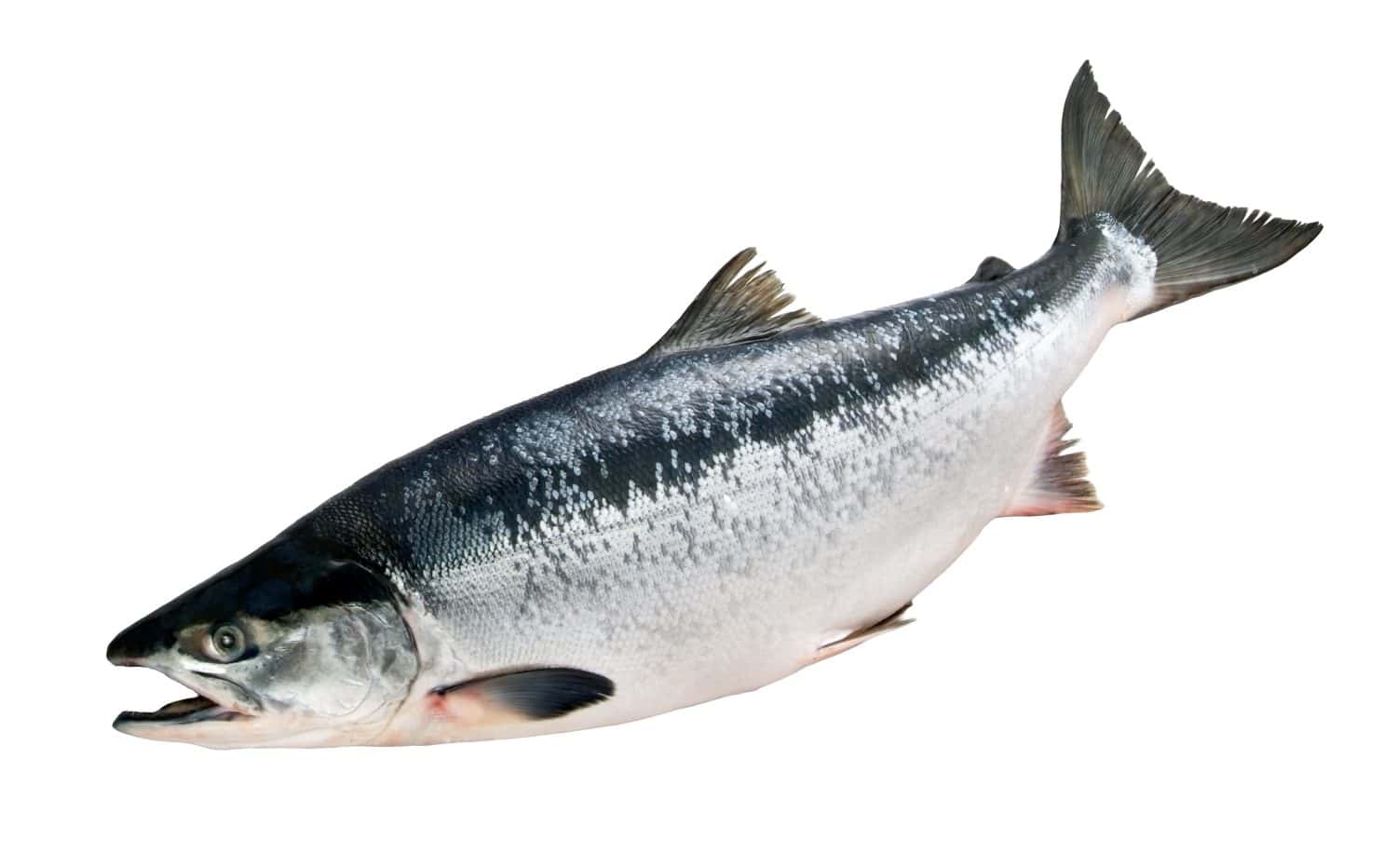
The sockeye salmon starts out like many other fish, with a typical silver-like appearance. But that will soon change.
©SAI A.D.A/Shutterstock.com
The appearance of the sockeye salmon (Oncorhynchus nerka) is fascinating in many ways. Beyond its unique look during mating season, the fish also looks a bit different from its counterparts the rest of the year. Unlike many other Pacific salmon, sockeye generally lack the large, obvious dark spots that make species such as chinook, coho, and pink salmon easy to recognize.
Most anadromous sockeye hatch in freshwater and spend their early years in lakes or streams. They then migrate to the ocean, where they spend roughly two or three years growing and feeding before returning to freshwater to reproduce. As the sockeye approaches maturity, its appearance gradually changes. The body becomes increasingly red, while the head takes on greenish or olive tones.
By the time the fish reaches its spawning grounds, the transformation can be so dramatic that a person unfamiliar with salmon might have difficulty believing the ocean-colored fish and the brilliant red fish are the same species. That is why the sockeye’s other common name, red salmon, is so appropriate.
Where Does the Color Come From?
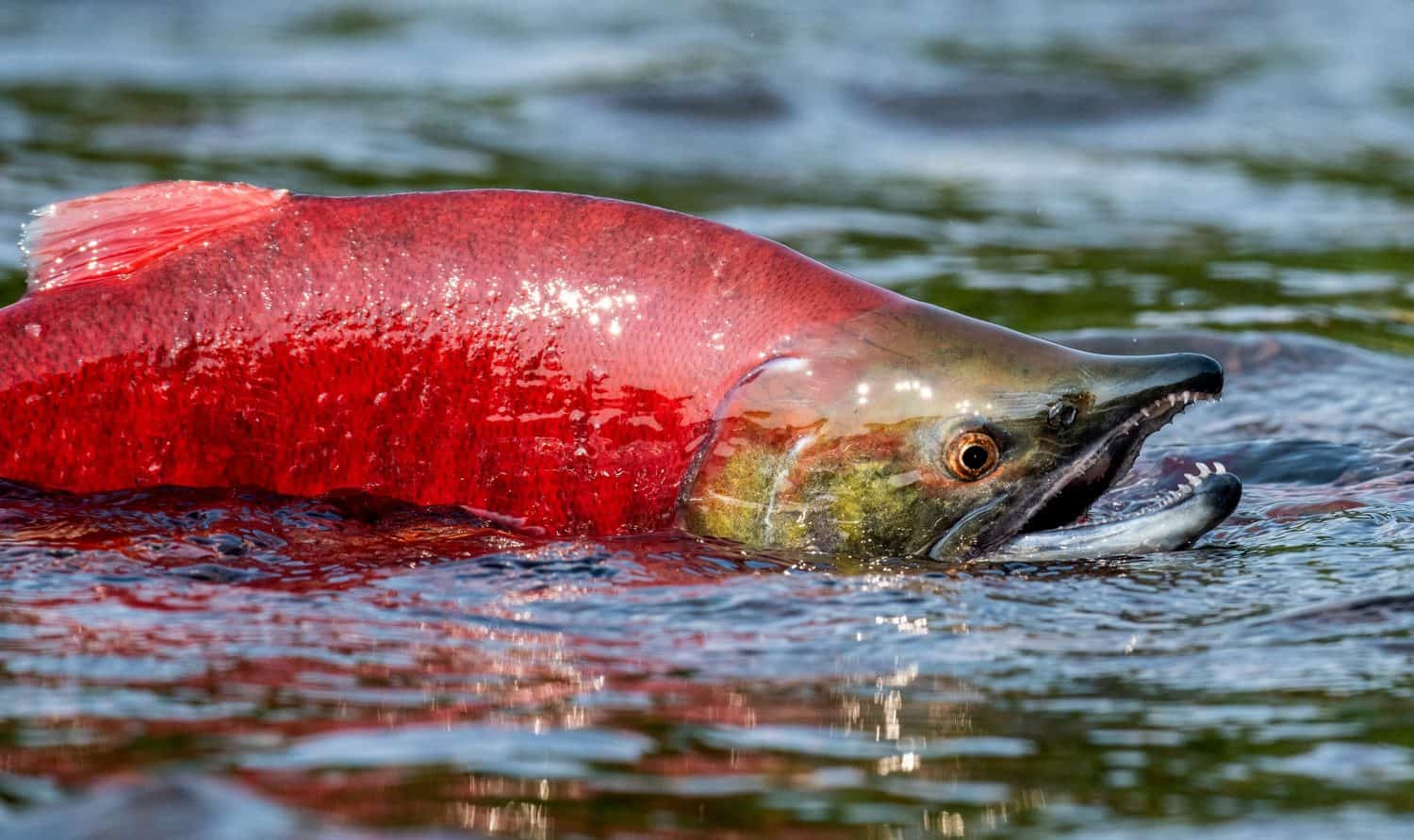
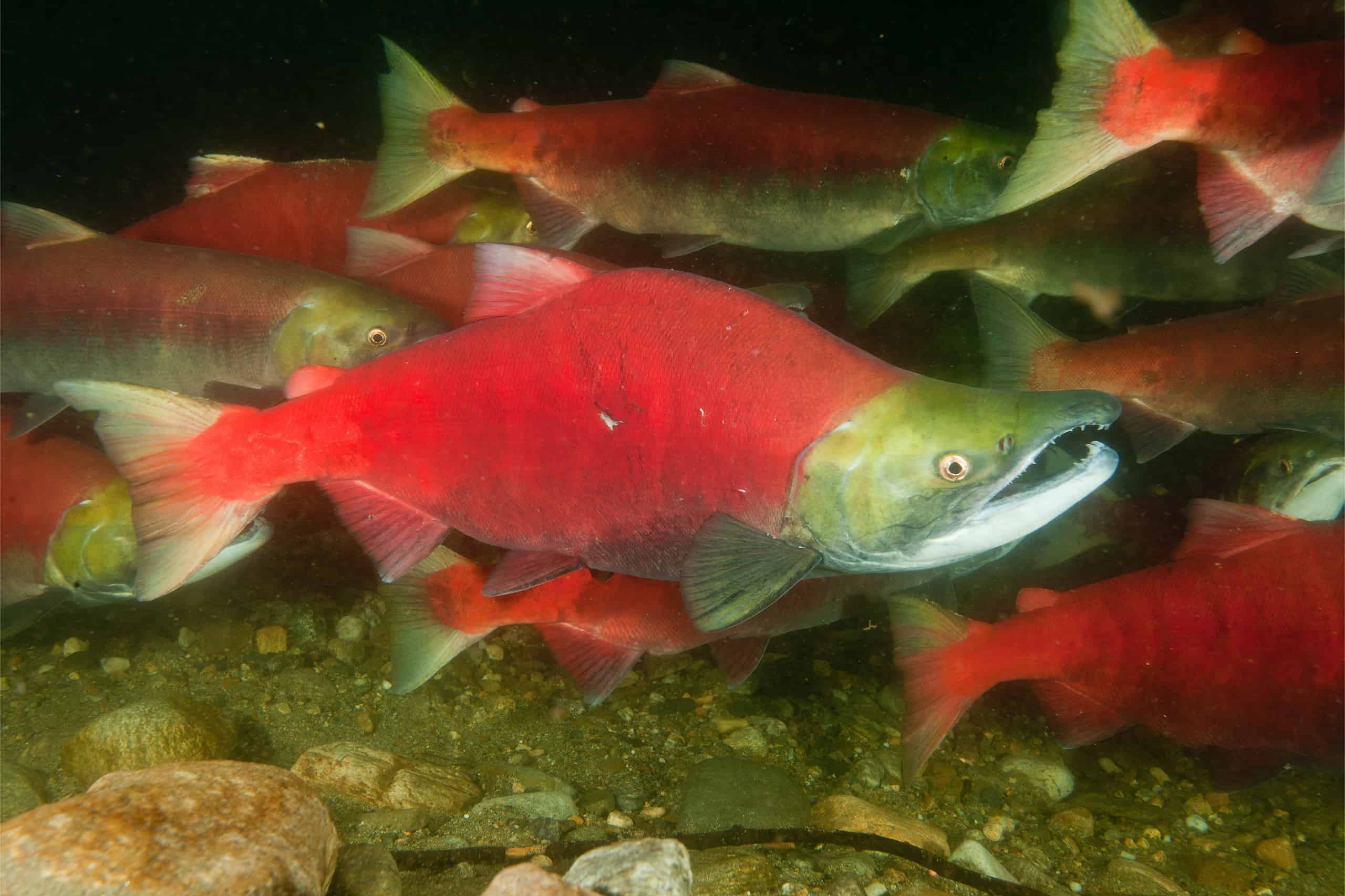
After it’s transformation, the sockeye salmon will have a scarlet body and modified head.
©Sergey Uryadnikov/Shutterstock.com
So where does all that red come from? The answer begins with the sockeye’s diet and the introduction of carotenoids, which are natural pigments responsible for many of the yellow, orange, and red colors found throughout nature. They also drive much of the characteristic coloration associated with salmon. Sockeye consume carotenoid-rich organisms in the marine food web, including zooplankton and small crustaceans.
So, the red color of mature fish is linked to what they ate while growing in the ocean. During the ocean phase, much of the carotenoid pigment is stored in the muscle, contributing to the familiar orange-red color of salmon flesh. But as the fish matures and prepares to reproduce, it mobilizes and redistributes that pigment.
It’s fascinating because the transformation is not merely a change in surface appearance. It is part of a much larger physiological shift taking place inside the fish.
The Pigments Move to the Skin
As spawning approaches, carotenoids stored in the fish’s flesh shift toward the skin of males and the eggs of females. The effect is particularly dramatic because the ocean-colored fish starts relatively reflective and silvery. As the transformation progresses, those silver sides become increasingly saturated with red until the fish can appear almost scarlet. The head also changes, developing a contrasting green or olive coloration, which makes the red body stand out even more.
So, why does the sockeye salmon turn red? When it comes time to reproduce, they need to find appropriate spawning habitat and compete with other salmon. The striking colors can therefore serve as visual signals during this period. But make no mistake, the red coloration isn’t simply decoration.
There is also an interesting nutritional connection. Carotenoids have antioxidant properties, and salmon deposit these pigments in their eggs and skin. The carotenoids in salmon eggs can help protect tissues from oxidative damage and support immune function. That means the same basic group of pigments that contributes to the spectacular red appearance of a spawning sockeye is also being directed toward reproduction itself.
The Males Also Change Shape
The color transformation is only half the story. Male sockeye salmon develop some extraordinary physical characteristics as spawning approaches.
Their jaws elongate and develop a pronounced hook known as a kype. The teeth become more conspicuous, and the body changes shape as the fish matures. The male also develops a hump behind the head, creating the unmistakable profile of a spawning sockeye. The difference between an ocean-phase male and a spawning male can be astonishing. Instead of the streamlined silver fish built for ocean travel, the mature male has a deeper, more heavily modified body, a greenish head, a red body, and a prominent hooked jaw.
These changes are associated with reproduction and competition among males. Salmon spawning grounds can contain numerous mature males competing for access to females, and the exaggerated jaws, teeth, and body shape are among the physical characteristics that distinguish mature males. The hump is not as enormous as the famous hump of a male pink salmon, but it is unique, nonetheless.
That hooked jaw is particularly striking, but the transformation isn’t that far out of left field. The genus name, Oncorhynchus, even comes from Greek roots associated with a hooked nose or snout. In spawning sockeye, the male’s jaw becomes elongated and curved, with enlarged teeth that are clearly visible.
A Transformation During a Demanding Journey
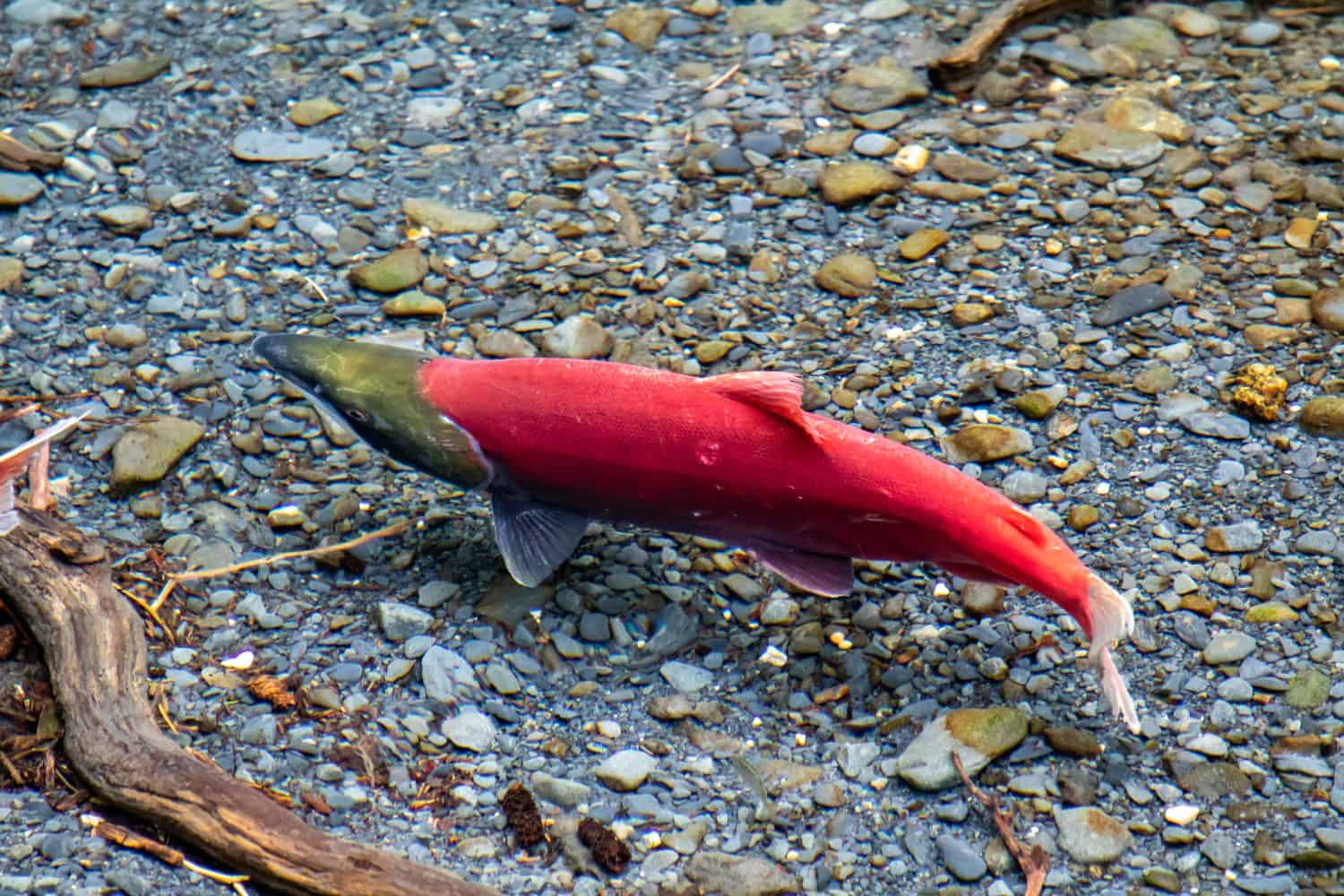
Sockeye salmon make this dramatic transformation while also traveling considerable distances to mate.
©Mark A. McCaffrey/Shutterstock.com
Perhaps the most remarkable thing about the change is that it happens while the salmon is completing one of the most demanding journeys of its life. Sockeye leave the ocean and enter freshwater, often traveling considerable distances toward the spawning area where they originated. They return to the habitat where their lives began.
During this period, the fish is also approaching the end of its life. Sockeye generally spawn only once. After spawning, adults die within weeks, and their bodies eventually become part of the ecosystem they returned to. Their carcasses provide nutrients such as nitrogen and phosphorus to freshwater environments, supporting other organisms and even benefiting young salmon. That makes the bright red body more than a beautiful seasonal display. It is also one of the final chapters in the sockeye’s life cycle.
A Truly Unique Fish
The story of the sockeye salmon is almost like something out of make-believe, and the transformation can be quite jarring. But like many miraculous shifts in nature, every aspect of the change benefits the species.
So, the next time you see a photograph of a brilliant red sockeye salmon, remember that you are looking at the final form of an extraordinary transformation, one that began with a silver fish in the ocean and ended with a green-headed, red-bodied salmon ready to create the next generation.