
A lesser-known pothos variety that has become increasingly well-known in recent years is the global green pothos plant. These resilient plants are prized for their gorgeously textured leaves and deep green hue.
It can be much harder to obtain this distinctively patterned colorful variety in traditional garden retailers as a result of the current online obsession around it. They can also be more expensive than other less-common types because of the global green pothos’ appeal and scarcity. But once you have this lush lime and emerald-colored tropical plant in your possession, you’ll want to take good care of it.
After you’ve managed to get one of these plants in your hands, it’s crucial to see to it that its requirements are satisfied so it may develop and live a long life. Let’s take a look at everything you need to know about the global green pothos plant.
Origin of the Global Green Pothos
Mo’orea, a French Polynesian volcanic island, is the source of most pothos plants. Also, it has been naturalized in southern Asia, the Pacific Islands, the West Indies, and all of the tropical and subtropical regions in South Africa and Australia.
The global green pothos variant of Epipremnum aureum is a very recent development. It’s not particularly clear who cultivated this cultivar, though. There is some evidence that it was developed by a Japanese pothos breeder named Hiroaki Asaoka back in 2016 and was created via a mutation. It is known that Costa Farms began selling it in 2020. Costa Farms also said on their website as of September 2021 that they had been given exclusive rights (a.k.a. the patent) to cultivate this variety in North America. Where therefore did the variegation originate from initially? It’s not abundantly clear. However, if you want to avoid the headache of finding this rare variety at local nurseries, you can find it on the Costa Farms website.
Emerald Pothos and Global Green Pothos: Key Differences
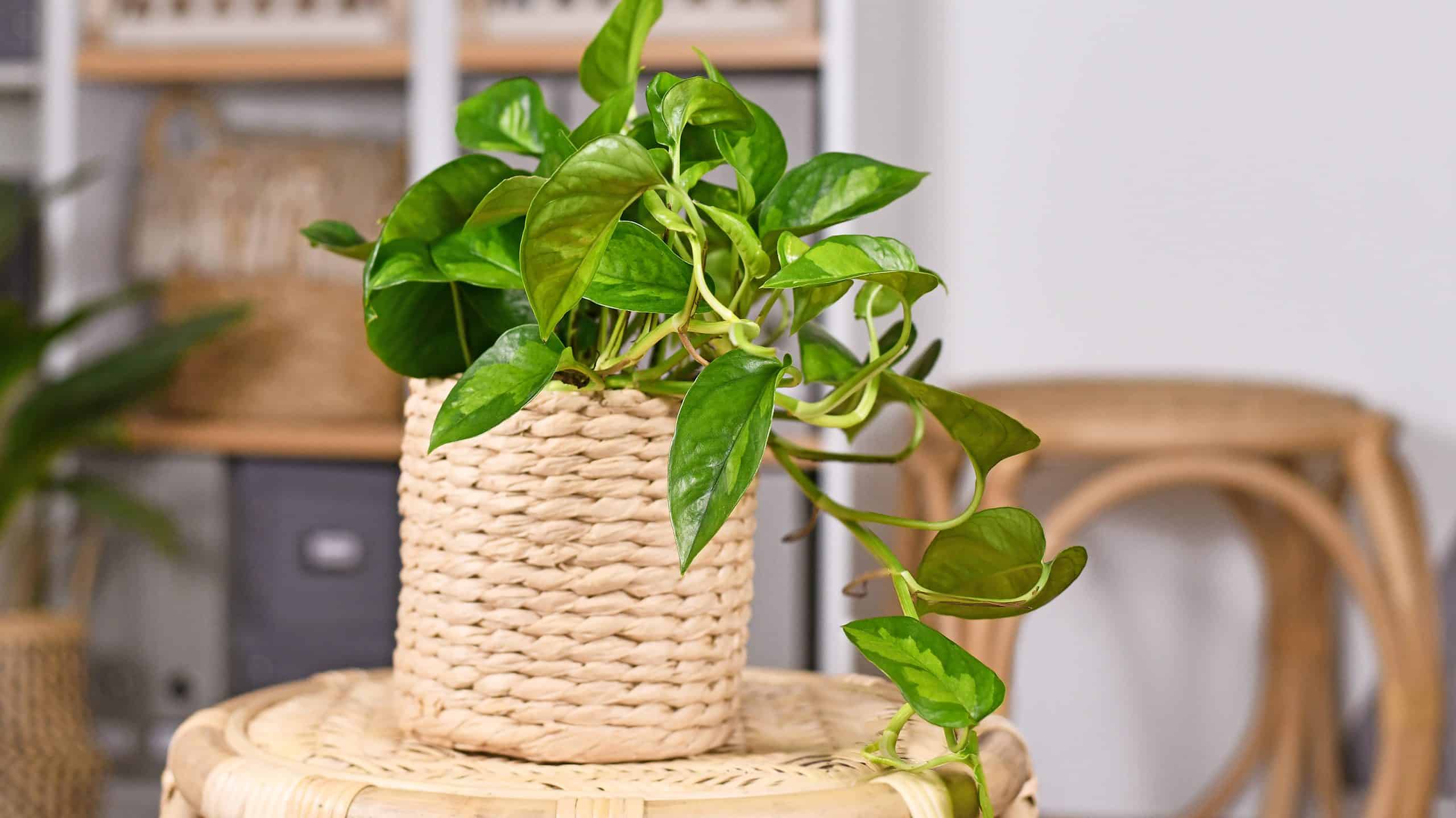
The emerald pothos and global green pothos might be similar in looks, but they are completely different varieties. Global green pothos plants often have a lighter green inside the leaf and a darker green border. The variegation also appears more square or pixel-like. Emerald pothos plants are essentially the reverse. Light green leaves with deeper green variegation on the inside are key indicators of emerald pothos.
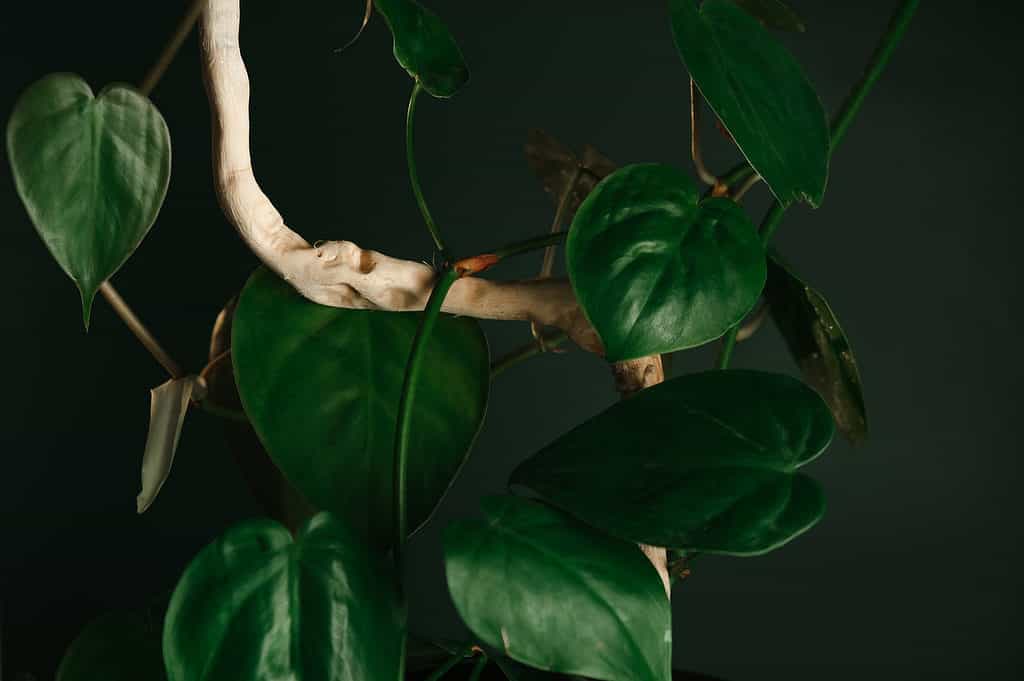
While similar in appearance, the emerald pothos (pictured) differs quite a bit from the global green variety.
©iStock.com/Margarita Khamidulina
Global Green Pothos Care Requirements
Give your global green pothos enough water to ensure their successful growth. When the soil in its pot is nearly entirely dry, thoroughly water it. The withering of its leaves is a sign that it needs water. During the growth season, water more frequently; in the winter, less frequently. If you are unsure of when to add extra water, simply stick a finger in its soil to check for dryness. Bigger pothos may go longer without water, but younger, less established plants require regular watering until their roots are well set. Be careful to water your global green pothos gently and thoroughly. Water should be uniformly distributed throughout the whole root system. Global green pothos are not water-sensitive. That being said, you can drain the soil by washing away salts and minerals that may have built up in the soil every few months. Run water through the soil for a few minutes to do this. Some plant parents will simply place their pothos and its pot under a showerhead for a few minutes to do this.
Global green pothos, like the majority of tropical indoor plants, will thrive in environments with greater humidity levels above 50%, but they will also thrive in typical indoor home humidity. If you notice brown edges growing on the leaves or if you heat your house with forced hot air because you live in a colder climate, you may need to raise the humidity level. You can do this by purchasing a humidifier or by placing a tray of water near the plant.
Your global green pothos will be able to tolerate the majority of typical household temperature variations. But, if they are exposed to temperatures below 55 degrees F, they will stop growing. These tropical indoor vines may perish if exposed to freezing temperatures for an extended period of time. Temperatures above 90 degrees F can rapidly cause the soil to dry up, necessitating a change in your watering schedule. In order to prevent mold, fungus, and pests, we advise providing air circulation as well as more regular watering while it’s hot outside.
Global green pothos may survive in lower light levels but requires medium to bright indirect sunshine for at least six hours per day. If the light levels are low for an extended period of time, the leaves may shrink and their painterly hue may deteriorate. Moreover, the vines will have fewer leaves and seem lanky and barren. Move your pothos to a location with more light as soon as you become aware of these problems. To escape the sun’s direct rays, place them close to an east or north-facing window or pull them back from a south or west-facing window. The leaves of your pothos will quickly scorch or get discolored under direct sunlight.
Pothos don’t have particular soil preferences, although they thrive in potting soil that is loose, light, and nutrient-rich. To prevent root rot, choose a soil media that holds moisture and enables appropriate drainage. The majority of pre-mixed soils will work. Avoid soils that contain moisture-retaining crystals and make sure your soil has lots of organic matter, such as peat moss or dead leaves. Repotting your soil into a compost-rich soil combination with fewer drainage components is advised if your soil drains too rapidly.
Regular fertilization has significant benefits for global green pothos plants. Throughout the growing season, use a weak solution of a diluted liquid fertilizer every two weeks. In contrast, you can use a slow-release fertilizer in the spring to nourish your pothos for several months. Avoid fertilizing your pothos plant in the wintertime.
Global Green Pothos Growth Rate
The global green pothos can grow moderately to very fast. Once it is established and cared for, you can expect its emerald leaves to get up to eight inches wide and boast an overall plant length of 15 feet.
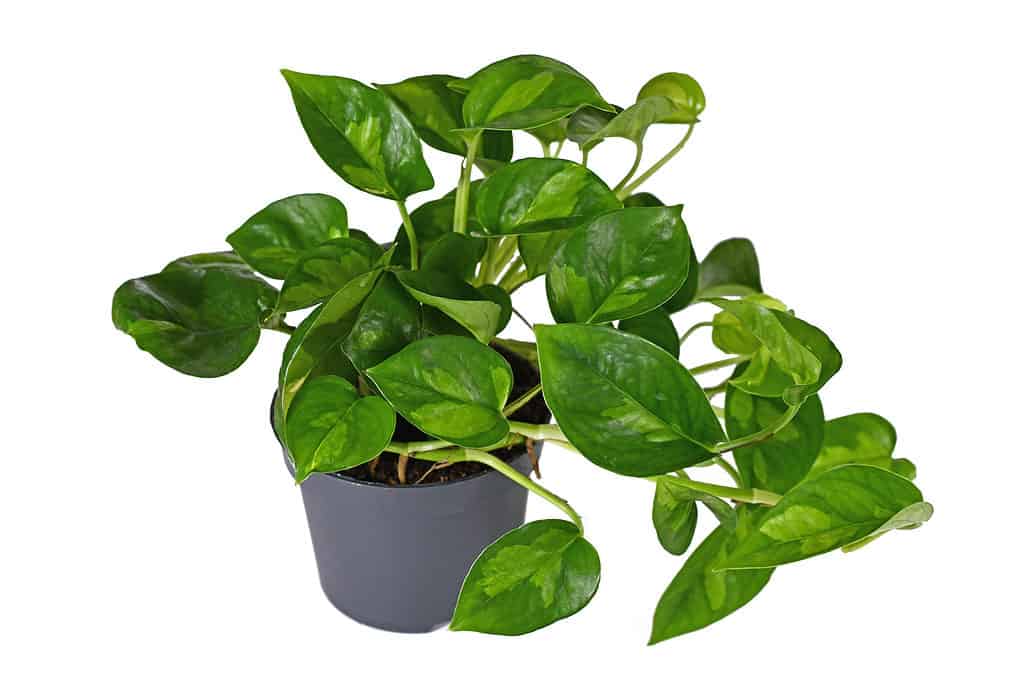
The global green pothos (pictured) can grow up to 15 feet and has a relatively fast growth rate.
©iStock.com/Firn
How to Repot a Global Green Pothos
Are you unsure about when to transfer your global green pothos to a larger container? Luckily, it’s not something you have to do very frequently. This is due to the fact that global green pothos repotting is often done every two to three years, and the necessity of repotting relies on the plant’s present growing environment, which affects the pace of development. The plant does, however, have a quite wide root system, and after it gets root-bound, it should be moved to a bigger container size.
Prepare a well-draining potting mix before repotting your pothos, then start to fill the container halfway. After planting the pothos and covering the root ball with the remaining soil, thoroughly water the soil’s surface area. It’s really that easy!
How to Propagate a Global Green Pothos
Remember that global green pothos plants are protected by patents. But, you may grow them just like any other pothos plant if you want to increase the size of your plant.
Global green pothos propagation requires moss, water, or a lightweight clay. Regardless of the technique, make sure the cutting you use has at least a few nodes and a few leaves. To start, just place it in water and change the water every few days. Plant it as soon as the little white roots begin to appear. Nestle the cutting in your propagation material of choice and fill it with water just to the bottom of the cutting.
Some horticulturists use sphagnum moss and perlite to root the cuttings of global green pothos. To do this, soak the moss and combine it with coarse perlite. The cutting can then be inserted. To maintain a high humidity level, place it in a plant propagation box.
If you don’t want to use a plant propagation box, just cover the cutting and moss combination with a transparent plastic bag. Make sure the moss is moist but not dripping wet. Plant it in soil after it has rooted.
How to Prune a Global Green Pothos
Most pothos, which are native to the tropics, have aerial roots that allow them to grow very long. They frequently require assistance, such as a moss pole to climb on, as they grow longer and start to produce more leaves. In light of this, pruning a global green pothos is advised if part of its leaves are withered and weighing down the plant unnecessarily. Since global green pothos are mostly cultivated inside, pruning is not done regularly, but it may still be a good idea to trim the plant occasionally to keep it tidy, active, and seem longer in length.
Pests and Diseases to Watch Out For
Global green pothos issues frequently result from poor soil management, which provides a breeding ground for pests and illnesses. While global green pothos pests are uncommon, mealybugs are the most frequent unwelcome guests for this plant. They are rather simple to spot since they have the appearance of little white cotton balls on the upper and abaxial surfaces of the leaves. Use neem oil or an insecticidal soap to get rid of any pests that may be harming your pothos. You may also use water in a misting bottle to spray them away. To keep your plant looking tidy and healthy, make leaf wiping a routine to remove pests as well as dust. Maintaining an ideal amount of relative humidity is also important because sometimes a high prevalence of pests and illnesses is caused by this factor.
The global green pothos can suffer from bacterial or fungal infections that may arise from a decaying root system, often caused by overwatering. This is particularly prevalent with clumpy soil when too much moisture is trapped and oxygen becomes insufficient. The environment in which pothos illnesses flourish can affect other houseplants near the pothos. To avoid diseases caused by overwatering, check first if the top inch of the soil already feels dry to touch before watering. Make sure the growth media is not too thick and that the container has adequate drainage. Avoid wet soils, and if there are any sick plant parts or spent leaves, remove them via pruning.
If you can manage to find a global green pothos, you’ll be able to enjoy a stunningly vibrant pothos variety for years to come. Just make sure you keep up with its care requirements and this plant will grow like a weed!
Up Next:
- Do Pothos Plants Produce Flowers?
- Discover 3 Types of Rare Pothos
- Are Pothos Plants Toxic To Cats Or Dogs?