
Quick Take
- 70% of wild bee species nest underground, and what they're doing down there has nothing to do with pollination. See who lives underground →
- Bees outperform ants and termites at a key soil task, something scientists are only now beginning to understand the significance of. Compare bees to ants and termites →
- The stuff bees leave behind in their nests, such as secretions, pollen, and feces, may be quietly reshaping the chemistry of the ground beneath your feet. Explore what bees leave behind →
- A new study found that soil near bee nests is measurably different from surrounding soil, though not in the way you'd expect. See the study findings →
For years, earthworms and ants have been lauded as soil engineers. They mix soil layers, alter density profiles, redistribute nutrients, and support biodiversity. You might not expect bees to participate in this process because they are so busy flying around and pollinating! Yet, a new study has revealed that so-called ‘digger bees’ make a significant contribution to bioturbation. Let’s explore what these overlooked soil engineers have been working on without us even realizing!
In Praise of Ground-Nesting Bees
We all know that bees are essential for pollination and therefore make a crucial contribution to global food security. However, at least 70 percent of wild bee species also nest below ground and excavate their burrows themselves. What’s more, some of these bees live in large groups that can reach thousands of individuals. That’s a lot of burrowing and a lot of soil to shift!
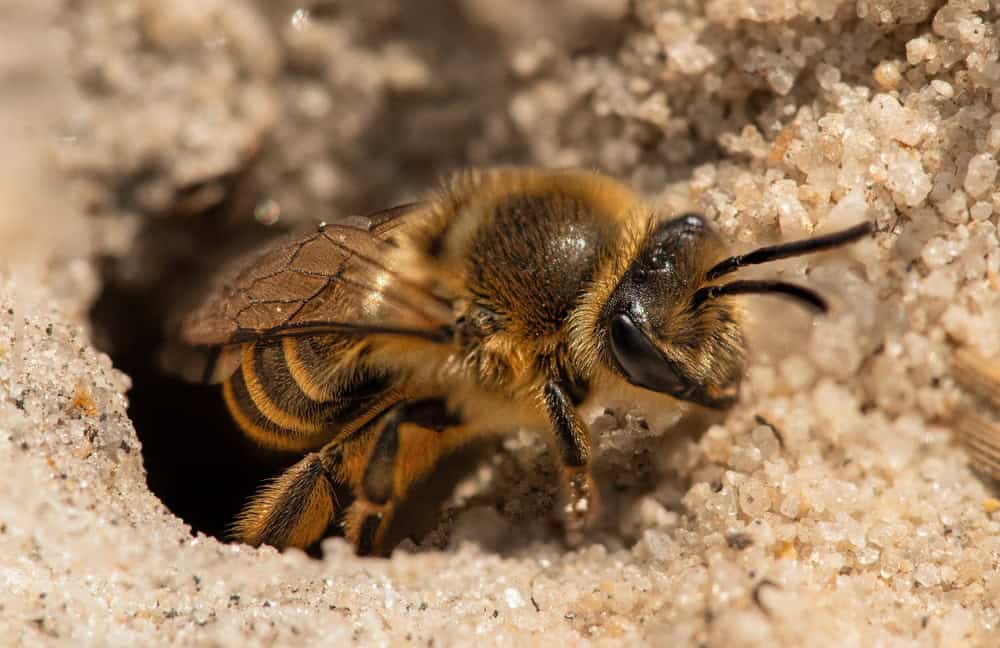
Their nests are usually dug in soil scarcely covered by vegetation and exposed to sunlight. The entrance is often vertical and then expands into brood cells, where the bees store pollen and their young develop. This raises the possibility that their nesting activity may alter the physical, chemical, and microbiological properties of the soil around the nest. This vertical burrow connects subsoil to the soil surface in a similar way to earthworms.
How Could Bees Alter the Soil?
Scientists had already observed that ground-nesting bees bring more soil per unit area to the surface than ants or termites. Some studies have estimated that aggregations of one North American bee species (Nomia melanderi) can bring the equivalent of several tons of soil to the surface per hectare per year. This likely alters the density and therefore the porosity of soil. Linked to this is the water and gas transport between the soil and the atmosphere.
How Could Bees Alter the Chemical Composition of Soil?
The chemical properties of the soil may also be altered by bee digging activity. The bees deposit gland secretions, dead larvae, pollen, and feces (poop) in the soil. This potentially changes its pH and redistributes and accumulates organic matter and nutrients.
Female bees (along with wasps and ants) have an abdominal exocrine gland called the Dufour’s gland. This gland produces a mix of chemicals (including long-chain hydrocarbons, cholesterol, and aldehydes) that they use for communication and reproduction. Within the nest, the secretions act as a nest-lining layer and larval food. These secretions may potentially alter soil pH and chemical composition.
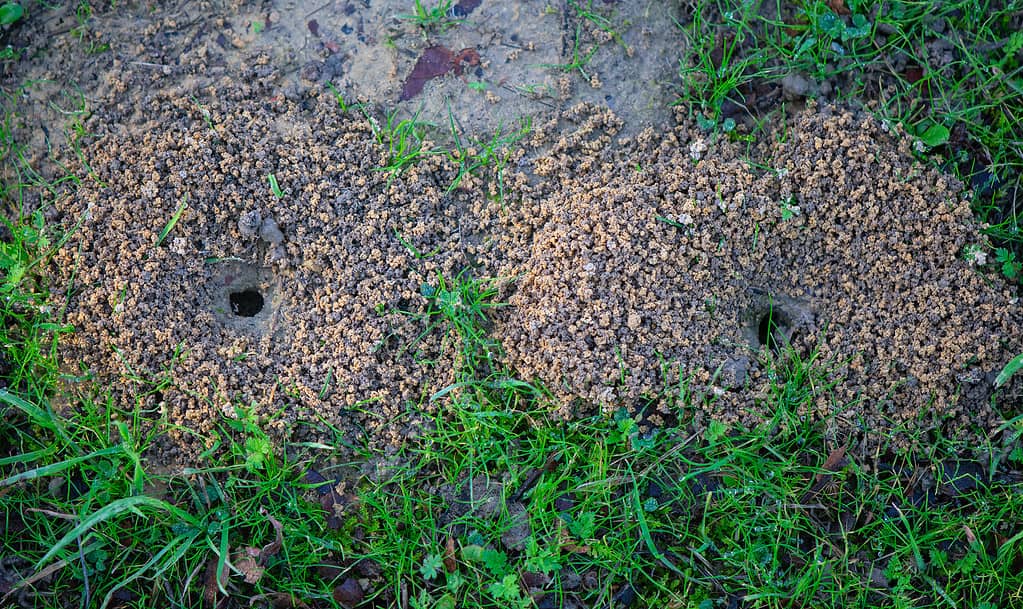
Bee colonies below ground may redistribute organic carbon and nutrients.
©Diane N. Ennis/Shutterstock.com
Not all of the pollen collected by bees gets used up. A lot of it is left within the nest and is potentially available to contribute towards the redistribution of organic carbon and nutrients in the soil.
Both larvae and adult bees perish within the nest. Their decaying bodies are a source of decaying matter and nutrients that could be incorporated into the soil. And we can’t forget bee feces, which is another source of organic matter! It has even been suggested that ground-nesting bees may excrete substances that stimulate microbial activity.
What About Microorganisms?
Bees may introduce certain bacteria and fungi into the soil with the pollen they transport into their nests. Wild bees take up bacteria from flowers, and they colonize the bee’s gut. These organisms can be transferred into the soil when the bee dies, or through feces when they poop. Bacteria can also enter the soil when the bee digs, since it uses its mouthparts to do so.
Studying Chemical and Microbiological Effects of Ground-Nesting Bees
Scientists collected soil samples from the nest entrances and compared them with corresponding control topsoil samples. Nesting bees were also collected so that the scientists could compare the microbiomes (populations of microorganisms) on their bodies to those of the soil.
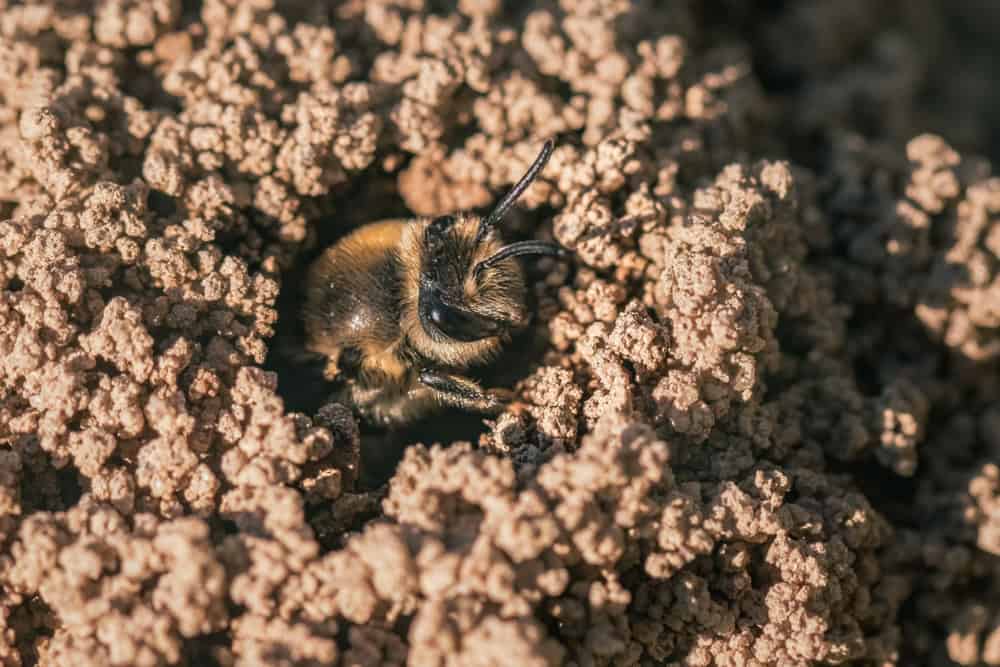
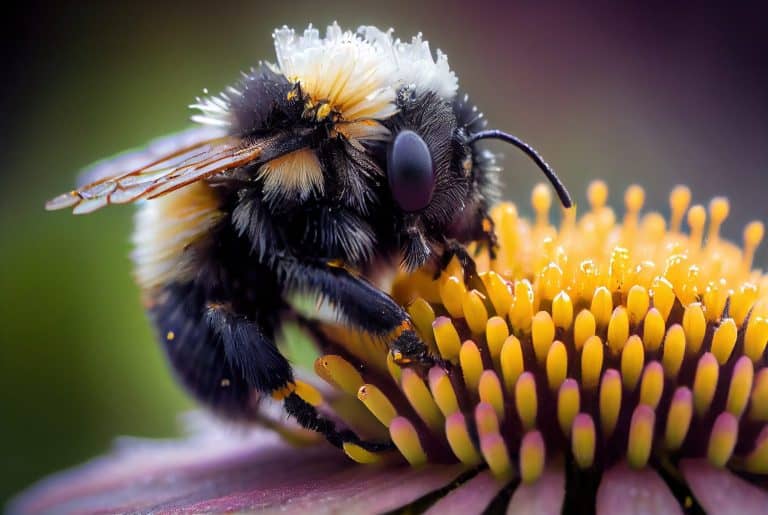
Digger bees make a significant contribution to bioturbation.
©Victoria Virgona/Shutterstock.com
The bees in this study were common ground-nesting and eusocial sweat bee (Lasioglossum malachurum). They were studied across four independent nesting sites in agricultural fields in Italy.
How Do Bees Engineer Soil?
This study showed that nest-entrance soils had a more neutral pH than control soils. They also had reduced C:N ratios (the proportion of the mass of carbon to the mass of nitrogen). In soils with a lower C:N ratio, organic matter breaks down faster, and nitrogen is quickly released, which is good news for plants. What’s more, the nest-entrance soils had higher levels of available aluminum, which was raised by 45 percent, and of cobalt, which was raised by 52 percent. Levels of manganese were also raised by 38 percent and selenium by 59 percent.
The bacterial populations in nest-entrance soils were also altered. In particular, there were higher numbers of bee-associated bacteria such as Apilactobacillus. There were also higher numbers of bacteria usually linked to biologically enriched soils, such as Paenibacillus.
The findings encourage us to take another look at how bees contribute to the environment. Perhaps it’s time to value these insects for more than just their honey-making abilities.