
Quick Take
- Cows graze the Swiss Alps every summer for reasons that go far beyond fresh grass, and doing so shapes the entire country. Discover the tradition →
- Getting a cow down a mountain sounds simple, but that assumption fades quickly once you learn what can go wrong at 9,000 feet. See what goes wrong →
- Helicoptering a cow is eye-wateringly expensive, yet farmers say it's worth every franc for a counterintuitive reason. Explore the surprising value →
- The cows dangling from helicopters look perfectly calm. See how cows react →
A puzzling scene unfolds in the Instagram reel above as a cow is airlifted by helicopter. The large animal rides in a harness, seemingly unbothered by all the commotion. Surrounded by the beauty of the Swiss Alps, the cow is safely brought down the mountain. The odd occurrence is much more than just an amusing sight. It’s an indication of a country allocating resources to keep farmers afloat in a challenging agricultural landscape.
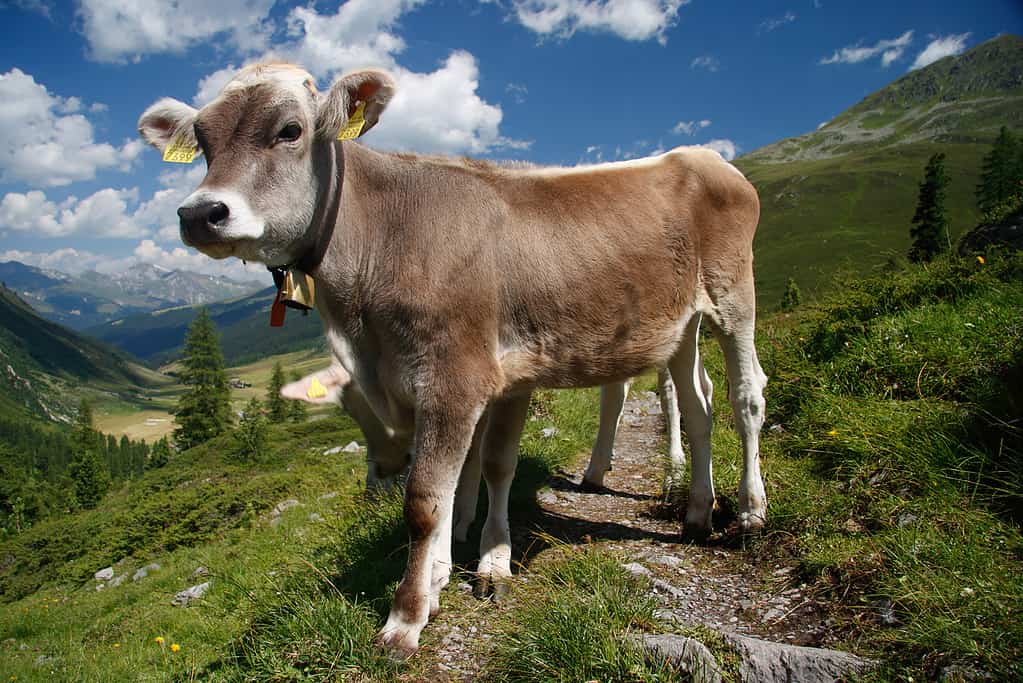
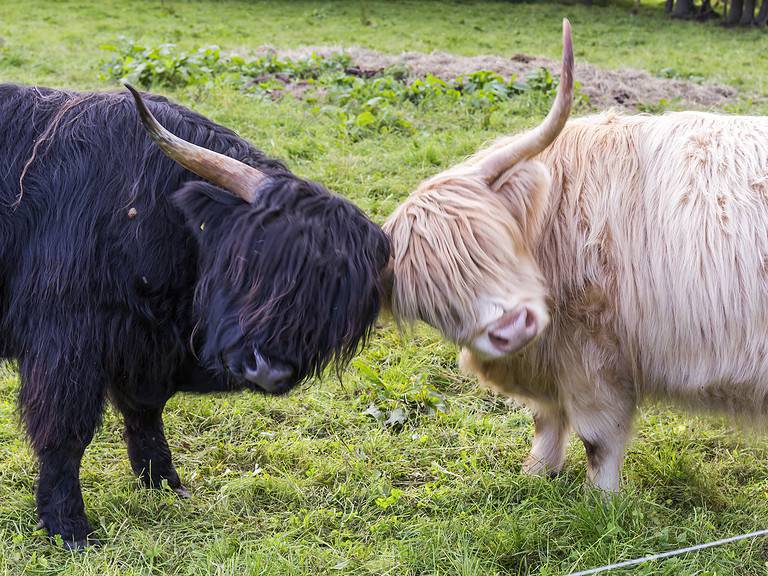
Alpine cattle breeds thrive on the high-altitude grasses, wildflowers, and herbs.
©Mathias Pabst/iStock via Getty Images
Swiss Cows Spend the Summer in the Mountains
Dairy cows make a long trek into the Swiss Alps every spring, where they spend their summer grazing on fresh alpine grass, flowers, and herbs. According to Swiss Farmers, around 20% of the cattle in Switzerland spend their summers in one of the 6,000 high-altitude summer pastures. This seasonal movement of livestock to high mountain pastures in summer and back down to the low valleys during winter is known as Alpine transhumance.
When the season changes and it’s time to move the animals, farmers walk with their cows up and down the mountain. The dairy farmers and their families live with their livestock through the summer in the high-altitude farms. The trip up each spring and the descent home in the fall are festive occasions where people dress up in traditional garb, and even the cows wear flower crowns and decorative bells.
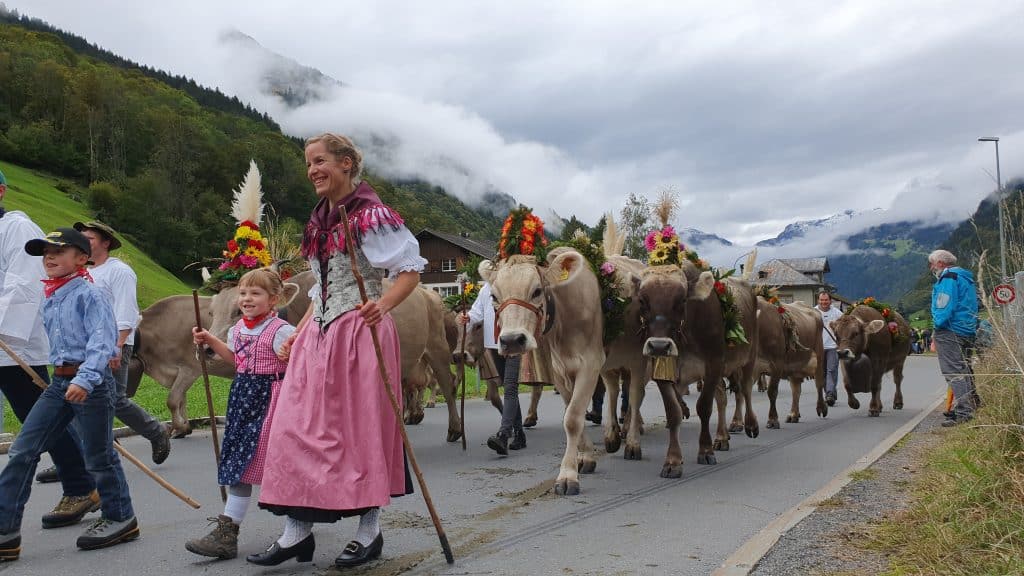
It’s a celebration each spring and fall when farmers walk their livestock up and down the mountain.
©Ben-Xi, CC BY-SA 4.0, via Wikimedia Commons – Original / License
While the cows spend summer in the mountains, the farmers use the lower pastures to grow crops. Meanwhile, the cows eat a variety of plants from the alpine meadows. This gives their milk a distinct flavor, and farmers use it to make alp cheese (Alpkäse), a specialty raw-milk hard cheese.
Most Cows Don’t Need a Helicopter
The usual way for cows to get to their summer pastures and back down to the lower terrain is by walking. Healthy cattle are accustomed to the trek and have no problem traveling the rocky and steep terrain. However, the pastures are incredibly high.
According to Switzerland’s Federal Office of Culture, cattle, sheep, and goats are driven to summer pastures between about 1,970 and 9,515 feet above sea level. Pastures are in different locations and elevations, and some trips are farther than others. Healthy cows have no problem with the walk.
A sick or injured cow will need help getting down the mountain. Sometimes a cow will die in the Alpine pastures, and the farmer must remove it. Leaving dead livestock on the mountain could contaminate the water table, which is used for drinking water in nearby villages.
What Can Make a Cow Need a Helicopter?
Cows can slip on the rocky terrain and injure their legs. A cow with an injured leg can’t walk down the mountain path. Extreme weather or natural disasters can also warrant a rescue. Global News reported in 2021 that 10 cows out of a herd of 1,000 were airlifted down that year.
And in 2025, AP News reported that 300 people, 190 sheep, 26 cows, and about 20 rabbits were evacuated from an Alpine village due to a possible landslide in the area. One of the cows was injured and had to be helicoptered out.
Does the Cow Mind?
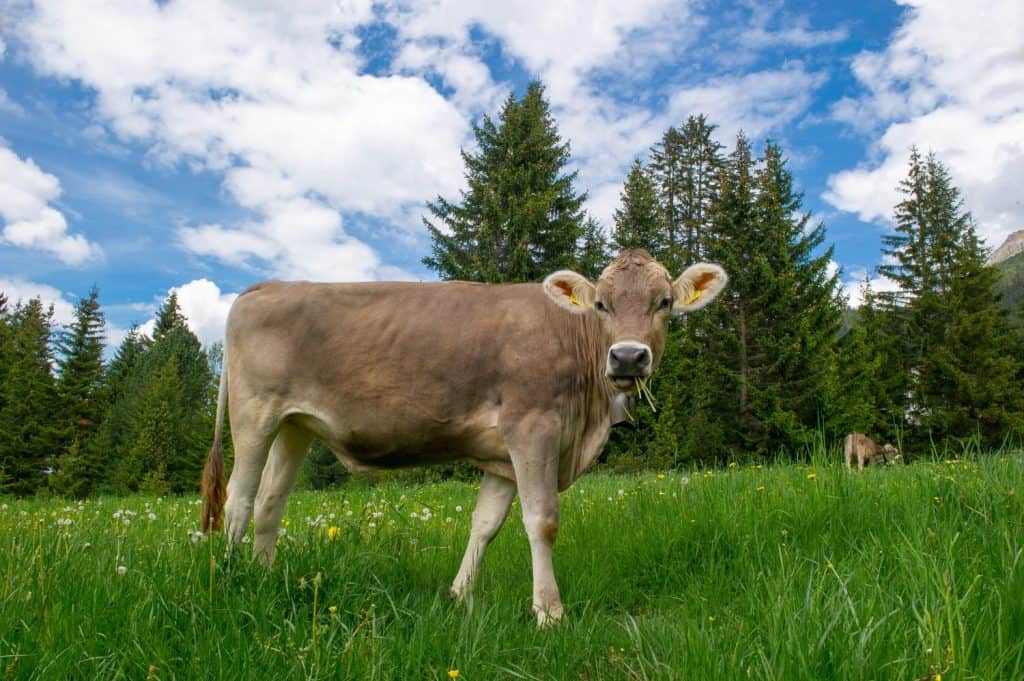
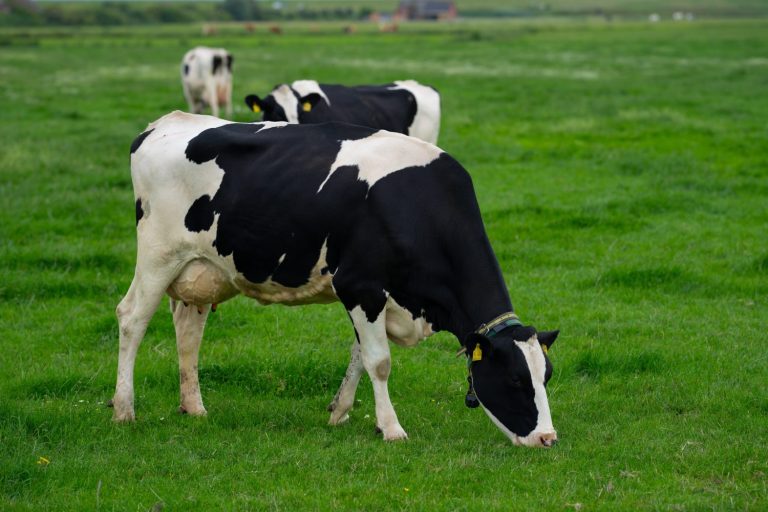
It may be stressful for the cow, but they seem to suffer no ill effects after being helicoptered down the mountain.
©O.C Ritz/Shutterstock.com
Remarkably, these cows seem generally unfazed flying through the air. A dairy farmer told Global News, “I didn’t ask how it feels after such a flight as it couldn’t answer, but it’s only a short distance and it has to keep going. It was only a short calm flight. I didn’t notice any difference between the ones that flew and the ones that walked normally.” Once the cows safely land on the ground, they are loaded up into a truck to make the rest of their journey.
Why Alpine Cows Are Worth the Cost
Farmers don’t make the decision to fly a cow by helicopter lightly. As you can imagine, hiring a helicopter is expensive. But farmers find it’s worth the money. It’s not just about the milk production the farmer would lose. Mountain agriculture is important in many ways to the culture, economy, and sustainability of the country.
Grazing cows keep the Alpine pastures free of shrubs and overgrown plants, preserving the iconic green meadows and clearing the ground for hiking, biking, and other outdoor activities. Grazing also helps prevent erosion and landslides.
But farming in the Swiss Alps is difficult and expensive and wouldn’t be profitable without government assistance. Because Alpine farming benefits the country, the government assists the farmers through subsidies. The government rewards farmers with a payment for each cow they take up to the Alpine pastures in the summer. This helps preserve the farming tradition of historic mountain communities and also prevents rural abandonment in favor of larger cities.
Swiss Alpine farmers aren’t just producing food by raising their cows. They’re caring for the environment, managing mountain landscapes, and preserving a traditional way of life.