
Although the lady palm is a less popular indoor houseplant when compared to its cousins in the Arecaceae family, plant collectors nonetheless love its exquisite beauty. This species is one of the easiest indoor palm species one can possess, but in recent years their expensive cost and very slow growth rate appear to have turned many away, especially novice collectors and gardeners.
Lady palms are resilient and forgiving, and they even like growing in low light because of their erect, robust canes that don’t need much sunlight to grow strong. They are ideal for beginner plant parents, and if you enjoy their odd growth pattern and tropical appearance, they will blend beautifully into your space.
Let’s break down some basic information about the lady palm tree and how to grow and care for your very own at home.
What are Lady Palm Plants?
Lady palms are also known as bamboo palms, though this naming is not exactly correct and is mainly used to refer to Chamaedorea seifrizii. They are also known as miniature fan palms. This species is classified as Rhapis excelsa and is a member of the perennial Arecaceae plant family.
Taiwan and southern China are likely the species’ original natural habitats. No one knows for sure, as all known plants of this species originate from Chinese cultivated groupings; it is not known to exist in the wild. They were initially gathered by the Japanese for the homes of members of the Tokugawa shogunate in the 1600s through the 1800s. Later, its popularity expanded to Europe and then to the Americas in the late 1700s, where it is a common natural fixture in shopping centers and places of business due to its low light and humidity needs.
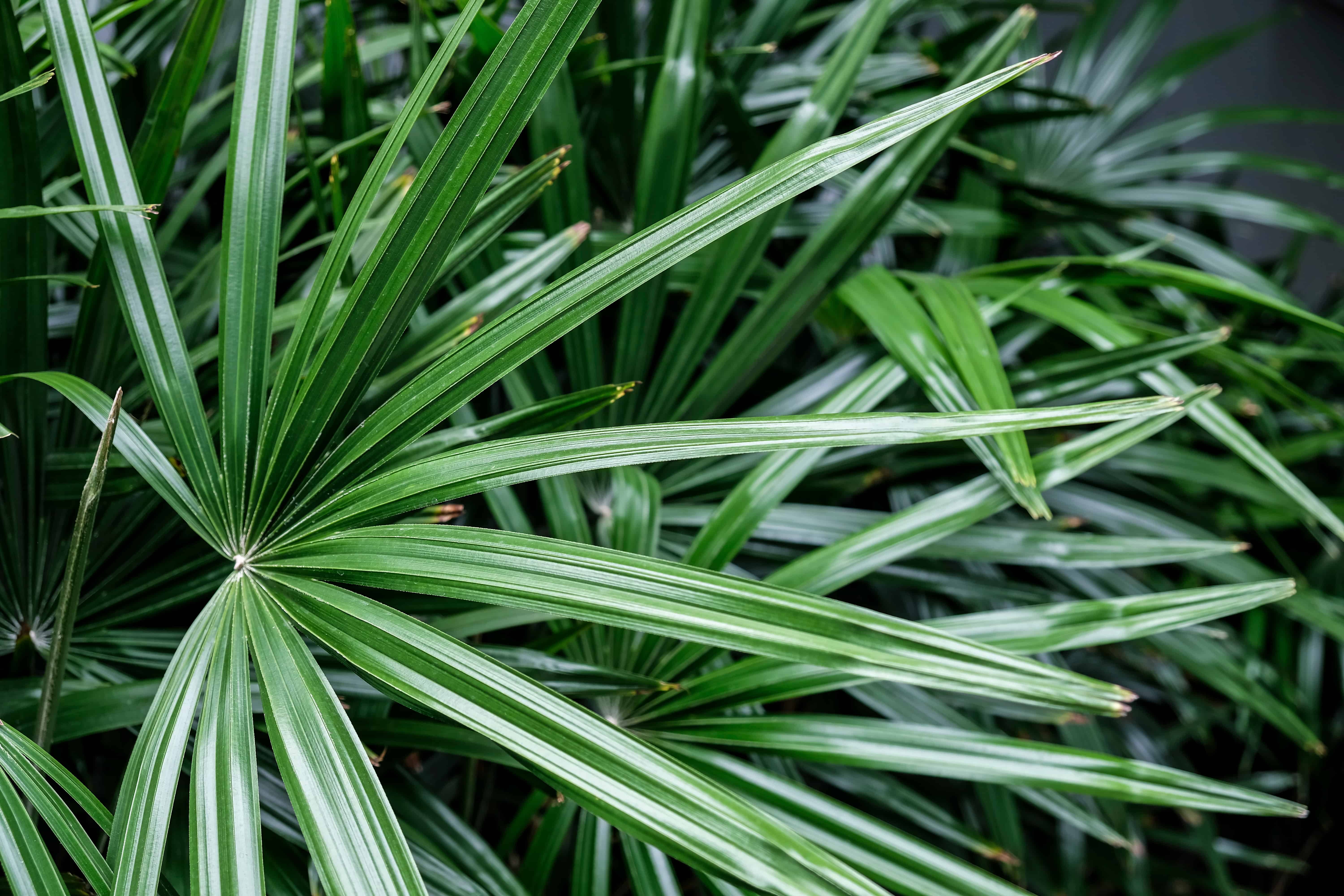
This palm has glossy, palmate, evergreen leaves that are separated into wide, ribbed segments, and it can grow up to 13 feet tall in clumps with several stems. In immature plants, there are just one or a few leaf segments; in adult plants, there are twelve or more segments, which are split at the petiole. Unlike most other palms, this one has saw-toothed leaf ends that grow on short petioles that can be anywhere between seven and 20 inches long. A fibrous sheath that is still attached to the base of the plant produces new leaves. The sheaths shed off the plants as they become older, exposing their bamboo-like trunks.
This typically dioecious palm species has a tiny inflorescence at the top of the plant with fleshy yellow flowers that are spirally arranged and have three petals that are joined at the base. The lady palm tree more easily spreads by subterranean rhizome offshoots, rather than via flowers or fruit seeds.
Lady palm plants can only be grown outside in USDA hardiness zones nine through 11, as they are not particularly cold-hardy.
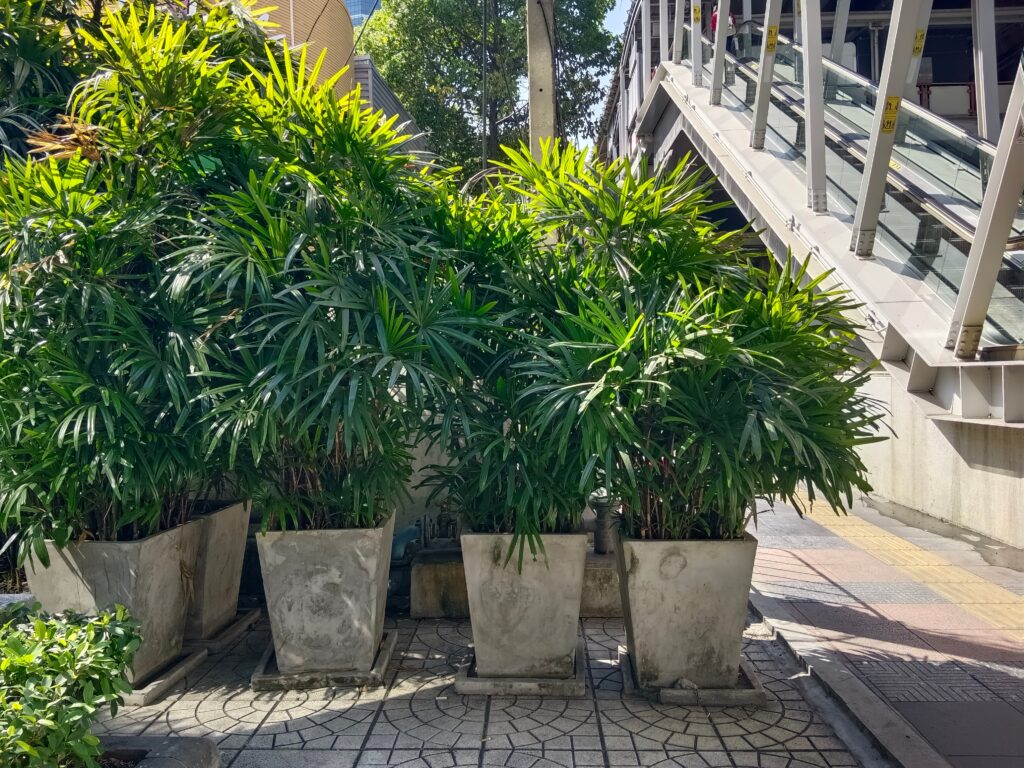
Lady palm trees (pictured) make excellent potted plants, both indoors and outdoors.
©porjai kittawornrat/Shutterstock.com
How to Care for Lady Palm Plants
Lady palms make lovely indoor plants and will do quite well in low-lit rooms. Their maintenance isn’t too hard, but one will need to develop a regular feeding and watering schedule to keep them happy. Plan to water and feed more often throughout the warmer seasons of the year and a little less often during the winter. The interior conditions that your palm should flourish in should be comfortable for you as well. They are great growers at room temperature and average indoor humidity levels.
Once plants are established, lady palms are fairly drought-tolerant and have medium water requirements. When the top inch or so of soil feels dry, water the palm during the spring and summer when the majority of its active development is occurring. Reduce watering in the fall and winter to just when the top two inches or so of soil feel dry.
Lady palms are perfect for growing indoors due to their small size, low need for light, and ability to flourish in ordinary room temperatures of 60 to 80 degrees F. Make sure your palm is kept above 55 degrees F throughout the colder months since anything below might harm the plant. Avoid blowing cold air over your plant as well as hot air, such as a heater vent. Placement is key when it comes to temperature control for these plants.
The humidity should be at least 50% for this species of palm. Brown leaf tips can indicate that this plant’s humidity needs are not being met. You can mist your plant with clean water from a spray bottle to increase the humidity surrounding your lady palm tree. Just as well, you can set the pot on a tray of rocks with water, being careful not to let the pot rest in the water directly since this might lead to root rot. If you have the money, you can invest in a humidifier as well.
Exposure to unfiltered sun can burn the leaves of these palms, so a location that receives direct sunlight is not recommended for this species. Lady palm plants prefer dappled light when planted outside and they will also take partial shade. Indoor palms should be positioned close to a window where they can get bright and indirect light.
Lady palms thrive best on loamy soil with good drainage. A potting mixture designed specifically for palms performs well when this species is grown in pots. Fertilization treatments are only necessary for lady palms during the growing seasons, which are spring and summer. Feed your palm once a month with liquid houseplant fertilizer that has been diluted to half strength from around April to mid-September.
It is not required to prune or trim your lady palm. This plant can still use the nutrients from its leaves that have just a little bit of brown damage, which is a pretty typical issue with lady palms and generally results from slightly insufficient water or light. If you simply don’t like the way they look, you can cut off an entire leaf if it is dead or brownish in color.
The spacing between your lady palms can be as close as you wish if you’re planting them outside. As this variety of palm will grow outward from wherever it is planted, it can grow right up to a house, fence, or tree. If you’re planting a lady palm tree in a garden, you can tightly surround it with smaller plants that you can get rid of after the palm becomes larger. For this, perennials are a fantastic option. Since these palms grow so slowly, pots or planter boxes provide excellent homes for them as long as you offer routine watering or live in a rainy area.
How to Repot Your Lady Palm Plant
The lady palm tree doesn’t mind if its container is a little small. When it does come time to repot your plant, pick a container that is just a little bit bigger than the root ball. Ensure there are plenty of drainage holes at the bottom of the new pot.
Every other year in the spring, aim to repot your palm into a slightly bigger container. Lift the roots out of the container slowly, trying not to disrupt them too much so as to preserve the root ball. After that, set the palm into its new container and cover it with fresh potting soil. Water it well and compact the soil just slightly.
How to Propagate Lady Palm Plants
As it takes at least four years for a propagated lady palm to grow to the proportions you see it at in garden centers and nurseries, propagation is not advised unless you are a patient and skilled gardener. Both sexed plants are necessary for lady palms to successfully pollinate. If you want to put in the effort, you can buy lady palm tree seeds online. Plants of this species will need to be propagated by division if you don’t have any male or female plants on hand.
Due to the abundance of roots produced by lady palms, splitting the rhizomes to propagate this plant is considered the easier method. You shouldn’t divide it until the root system has either expanded to the point where it can no longer fit inside of its pot or has simply become rootbound. As the lady palm tree is a tough plant, you can divide the roots without worrying about the plant getting damaged.
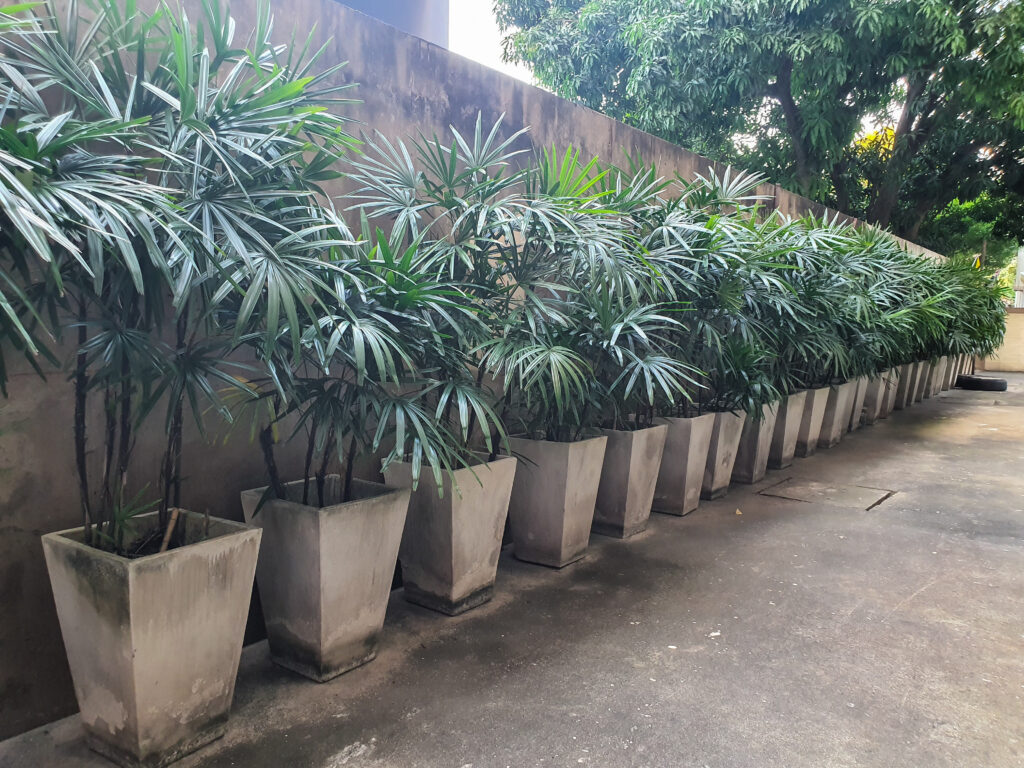
Lady palms (pictured) are easy to repot and propagate via their rhizomes.
©Maminami/Shutterstock.com
Pests to Watch Out For
Due to the lady palm’s hardiness, the majority of pests and illnesses don’t affect it. Yet, to make sure your plants stay nice and healthy, there are a few important pests to be aware of.
The most unpleasant pest that can harm your lady palm is scale. They like to grow in the shadowy underside of palm leaves, which makes them difficult to notice. Check your leaves regularly for signs of scale and use a product like neem oil to get rid of them.
White spider mites are dreaded by gardeners everywhere because they can quickly kill any type of plant, including palm varieties. Use a cotton swab and rubbing alcohol to eradicate these pesky pests right away, and be sure to thoroughly check your plant for signs of infestation.
Why are Lady Palms So Pricey?
The cost of lady palms is often high for two reasons. First of all, these plants grow extremely slowly even under optimal conditions. Until they are a respectable size and prepared for sale, the nursery will need to raise them for at least three to four years. That means that in order to sell these plants, they must be priced appropriately, taking into consideration compensation for at least four years of someone’s time and resources.
Secondly, lady palms are somewhat rare and uncommon plants. There aren’t many nurseries or garden centers that sell them. This is partially due to the lack of a significant market for them, despite the fact that they are starting to acquire popularity once more. The lady palm is more resilient and tolerant to most indoor circumstances than many other palms marketed as houseplants, which makes their lack of popularity a bit surprising. There is no reason why this plant couldn’t stay with you for 10 years or more, even if you’re a beginner gardener, which makes this plant a very good long-term investment.
The somewhat rare and always lovely lady palm would make an excellent addition to any home in need of some tropical flair. Just ensure it gets the right amount of humidity and sunlight, and your lady palm will last for years to come indoors.