Have you ever heard of the ponytail palm tree? Despite its name and general appearance, the ponytail palm is a member of the Agave family and is indigenous to the southeast desert of Mexico; it is neither a palm nor a tree. However, it is just as easy to care for as most palm species.
The ponytail palm can withstand drought, grows slowly, and needs minimal maintenance. For those who are always traveling or have limited free time, this plant is perfect for keeping at home. The ponytail palm is perfectly content with just a once-weekly watering and a little bit of sunshine. Water is stored in this species’ bulb-shaped trunk, and the long leaves that sprout from the tip of the stem resemble a ponytail, hence its name. This unusual plant adds a touch of levity to any indoor space, and it’s quite a bit of fun to care for.
Let’s break down more information about the ponytail palm tree, as well as how to care for one on your own.
What is the Ponytail Palm Tree?
The ponytail palm tree, also known as the bottle palm or elephant palm, is classified as Beaucarnea recurvata. It is also sometimes referred to as Nolina recurvata. This species is native to Mexico, particularly in Veracruz. In fact, it is believed that there are ponytail palm trees in Veracruz that are over 300 years old. It has since been naturalized and used as a houseplant species in Europe, the United States, and other nations.
The ponytail palm is not a palm species, nor related to any plant in the Arecaceae family. Rather, it is a member of the Asparagaceae plant family and is closely related to plants such as spider plants, asparagus, hostas, yucca plants, and many more.
Ponytail palms are 15-foot-tall evergreen perennials with a pronounced enlarged caudex used for water storage. Some varieties, if old enough, can reach up to 30 feet tall. After the plant reaches a maturity age of over 10 years, the solitary palm-like stem develops terminal tufts of strap-shaped, recurved leathery leaves, occasionally with hair lock-shaped tips, and with sporadic panicles of little white flowers. Indoor plants of this species rarely flower.
The lone trunk that is somewhat enlarged at the base is thin above it and hardly branched. The almost spherical caudex in the juvenile stage subsequently grows to be 19 feet long and has a base diameter of at least 19 inches. It has notably smooth bark. The thin, flat, or hardly ridged leaves of the ponytail palm are green and linear. The leaves can grow to be 90 to 180 inches long.
This species will grow in low deciduous woodland with average temperatures of 68 degrees F, annual rainfall of 31 inches, and a distinct dry season of around eight months. They flourish on cliffs, high mountains, and nutrient-poor rocky soils. The ponytail palm can withstand temperatures as low as 50 degrees F and thrives in either full sun or light shade. Whether grown in a container or planted as an attractive garden tree, the ponytail palm is very slow-growing and also drought-tolerant.
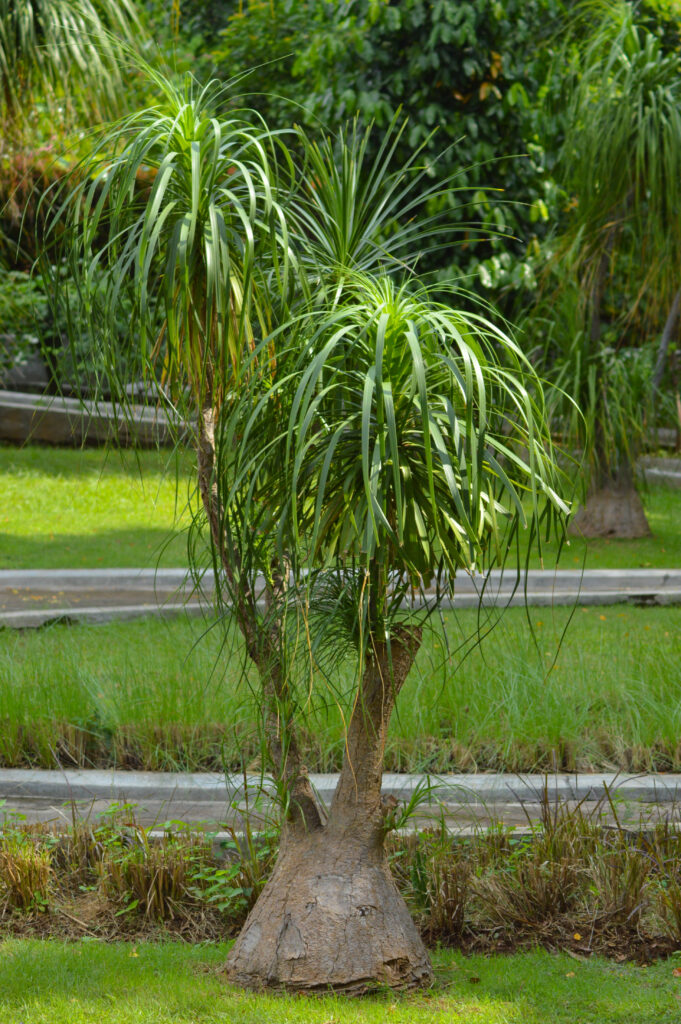
The ponytail palm tree (pictured) can reach up to 30 feet when grown outdoors in the right climate.
©iStock.com/Ketut Agus Suardika
How to Grow Ponytail Palm Trees Indoors
Given that it can grow to be a large tree that looms and sheds over buildings when planted outside, the ponytail palm makes a much better desktop plant. Ponytail palms can grow to a height of 30 feet when planted outside in full light; but when cultivated inside, they normally reach maturity at a height of six feet or less.
With a tuft of strappy green leaves growing from a bulbous stem that appears to erupt from the soil, these unusual miniature trees are often cultivated inside in small pots. A small desktop plant can develop into a respectable specimen plant that can reach heights of six feet with enough time and the correct circumstances. It’s also quite easy to keep small as a bonsai plant.
Although a ponytail palm can be planted practically any time, April is traditionally the best time to put them outside. This species has extremely sluggish growth and a lengthy lifespan. A juvenile plant can require five years or more to double in growth. It can be grown outdoors in USDA hardiness zones 10 through 11, though as we mentioned earlier, it does much better as an indoor houseplant.
How to Care for a Ponytail Palm Tree
As mentioned earlier, only in USDA hardiness zones 10 and 11 can ponytail palms be grown as an outdoor plant. When grown outside in a garden or as a landscaping plant, it should be planted in a succulent soil mix and put in the brightest area you can locate. As long as it receives a small amount of water on a regular basis, it is generally trouble-free and tolerant of neglect in the correct position.
The ponytail palm tree will similarly grow well indoors with occasional neglect, as long as it receives adequate light and regular watering during the growing season. But keep in mind that the ponytail palm tree grows quite slowly, so don’t anticipate that your desktop plant will grow very large in just a few seasons. This plant requires quite a bit of patience!
Ponytail palms can be grown inside by being potted in a modest-sized container filled with peat moss and cactus potting soil. If necessary, repot your ponytail palm in the spring. Repot your ponytail palm tree annually if you want them to become larger. Repot them every two to three years if you want them to stay management in size. Ponytail palms will flourish when slightly rootbound, so try not to repot your plant into a very large container.
The tips of damaged ponytail palm leaves should be pruned back to their healthy tissue. You can remove the secondary branches that the offsets produce in order to preserve the core stem and traditional tree-like look. Nonetheless, many plant parents like these additional shoots since multi-stemmed trees are aesthetically pleasing.
During the growing seasons, which are spring and summer, water your ponytail palm tree every one to two weeks if it is housed in a pot indoors. Be cautious not to overwater it because the bulbous stem retains quite a bit of water. Reduce watering to once a month during fall and winter.
If you receive any form of regular rain, a ponytail palm planted outside hardly ever has to be watered by hand. A light watering every two weeks is more than enough in dry locations or during droughts.
Ponytail palms require warm, dry climates with temperatures over 60 degrees F. They can also live at temperatures as low as 50 degrees F, but only if it is not for extended periods of time. Ponytail palms like direct sunlight or bright, indirect light. Place your plant in the brightest spot you can find while growing it indoors, such as a window that receives plenty of indirect light.
This plant is indigenous to semi-desert regions of Mexico, and it thrives in moderately sandy but organically rich soil when grown outdoors. It grows best in a succulent potting mix that has been supplemented with peat to increase its richness, just like most indoor plants. Throughout the growing season, fertilize your ponytail palm tree once a week with liquid fertilizer. If you choose to fertilize your plant in the spring, use slow-release pellet fertilizer. Winter feeding should be reduced or avoided altogether.
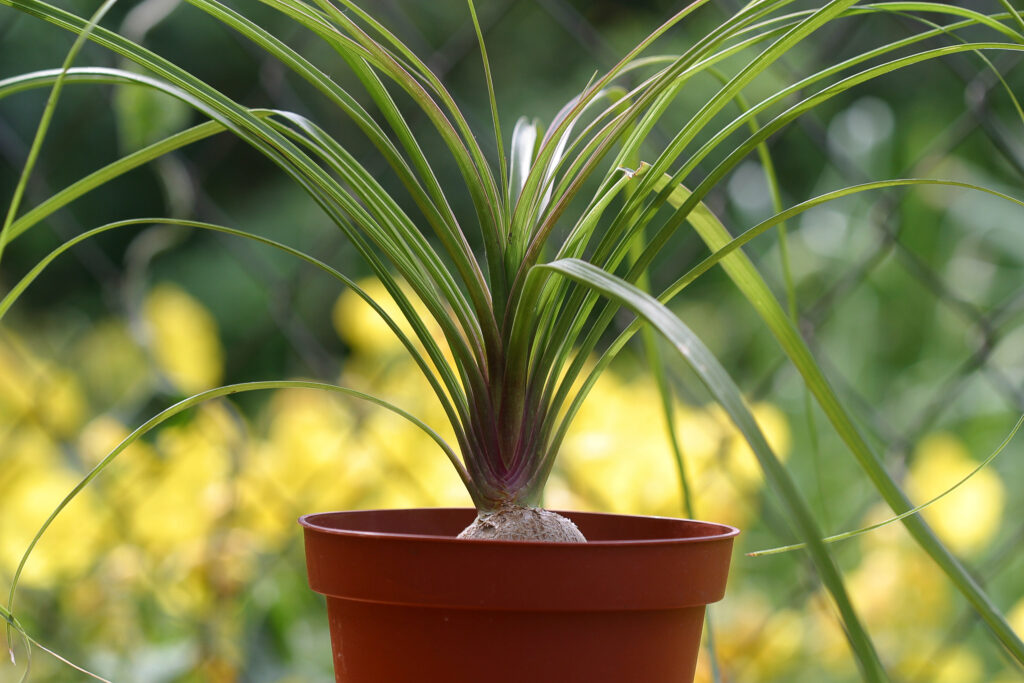
The ponytail palm (pictured) can stay relatively small as a potted indoor plant.
©iStock.com/Olena Troshchak
Pests and Diseases to Keep an Eye Out For
Ponytail palm trees are particularly vulnerable to sooty mold and root rot. Infestations of pests are the primary cause of the majority of illnesses that damage ponytail palm plants. Scale, mealybugs, mites, aphids, and other leaf-munching insects are common pests. Fungus spores adhere to the sticky material that these pests leave behind, which covers the foliage and blocks light, slowing photosynthesis by preventing enough chlorophyll from being produced.
Mealybug colonies form quickly, therefore they need to be treated right away. Developed colonies are able to grow wings and land on other plants. In that they leave behind a substance that resembles fuzz, they are comparable to spider mites. But, treatment is substantially different from spider mite removal.
Wax serves as a barrier between adult mealybugs and pesticide solutions. Most indoor plants can have these bugs hosed off the leaves with a continuous stream of water. That being said, there is a chance that this treatment will cause overwatering. Your best option will be a cotton swab soaked in rubbing alcohol. This solution will work well to kill mealybugs and dislodge them so you can get rid of them as long as you don’t use enough alcohol to burn the leaves.
Nutrient supply is often hampered if a ponytail palm tree’s fragile roots are damaged. Yellowing leaves are the first indication that the plant’s roots aren’t absorbing enough nutrients. The most typical issue that causes a ponytail palm tree to die is root rot. The plant’s soil must dry out in between waterings to prevent this. Failure to do so diminishes the soil’s oxygen-holding capacity, causing the roots to slowly suffocate and eventually decay. Your ponytail palm’s trunk could gradually soften as additional roots rot if left untreated. The plant won’t be able to recover if the roots sustain enough harm. So, be mindful of how much you water your ponytail palm.
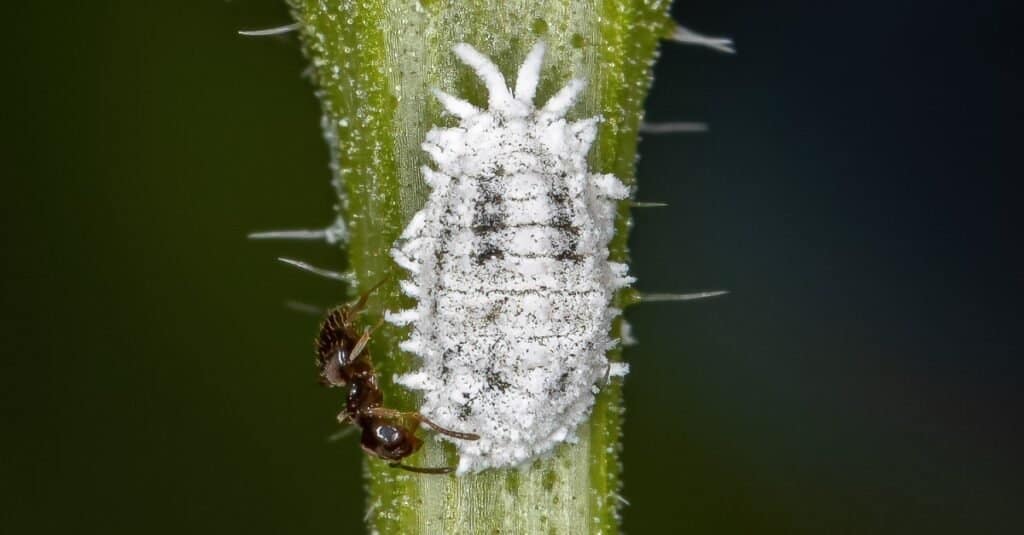
Mealybugs (pictured) can cause a lot of damage to ponytail palms, so be sure to check your plant regularly.
©iStock.com/ViniSouza128
Are Ponytail Palms Endangered?
The majority of the ponytail palm species are in critical condition as a result of different human activities that have severely fragmented and destroyed their habitat. Moreover, the size and gender distribution of populations have been impacted by the commercial collection of seeds, seedlings, juvenile plants, and adult plants. This decreases the likelihood of fertilization and, thus, the ability to produce seeds.
By diminishing the populations’ minimum sustainable size and degrading their genetic diversity, this exploitation process places this species in danger of going extinct. According to SEMARNAT, or the Secretariat of Environment and Natural Resources in Mexico, the ponytail palm is regarded as being endangered. As a result, its trade and cultivation are regulated. However, it is perfectly legal to purchase a ponytail palm from local nurseries and garden centers if available.
The ponytail palm is definitely one heck of a unique plant. While it isn’t technically a palm, it can add a nice tropical element to any indoor space. Why not grow your own ponytail palm tree today? It’s certainly easy to keep alive!