
The sabal palm is the state tree of Florida, and it makes sense why. Nothing says “Florida” quite like a palm tree. Interestingly enough, the sabal palm is not a genuine tree and, rather, is more closely related to species of grass than it is to other types of palms.
The Florida state seal features the sabal palm, sometimes referred to as the cabbage palm, which was named the state tree in 1953. Before the sabal palm was chosen as the state tree, there were years of discussion about which plant species should be used. The royal palm and longleaf pine were other trees up for consideration, but the sabal palm ultimately beat them both.
The sabal palm served a number of purposes for early Floridians. The trunk and fronds were used to construct shelter, while different fibrous portions of the tree were utilized to manufacture cordage. The tree’s bud is edible and is also known as the heart of palm, which has become more popular in cuisine as of late. In addition to being a great landscaping plant, the sabal palm is a great source of food and other resources.
If you’re interested in learning about this fascinating palm species or possibly want to grow your own, keep reading to learn more!
What is the Sabal Palm?
The sabal palm, also known as the cabbage palm, swamp cabbage, or cabbage palmetto, is classified as Sabal palmetto. It is indigenous to Florida, spreads widely there, and continues expanding up the coast in the direction of North Carolina. It also happens to be the South Carolina state tree. Both the Atlantic Ocean and the Gulf of Mexico coasts have native specimens of this plant. The sabal palm grows along the sides of rivers, in hammocks, and in pine forests. Although salt in the root zone is intolerable for these plants, salt spray on the leaves is generally tolerable for them, which is why grow easily along coastal regions.
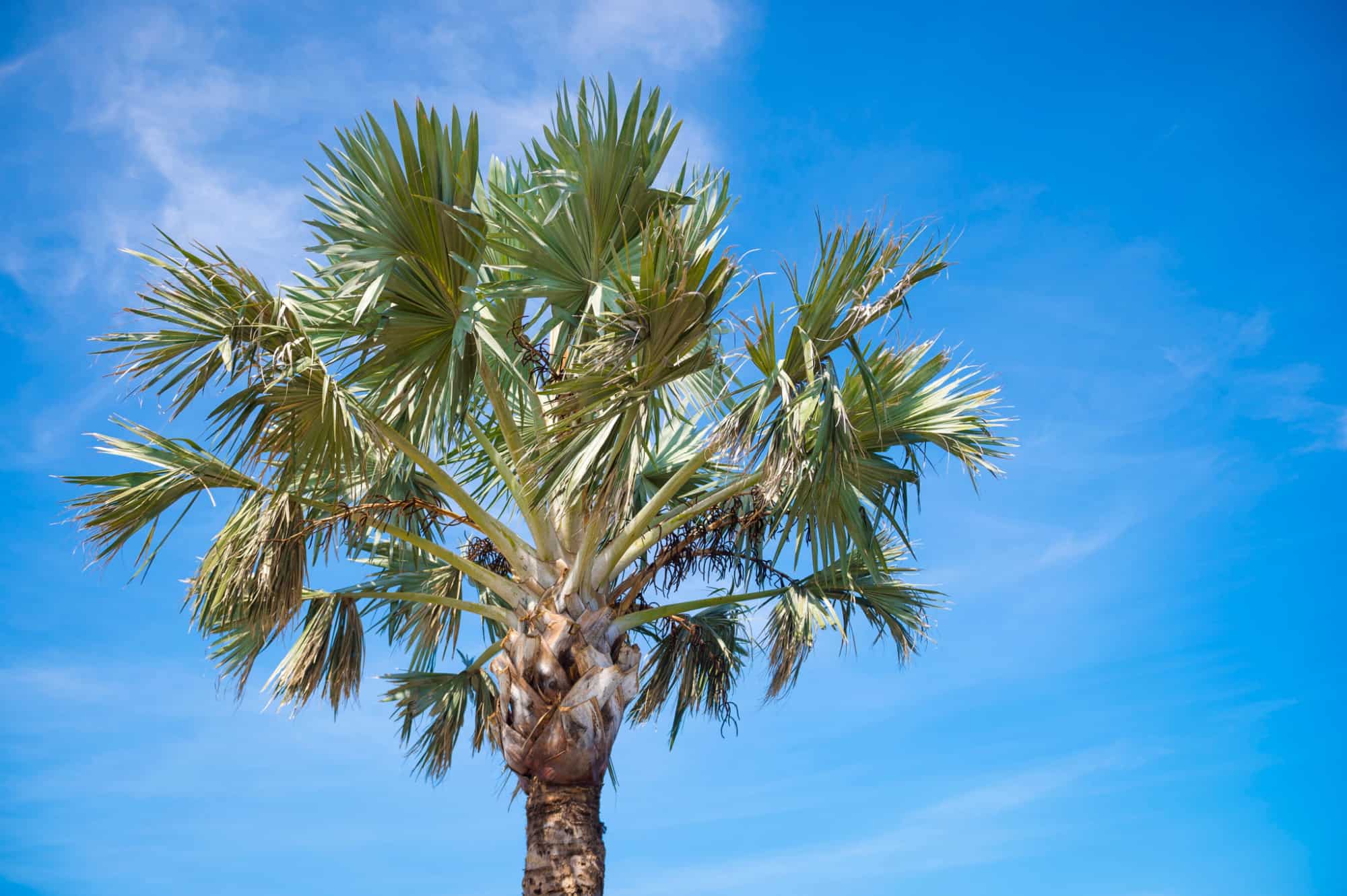
The leaves of sabal palms are curved, fan-shaped, and have blade lengths of three to four feet and petioles, or leaf stalks, of three to six feet. This species’ 40-foot-tall trunk with a diameter of 10 to 16 inches develops a complete, circular canopy on top of it. Late spring sees the development of branching inflorescences on this species, which typically extend beyond the leaves and are filled with hundreds of small, creamy-white, fragrant blooms that draw bees. Late summer sees the production of black fruits, which animals tend to love but humans tend to dislike, though they are edible. This plant’s young leaves, sometimes referred to as the heart of palm, are edible and taste like cabbage.
Sabal palm trees (pictured) can grow up to 40 feet tall or sometimes even taller.
©Jillian Cain Photography/Shutterstock.com
How to Care for Sabal Palm Trees
Realizing that growing sabal palm trees is a drawn-out, laborious process is a crucial component of sabal palm tree maintenance. As they reach their full height, they demand a lot of patience, but their stunning beauty and low maintenance requirements, in the long run, make the wait worthwhile.
Because they grow on whatever rainfall is there and make the most of the few nutrients present in Florida’s sandy soil, sabal palm trees are favorable to the severe circumstances of the state, making them ideal for sustainable landscaping. They also tolerate the destruction caused by storms and floods, and they bounce back quite quickly from the stress of being uprooted from their native habitat. The best way to grow sabal palm trees in sustainable landscapes is to include any onsite specimens in your landscape design rather than move them or bring in young sabal palms to transplant. A sabal palm tree’s trunk should not be pierced or otherwise injured since doing so might cause the tree considerable harm or even death. Also, avoid trimming the sabal palm because it naturally self-prunes and sheds its fronds. Sabal palm trees can become significantly weaker when pruned.
Throughout the first six months after planting, sabal palm trees should receive two to three weekly waterings. Be careful to soak the soil surrounding the roots to a depth of around 18 inches. In contrast, mature palms only need a thorough soaking at the base of the tree once every two weeks when there is a dry spell or drought. Other than that, these strong but attractive trees seldom ever need regular watering.
Sabal palm trees should be planted in full to partial sunshine. The freshly planted sabal palm tree should be staked until it becomes well-established, which typically takes six months to a year. Attach the palm tree’s trunk to the stakes using twine after placing two tall wooden stakes or poles on either side of the tree.
Before transplanting a new and young sable palm tree, prepare the soil. If the original soil is quite heavy, work in a lot of sand to ensure excellent drainage. Place the sable palm in a spot that receives full sun, some shade, or some partial shade. It spreads out from approximately 11 to about 20 feet, therefore you should avoid or move any other plants or structures from its close vicinity. Apply a ring around the trunk of sterilized wood mulch about 16 inches wide and six inches deep around the sable palm. Try to spread the mulch about six inches from the base of the plant’s trunk. Use only sterilized mulch since other varieties can contain pathogens that might harm a living tree, such as bacteria or fungi.
After planting your sabal palm tree, sprinkle two ounces of palm tree fertilizer per one inch of trunk diameter into the soil to give your tree the greatest possible chance of successful growth. Immediately after planting, give the newly-planted palm one ounce extra of the slow-release palm tree fertilizer per inch of trunk in order to ensure that the tree gets the nutrients it requires while establishing itself. Care for established sabal palm trees does not necessarily have to include fertilizer treatment. But, if your soil needs some form of fertilizing due to its condition or constant rain, use slow-release palm fertilizer two to four times a year. The application procedure is quite easy to use and produces excellent results.
The sabal palm’s low maintenance requirements combined with their stunning natural beauty make them a particularly appealing palm for landscape design in Florida and other places in USDA hardiness zones eight through 11.
How to Winter-Proof Sabal Palm Trees
You only need to winter-proof your sabal palm trees in colder locations when freezing and frost are potential hazards. The sabal tree can experience tissue damage or eventual death if its core temperature falls below the palm’s cold-hardy threshold for a lengthy period of time. Investing in cold-tolerant trees is one way to grow beautiful palms in colder climates, but unfortunately, the sabal palm is not one of them. If you live in anything under USDA hardness zone eight, the sabal plant will not be a good choice for your landscaping project or yard.
That being said, maintaining a temperature above the tree’s minimum temperature threshold will prevent cold shock from happening. Cold weather can harm or kill the sabal palm, but there are things you can do to prevent damage.
To start, set a box on top of very young and small sabal palms, or wrap them in straw to keep them warm. Usually, this is good enough for those living in hardiness zone eight. You can use string lights if you wish to artificially warm the interior of the box. Use lights with caution to prevent a potential fire.
Some sabal palm owners will wrap the trunk of bigger palm trees in burlap, bubble wrap, or similar heat-retaining material to keep them warmer. Burlap is good since it dries out fast after getting wet and tends to seem a bit less cheap-looking. Once the palm has been wrapped, you can use string lights to wrap the tree from the trunk to the largest fronds. This will prevent the trunk’s core temperature from freezing. To keep the soil warm as well, some palm parents bury pipes in the ground and stream hot water through them.
You will need to take greater precautions to safeguard your trees in colder winter climates. As was already indicated, trimming a sabal palm tree just before the cold season (or at all) is not a good idea. Healthy and fuller trees will have a greater chance of enduring chilly winters.

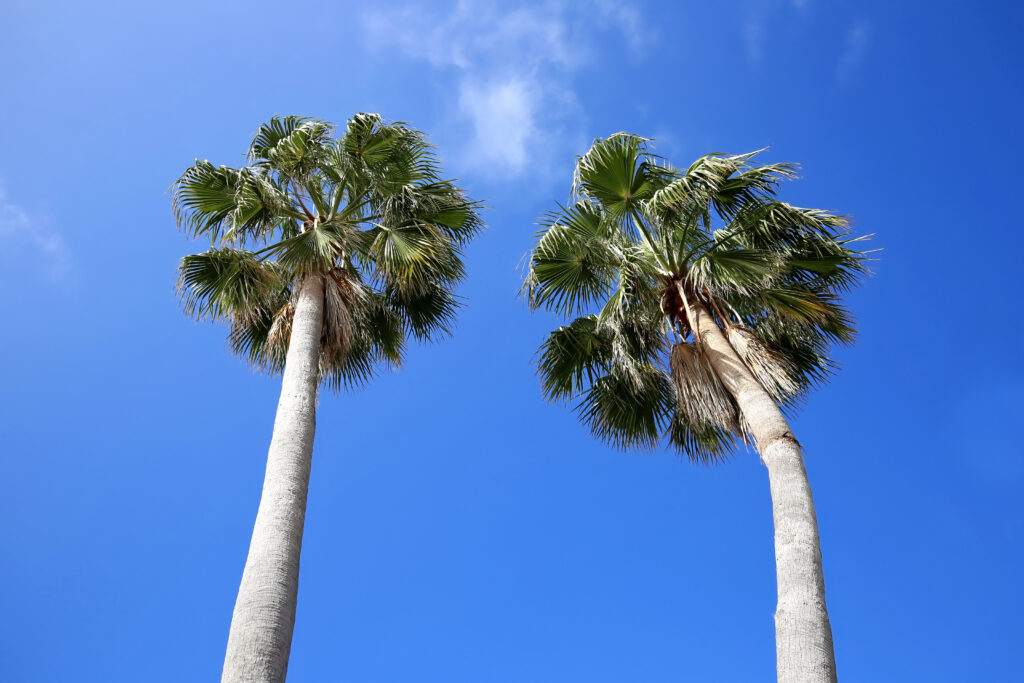
While some palm trees can survive frost and snow (pictured), sabal palm trees cannot handle cold and will quickly perish.
©goffkein.pro/Shutterstock.com
One Disease to Watch Out For
Sadly, the Florida state tree is in danger since it is susceptible to the most recent illness to strike Florida’s palm trees. Once the signs of Deadly Bronzing Disease (commonly known as LBD) appear, it is already lethal to the tree it has decided to attack. But, there is still some hope since palm plants that are close to sick palms can be protected using preventative measures.
What are Sabal Palm Trees Used For?
People primarily employ sabal palms for landscaping purposes. They do have some additional applications outside of looking nice, though.
This tree gets its “cabbage” nickname from the terminal bud, or developing heart, of the new fronds because they can be eaten and have a flavor similar to other undifferentiated plant meristem tissue, such as the heart of a cabbage or an artichoke. Heart of palm salads occasionally contains one of a number of palm species. Native Americans often eat palm hearts as part of their cuisine. The terminal bud, which is the only site from which the palm can develop, is what causes this species of palm to die when the heart is removed. Without this bud, the palm is unable to produce new leaves and finally perishes.
Hearts of palm are made from the terminal bud, which resembles a cabbage. Young leaf sheaths’ bristles have also been used to make cleaning brushes. Wharf heaps have been made out of the trunks of this species as well. Patriots from Charleston, led by William Moultrie, constructed a fort out of palmetto trunks in 1776 and used the trunks to effectively repel the British during the Revolutionary War. The seeds of this plant may be processed into flour, and the fruit can be eaten raw. Sabal palm fruit is not often used in cooking, though.
The sabal palm is a classic American palm tree beloved by many throughout Florida and around the country. If you can handle its large size and have a use for it in your landscaping project, this is an excellent and durable palm tree to consider.