C
Species Profile

Caterpillar

Lepidoptera

Eat. Molt. Metamorphose.
Cathy Keifer/Shutterstock.com
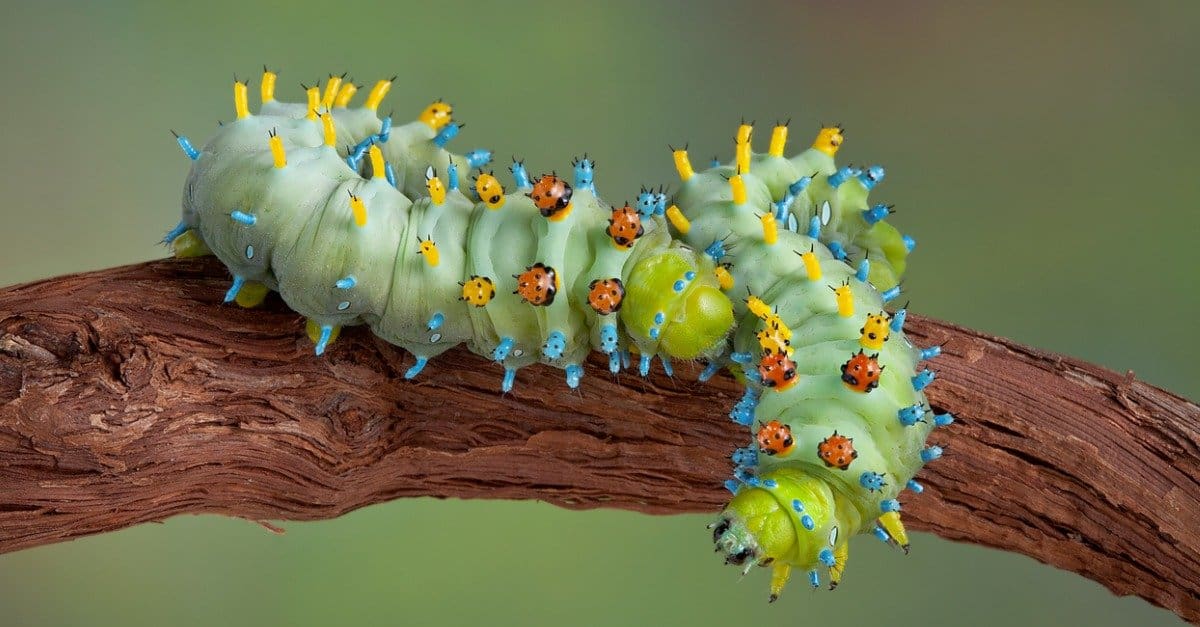
Largest caterpillars - cecropia

At a Glance

Order Overview This page covers the Caterpillar order as a group. Stats below are general traits shared across the order.
Also Known As larva, inchworm, looper, cutworm, hornworm, woolly bear
Diet Herbivore
Activity Diurnal+
Lifespan 30 years
Weight 0.03 lbs
Status Not Evaluated
Did You Know?

A caterpillar has 3 pairs of true legs (insect legs) plus typically 2-5 pairs of fleshy prolegs-often with tiny hooklets (crochets) for gripping.

Scientific Classification

Order Overview "Caterpillar" is not a single species but represents an entire order containing multiple species.

Caterpillars are the larval stage of butterflies and moths (Lepidoptera). They are primarily herbivorous growth stages specialized for feeding and storing energy before pupation (chrysalis/cocoon) and metamorphosis into winged adults.

Kingdom
Animalia
Phylum
Arthropoda
Class
Insecta
Order
Lepidoptera

Distinguishing Features

  • Soft, segmented body with a hardened head capsule and chewing mouthparts
  • Three pairs of true legs on the thorax plus abdominal prolegs (typically with hooklets/crochets in Lepidoptera)
  • Often highly host-plant specific; many possess defensive hairs, spines, toxins, or camouflage
  • Undergo complete metamorphosis: larva → pupa → adult (butterfly/moth)

Did You Know?

A caterpillar has 3 pairs of true legs (insect legs) plus typically 2-5 pairs of fleshy prolegs-often with tiny hooklets (crochets) for gripping.

Most species pass through ~4-6 instars (growth stages), but across Lepidoptera the number can vary wider with species and diet.

Many caterpillars are plant specialists, feeding on one plant family (or even one species), while others are broad generalists.

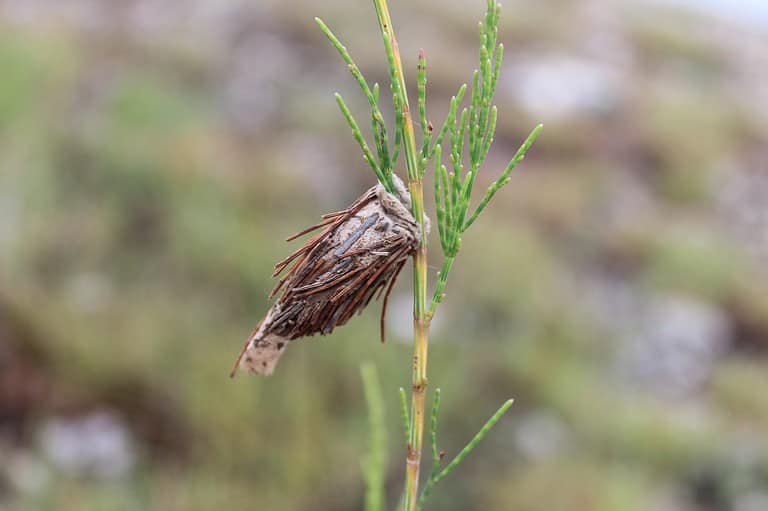
Some caterpillars don't just chew leaves: many mine inside leaves, bore in wood/stems, roll leaves, or live in portable silk "cases."

Defense is diverse: camouflage, warning colors, irritating hairs/spines, startle displays, and even plant-toxin "borrowing" (sequestration) occur across the order.

Silk isn't just for cocoons-larvae use it for safety lines, shelters, leaf ties, and sometimes group tents.

Not all are herbivores: a minority are predators or ant-associated (notably some Lycaenidae), showing surprising ecological variety for "caterpillars."

Unique Adaptations

  • Prolegs with crochets: hook-like structures that function like Velcro for gripping leaves, bark, or silk-key to climbing and anchoring.
  • Powerful chewing mandibles and a high-throughput gut: most larvae are built to process large volumes of plant tissue quickly.
  • Silk glands and spinneret: silk enables shelters, escape lines, case construction, and cocoons (many moths) or pupation supports (many butterflies).
  • Chemical defense and sequestration: across the order, some larvae store plant toxins (or produce their own deterrents) and advertise them with warning colors.
  • Irritating/venomous hairs and spines (in some lineages): detachable urticating setae or spined defenses discourage predators; effects range from mild irritation to medically significant reactions.
  • Startle and masquerade defenses: eyespots, snake-like postures, twig/leaf mimicry, and disruptive patterning are common but vary widely among families.
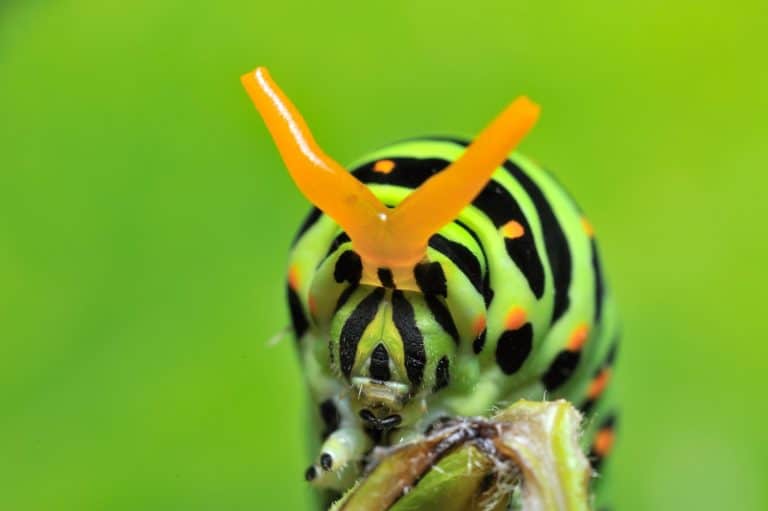
  • Eversible scent organs (notably swallowtail larvae): some can protrude a gland that emits strong odors to repel attackers.

Interesting Behaviors

  • Explosive growth and molting: larvae expand between molts, then shed the old skin; the head capsule size steps up each instar.
  • Host-plant tracking: many hatch precisely when their host's new leaves flush, and some females lay eggs only on chemically "correct" plants.
  • Leaf mining and hidden lifestyles: numerous families have larvae that live between leaf layers, inside stems, or in soil/leaf litter-making them hard to spot.
  • Silk safety lines: many species trail silk as they walk; if disturbed they can drop and hang, then climb back up.
  • Shelter-building: leaf-rolling, leaf-tying, and tent-making (social or semi-social) are widespread strategies to reduce predators and weather stress.
  • Group living (variable): some lineages are gregarious (e.g., tent-makers, processionary forms), while many are solitary and territorial about feeding sites.
  • Ant partnerships (in some groups): certain lycaenid larvae exchange sugary secretions for ant protection; in some cases larvae may be predatory within ant nests.
  • Timing diversity: depending on species and climate, larvae may develop in days to weeks, or enter diapause and overwinter one or more times before pupating.

Cultural Significance

Caterpillars (Lepidoptera larvae) stand for change and the soul in many cultures. They support silk production (silkworms), are eaten (e.g., mopane worms), and become pollinators yet also plant-eating pests, affecting conservation and education.

Myths & Legends

China's sericulture origin tradition credits Leizu (Lady Xiling/Shi), consort of the Yellow Emperor, with discovering silk when a cocoon unraveled-linking silkworm caterpillars to civilization and craft.

In Zhuangzi's famous Daoist parable, he dreams he is a butterfly and wakes unsure of his true nature-an enduring story about transformation and identity tied to Lepidoptera life stages.

In parts of Mexico, monarch butterflies arriving near the Day of the Dead are widely associated with returning souls-an evolving tradition that draws on older Mesoamerican ideas connecting butterflies with the spirit world.

In Japanese tradition, butterflies can signify the soul; Lafcadio Hearn's retold tale "The Butterfly" draws on this motif, where butterflies embody a spiritual presence tied to love and death.

In Greco-Roman tradition, Psyche (whose name means "soul") is often depicted with butterfly wings; the story of Psyche and Eros helped cement Lepidoptera as symbols of the soul's journey and transformation.

Conservation Status

NE Not Evaluated (order-level entity). IUCN assesses Lepidoptera at the species/subspecies level, and statuses across the order span from LC to CR, with some EX (e.g., Xerces blue, Glaucopsyche xerces). Notable at-risk examples include the monarch butterfly (Danaus plexippus; EN), several island endemics and habitat specialists, and multiple threatened moths/butterflies tied to rare host plants. Order-wide biological ranges/generalizations (caterpillars = larval stage): - Measurements (larvae): from a few millimeters in many microlepidoptera to ~12-15+ cm in some large silkmoths/sphinx moths (with exceptional giant saturniids reported longer). - Lifespan (whole life cycle): typically weeks to months; can extend to 1-2+ years in species with diapause, multi-year larval development, or delayed emergence. - Behavior/Ecology: most caterpillars are herbivores on specific host plants (often highly specialized), but diets range from generalists to extreme specialists; some are leaf-miners/borers, detritivores, or (rarely) predatory; many use camouflage/chemical defenses/hairs, some are gregarious, and interactions with ants are important in several groups (Lycaenidae). Phenology, voltinism, and habitat use vary widely across the order.

Has not yet been evaluated against the criteria.

Population Decreasing

Protected Under

  • Protections are typically applied at the species/subspecies and habitat level, not to the entire order Lepidoptera.
  • CITES: certain Ornithoptera (birdwing butterflies) are listed (trade regulated).
  • European Union Habitats Directive: multiple butterfly species are listed in Annexes (strict protection and habitat measures).
  • United States Endangered Species Act (ESA): numerous butterflies and moths are listed (e.g., specialized endemics), providing legal protection and recovery planning.
  • Many countries maintain national/provincial protected-species lists and protected areas that incidentally safeguard Lepidoptera habitats.

You might be looking for:

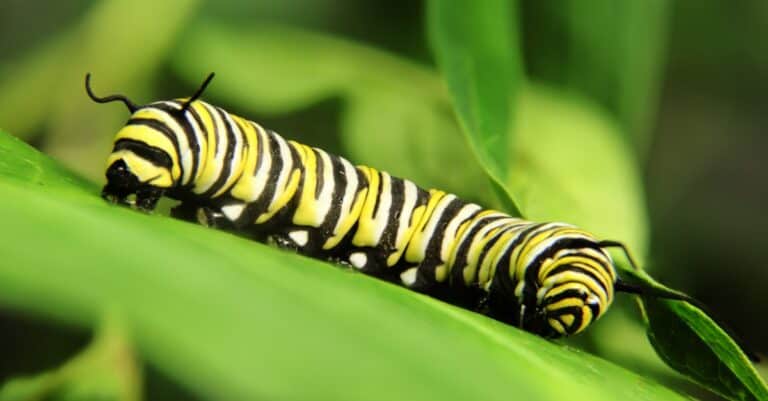
Monarch caterpillar

22%

Danaus plexippus (larva)

Famous milkweed-feeding butterfly larva with bold black/yellow/white striping.

Tomato/Tobacco hornworm

18%

Manduca quinquemaculata / Manduca sexta (larvae)

Large sphingid moth larvae with a characteristic rear 'horn'; common garden pests on solanaceous plants.

Cabbage white caterpillar

14%

Pieris rapae (larva)

Common green caterpillar that feeds on brassicas; widespread agricultural/garden pest.

Silkworm

12%

Bombyx mori (larva)

Domesticated moth larva used in silk production; feeds primarily on mulberry leaves.

Sawfly larva (sometimes called a caterpillar)

10%

Hymenoptera: Symphyta (larvae)

Caterpillar-like larvae of sawflies (not Lepidoptera); often have many more prolegs and lack Lepidoptera crochets.

Life Cycle

Birth 100 larvas
Lifespan 30 years

Lifespan

In the Wild
7–1095 years
In Captivity
7–1095 years

Reproduction

Mating System Polygynandry
Social Structure Transient
Breeding Pattern Transient
Fertilization Internal Fertilization
Birth Type Internal_fertilization

Caterpillars (Lepidoptera larvae) do not mate; adult butterflies and moths do. Many species are polygynandrous (both sexes mate multiple times). Mating is brief with internal fertilization via a spermatophore. Females may be mono- or polyandrous; no parental care.

Behavior & Ecology

Social Aggregation Group: 10
Activity Diurnal, Nocturnal, Crepuscular, Cathemeral
Diet Herbivore Tender young leaves of the larval host plant (fresh foliage)
Seasonal Hibernates

Temperament

Generally non-social and non-cooperative in many species; behavior is often driven by feeding, growth, and predator avoidance rather than stable social bonds.
Gregariousness varies widely: some species are persistently communal (including coordinated group movement), while many are solitary after early instars.
Typically risk-averse and defensive: common responses include freezing, dropping on silk, hiding/retreating into shelters, thrashing, regurgitation, and displaying aposematic coloration or eyespots in some taxa.
Aggression is variable: many species tolerate close neighbors in aggregations, but others show strong interference or cannibalism, especially under crowding or food limitation.
Group-living species may show increased boldness/basking and reduced individual vigilance due to dilution effects, while solitary species often prioritize concealment and cryptic behavior.

Communication

Usually minimal or absent; most caterpillars do not rely on airborne sound.
Some taxa can produce audible or near-audible sounds (e.g., clicking, squeaking, or rasping/stridulatory sounds) during disturbance, likely serving defensive or startling functions rather than social coordination.
Chemical cues: contact chemicals and pheromone-like signals can influence aggregation, spacing, host-plant acceptance, and trail/route following; frass and cuticular compounds may also provide cues.
Silk-mediated cues: silk trails can act as orientation guides, helping larvae return to shelters or follow group movement pathways; communal silk structures provide shared 'information' about safe refuges.
Tactile signals: contact/antennation-like probing with mouthparts/legs and body contact can help maintain spacing, align in processions, or trigger defensive responses in neighbors.
Vibrational signaling: substrate-borne vibrations (tapping/scraping) are used in some groups during disturbance and may function in warning, deterrence, or local coordination within a shelter.
Visual cues: limited but present-gregarious species may use neighbor presence and movement as cues for following, while warning coloration can function at the group level by reinforcing predator learning.

Habitat

Biomes:
Tropical Rainforest Tropical Dry Forest Savanna Desert Hot Desert Cold Mediterranean Temperate Grassland Temperate Forest Temperate Rainforest Boreal Forest (Taiga) Tundra Alpine Freshwater Wetland +8
Terrain:
Mountainous Hilly Plateau Plains Valley Coastal Island Riverine Volcanic Karst Rocky Sandy Muddy +7
Elevation: -16929 in – 19685 ft 1 in

Ecological Role

Primary consumers and major converters of plant biomass into animal biomass during the larval stage; foundational prey resource in many terrestrial food webs (with diet breadth ranging from strict host specialists to broad generalists).

Regulation of plant communities through herbivory (can include both ecosystem shaping and crop/forest impacts) Energy transfer to higher trophic levels (key prey for birds, bats, reptiles, amphibians, small mammals, predatory insects, and parasitoids) Nutrient cycling via frass (feces), leaf litter processing, and mortality contributing organic matter Support of parasitoid and predator diversity (host resource sustaining complex trophic interactions) Influence on plant evolution via selective pressure on plant defenses and host-plant specialization dynamics

Diet Details

Other Foods:
Leaves of flowering plants Conifer needles and new growth Grasses, sedges, and other monocots Herbs, shrubs, and tree foliage Flowers and buds Fruits and developing seed pods Seeds and grains Roots and belowground plant tissues Lichens and mosses Algae and cyanobacterial films on plants Fungi and decaying plant material +5

Human Interaction

Domestication Status

Wild

Most Lepidoptera caterpillars are wild and not domesticated. One main exception is sericulture: silkworms have been kept and bred for silk for centuries. People also rear wild caterpillars short-term for food, education, display, or conservation, but these are not true domestication.

Danger Level

Moderate
  • Skin irritation, rashes, or painful stings from urticating hairs/spines in some caterpillar groups (severity varies by species and individual sensitivity)
  • Allergic reactions (including eye/respiratory irritation) from handling hairy/spiny larvae or airborne hairs in rare cases
  • Toxicity risk if ingested (some caterpillars sequester plant toxins; ingestion is not safe unless species is known edible and properly prepared)
  • Indirect harms via agriculture/forestry: defoliation, crop loss, and economic damage; some species contaminate stored products
  • Handling risks: secondary infection from scratching irritated skin; irritation from defensive secretions in some species

As a Pet

Suitable as Pet

Legality: Laws vary. Keeping local native caterpillars (Lepidoptera) for short-term teaching is often allowed, but moving them, eggs, host plants, or cocoons across borders can be banned. Especially for pests or protected species. Permits may be needed.

Care Level: Moderate

Purchase Cost: Up to $50
Lifetime Cost: $10 - $300

Economic Value

Uses:
Sericulture (beneficial) Food (edible larvae in some regions) Agriculture & forestry (major pest damage; also monitoring and management industries) Education & outreach (classroom rearing, citizen science) Research (development, genetics, physiology, ecology) Conservation & ecotourism (butterfly houses; habitat restoration linked to host plants)
Products:
  • silk (from cocoons; depends on larval rearing)
  • edible caterpillars (regional human food; also sometimes animal feed)
  • educational rearing kits and supplies
  • frass (insect manure) used as a minor fertilizer/soil amendment
  • pest-monitoring and management services/tools (e.g., scouting, rearing for identification)

Relationships

Predators 10

Great tit Parus major
Blue tit
Blue tit Cyanistes caeruleus
Common wasp Vespula vulgaris
Paper wasp
Paper wasp Polistes dominula
Braconid wasp Cotesia glomerata
Tachinid parasitoid fly Tachina fera
Wood ant
Wood ant Formica rufa
European garden spider Araneus diadematus
European mantis Mantis religiosa
Common wall lizard Podarcis muralis

Related Species 8

Brush-footed butterflies
Brush-footed butterflies Nymphalidae Shared Family
Whites and sulphurs Pieridae Shared Family
Swallowtails
Swallowtails Papilionidae Shared Family
Hawk moths Sphingidae Shared Family
Silk moths and royal moths
Silk moths and royal moths Saturniidae Shared Family
Owlet moths Noctuidae Shared Family
Monarchs Danaus Shared Genus
Hornworms Manduca Shared Genus

Ecological Equivalents 4

Animals that fill a similar ecological role in their ecosystem

Sawfly larvae Symphyta Plant-feeding, external-chewing larvae that can look and behave much like caterpillars, often on similar host plants. They differ by having more abdominal prolegs (typically six or more pairs) and lacking Lepidoptera-style crochets on the prolegs.
Leaf beetle larvae Chrysomelidae Herbivorous larvae that skeletonize leaves or feed externally. They share host-plant specialization and chemical sequestration in some lineages, but have very different body form and locomotion (they lack prolegs).
Gall midges Cecidomyiidae Larvae that manipulate plants and live within plant tissues as galls. They overlap with endophytic Lepidoptera larvae (such as leaf miners and stem and fruit borers) in feeding niche and plant impacts.
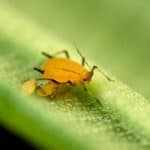
Aphids
Aphids Aphididae Common co-occurring herbivores on the same plants. Not similar in form, but they occupy a comparable 'plant-feeding, high-biomass prey' role in food webs and drive similar predator and parasitoid communities.

Types of Caterpillar

10

Explore 10 recognized types of caterpillar

Monarch butterfly
Monarch butterfly Danaus plexippus
Tobacco hornworm (Carolina sphinx moth) Manduca sexta
Small cabbage white Pieris rapae
Domestic silkmoth Bombyx mori
Spongy moth
Spongy moth Lymantria dispar
Old world swallowtail Papilio machaon
Red admiral
Red admiral Vanessa atalanta
Luna moth
Luna moth Actias luna
Cotton bollworm
Cotton bollworm Helicoverpa armigera
Winter moth
Winter moth Operophtera brumata

It is estimated that there are over 20,000 species of caterpillars in this animal group, and there may be many more left to be discovered.

The only job of the caterpillar is to eat, and it may increase its size by more than 1,000 times before metamorphosizing into a moth or butterfly. As the insect grows, most species will shed their skins four times. They have over 4,000 muscles in their bodies.

Different species metamorphosis at unique rates ranging from 1-to-11 months.

5 Incredible Caterpillar Facts!
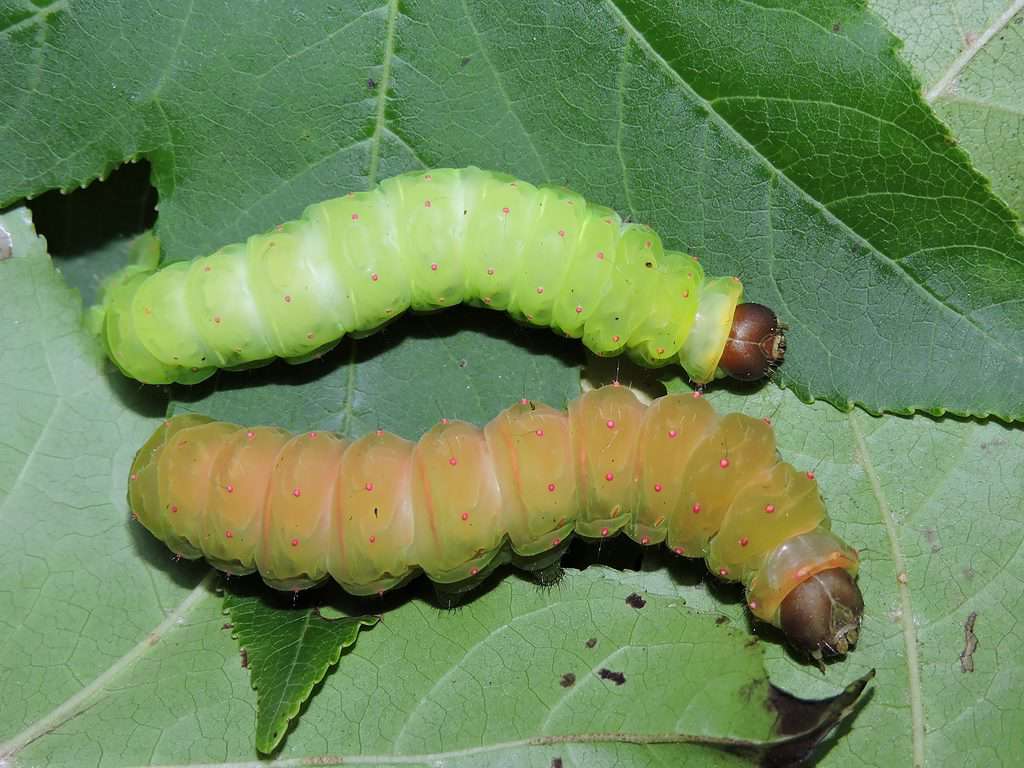
Two Luna Moth caterpillars are visible on a green leaf. The caterpillar in the top part of the frame is green with tiny orange dots. The caterpillar beneath it is brown are preparing to pupate.

Some of these insects that turn into moths can sting, but butterfly caterpillars cannot sting.

  • There are more than 20,000 species in the world. Biologists believe that they will discover many more of these animals, with many of them being discovered in remote areas.
  • Some of these insects that turn into moths can sting, but butterfly caterpillars cannot sting.
  • The vast majority of them eat plants, but a few will eat insects and other caterpillars.
  • They may spin a single pupa, or they may spin a cocoon around themselves before spinning an additional pupa around the cocoon.
  • The caterpillar stage can last from 1-to-11 months, depending on the species. The largest caterpillars in the world can reach up to 6 inches in length!

You can check out more incredible facts about caterpillars.

Species, Types, and Scientific Names
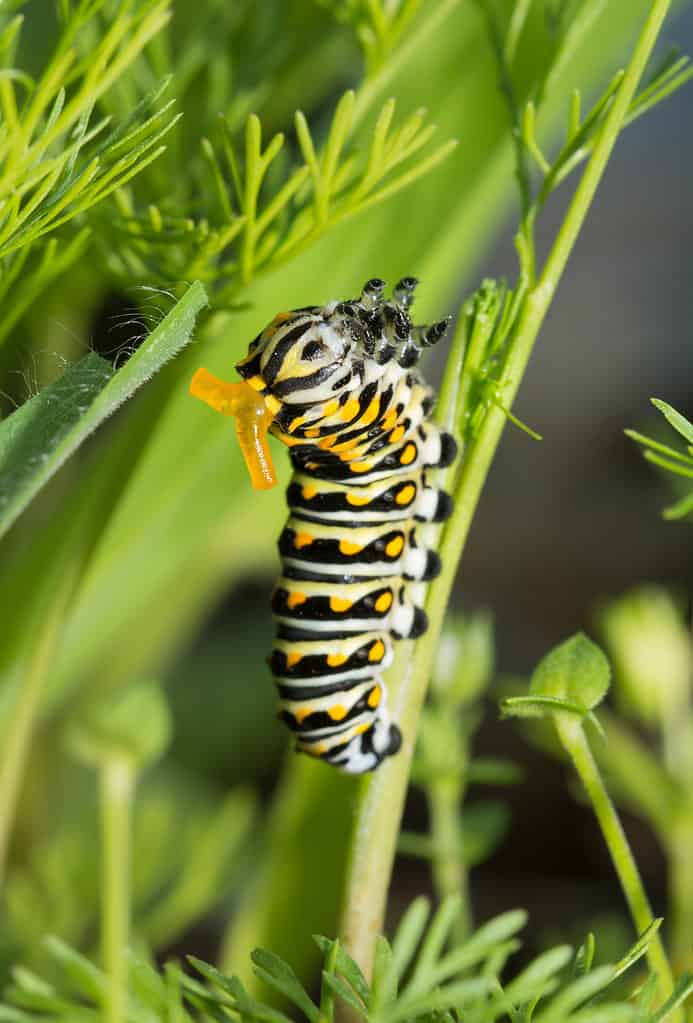
a photograph of a black swallowtail caterpillar with visible osmeterium, the scent glands that secrete a foul odor to ward off predators/ The osmeterium are orange and look like horns protruding from its ear. The body of the caterpillar is striped yellow green and black/ Against a background of greenery.

Caterpillars are the larval stage of members of the order Lepidoptera. Caterpillars belong to the same classification as the butterfly that they become butterflies.

Caterpillars are the larval stage of members of the order Lepidoptera. Caterpillars belong to the same classification as the butterfly that they become butterflies. This scientific name comes from the Ancient Greek language. The first part of the scientific name lepís means scale while the second part of the scientific name pterón means wing.

There are about 180,000 species in this order that biologists have placed into 126 family and 46 superfamily classifications. Only about 10% of them may still be alive. Most butterflies are in the Papilionoidea superfamily, which can be divided into several classifications, including:

  • Hesperiidae – These are skipper butterflies.
  • Papilionidae – There are more than 550 species in this family, including some of the world’s largest butterflies.
  • Pieridae – Most members of this group which includes more than 1,100 species, develop into yellow or orange butterflies, and they usually live in the tropics in Africa and Asia.
  • Riodinidae – More than 1,500 species in this family where the butterfly will have metallic-looking marks on its wings.
  • Lycaenidae – There are over 6,000 members of this family, with most having blue wings and black on them.
  • Nymphalidae- There are more than 6,000 members of this group who live worldwide. This is the largest group of butterflies, and it is divided into 13 superfamilies.

In general, the classification of caterpillar species is based on morphological behavioral, and molecular characteristics, and species are grouped into families and superfamilies. Other high-level taxonomic categories are based on their similarities and evolutionary relationships.

With that said, here are the most common species of the caterpillar:

Evolution and Origins

The evolution and origin of caterpillars can be traced back to the early ages of insect evolution, approximately 300 million years ago. Caterpillars are the larval stage of butterflies and moths, belonging to the order Lepidoptera.

Over time, through the process of natural selection and adaptation, caterpillars have evolved various physical and behavioral adaptations that have allowed them to survive and thrive in their environments, such as the ability to camouflage, spin silk, and feed on a variety of plant matter.

Additionally, the relationship between caterpillars and the plants they feed on has also evolved, leading to a mutualistic relationship in which the caterpillar obtains food and shelter, while the plant benefits from the fertilization and pollination provided by the adult butterfly or moth.

Appearance

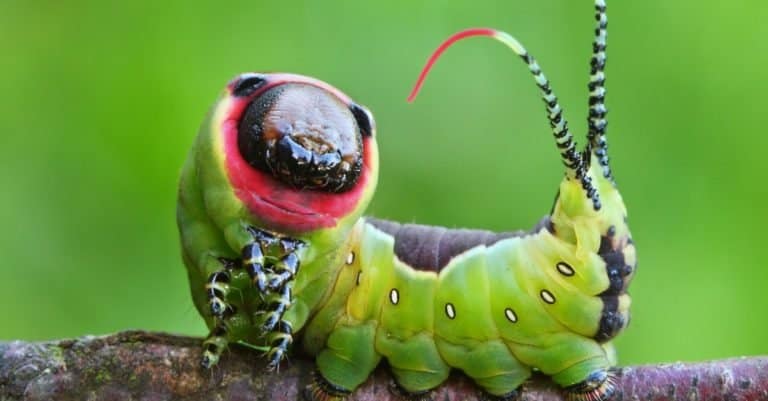
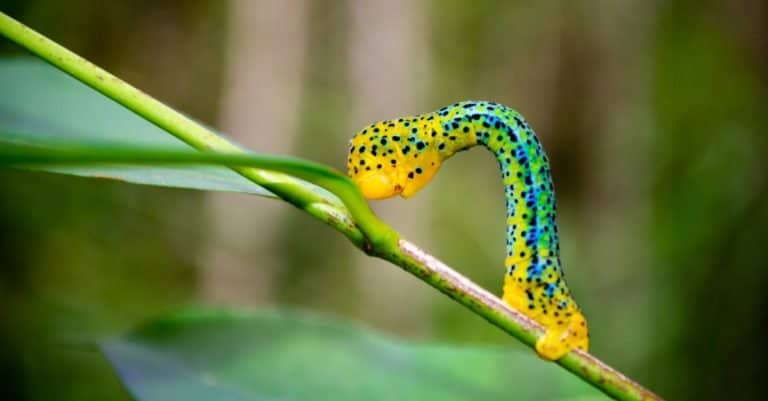
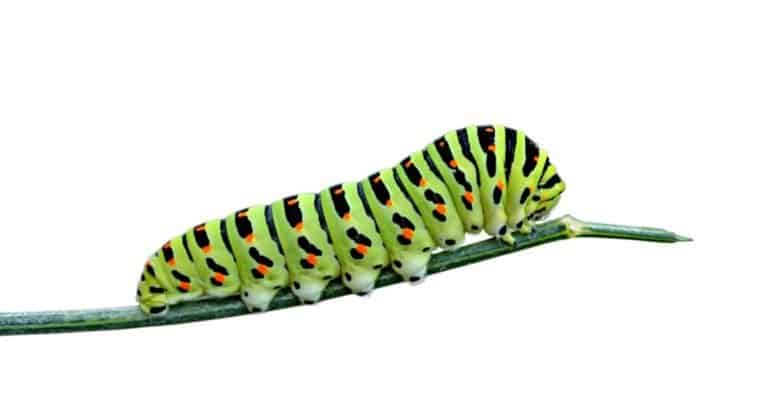
In order to identify what type of caterpillar you are looking at, you need to pay attention to several different factors, including:

  • Size
  • Color, such as green or black
  • Type of hair covering if any
  • Markings, such as stripes or spots
  • Presence of horns
  • Pairs of legs or prolegs
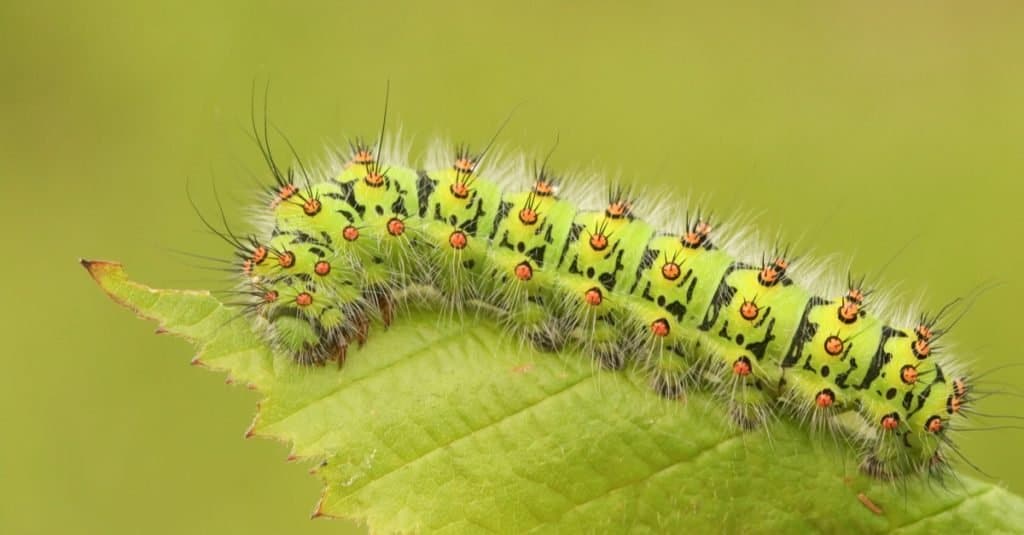
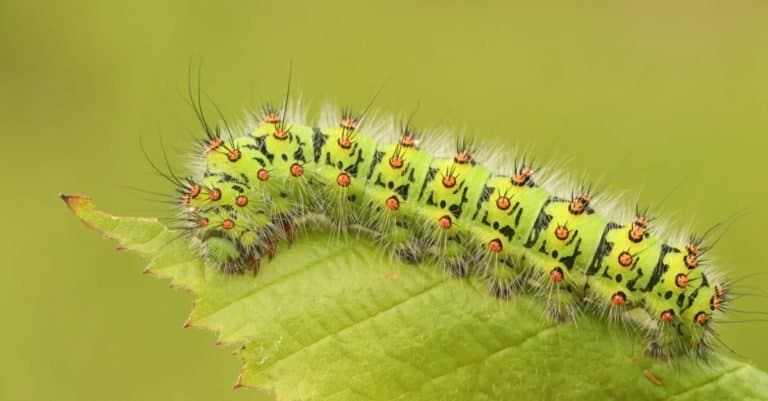
An Emperor moth Caterpillar (Saturnia pavonia) feeding on a bramble leaf.

Caterpillars are characterized by size, color, hair covering, strips, spots, and horns.

Habitat

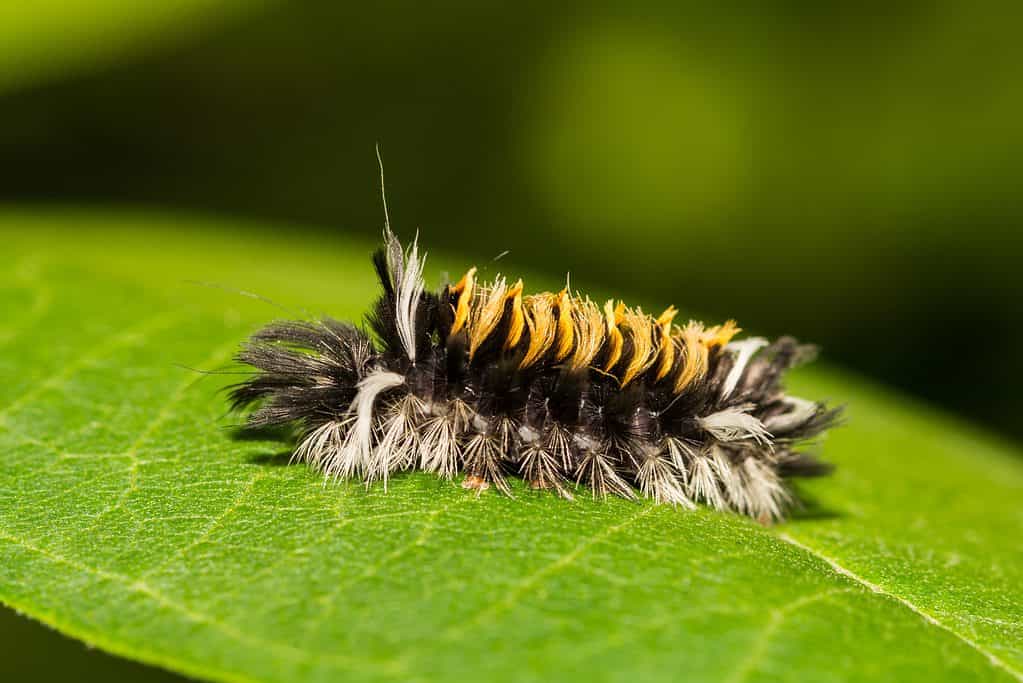
Macro if milkweed tussock caterpillar on a bright green leaf. Thecterpillars is quite fuzzy. It has whitish/gray hair protruding from the bottom part of its body. The middle is black, and the top is striped mpstlyorng with some gray and black. Looks like a parade float.

These insects can be found almost anywhere that there are plants for them to eat. Some species have particular habitats while others live in many different areas. Butterflies often live under leaves, in shrubs, and in grasses.

The habitat of a caterpillar can vary depending on the species. However, in general, caterpillars are found in a variety of environments where they have access to food, shelter, and suitable temperatures for their development.

Most caterpillars are herbivores and feed on leaves, stems, and other parts of plants. Therefore, they are typically found in areas with abundant vegetation, such as forests, meadows, fields, and gardens. Some caterpillars are generalists and can feed on a wide range of plant species, while others are specialists and feed on only one or a few specific plant species.

In addition to access to food, caterpillars also require shelter from predators and environmental stressors, such as extreme temperatures and drying winds. Many caterpillars spin silk cocoons or find shelter in crevices, leaf litter, or other natural structures. Some species burrow into the soil or form shelters using leaves or other materials.

Caterpillars are also dependent on temperature for their development. Some species can tolerate a wide range of temperatures, while others have very specific temperature requirements. For example, some tropical caterpillars only develop at high temperatures, while others only develop at cooler temperatures.

In conclusion, the habitat of a caterpillar depends on several factors, including access to food, shelter, and suitable temperatures for its development. Caterpillars are found in a variety of environments, from forests and meadows to gardens and agricultural land, where they feed on plants and seek protection from predators and environmental stressors.

Diet
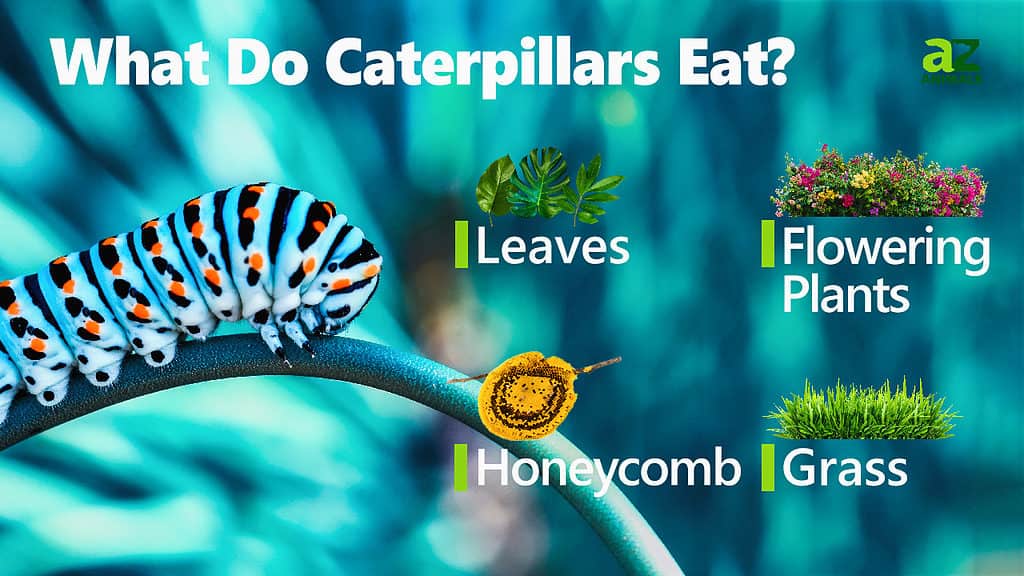
Caterpillars eat leaves, flowering plants, honeycombs, and grass.

Most butterflies eat plants. Most prefer the leaves but will eat the seeds and petals if they are hungry enough. Some caterpillars also eat insects and even other caterpillars.

The Transformation
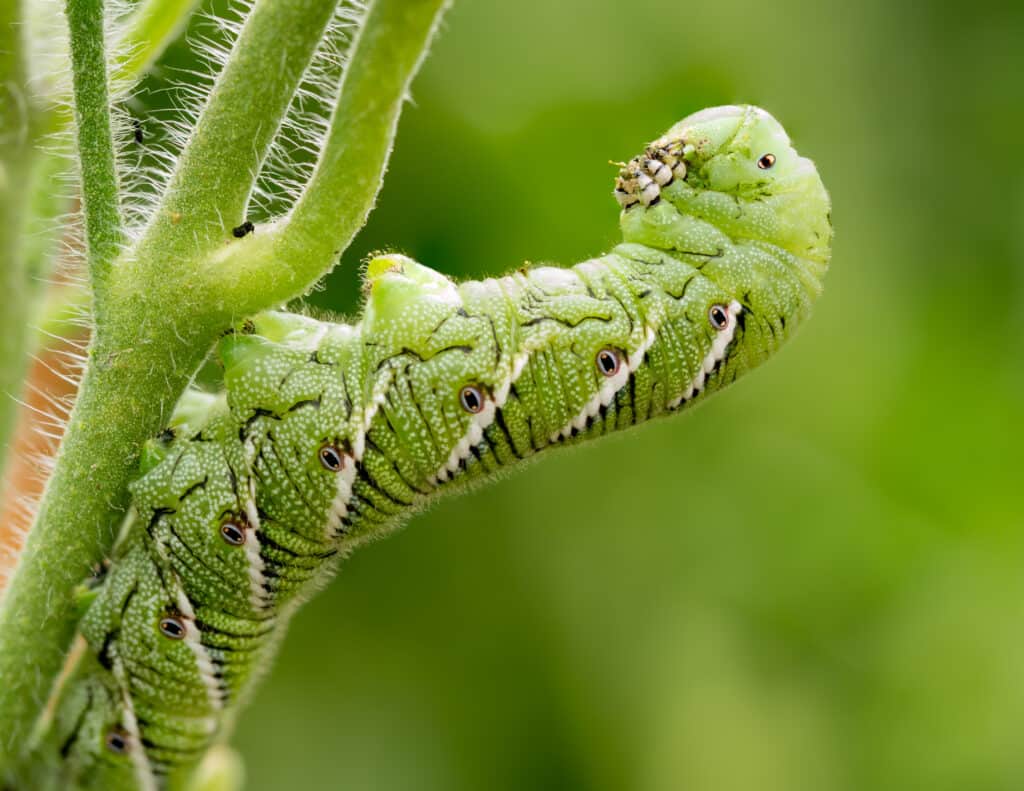
Tomato hornworm

Tomato hornworm

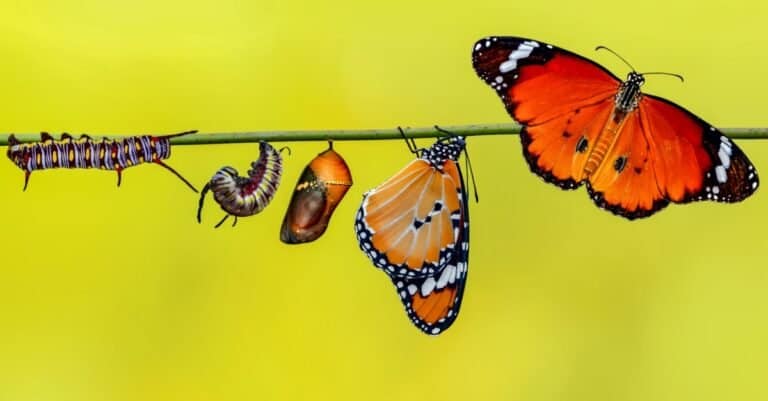
A caterpillar is ready to become a butterfly the moment it comes out of its cocoon. First, it eats a bunch of food until it reaches a predetermined size. That process can last from one-to-11 months. Then, its body releases the molting hormone ecdysone.

Each time the hormone is released, the caterpillar’s body still contains juvenile hormones. Therefore, it remains a caterpillar. Each time the ecdysone hormone in the caterpillar’s body becomes stronger while juvenile hormones become less. Most caterpillars go through this process four times.

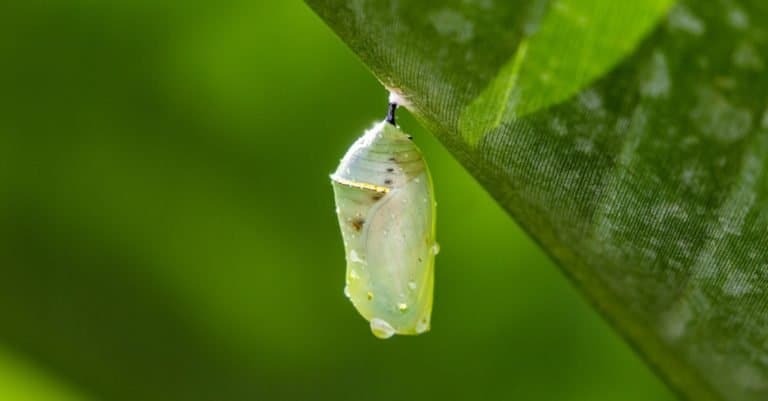
As the process is taking place, imaginal discs have started to emerge from the caterpillar’s body. After the juvenile hormone level drops below a certain threshold and the ecdysone hormone rises above a particular level, the caterpillar forms a chrysalis. The developing imaginal discs grow quickly into a sock shape. Each imaginal disc becomes a part of the butterfly’s body, and most of the caterpillar is transformed into the butterfly.

One more burst of ecdysone hormone occurs, and the adult butterfly emerges.

Prevention
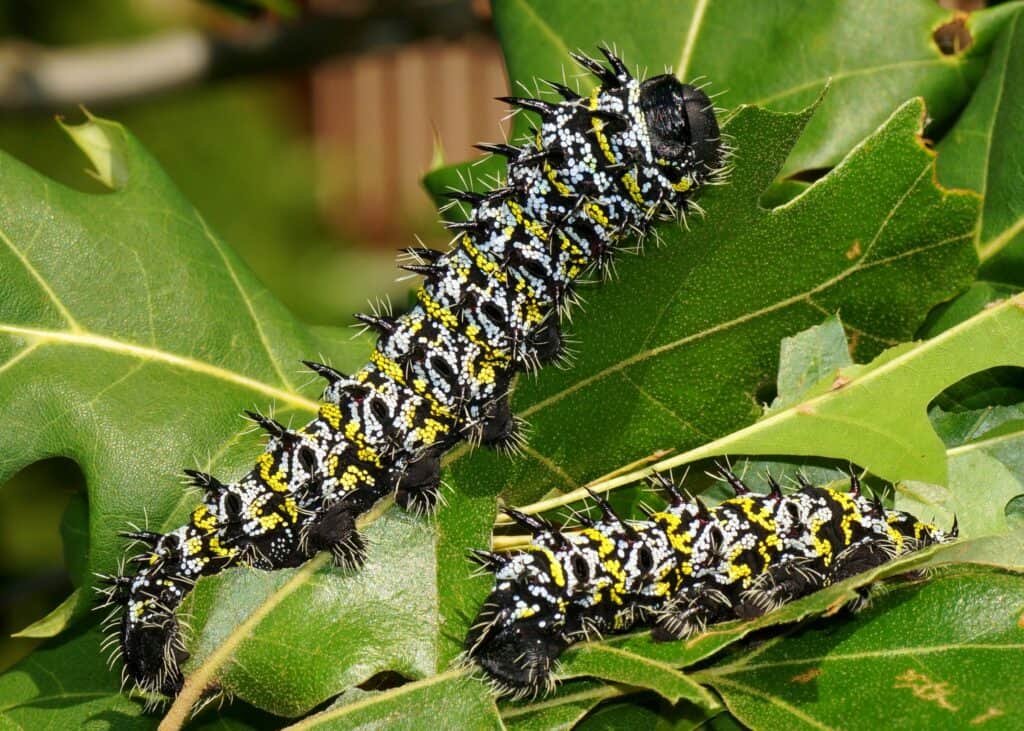
Madora Moth Caterpillar

The moth’s larva, referred to as “mopane worm”, feeds primarily on mopane tree leaves.

It is important to remember that not all of these insects are harmful, but they may harm plants in farm fields or your garden. If you notice them in an area where you want to get rid of them, then there are at least four methods that you may want to try.

First, you can hand-pick them off your plants. This method is most effective if you have a small area and catch caterpillars in the area when there are only a few. Sometimes, spraying the area with water is an effective way to encourage caterpillars to move on.

Secondly, if the insect has built a nest, you can use a stick or other object to knock down the nest and tear it apart. You need to destroy the nests so that the eggs inside them do not turn into more caterpillars. Since caterpillars usually return to the nest at night, this method works best when done in the evening or early morning.

Third, you can use Bacillus thuringiensis to kill them. Bacillus thuringiensis is a soil bacterium that destroys the stomach of caterpillars.

Another option is to make a deterrent at home. Take a little molasses and mix it with water and dish soap. Spray it where you see these insects. They do not like the taste, and they will move on to another area.

View all 392 animals that start with C

Sources

  1. Discover Wildlife / Accessed June 8, 2021
  2. Wildlife Insight / Accessed June 8, 2021
  3. The Caterpillar Lab / Accessed June 8, 2021
  4. Woodland Trust / Accessed June 8, 2021
  5. Wikipedia / Accessed June 8, 2021
  6. Leafy Place / Accessed June 8, 2021
  7. Center for Urban Agriculture / Accessed June 8, 2021
Rebecca Bales

About the Author

Rebecca Bales

Rebecca is an experienced Professional Freelancer with nearly a decade of expertise in writing SEO Content, Digital Illustrations, and Graphic Design. When not engrossed in her creative endeavors, Rebecca dedicates her time to cycling and filming her nature adventures. When not focused on her passion for creating and crafting optimized materials, she harbors a deep fascination and love for cats, jumping spiders, and pet rats.
Connect:

Thank you for reading! Have some feedback for us?


Caterpillar FAQs (Frequently Asked Questions)

Caterpillars are Herbivores, meaning they eat plants.