

T
Species Profile

Tuatara

Sphenodon punctatus

Ancient reptile, modern survivor
Knutschie - Public Domain

Tuatara Distribution

Click a location to explore more animals from that region

Endemic Species
Loading map...

Found in 1 country

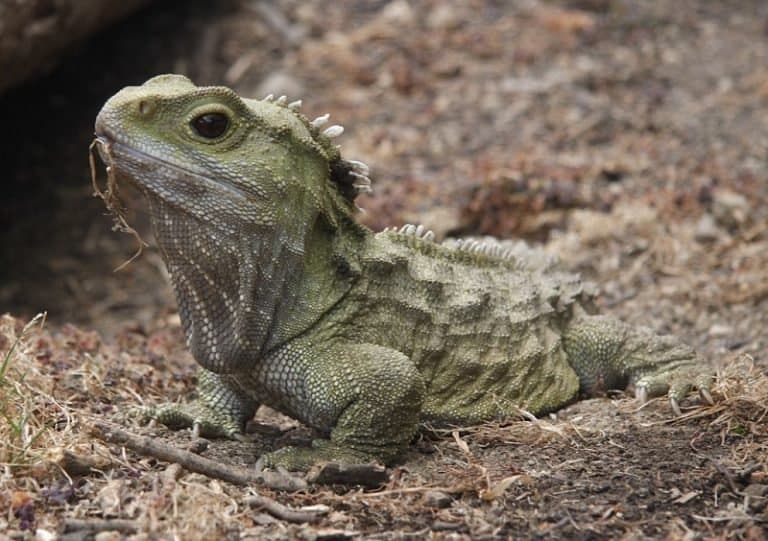
Tuatara on ground

At a Glance

Wild Species
Also Known As Tuatara, Tūātara, Living fossil
Diet Carnivore
Activity Nocturnal+
Lifespan 60 years
Weight 1.3 lbs
Status Least Concern
Did You Know?

Adults are typically 40-70 cm long; the largest reported individuals reach about 80 cm total length.

Scientific Classification

The tuatara is a New Zealand reptile and the only living representative of Rhynchocephalia, a lineage distinct from lizards and snakes. It is long-lived, slow-growing, mostly nocturnal, and notable for retaining several ancient anatomical traits.

Kingdom
Animalia
Phylum
Chordata
Class
Reptilia
Order
Rhynchocephalia
Family
Sphenodontidae
Genus
Sphenodon
Species
punc­tatus

Distinguishing Features

  • Only living rhynchocephalian lineage
  • Prominent spiny dorsal crest
  • Parietal “third eye” (pineal complex)
  • Slow growth and exceptional longevity

Physical Measurements

Males and females differ in size

Length
1 ft 11 in (1 ft 8 in – 2 ft)
1 ft 8 in (1 ft 4 in – 1 ft 12 in)
Weight
2 lbs (1 lbs – 2 lbs)
1 lbs (1 lbs – 1 lbs)
Tail Length
11 in (8 in – 12 in)
7 in (6 in – 9 in)
Top Speed
2 mph
running

Appearance

Primary Colors
Secondary Colors
Skin Type Granular scales
Distinctive Features
  • Adults typically 40-70 cm total length (Thompson et al., 1992).
  • Males average heavier; up to ~1 kg recorded (Cree, 2014).
  • Longevity commonly >60 years; >100 recorded in captivity (Cree, 2014).
  • Prominent midline spiny crest from neck to tail.
  • Parietal "third eye" with light-sensitive scale on head.
  • Acrodont teeth: two upper rows meet one lower row.
  • No external ear opening; tympanum absent externally.
  • Mostly nocturnal; shelters in burrows, often with seabirds.
  • Thick tail capable of autotomy and later regrowth.
  • Rhynchocephalian skull: diapsid-like temporal openings, unlike squamates.

Sexual Dimorphism

Males are larger and more robust, with broader heads and a taller dorsal crest used in display and combat. Females are smaller-bodied with a lower crest and generally less pronounced neck musculature.

  • Larger body size and heavier build overall.
  • Taller, more conspicuous dorsal crest spines.
  • Broader head and stronger jaw musculature.
  • Smaller body size and lighter build.
  • Lower dorsal crest with shorter spines.
  • Relatively narrower head and neck region.

Did You Know?

Adults are typically 40-70 cm long; the largest reported individuals reach about 80 cm total length.

Tuatara can live over 100 years; the captive male "Henry" successfully sired young at ~111 years old.

Egg incubation is exceptionally long for reptiles: about 11-16 months, depending on nest temperature.

Temperature-dependent sex determination: warmer nests (~22 °C) yield mostly males; cooler nests (~18 °C) yield mostly females.

Females lay 1-19 eggs (often ~8-10) and may breed only every 2-5 years.

They can be active at ~5 °C and prefer cool body temperatures around 16-21 °C-unusual among reptiles.

Not a lizard: tuatara are the only living members of Rhynchocephalia, a lineage split from squamates over 200 million years ago.

Unique Adaptations

  • A parietal "third eye" with lens and retina develops in juveniles, aiding light-sensing via the skull roof.
  • Acrodont teeth form sharp shearing ridges: two upper tooth rows bite against one lower row.
  • Cool-climate physiology allows activity at low temperatures and very slow metabolic, growth, and aging rates.
  • A largely unchanged diapsid skull and primitive jaw mechanics preserve ancient reptile features lost in most modern groups.
  • Long embryonic development (11-16 months) matches highly seasonal island climates and conservative life history.

Interesting Behaviors

  • Mostly nocturnal, emerging from burrows to ambush insects, wētā, spiders, and small vertebrates.
  • Daytime basking raises body temperature; individuals often retreat to the same burrow repeatedly.
  • Males defend territories with crest-raising, head-bobbing, and biting during the breeding season.
  • Often shares burrow systems with seabirds on offshore islands, using the same habitat mosaic.
  • Females dig nest chambers and carefully backfill; reproduction is slow, with long intervals between clutches.

Cultural Significance

In Aotearoa New Zealand, tuatara are a taonga species and powerful symbol of deep time. Predator-free island conservation and translocations protect remaining populations, aligning closely with kaitiakitanga (guardianship) values.

Myths & Legends

In Māori whakapapa, tuatara are counted among the ngārara (reptiles), descendants of Punga, linking them to ancestral genealogies of the wild.

Some Māori traditions describe tuatara as kaitiaki-guardians of places made tapu-requiring respect and proper ritual approach.

Nocturnal reptiles, including tuatara, are sometimes associated in tradition with Whiro, reflecting links to darkness and hidden, subterranean places.

The name "tuatara" is from te reo Māori, commonly glossed as "spiny back," reflecting the animal's crest and presence in traditional naming.

Conservation Status

LC Least Concern

Widespread and abundant in the wild.

Population Stable

Protected Under

  • CITES Appendix I
  • Wildlife Act 1953

Life Cycle

Birth 10 hatchlings
Lifespan 60 years

Lifespan

In the Wild
20–110 years
In Captivity
20–150 years

Reproduction

Mating System Polygyny
Social Structure Harem Based
Breeding Season Late summer (January-March)
Breeding Pattern Seasonal
Fertilization Internal Fertilization
Birth Type Internal_fertilization

Breeding is seasonal: territorial males court and mate with multiple females within defended areas. Copulation uses cloacal apposition ("cloacal kiss") for internal fertilization. Females typically reproduce every 2-5 years, laying ~5-19 eggs; incubation lasts ~11-16 months, with no parental care.

Behavior & Ecology

Social Aggregation Group: 1
Activity Nocturnal, Cathemeral
Diet Carnivore weta
Seasonal Hibernates

Temperament

Territorial
Seasonally aggressive
Site-faithful
Cautious

Communication

hisses
grunts
squeaks
chirps
head bobbing
open-mouth gaping
tail lashing
biting
chemical cues

Habitat

Biomes:
Temperate Forest Temperate Grassland
Terrain:
Island Coastal Rocky Sandy
Elevation: Up to 984 ft 3 in

Ecological Role

Island mesopredator regulating arthropods and small vertebrates; seabird chick predator (Cree 2014).

invertebrate population control small-vertebrate regulation seabird colony dynamics nutrient cycling

Diet Details

Main Prey:
Weta Beetle Moth Spider Centipede Isopods Amphipods Earthworm Snail Skink Gecko Seabird eggs Seabird chick +7

Human Interaction

Domestication Status

Wild

Never domesticated. In New Zealand, it is a culturally treasured species for the Maori people; now strictly protected and managed via permits, captive breeding, and island translocations. Long-lived (>100 years) and slow to mature (10-20 years). [Cree 2014; Gaze 2001].

Danger Level

Low
  • Painful crushing bite
  • Deep lacerations from teeth
  • Salmonella exposure from feces
  • Secondary infection after bite

As a Pet

Not Suitable as Pet

Legality: NZ Wildlife Act protected; permits required; CITES Appendix I.

Care Level: Expert Only

Purchase Cost:
Lifetime Cost: $20,000 - $120,000

Economic Value

Uses:
Conservation Research Ecotourism Education
Products:
  • tourism
  • research

Relationships

Related Species 1

Brothers Island tuatara Sphenodon guntheri Shared Genus

Ecological Equivalents 4

Animals that fill a similar ecological role in their ecosystem

Duvaucel's gecko Hoplodactylus duvaucelii Nocturnal island reptile. Large-bodied, opportunistic predator of invertebrates.
McCann's skink Oligosoma maccanni New Zealand reptile with an insectivorous diet that overlaps in coastal and shrub habitats.
Morepork Ninox novaeseelandiae Nocturnal predator. Shares nocturnal activity patterns and invertebrate-focused foraging.
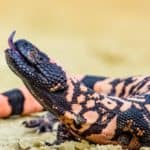
Gila monster
Gila monster Heloderma suspectum Long-lived, slow-metabolism reptile with a low-energy, ambush-foraging strategy.

One of the tuatara’s nicknames among scientists is “living fossil” because of its lack of evolutionary change.
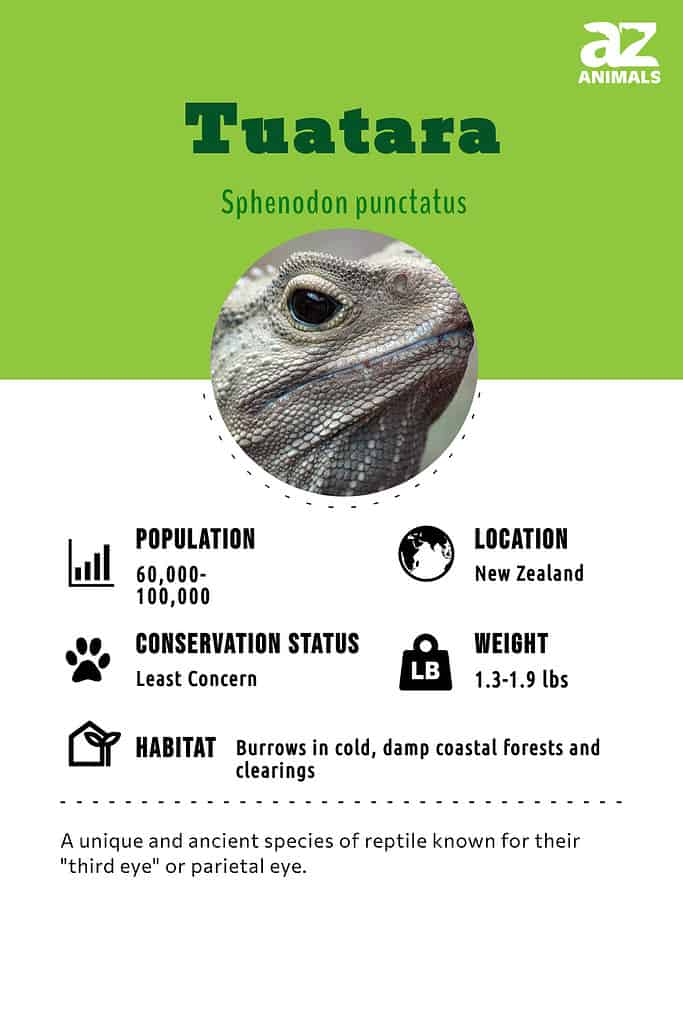
Because of the fact that it is not quite a lizard and not quite a dinosaur, New Zealand’s tuatara is one of the few truly unique animals left in the world. These reptiles may look like lizards, but they belong to their own separate class and are the only surviving members of their taxonomical order. Scientists are extremely interested in studying them because they can offer insight into how modern-day lizards and snakes evolved.

Tuatara Facts

  • The name “tuatara” means “peaks on the back” in the Maori language.
  • Tuataras are animals that have survived since the Triassic period, which was about 240 million years ago.
  • They are the only surviving members of the order Rhynchocephalia.
  • Tuataras have a third eye known as a “parietal eye” on the top of their heads.
  • The lifespan of a tuatara is upwards of 60 years. Even up to 100 years in captivity!

Scientific Name
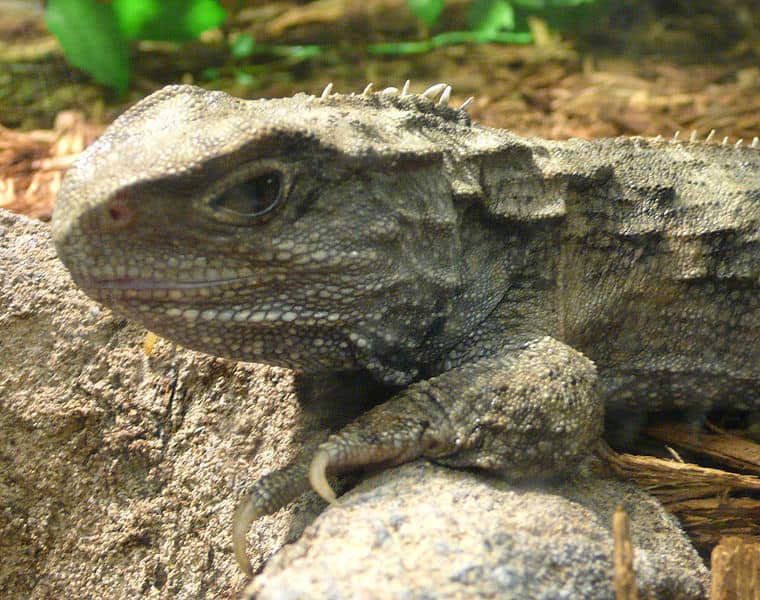
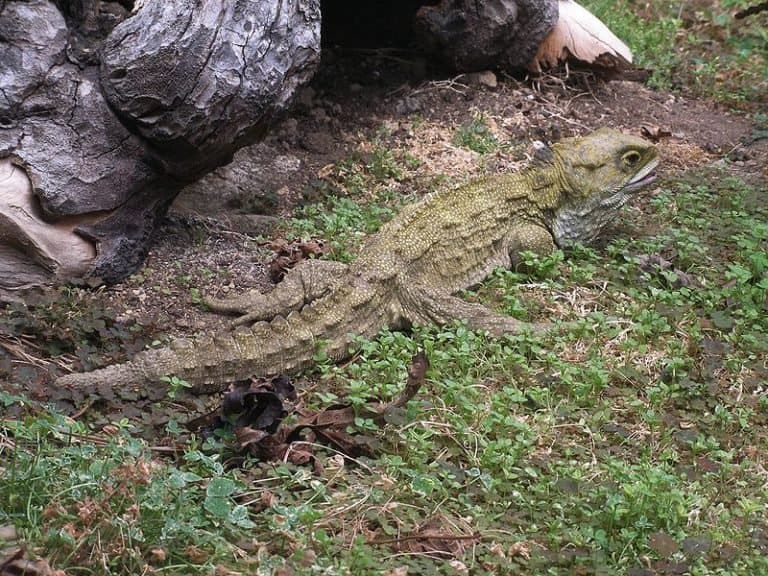
Tuatara on a rock

Tuatara’s common name comes from the Maori language.

The tuatara’s scientific name is Sphenodon punctatus. “Sphenodon” originates from the Greek words “sphen,” meaning “wedge,” and “odon,” meaning “tooth.” “Punctatus” is a Latin word that means “pointed.”

In the Maori language, ” tuatara ” means “peaks on the back.” Maoris are New Zealand’s indigenous Polynesian people. Tuataras hold great significance in the Maori culture and are depicted in various myths as living embodiments of gods and harbingers of great wisdom.

Evolution
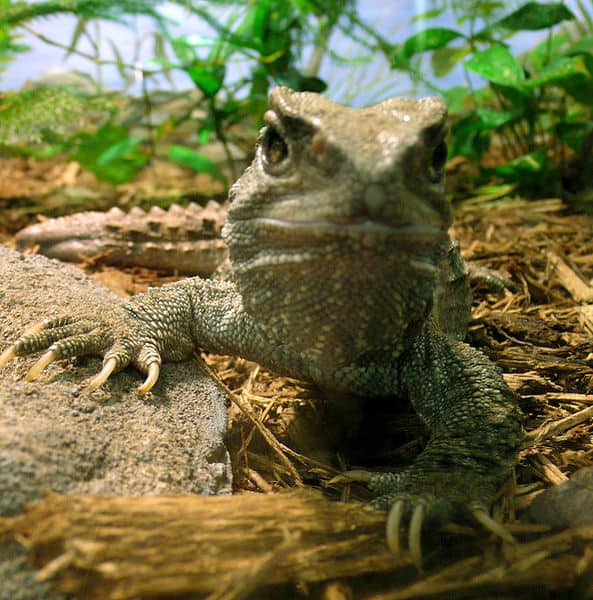
Tuatara on a rock

Tuataras are the only living species of an ancient order of reptiles.

Tuataras first evolved along with their ancestors in the Rhynchocephalia around 238 to 240 million years ago, going on to flourish during the early Jurassic period. After this point, all members of the tuatara family tree practically vanish from the fossil record, along with the dinosaurs, with the exception of themselves. Recent research into tuatara DNA reveals that modern-day specimens are almost genetically identical to fossils of Sphenodon punctatus dating back to 190 million years ago.

Appearance and Behavior
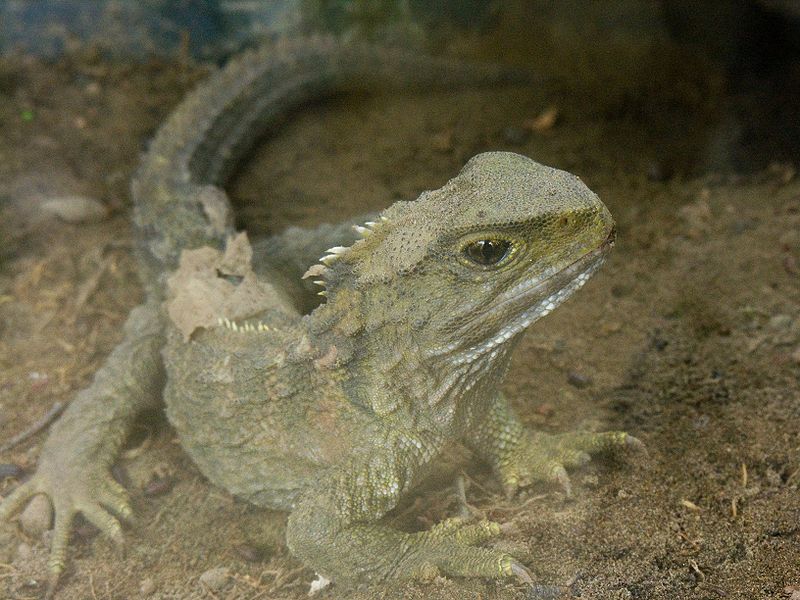
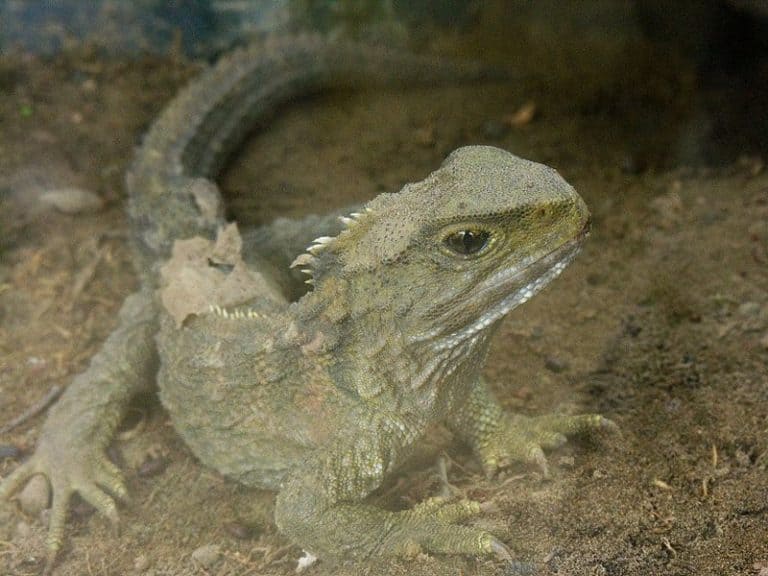
tuatara (Sphenodon punctatus) tuatara up close
Tuataras may resemble lizards, but they are not actually closely related.

The tuatara is an animal native to New Zealand, and it is the country’s largest reptile. Males can grow to be nearly three feet in length, and adult females typically grow to be about two feet long. Both males and females will only weigh up to two pounds when fully grown, so despite the fact that they are labeled as the largest reptiles in New Zealand, they are not particularly large animals.

Tuataras are solitary animals that live in burrows, but they have been known to share their burrows with certain seabirds that they live in harmony with.

Both males and females have similar coloring. Most have skin that is a muted, olive green, or rusty brown color in order to help them blend into their surroundings. One interesting fact about tuatara coloring is that it can change with time. They molt annually, so their color can gradually shift as they age.

Male tuataras have a large, distinctive crest of spines along their backs and necks. These spines can be fanned out into a showy display in order to impress females during mating season, but they are also used to show dominance when they are fighting other males.

Habitat
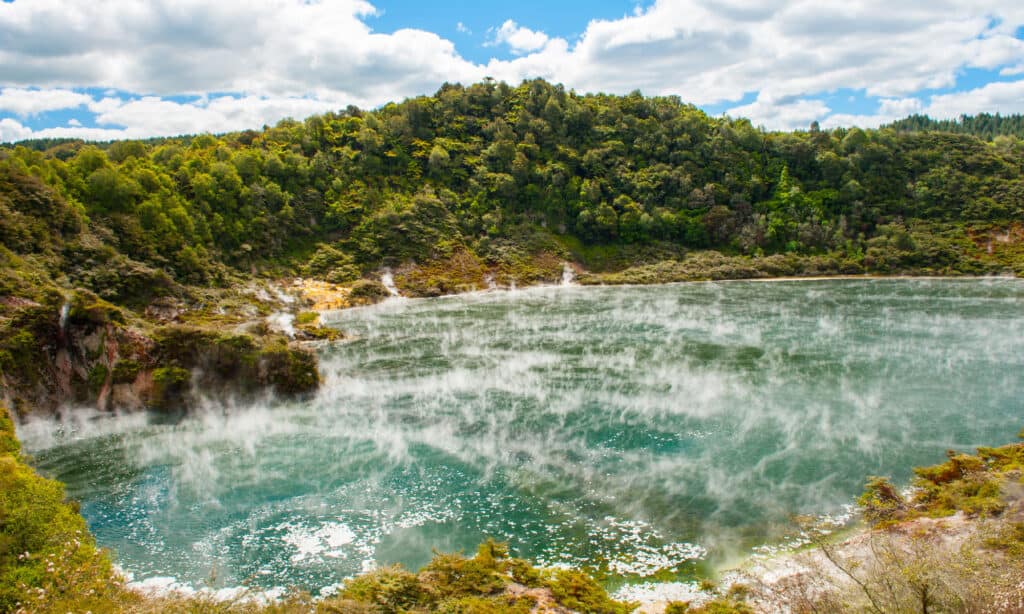
Frying Pan Lake

Tuataras are endemic to the islands of New Zealand

Tuataras can only be found in New Zealand. They currently only live on a few offshore islands and in limited regions of the mainland.

Diet
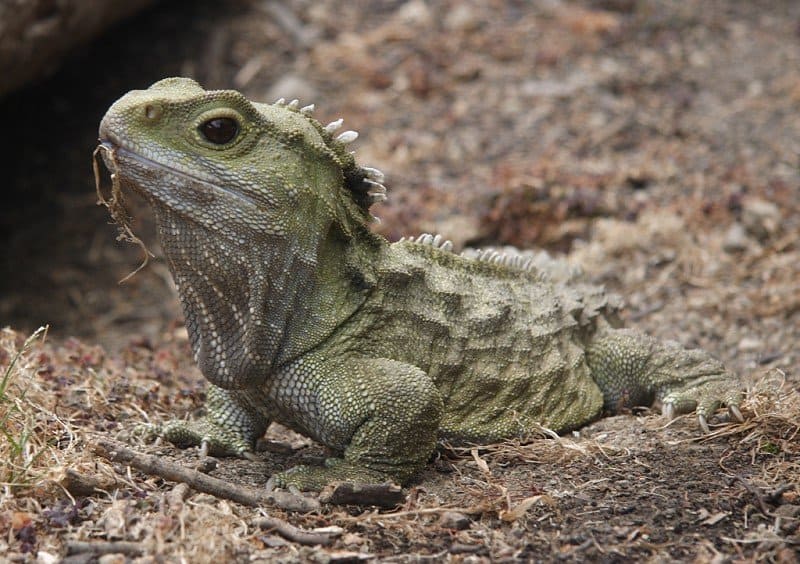
Tuatara on ground

Tuataras primarily eat insects, though their diet consists of a few more unsavory menu items.

Since tuataras are unique in the world of reptiles, many people ask, “What do tuataras eat?”

In this aspect, tuataras are like many other lizards and reptiles of similar size. They primarily eat insects such as beetles, earthworms, crickets, and spiders. When these crawling critters aren’t on the menu, they have also been known to eat snails, frogs, bird eggs, skinks, and even their own young.

Predators and Threats

pack of hunting dogs
Outside pets like cats and dogs are some of the biggest threats to tuatara populations.

Tuataras fluctuate between being classified as an endangered species and being “at-risk” or “vulnerable,” which is a step below that. However, the IUCN recently updated it to be of the least concern due to successful conservation efforts.

The most serious threats to wild tuataras are the mammalian predators introduced to the islands via human settlement. Dogs and rats have had the most serious impact on tuatara populations, but other animals such as ferrets and cats have affected their numbers as well.

Due to the fact that these introduced predators severely decimated the wild tuatara populations in such a short span of time, the New Zealand government declared tuataras and their eggs to be fully protected in 1895. That protection is still in place today, and it is instrumental in preserving their dwindling numbers.

Reproduction, Babies, and Lifespan
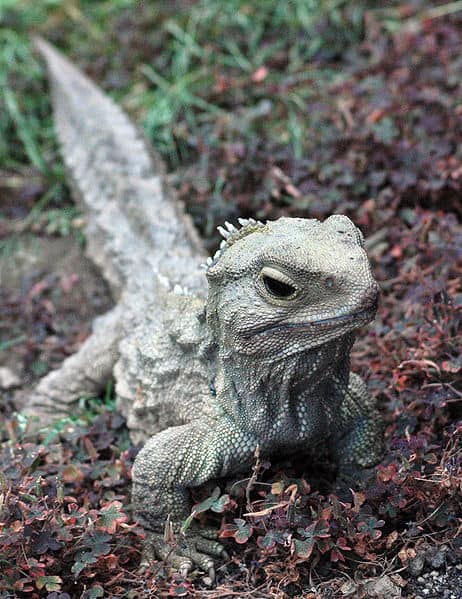
Tuatara in leaves

Tuataras can live incredibly long lives.

Tuataras are not like most reptiles in that they reproduce quite slowly. They have relatively long lifespans of 60 years or more in the wild, and they can live up to 100 years in captivity.

This long life means that they do not reach sexual maturity until they are between 10 to 20 years of age. In addition, they continue to grow until they are approximately 35 years old.

Mating occurs in midsummer and is largely dictated by the females. Males can breed every year, but females typically only breed every two to five years. Males will darken their skin, spread their crests, and wait outside of a female’s burrow in an attempt to impress her. Male tuataras have no external reproductive organs, so they transmit sperm to females by rubbing their cloacas together. This is called a “cloacal kiss.”

Females can store this sperm for up to a year, and they use it to fertilize a clutch that can range in size from a single egg up to 19 eggs. These eggs incubate for well over a year, which is an incredibly long period of time for reptiles. Unfortunately, this long incubation means that tuatara eggs are easy meals for predators.

Tuatara mothers do not stay around to protect the eggs or the babies once they have hatched, so any hatchlings that survive the incubation period are particularly vulnerable and must immediately fend for themselves in terms of food and safety.

An interesting fact about tuatara babies is that the temperature of the incubation nest determines the gender of the hatchling. This is a phenomenon known as “temperature-dependent sex determination.” Researchers noted that eggs incubated at 70 degrees Fahrenheit have an equal chance of being male or female. Eggs that are incubated at 72 degrees Fahrenheit usually end up being about 80 percent male, and nests that are cooled to 68 degrees Fahrenheit are typically 80 percent female. If a nest is cooled to 64 degrees Fahrenheit, all of the hatchlings will be female. 

Population
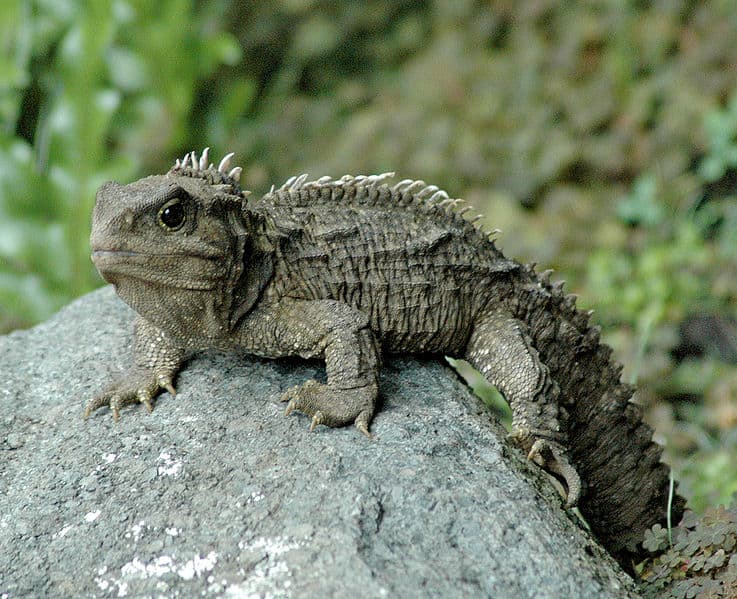
Tuatara on a rock

Tuataras have been classified as of Least Concern on the IUCN Red List.

Currently, tuataras can only be found scattered across small pockets of mainland New Zealand and a handful of rodent-free outlying islands. It is estimated that only about 55,500 tuataras exist in the wild.

In addition to those found in the wild, there are some kept in special sanctuaries and raised in captivity as a part of breeding programs to help boost population numbers.

Due to this, the tuataras are often still thought of as endangered species. However, the International Union for the Conservation of Nature (IUCN) has it listed as least concern because the efforts to remove invasive species have had a strong effect on the well-being and future of the tuatara. Although, this means it is reliant on conservation management to survive.

View all 606 animals that start with T

Sources

  1. David Burnie, Dorling Kindersley (2011) Animal, The Definitive Visual Guide To The World's Wildlife / Accessed November 3, 2009
  2. Tom Jackson, Lorenz Books (2007) The World Encyclopedia Of Animals / Accessed November 3, 2009
  3. David Burnie, Kingfisher (2011) The Kingfisher Animal Encyclopedia / Accessed November 3, 2009
  4. Richard Mackay, University of California Press (2009) The Atlas Of Endangered Species / Accessed November 3, 2009
  5. David Burnie, Dorling Kindersley (2008) Illustrated Encyclopedia Of Animals / Accessed November 3, 2009
  6. Dorling Kindersley (2006) Dorling Kindersley Encyclopedia Of Animals / Accessed November 3, 2009
Corinna Cybele

About the Author

Corinna Cybele

My name is Corinna! In my profile photo you can see me with one of my two cats, Bisky! The other's name is Yma and she's a beautiful black Bombay kitty. I'm 24 years old and I live in Birmingham, AL with my partner Anastasia and like to spend my free time making music, collecting records and reading. Some other animals I've owned were a hamster, 2 chihuahuas and many different kinds of fish.

Thank you for reading! Have some feedback for us?


Tuatara FAQs (Frequently Asked Questions)

A tuatara is a medium-sized reptile that can only be found in New Zealand.