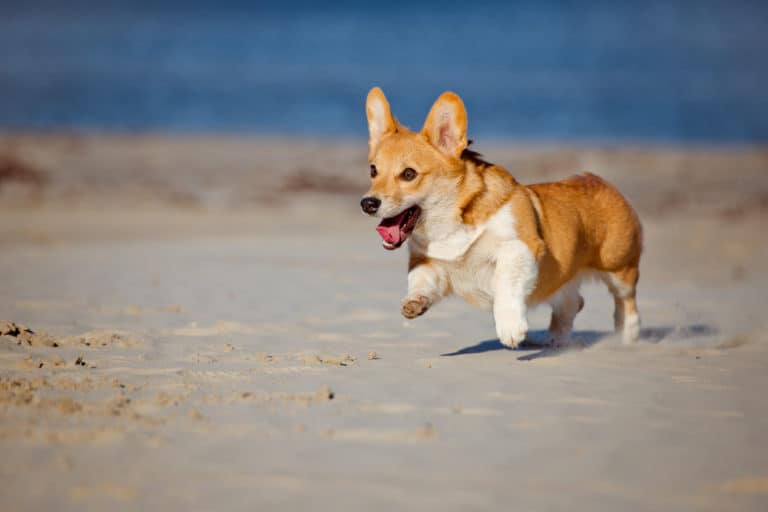
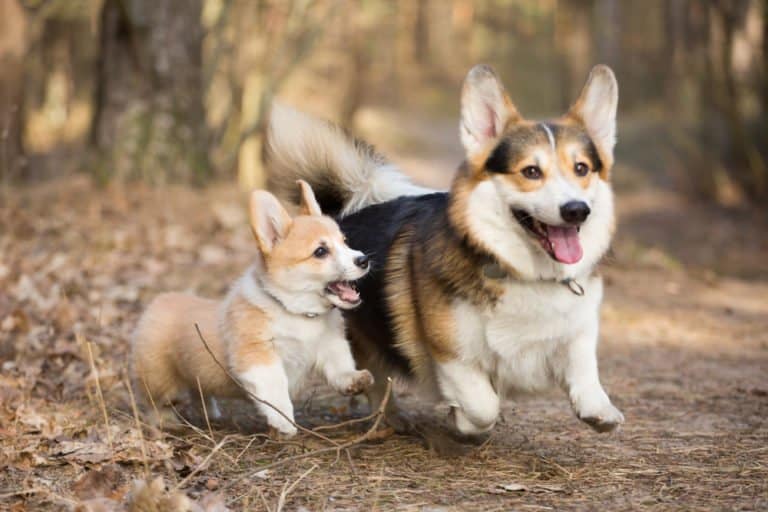
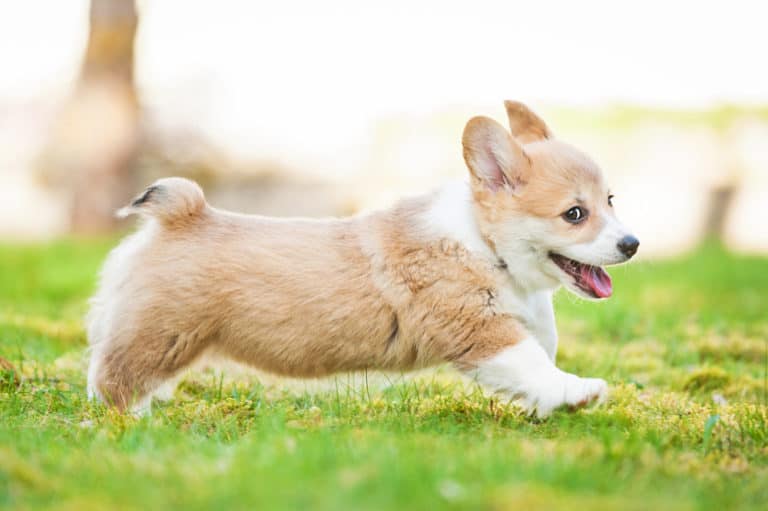
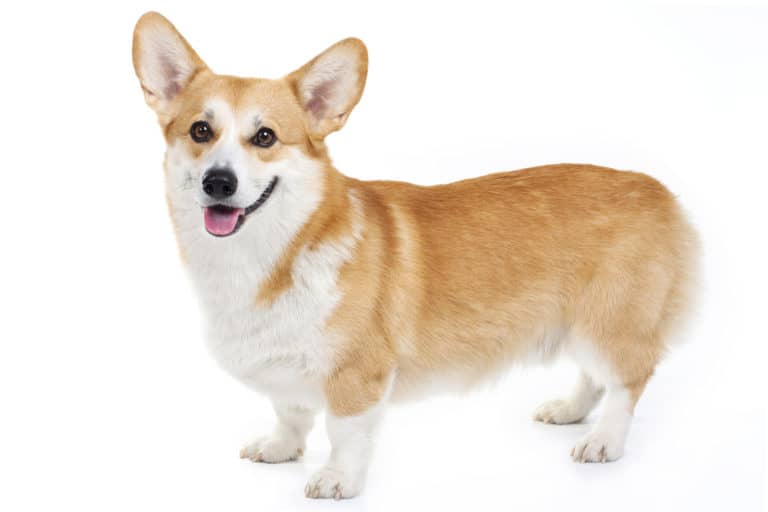






The Welsh corgi is a small herding dog that probably originated from the countryside of Wales sometime before the year 1000 AD. Its small size is well-suited for nipping at the heels of cattle or sheep to herd them around their grazing lands or into pens. The breed can be identified by its short but powerful legs, big black eyes, compact body, and long ears relative to body size.
Types
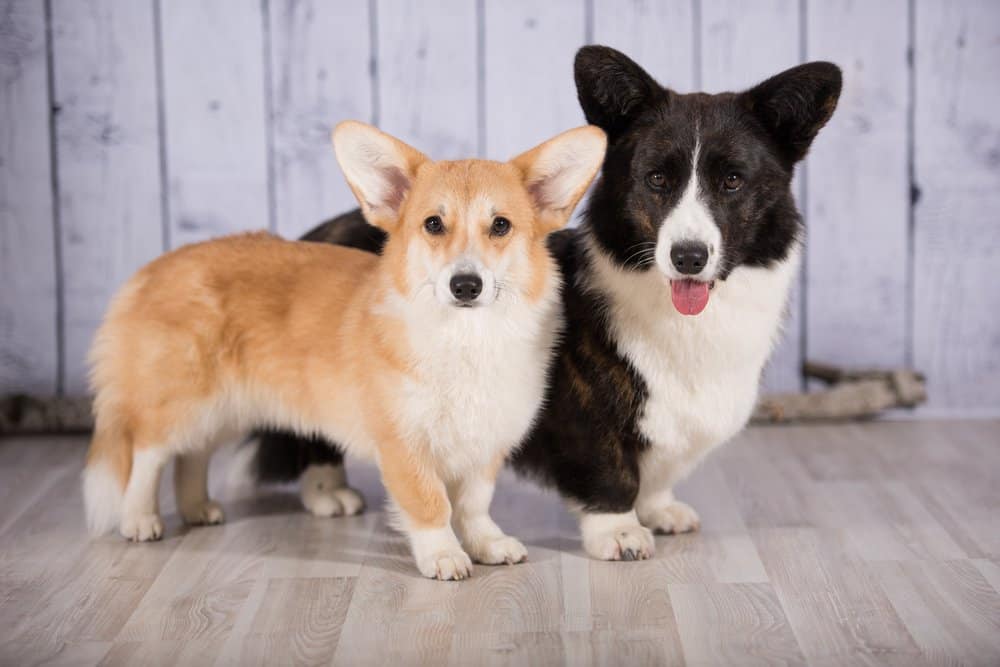
The two main types of corgis have different origins.
©iStock.com/volofin
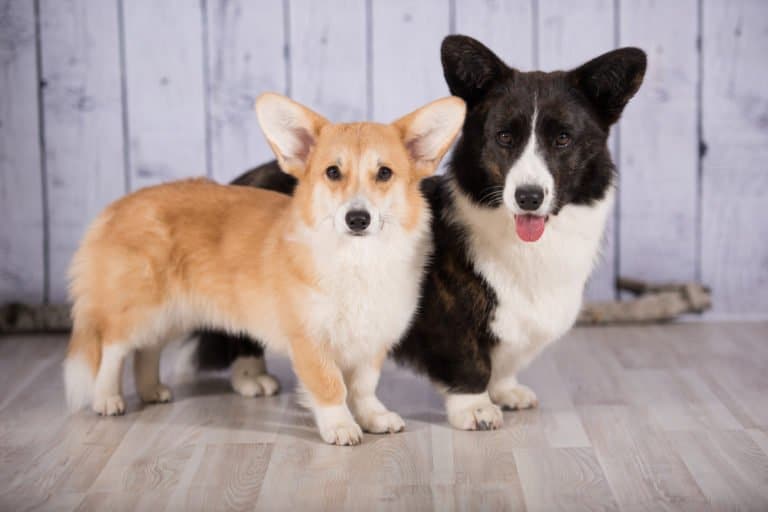
There are two types of Welsh corgi, and the main differences between them are their coloration, size, and bone structure.
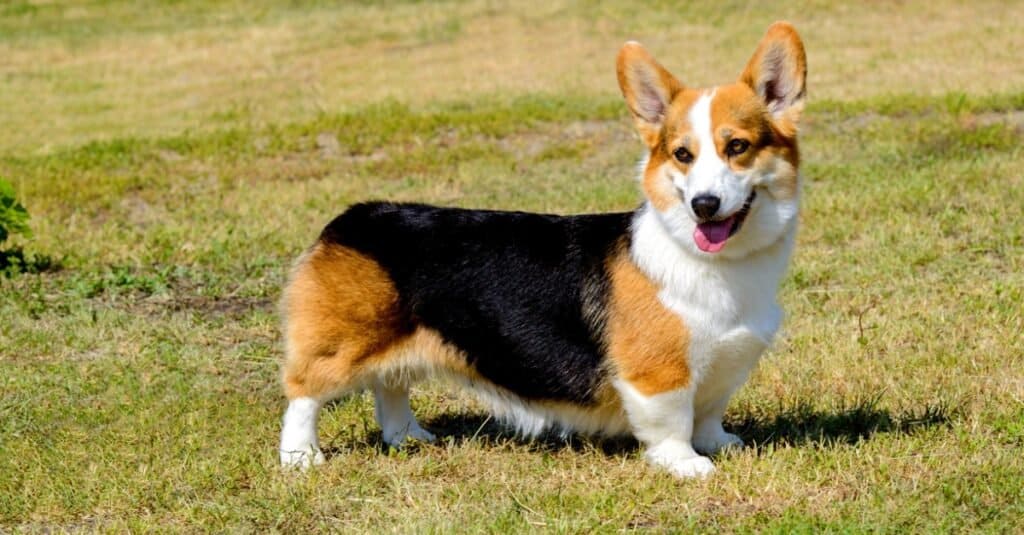
- Pembroke Corgis: Popularized by Queen Elizabeth II, Pembroke corgis are somewhat smaller and slighter than Cardigan corgis. They come in three main colors: red, sable, and tricolor splashed with white.
- Cardigan corgis: Possessing a heavier build compared to corgis of the Pembroke variety and a long bushy tail, Cardigan corgis also have a similar coat pattern to the former group of canines. However, they have a greater variation of color, including black and white, blue merle, brindle and white, red and white, sable and white, and tan and white.
According to the American Kennel Club, the Pembroke corgi is the 13th most popular breed in the country (the Cardigan ranks at 68). The breed is also popular in the United Kingdom.
Owning a Welsh Corgi: 3 Pros and Cons
| Pros | Cons |
|---|---|
| A great companion For small dogs, Corgis can have BIG personalities. Corgis are known for being good-natured dogs (albeit with a streak of stubbornness!). They’re generally good with families, although their herding instinct can cause nipping. | BARK, BARK, BARK Corgis are generally regarded as very vocal dogs. Their barking can be in a word — incessant — which can be a problem in dense areas or when neighbors are extremely close. |
| Long, healthy lives Welsh Corgis are a smaller breed that generally lives between 12 and 14 years. While corgis (like all breeds) suffer from some common health conditions, their list of common ailments is lower than many other breeds. | Get ready for shedding Corgis generally shed a lot. The breed has a very thick double coat, which leads to a disproportionate amount of shedding. This shedding will become especially pronounced in the spring and fall. |
| Long, healthy, lives Welsh Corgis are a smaller breed that generally lives between 12 and 14 years. While corgis (like all breeds) suffer from some common health conditions, their list of common ailments is lower than many other breeds. | Watch their weight Like most dogs, Corgis are voracious eaters. This isn’t necessarily a problem, but it does highlight that the breed does need abundant exercise to maintain their weight and health. |
Evolution and Origins
The two distinct Corgi varieties were bred by the Celts and the Vikings.
©Welshea/Shutterstock.com
Corgis actually belong to two distinct breeds: Cardigans and Pembrokes. The clue to their origins can be found in the regions from which they derive their names, Cardiganshire and Pembrokeshire in the southwest and south of Wales, respectively.
In the former, known for its rugged landscapes, Celtic people bred the ancestors of the Cardigans, and the result was a somewhat sturdy, bushy-tailed breed.
The latter breed would come much later — about the first millennium. Brought by the Vikings from Scandinavia, it is actually descended from the Nordic spitz and is known for its clipped tail and lighter bone structure.
For centuries, these pointy-eared pooches with stubby legs and a waddling gait bossed cattle around while also serving as canine pest control squads, as well. Unsurprisingly, they are also known for their tendency to order little residents around, too.
Size
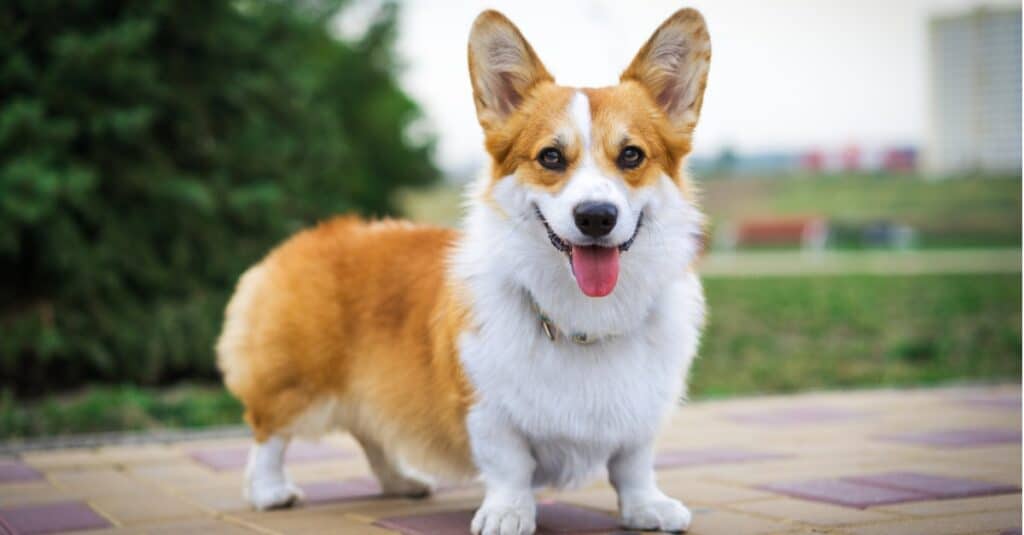
Welsh corgis are capable of weighing up to 38 lbs.
©iStock.com/Ирина Мещерякова
The Welsh corgi is a small-sized dog with a compact frame and short but powerful legs. Males and females are approximately the same size, but males tend to weigh more on average. The Cardigan corgi breed is also ever so slightly larger than the Pembroke breed. Here is a breakdown of precise sizes:
| Height (Male) | 10 to 12.5 inches |
|---|---|
| Height (Female) | 10 to 12.5 inches |
| Weight (Male) | Up to 38 pounds |
| Weight (Female) | Up to 34 pounds |
Common Health Issues

Welsh corgis may suffer from back issues.
©Masarik/Shutterstock.com
The Welsh corgi is a healthy breed of dog with generally low rates of bleeding problems, degenerative issues, and hip or elbow dysplasia (which is a limping or gait problem that results from a developmental abnormality in the joints).
However, the breed does suffer from modest rates of cancer, eye diseases, and ear infections. Another potential health issue, due to the corgi’s compact and unique body structure, is back pain and degeneration. You should therefore be careful with letting the dog navigate stairs, beds, and other large gaps on its own.
You can mitigate some of the risk of disease with an early checkup and screen from a vet. However, breeders are generally good at screening for potential genetic or developmental problems before they ever trouble an owner. The typical life expectancy of the Welsh corgi is between 12 and 13 years.
Temperament
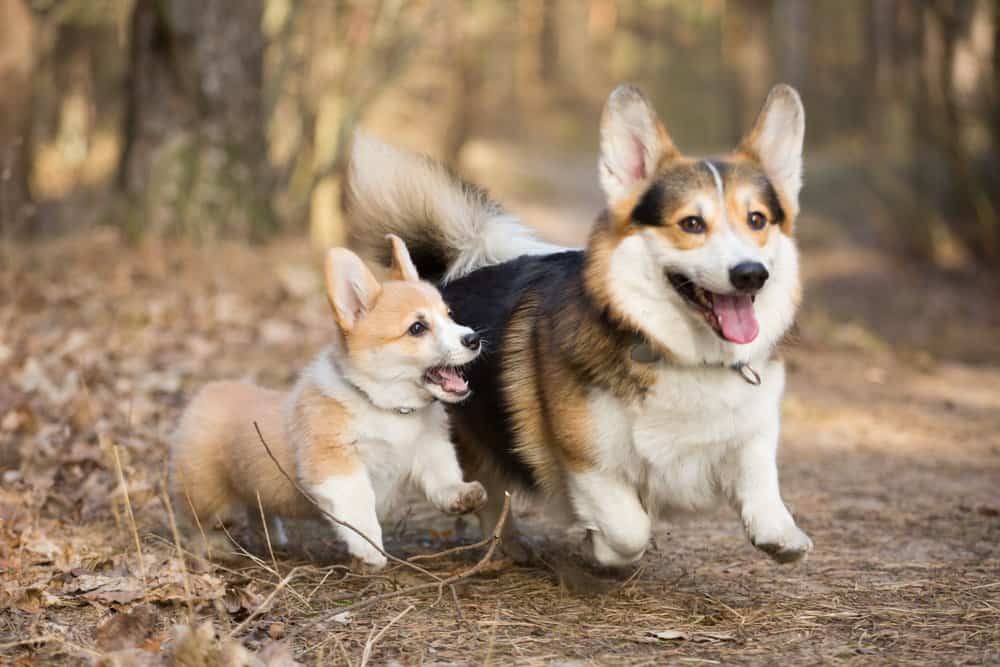
Welsh corgis are affectionate, extremely energetic, and bold.
©Vera Reva/Shutterstock.com
The Welsh corgi is a friendly and playful dog, eager to give its owner plenty of affection. It has an extremely exuberant and outgoing personality that manifests as a sort of manic energy. But although capable of big spurts of activity, a Welsh corgi also sometimes loves nothing more than to lie around the home or curl up on your lap.
Because of its history as a herding dog with sheep and cattle, the Welsh corgi can be a little nippy and barky and also rather fearless and bold, but it is not overly pushy or aggressive in its behavior. The breed is best satisfied when it has some kind of task to carry out, so you should attempt to give it plenty of things to do. Their intelligent behavior marks them out for the performance of tricks and games.
How to Take Care of a Welsh Corgi
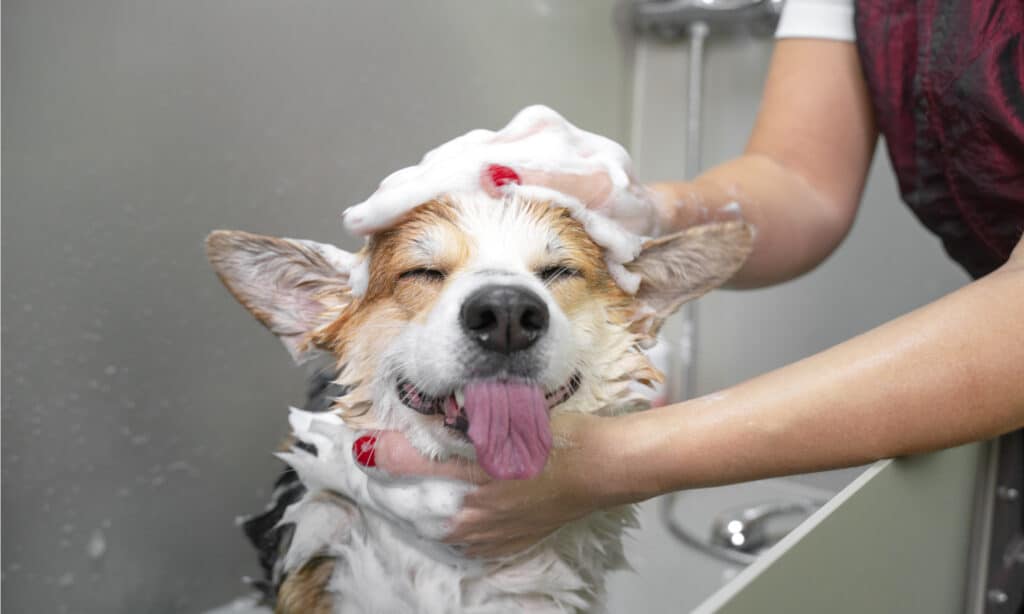
Welsh Corgis require a significant amount of grooming.
©/Shutterstock.com
The Welsh corgi is a somewhat middle-maintenance breed and does require quite a bit of daily work to fully care for its needs. So before purchasing, you should prepare in advance for its food, exercise, and grooming requirements.
Also, make sure your dog has an annual checkup at the vet to look for potential health problems before they can fully develop.
The Best Dog Food for Welsh Corgis

Welsh corgis tend to become overweight.
©RavenaJuly/Shutterstock.com
The corgi requires high-quality dog food to support an active and energetic lifestyle. It is a good idea to feed the dog two smaller meals a day rather than one larger meal to aid in digestion. You can also give your dog treats regularly to reward it for good behavior and obedience, especially when training it for specific behaviors.
But because the corgi tends to become overweight easily, you should carefully manage the dog’s diet to avoid excessive calorie intake. Since they shed a lot, there are some foods on the market designed to help control shedding, though they won’t eliminate the problem completely or substitute proper grooming. Their diet is something you should discuss with your vet in more detail.
Welsh Corgi Maintenance and Grooming
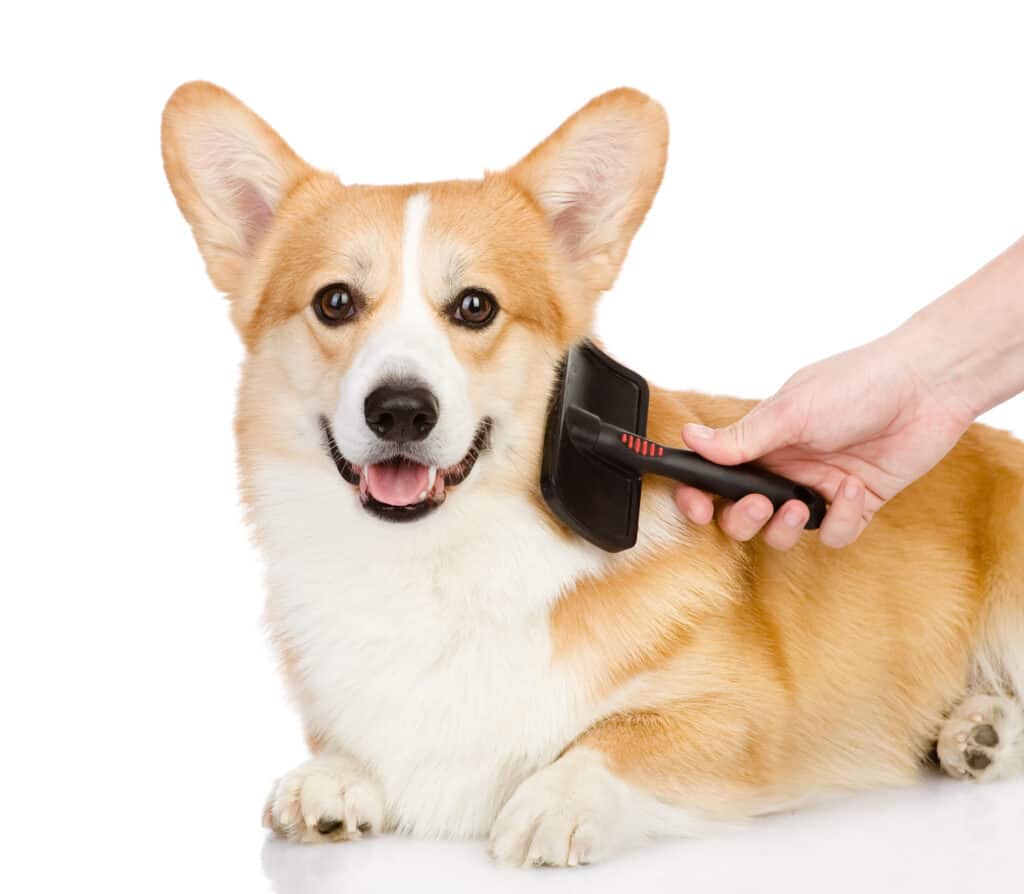
Welsh corgis require weekly brushing and showers because they shed regularly.
©Ermolaev Alexander/Shutterstock.com
Before buying a Welsh corgi, you should be prepared to set aside a modest amount of time for the dog’s maintenance and grooming. Because of its regular shedding, a weekly brushing, sometimes accompanied by a bath to loosen excess hair, should be sufficient to keep this breed looking nice and healthy, though make sure it is dry before brushing. You may need to brush more often during the times of the year with excess shedding.
The nails can get rather long and should be trimmed regularly. You should also brush its teeth and clean its ears regularly to prevent possible infections and health issues.
Training
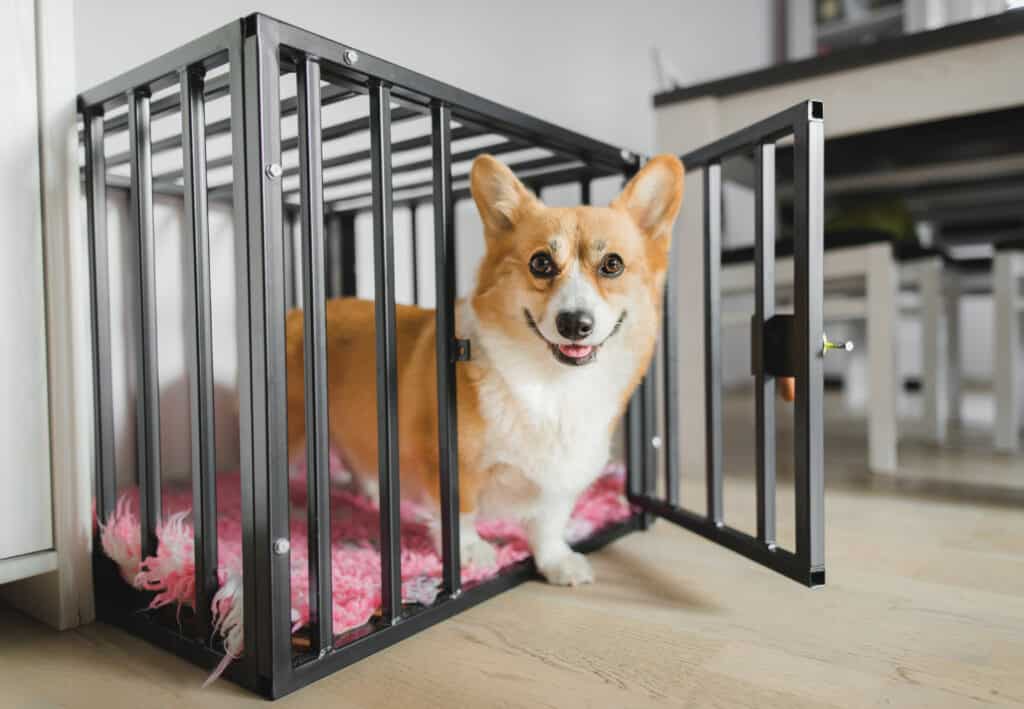
Because of their intelligence, Welsh corgis are easy to train.
©Jus_Ol/Shutterstock.com
Because of its intelligent and loyal personality, the Welsh corgi should take to training with relative ease. It is recommended to provide your dog with training classes and socialization opportunities from an early age, when the dog is most adaptable and compliant. The best time to do this is during its first four months of age.
However, even adult corgis are relatively easy to train for new tricks and behavior. Corgis can be willful and stubborn at times, but positive reinforcement and rewards-based training should allow them to engage with their owner with minimal problems.
Exercise
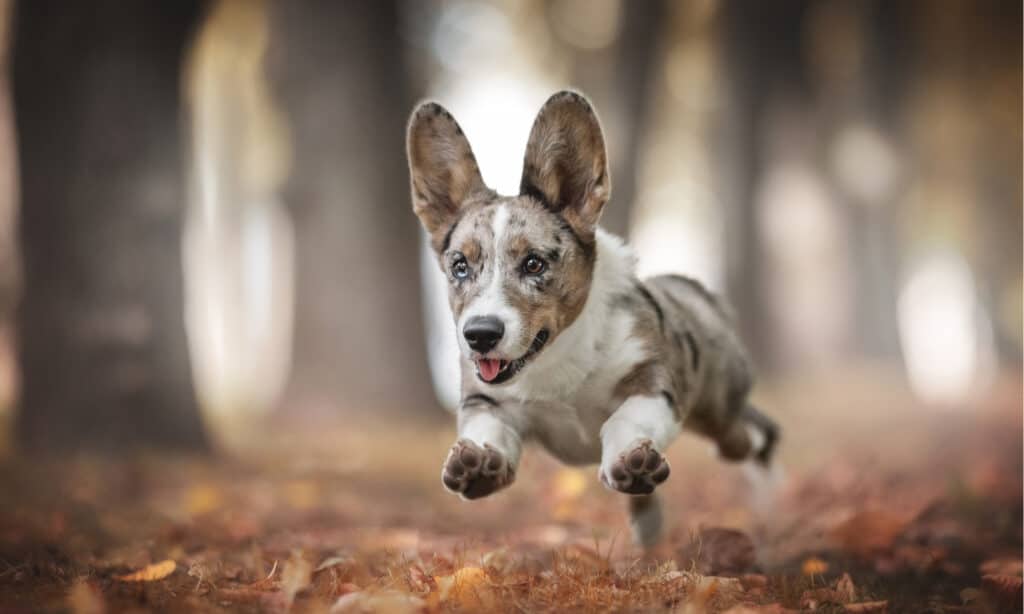
Corgis require daily exercise.
©Liudmila Bohush/Shutterstock.com
Because of its highly active lifestyle, the Welsh corgi does require a modest amount of exercise every day. They are very eager to engage in walking, running, or just playing ball in between longer stretches of rest and relaxation. However, the short legs of the corgi may make it difficult to keep up with a bicycle or a fast running pace. The corgi should not go too long without some kind of exercise with its owner, so you should be prepared to set aside some time every day to keep it active with either you, your family, or a friend.
Because of its herding instincts, the breed does tend to exhibit moments of manic behavior. So if the dog starts to become very excitable by racing around the house, then it might be a signal that you should take it outside to burn off some of that energy with healthy physical activity. One thing to keep in mind is that the corgi should not be exposed to extreme heat or cold. During the summer months, you should keep it properly hydrated and cool to avoid overheating. This breed is quite agile and athletic, so it is not uncommon to see it participate in herding and sports events for dogs.
Puppies
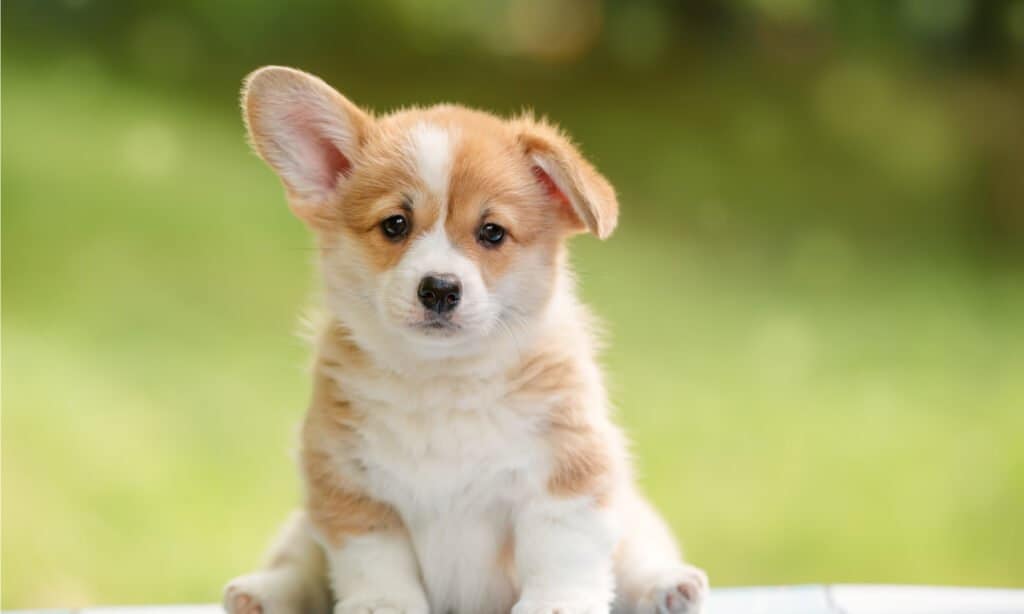
Welsh Corgi puppies are best obtained from reputable breeders.
©Natalia Fedosova/Shutterstock.com
The Welsh corgi is a very good breed to own from a young age, since it is very willing to be trained and socialized. For best results, you may want to acquire the puppy from a well-known and reputable breeder, even though this may be more expensive. This should minimize the chances of potential health or behavioral problems. Make sure the puppy is scheduled to visit a vet for an early checkup to get all of its health affairs in order as soon as possible.
Children
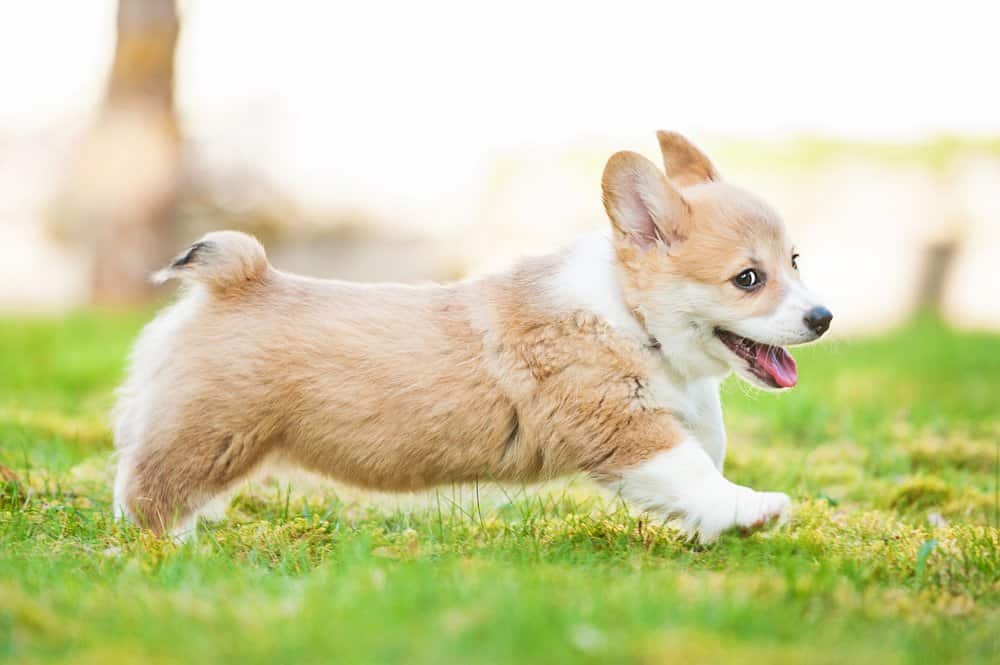
The corgi makes a very good family dog.
©Rita_Kochmarjova/Shutterstock.com
Due to their small size and affectionate personality, this breed gets along very well with babies and children. It has quite a loyal nature that drives it to protect other people. For this reason, the corgi makes for a very good family dog.
However, especially during the first introductions, some form of constant adult supervision is always recommended to prevent any poor interactions between dogs and children that may develop from the dog’s rather excitable and overeager nature.
Dogs Similar to the Welsh Corgi
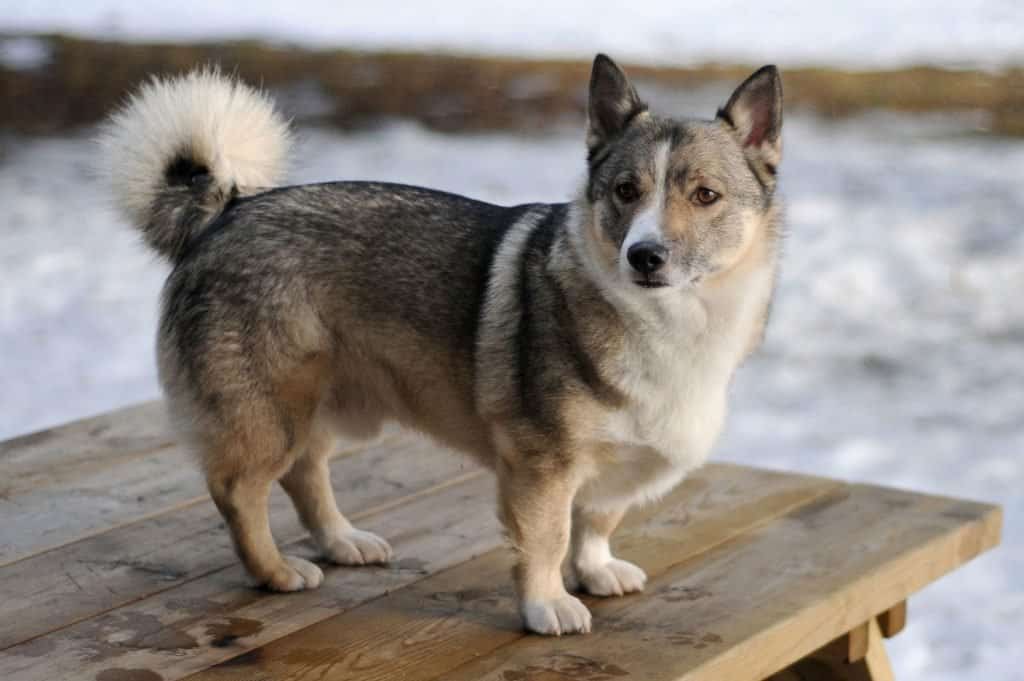
Swedish Vallhunds resemble corgis in temperament and appearance
The Welsh corgi is a unique breed of dog in many ways. However, there are several other breeds with similar characteristics.
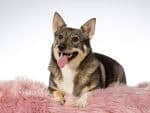
- Swedish Vallhund: With its short legs and stubby body, this herding dog has a similar size and appearance to the corgi. It also exhibits a similarly energetic, playful, and friendly behavior. The hair color can range from light orange to dark gray.
- Beagle: Originating from England, with roots tracing back to the 14th century, this short-haired dog is intelligent, courageous, and loyal, and like the corgi, it makes a good companion for families.
- Boston Terrier: Although very different in appearance from the Welsh corgi, this small-sized dog is nevertheless intelligent, friendly, and easily trainable, though it also has a stubborn streak. Because of its protective instincts for its owner, the breed may also exhibit some aggression toward other people or animals. It is considered to be a quintessential American dog breed.
- Border Collie: The border collie is actually a medium-sized dog, but it has the same herding behavior as the corgi. It is among the most active and intelligent breeds in the world, featuring regularly in sports competitions.
Famous Welsh Corgis
Let’s face it, unlike other dog breeds that might have celebrity owners or media appearances, the Welsh Corgi has the undisputed most famous owner. That, of course, would be Queen Elizabeth II. She has owned dozens of Pembroke Welsh Corgis throughout the years.
- Holly: Was one of Queen Elizabeth’s corgis that was especially beloved and appeared in the London Olympics opening video. Sadly, Holly has since passed away.
- Molly: Is the author Stephen King’s Corgi. He often refers to her as “The Thing of Evil” on social media… But a look at this lovable Corgi would say she’s anything but.
- Rufus: The original “mascot” of Amazon. This lovable Corgi was frequently in the office in the e-commerce giant’s early days and passed away in 2009.
Welsh Corgi Pictures
View all of our Welsh Corgi pictures in the gallery.

otsphoto/Shutterstock.com
Sources
- David Burnie, Dorling Kindersley Animal, The Definitive Visual Guide To The World's Wildlife / Accessed November 11, 2008
- Tom Jackson, Lorenz Books The World Encyclopedia Of Animals / Accessed November 11, 2008
- David Burnie, Kingfisher The Kingfisher Animal Encyclopedia / Accessed November 11, 2008
- Richard Mackay, University of California Press The Atlas Of Endangered Species / Accessed November 11, 2008
- David Burnie, Dorling Kindersley Illustrated Encyclopedia Of Animals / Accessed November 11, 2008
- Dorling Kindersley Dorling Kindersley Encyclopedia Of Animals / Accessed November 11, 2008
- AKC / Accessed October 17, 2020
- Doggie Designer / Accessed October 17, 2020
- Rover / Accessed October 17, 2020