
Quick Take
- Scientists state that crocodilians can all move at about the same speed, which is no greater than 11mph.
- It is uncommon for alligators to chase humans, but an alligator might chase a person if it feels threatened or provoked.
- As long as they are 30 feet away, the average healthy human could likely outrun an alligator.
Alligators are large, predatory reptiles. However, they prefer small prey and typically do not chase large mammals, especially on land. This is why unprovoked alligator attacks are rare. However, an alligator might chase or bite a person if it feels threatened, is territorial, or is protecting its nest. Alligators are most active between dusk and dawn, and attacks often occur near the water’s edge during these times. Encounters are more frequent from April through June, since this is when alligator courtship and mating occurs. It’s best to avoid alligators whenever possible and keep your distance from them. But how fast can an alligator run, and can a human outrun an alligator? Read on to find out.
How Fast Can An Alligator Run?
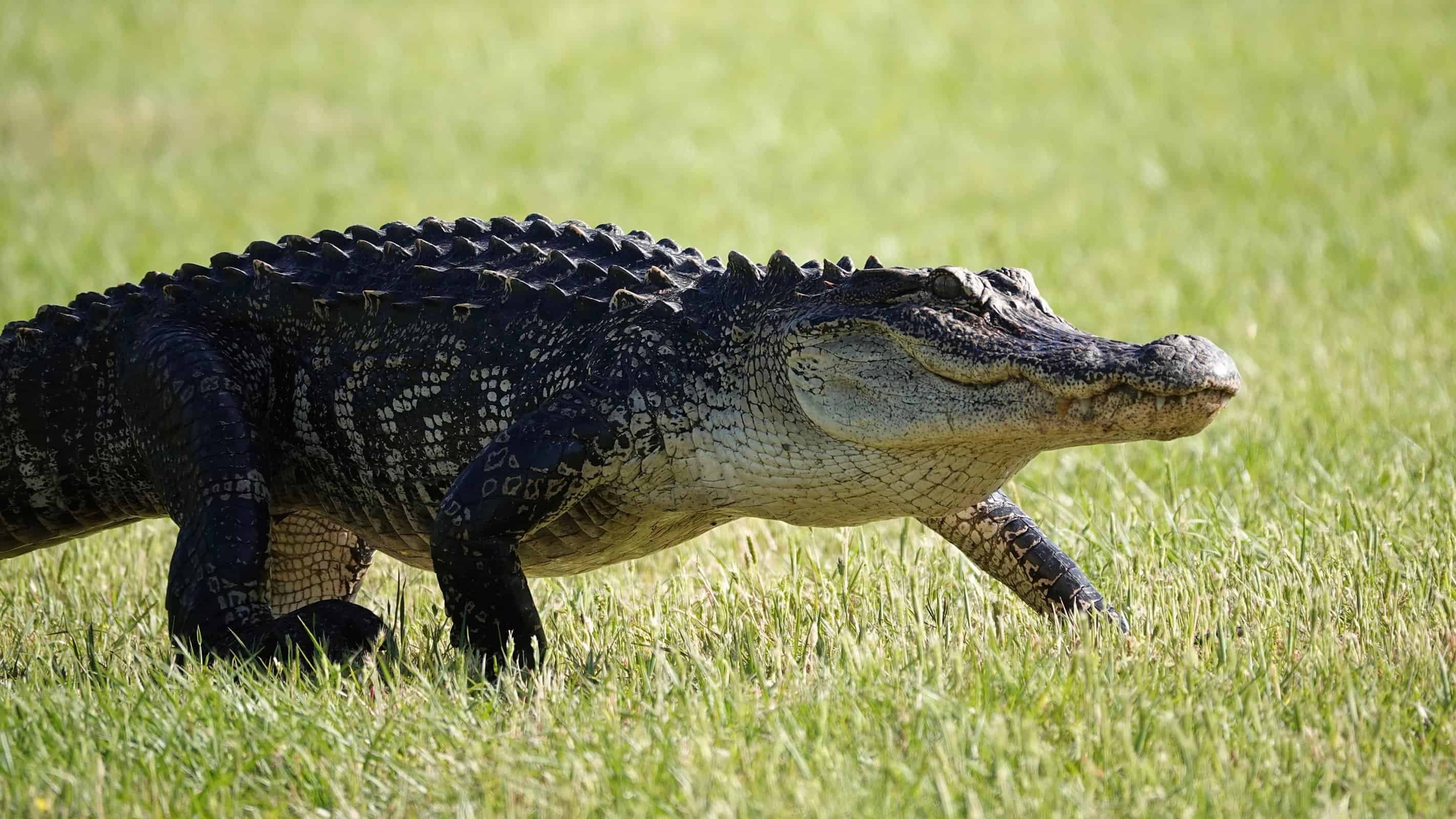
How fast are alligators? Alligators can run up to 11mph. Although some sources claim they can run much faster, scientists state that crocodiles and alligators can all move at about the same speed, which is no greater than 11mph. Like crocodiles, alligators can only maintain these speeds in short bursts. Essentially, alligators are only capable of accelerating very quickly over short distances. That is to say, if you’re within 30 feet of an alligator, they can be extremely fast and dangerous.
If you search the internet for a video of an alligator running across a field, you’ll likely be disappointed. However, videos of alligators lunging and grabbing prey demonstrate their impressive speed and power over short distances. Alligators are typically not active hunters that chase down prey. They use a sit and wait hunting strategy and have adapted to make very quick and powerful movements when prey comes near.
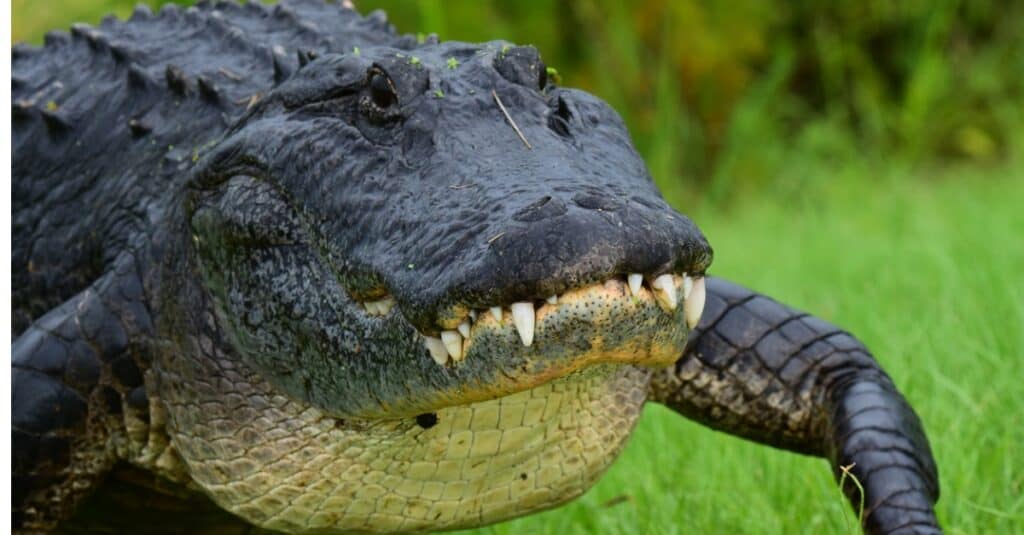
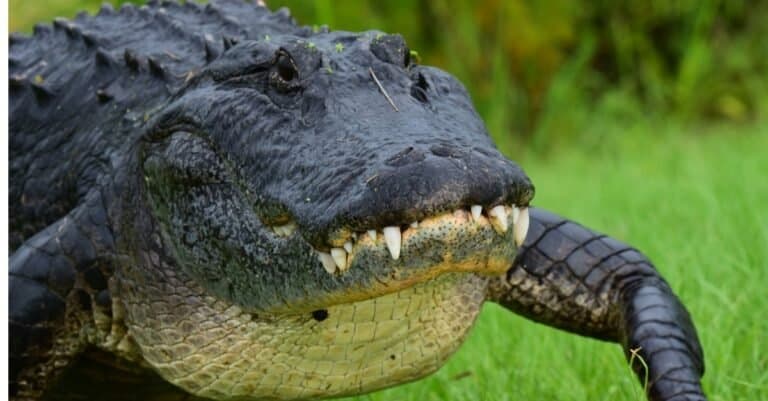
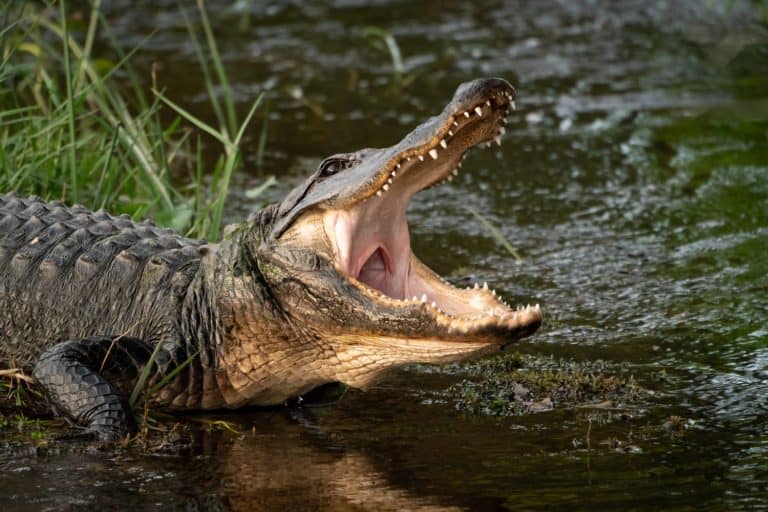
Alligators can run at speeds of about 11 miles per hour, but only over short distances.
©iStock.com/cturtletrax
In cold weather, alligators will even brumate, which is a type of hibernation in which their bodies slow down to survive the chilly temperatures. You may see an alligator in the water with its head or snout poking out, allowing it to breathe as it sits still beneath the surface. When alligators need to move, however, all of that conserved energy serves them well.
Alligator Speed on Land vs. Water
Some sources claim alligators can swim at speeds of up to 20mph, but researchers at the University of Florida note that there are no definitive answers regarding how fast alligators can swim. Crocodiles have been reported to swim around 10mph. As crocodiles and alligators run at the same top speed, it is suggested that alligators may have a similar top swimming speed. Since alligators are not generally active predators, they typically swim at much lower speeds than their maximum speed to conserve energy. One study found that they frequently swim at speeds of under 1mph.
However, if you are in the water, 10mph is still much faster than a human swimmer. Healthy adults average only around 1-3mph. Competitive swimmers may reach speeds of 5-6 mph.
Will Alligators Chase Humans and Can Humans Outrun Them?
Alligators may chase people either in the water or on land. However, it is uncommon. Alligators prefer easier prey than humans and are more likely to eat small animals such as fish, birds, frogs, turtles, snakes, or small mammals. Avoid swimming, wading, or walking nearby waters where alligators live or swim, especially at dawn and dusk — their most active times of the day. Do not walk your dog along the water’s edge either, as dogs are the size of their typical prey.
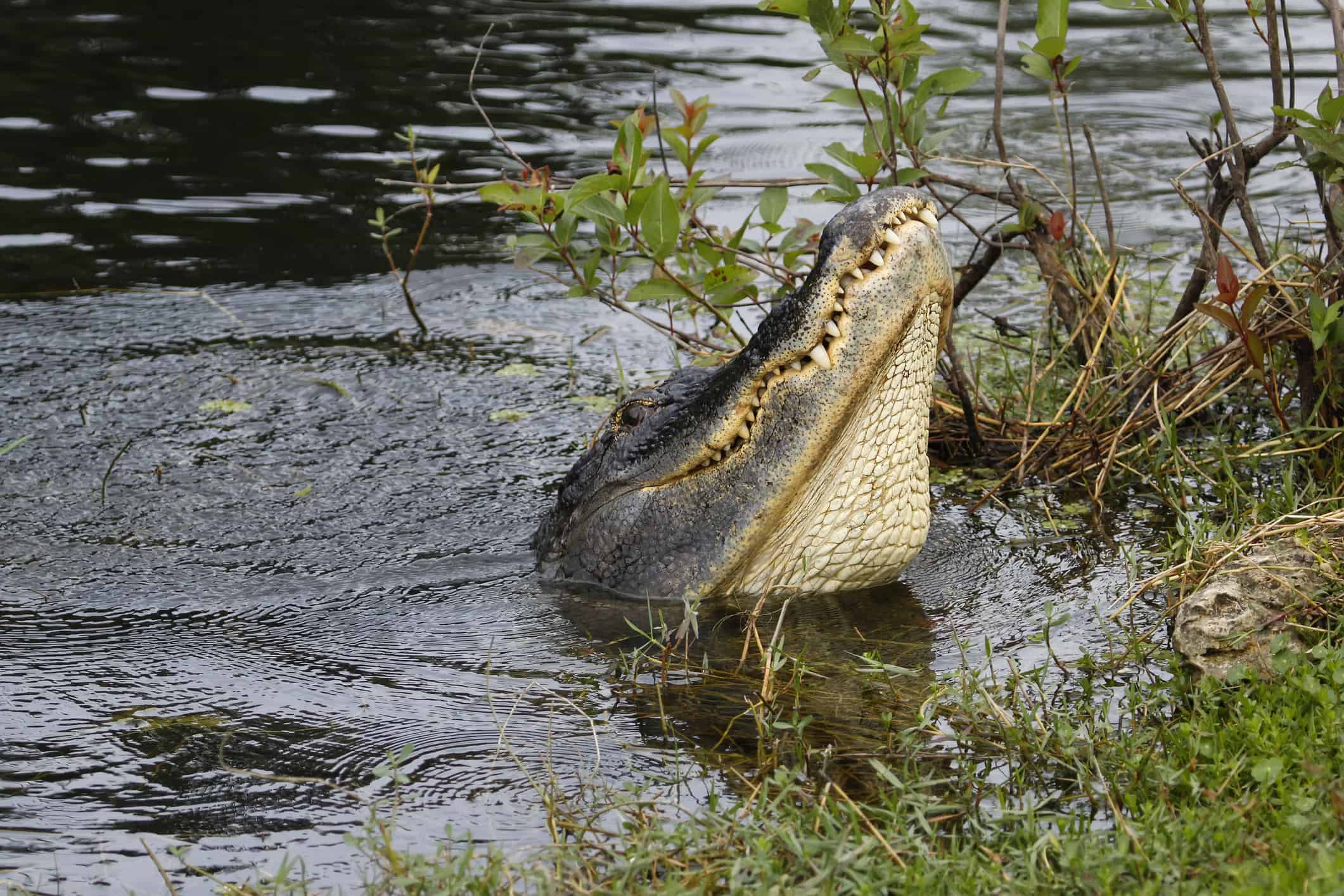
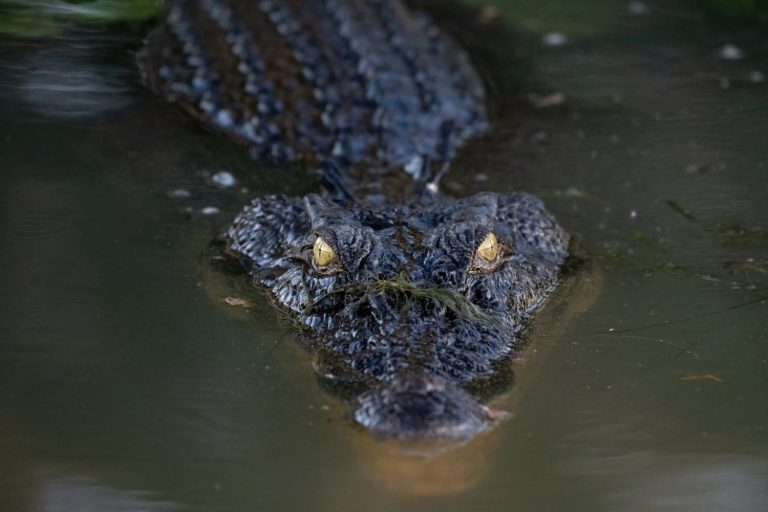
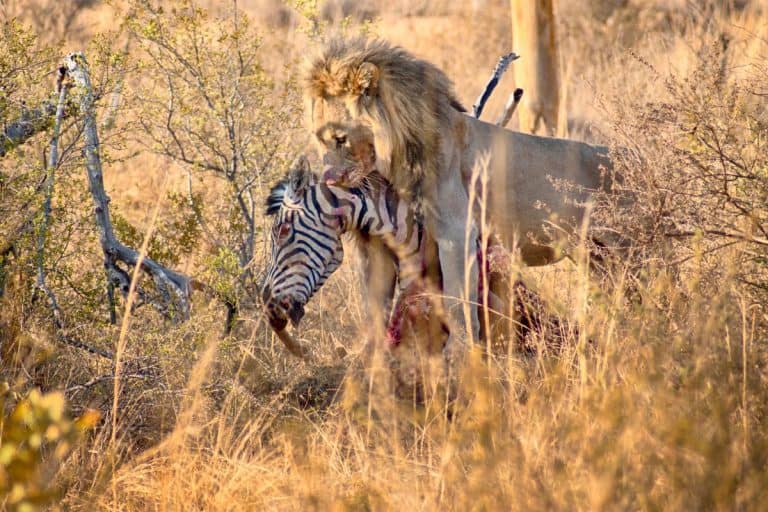
Alligators prefer not to chase prey, they use a sit and wait hunting strategy.
©Donyanedomam/iStock via Getty Images
Most alligator attacks happen when:
- The alligator is hungry or hunting (usually at dawn or dusk).
- Alligators are in their mating season, between April and June.
- A human threatens, tempts, baits, or feeds an alligator.
- Humans approach an alligator nest, which is typically located near the water’s bank.
As mentioned above, an alligator’s top speed is around 11mph. While this may be faster than some humans are capable of, the average sprint speed for a healthy adult is around 12-15mph. As long as you are 30 feet away, you could likely outrun an alligator, as they can only run in short bursts. However, if you are closer than 30 feet, you could be in danger.
What to do if an Alligator Chases You
If you ever see an alligator, or if an alligator hisses at you, you are too close and should slowly back away. They are most likely going to be afraid of you and will try to retreat. Rarely, an alligator will chase or attack a human instead. This sometimes happens if a mother is protecting her nest, a male is looking for a mate, or the alligator is hunting or otherwise desperate for food.
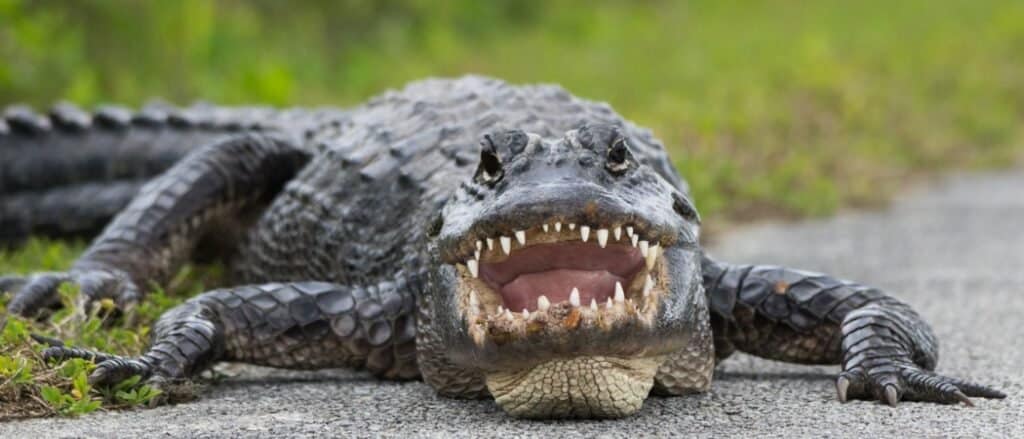
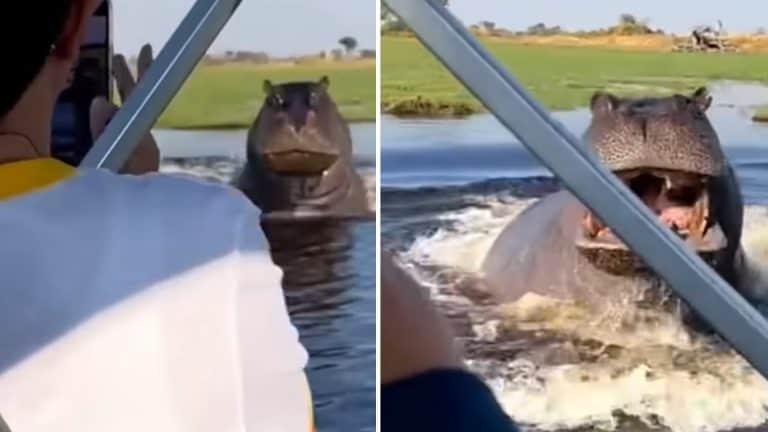
Alligator attacks are rare and most often happen near the water’s edge.
©iStock.com/tobiasfrei
If an alligator chases you, run as quickly as you can in a straight line — don’t zigzag, as this won’t help and can slow you down. If the alligator bites you, fight back and make as much noise as possible. People nearby should also try to scare the alligator away by making loud noises. Once you escape an alligator attack, seek medical attention. All animal bites can become infected easily, especially one from such a large, strong animal.