

Quick Take
- Most owners assume their American Bully is fully grown at one year, but the real development milestone comes later than you'd think. See the full growth timeline →
- Spaying or neutering your American Bully too early could cause physical harm, and the debate over timing is not as straightforward as your vet may suggest. Explore the spay/neuter debate →
- Some American Bullies never calm down for a specific reason, and most owners unknowingly cause it. Find out why Bullies stay hyper →
- Switching your Bully off puppy food at the wrong time can quietly derail their growth, and most people are surprised to learn when the right moment actually is. See when to switch foods →
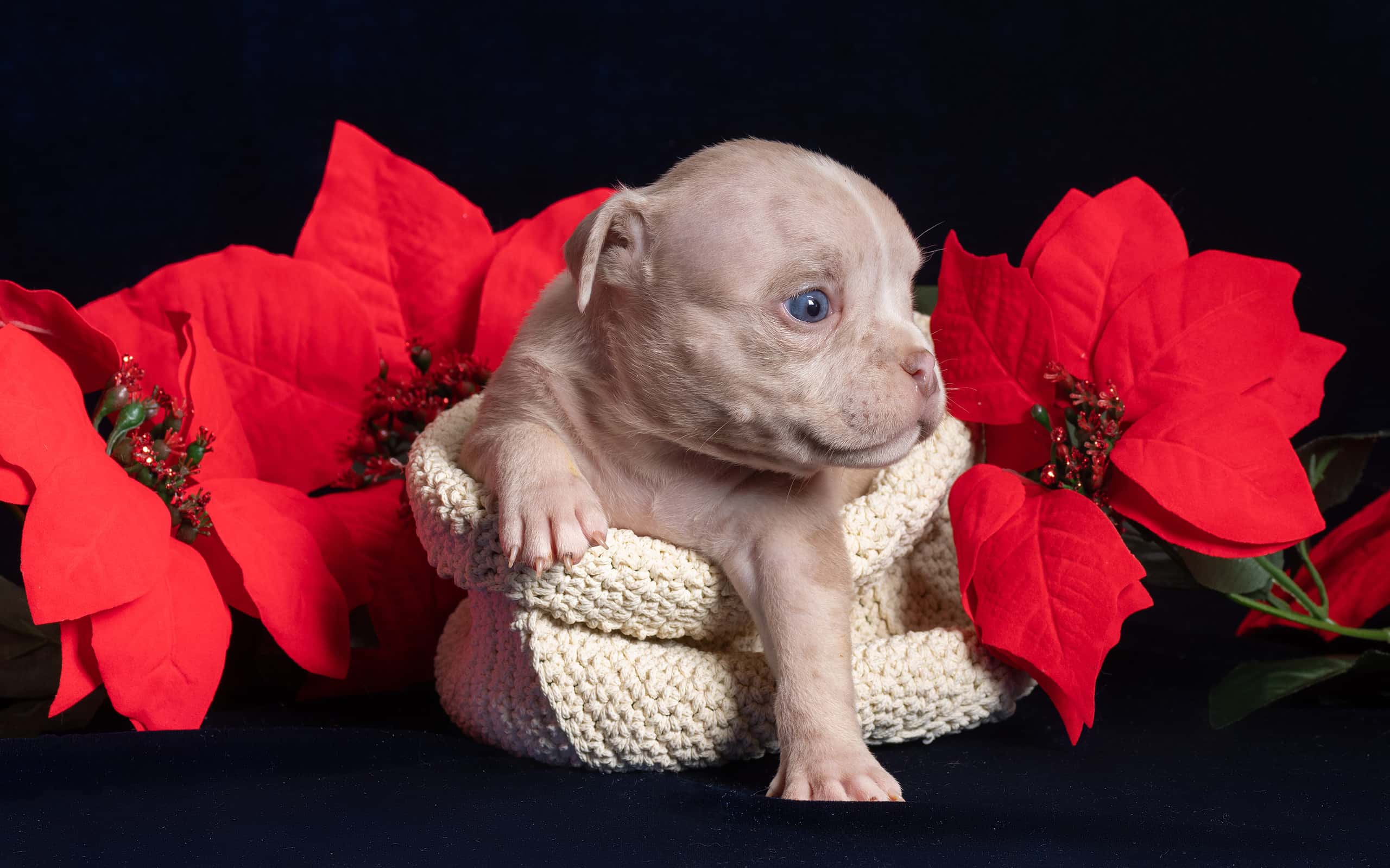
Because the American bully was developed by crossing the American pit bull terrier and the American Staffordshire terrier with various bulldog-type breeds, American bullies are often mistaken for an American bulldog or a pit bull. However, the American bully is its own distinct breed. American bullies have a short, easy-to-care-for coat in a variety of colors. This breed comes in four sizes, categorized by height: standard, classic, pocket, and XL. Some breeders also produce other, non-standard sizes, such as micro and XXL. The American bully is a cherished family pet, valued for its friendly and gentle nature. These pups have moderate to high energy levels and are typically considered a medium-sized breed. We’ll explore the growth milestones you can expect during their lifetime below.

American bullies are often confused with American bulldogs. However, bullies are typically smaller and have a stiffer, glossier coat type.
©Christine Reisner/iStock via Getty Images
When Will My American Bully Stop Growing?
American bullies typically reach their adult height by one year of age. However, they continue to develop muscle mass and bone density until age two to three years, particularly in XL varieties.
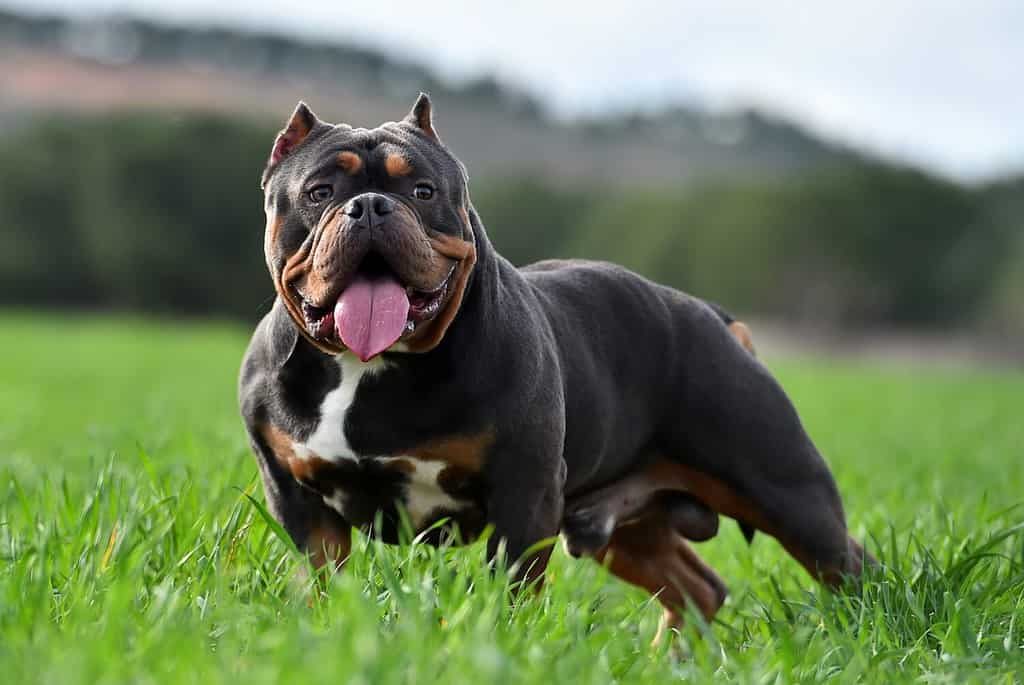
Adult American Bullies have a stocky and sturdy build, and typically weigh between 30 and 85 pounds depending on their size class and sex, with XL varieties reaching 150 pounds or more.
©alberto clemares exposito/Shutterstock.com
Pocket varieties may reach full height sooner than larger ones. However, in all cases, health, nutrition, exercise, and genetics will significantly influence the growth of your pup. A balanced diet is crucial for optimal development.
American bullies require the proper amount high-quality dry food each day, divided into two meals. The exact amount of food they’ll need depends on their size, age, and energy levels. Be aware that different dog food brands will have specific feeding guidelines. Your American bully should also always have access to fresh water.
An American bully puppy requires multiple vet appointments during its first year for wellness care and vaccinations. These visits begin at six to eight weeks of age and occur every three to four weeks until the puppy is around 16 weeks old, completing core booster shots for parvo, distemper, and rabies. After this initial series, they will usually return at six to 12 months for a spay or neuter evaluation and an adolescent check-up, before moving to an annual adult veterinary schedule.
How Big Will My American Bully Be When It’s Fully Grown?
The size of an individual dog can vary, especially based on its diet, lineage, and overall health.
- Pocket American Bully: This is the smallest American bully variety, males stand about 14-17 inches tall, and females are slightly shorter.
- Standard American Bully: The height of the standard American bully ranges from 17 to 20 inches for males and between 16 and 19 inches for females.
- Classic American Bully: The height of the classic American bully ranges from 17 to 20 inches for males and between 16 and 19 inches for females.
- XL American Bully: The largest type, XL males are 20-23 inches tall, and females range from 19 to 22 inches in height.
When Should My American Bully Be Spayed or Neutered?
You should consider spaying or neutering your puppy between four and nine months of age. Doing so can prevent certain health issues and may contribute to a more balanced temperament.
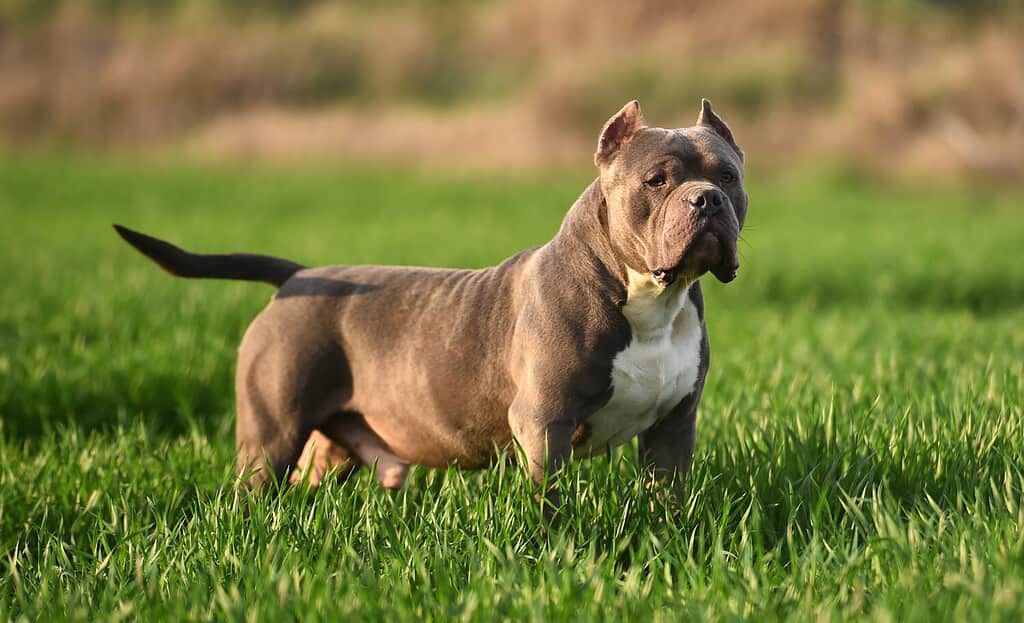
Some vets advise spaying or neutering larger breeds, like the American bully, a bit later in life.
©alberto clemares exposito/Shutterstock.com
Spaying females before their first heat can significantly reduce their risk of mammary cancer.
For males, neutering can decrease the likelihood of prostate problems and testicular cancer.
Additionally, spaying or neutering your dog can help reduce pet overpopulation by preventing accidental litters.
However, the timing will vary based on each dog’s health and needs. It’s best to consult a veterinarian to determine the most suitable age for spaying or neutering your American bully.
When Should My American Bully Be Housebroken?
Begin housebreaking your American bully between nine and 12 weeks of age, aiming for them to be fully trained by the time they’re four to six months old. Practice patience and maintain consistency, taking them outside after meals and naps and rewarding successful bathroom breaks. If accidents occur, clean them promptly with an enzymatic cleaner and avoid scolding your dog.
When Should My American Bully Stop Eating Puppy Food?
American bully puppies should transition to adult food when they reach their full adult size. However, individual growth rates vary, so it’s important to consult your veterinarian for the best timing. Signs that your American bully is ready for adult food include having reached full adult size, no longer growing rapidly, maintaining a healthy weight and body condition, and digesting adult food without issues.
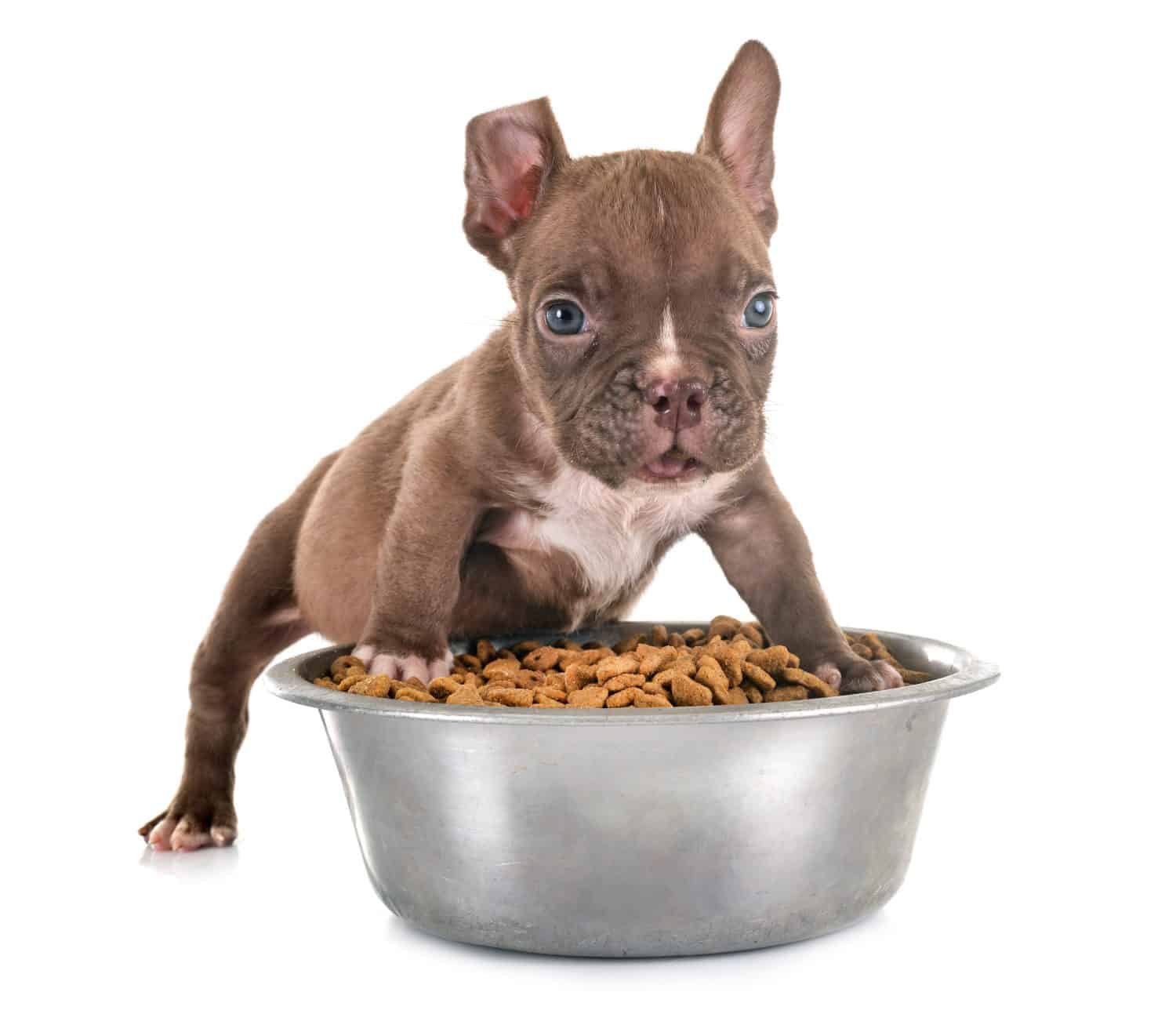
Switching from puppy to adult food is just as important as giving your pup adequate portions of balanced meals.
©cynoclub/Shutterstock.com
Transition them gradually over seven to 10 days, starting with a mix of 25% adult food and 75% puppy food, then gradually increasing the adult food proportion. If you observe changes in appetite, digestion, or stool, consult your veterinarian.
For suggestions on the best dog food according to their age, check out our article Best Dog Food for American Bullies.
When Will My American Bully Start Losing Teeth?
American Bullies will start losing their puppy teeth when their adult teeth begin to come in, usually at four to six months of age. To help manage their discomfort and increased chewing, give them appropriate chew toys to soothe their gums. You can also offer frozen treats, like ice cubes or dog-friendly frozen items, to numb any pain.
Regularly check their mouth for dental issues and maintain good dental hygiene. If you notice any dental problems or if they seem excessively uncomfortable, it’s best to consult a veterinarian.
When Should I Start Training My American Bully?
It’s never too early to start training your American bully. The moment you bring them home, you can begin to establish good habits and prevent undesirable behaviors. Early training is vital for instilling discipline and asserting your role as the dog’s leader. Use positive reinforcement by rewarding and praising their good behavior to foster learning and set clear expectations.
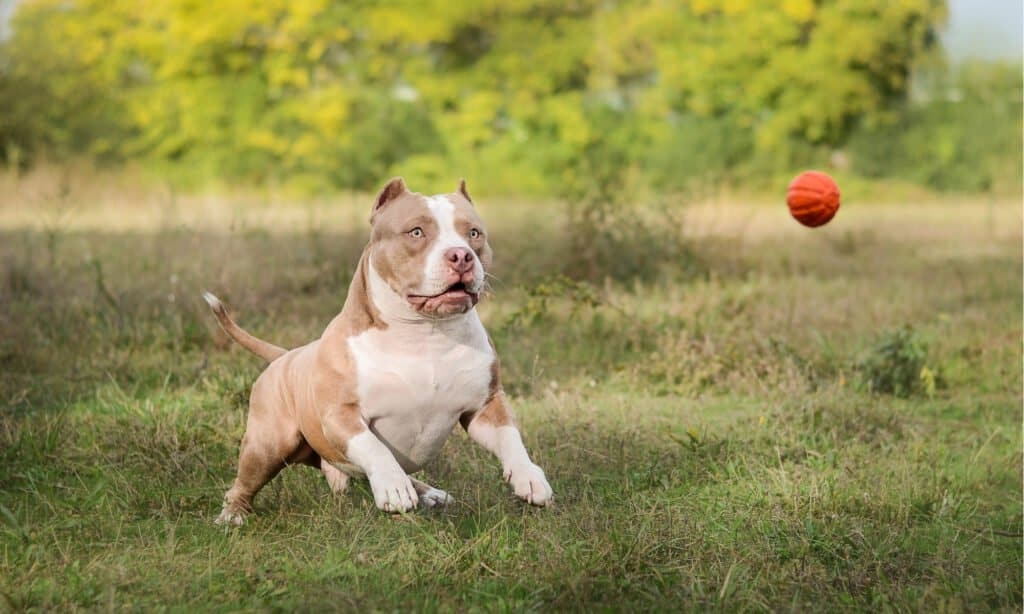
The sooner you start, the better results you can expect!
©Oksamutnaya/Shutterstock.com
Before training sessions, meet your bully’s physical needs by ensuring they get enough exercise, as this will help them focus. Pair this with mental stimulation to prevent boredom and enhance their training experience. Also, try to start socializing them early with different people and dogs. This will help build a confident, well-adjusted adult dog.
You should equip your dog with a robust, well-fitting collar and leash appropriate for their muscular build. Avoid using negative reinforcement tools like choke, prong, or shock collars.
What Cues Should I Teach My American Bully First?
To train your American bully, start with these essential cues:
- Sit: Teach them to sit to stay calm and focused.
- Stay: Once they master sitting, train them to stay put, gradually increasing the duration and number of distractions.
- Down: Progress from sit to down, rewarding them for lying down.
- Come or Here: Use treats to teach them to come when called, gradually increasing distance and reducing treat dependency.
Consistent, engaging, and positive training sessions are crucial for success, making the process enjoyable and effective for both of you.
When Will My American Bully Calm Down?
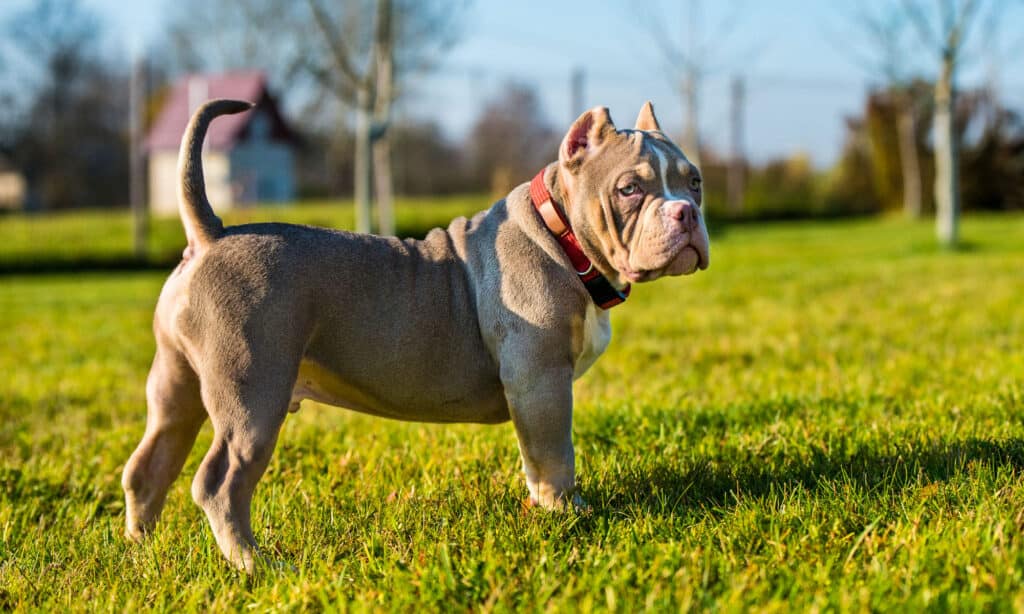
Daily exercise is a must for this medium- to high-energy breed.
©Zanna Pesnina/Shutterstock.com
Regular exercise and mental stimulation significantly affect an American bully’s behavior. It’s important to provide daily physical activity and start early training and socialization using positive reinforcement.
Bullies may remain hyper into adulthood due to:
- Inadequate training and socialization.
- Boredom and lack of attention.
- Insufficient exercise.
- Separation anxiety.
- Hyperkinesis (a condition similar to ADHD in humans).
To manage these behaviors, practice consistent training and patience. If behavior issues persist, consider consulting a professional trainer. Early intervention is crucial to prevent these tendencies from becoming ingrained before the dog matures.
Common Health Issues Your American Bully Might Experience
American Bullies are generally healthy. However, like all dog breeds, they can develop certain health issues over time. Age, of course, greatly influences your pup’s health and well-being.
The most common ailments for this breed include:
- Hip Dysplasia: A condition where the hip joint doesn’t develop properly, leading to pain and arthritis, commonly seen in larger dogs.
- Elbow Dysplasia: Similar to hip dysplasia, but affecting the elbow joint instead.
- Patellar Luxation: The kneecap dislocates from its normal position, possibly due to genetics, injury, or overuse.
- Brachycephalic Syndrome: This syndrome affects dogs with short snouts, American Bullies included. It can lead to breathing difficulties, overheating, and other health issues.
- Eye Problems: American Bullies may also develop eye issues like cataracts, glaucoma, and cherry eye. These conditions are common in most dog breeds.
- Skin Problems: They are prone to allergies, eczema, and seborrhea. In most cases, skin problems can be managed but not cured.
- Hypothyroidism: An underactive thyroid gland causes weight gain, lethargy, and hair loss.
- Heart Disease: Risk of congenital heart defects and cardiomyopathy.
Take your bully for regular veterinary checkups to detect and treat health issues early, especially as they age.
To ensure a long, healthy life for your American bully, follow these steps:
- Feed them a high-quality, nutritious diet.
- Ensure they get adequate exercise without pushing them too hard.
- Maintain a healthy weight.
- Keep their coat, skin, and teeth clean.
Pictures of American Bully as a Puppy
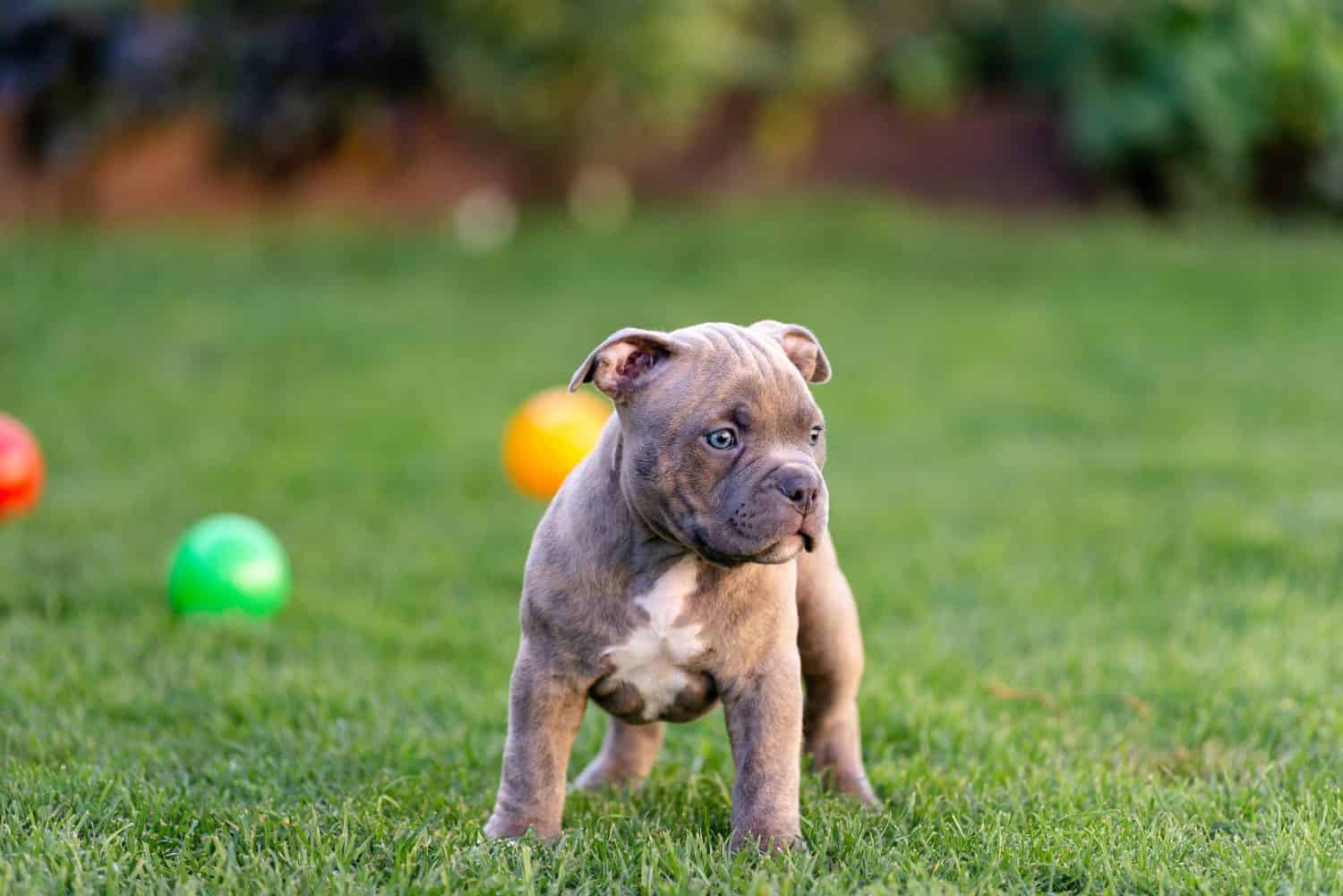
Most people consider American Bullies to be puppies until they are six months old.
©Sushitsky Sergey/Shutterstock.com
Pictures of American Bully at 6 Months
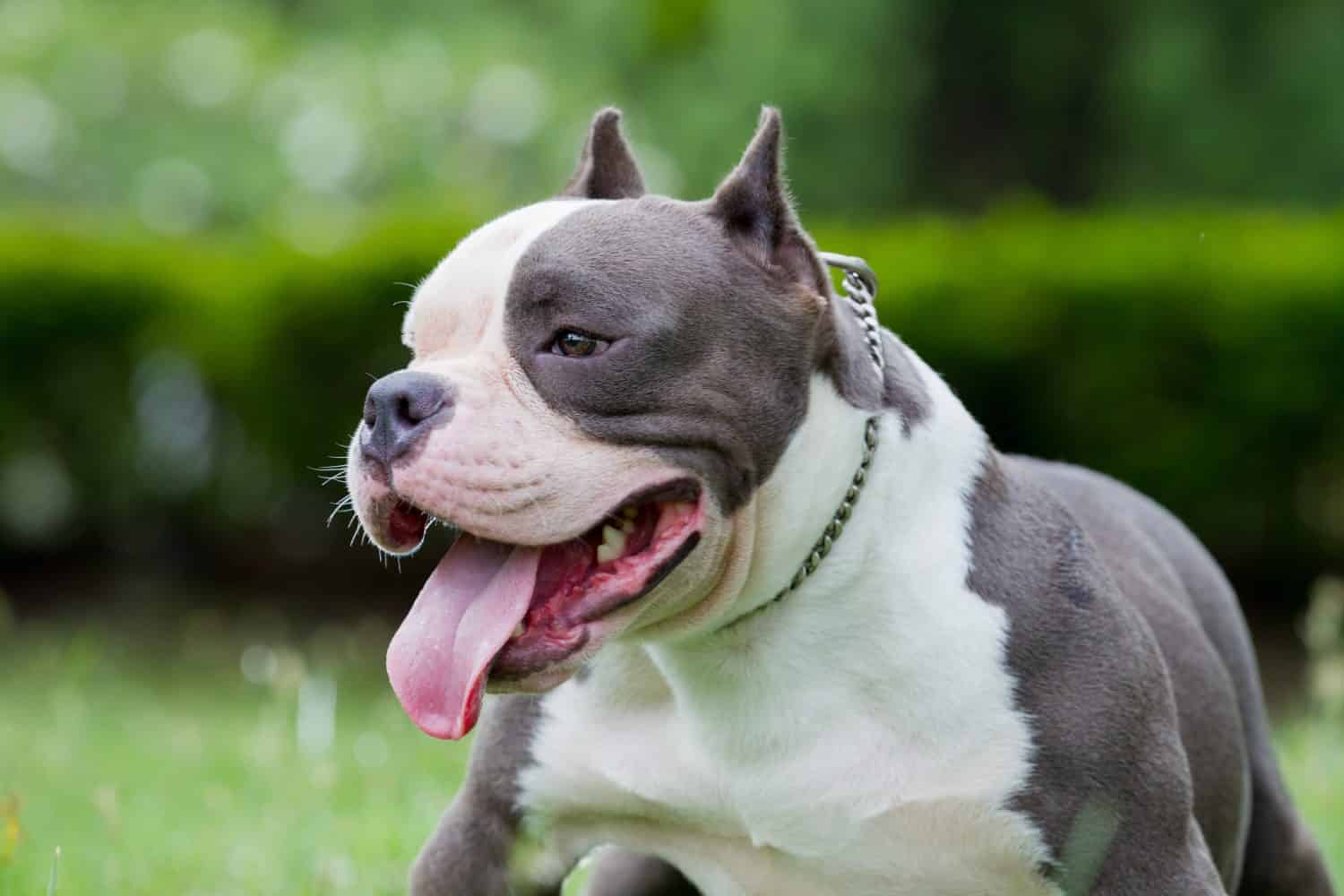
By the time they are six months old, American Bullies reach half of their full, adult weight. However, they have not yet fully lost their puppy look.
©HIRAN NANCHIANG/Shutterstock.com
Pictures of Fully Grown American Bully
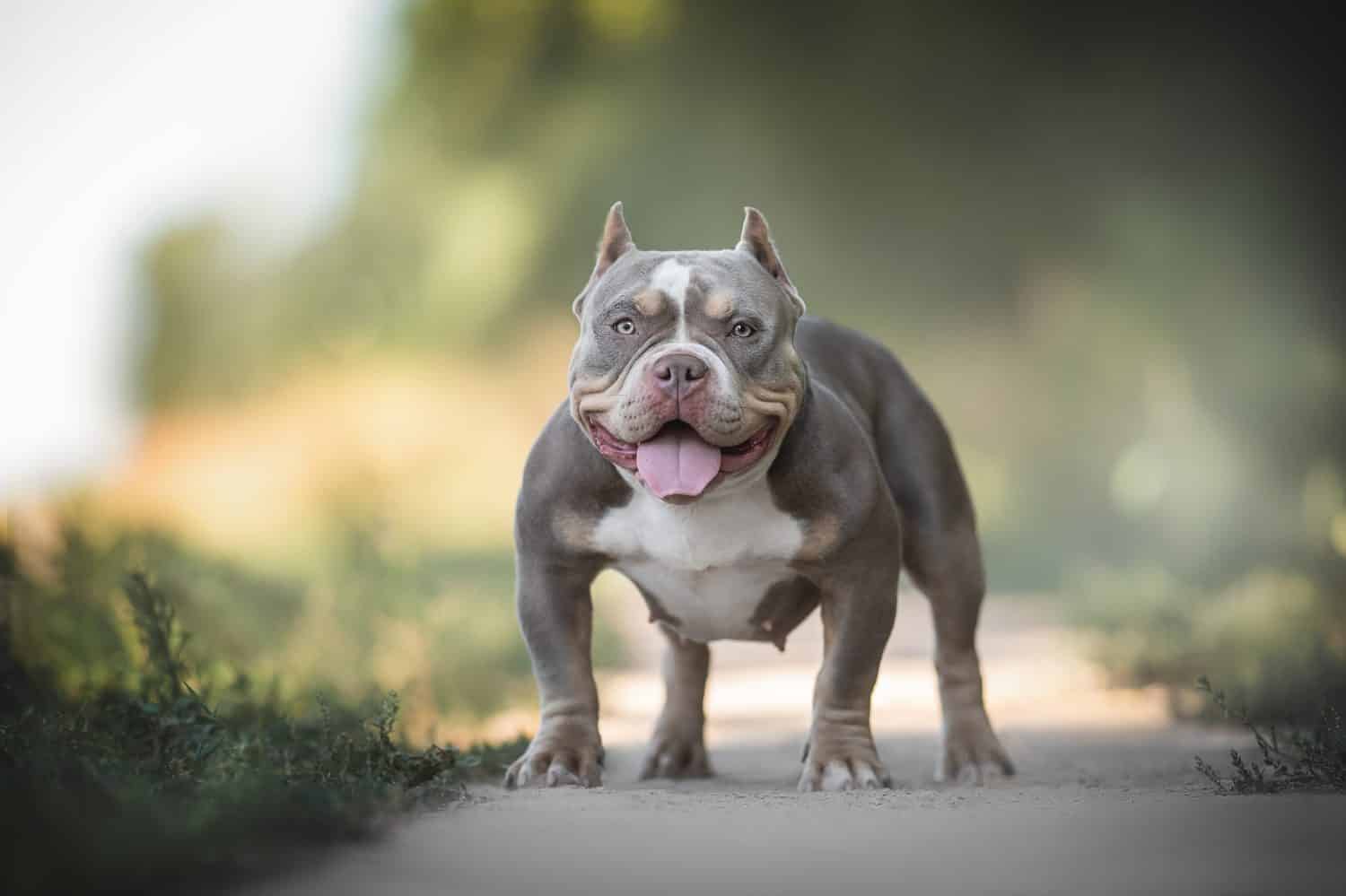
Adult American Bullies have a strong and powerful appearance, no matter which variety they belong to.
©Liudmila Bohush/Shutterstock.com