
Quick Take
- Angelfish don't eat the same things throughout their lives, and it is precisely that dietary shift that makes them so critical to reef survival. Explore the shifting diet →
- Juvenile angelfish have a surprising side job on the reef that has nothing to do with eating plants. See how juveniles help →
- A microscopic reef problem you've probably never heard of is quietly suffocating coral larvae, and angelfish are one of the few things keeping it in check. Discover the bacterial mat defense →
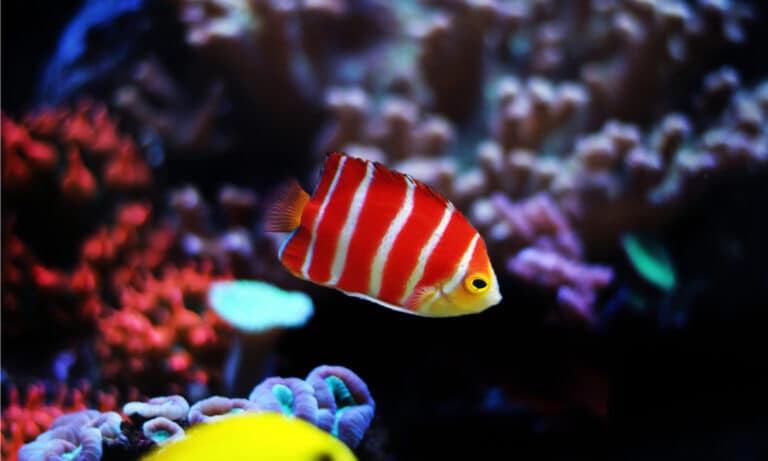
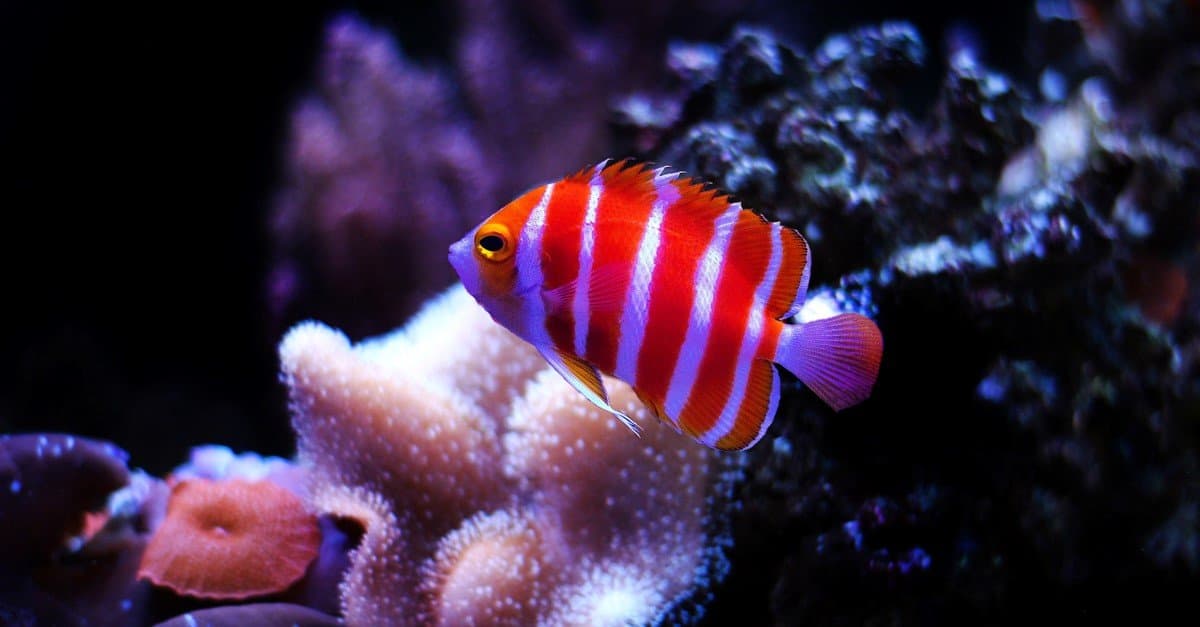
Angelfish are marine fish that belong to the family Pomacanthidae. There are over 80 species of angelfish, typically ranging from around 3 inches to 18 inches or more depending on the species. These fish have a wide variety of color patterns, including yellow, blue, orange, red, black, and white. These perch-like fish generally inhabit shallow reefs in tropical waters. Today, we will be covering the diets and behaviors of marine angelfish.
All About Angelfish
There are both freshwater and marine species called angelfish. Freshwater angelfish belong to the family Cichlidae and are found in South America. They inhabit the Amazon and Orinoco river basins, as well as some rivers in the Guianas. As noted above, marine angelfish belong to a different family, sharing only the popular name with their freshwater namesakes. It’s important not to confuse the two, as they are not closely related.
Marine angelfish are generally found in shallow coral reefs in the warm, tropical waters of the Atlantic, western Pacific, and Indian oceans. However, they are also popular in aquariums. Common marine angelfish you may see in captivity include emperor, king, queen, yellowtail, flame, and blueface angelfish. In the ocean, angelfish rarely swim much deeper than 164 feet. Generally diurnal fish, they spend their active hours during the day feeding or looking for food. They hole up in crevices and holes during the night, hoping to avoid predators.
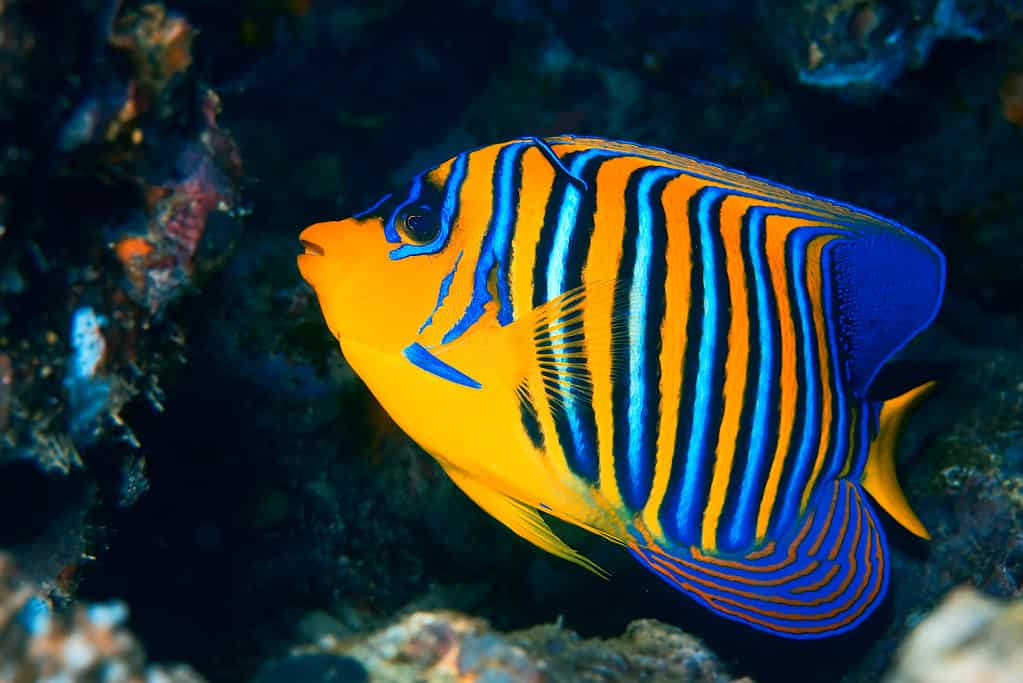
The royal, or regal, angelfish can be found in the the Indo-Pacific Ocean, Northern and Western Indian Ocean, and the Red Sea.
©stephan kerkhofs/Shutterstock.com
The Angelfish Diet
Angelfish are opportunistic eaters, but they do have some favorite foods. Classified as an omnivore, angelfish will eat everything from small plants to shrimp. Since there are so many species of angelfish, their diets will mostly depend on their location and their size, with size being the most important factor of the two. The smallest species of angelfish generally eat foods like algae and plankton. Since those food sources are plentiful, they make up much of a small angelfish’s diet.
As they get larger, angelfish diversify their diets. Medium to large angelfish are known to feed on small invertebrates such as coral polyps, tunicates, bryozoa, and sponges. Jellyfish and hydroids (jelly-fish like animals related to jellyfish) also make up portions of their diet. Larger angelfish consume insects, larvae, worms, and small crustaceans as well.
While there is some variation due to habitat, marine angelfish generally eat the following foods in the wild:
- Algae
- Sponges
- Jellyfish
- Plankton
- Soft corals and coral polyps
- Other small invertebrates such as tunicates and bryozoa
- Jellyfish and hydroids
- Insects and insect larvae
- Worms
- Shrimp and other small crustaceans
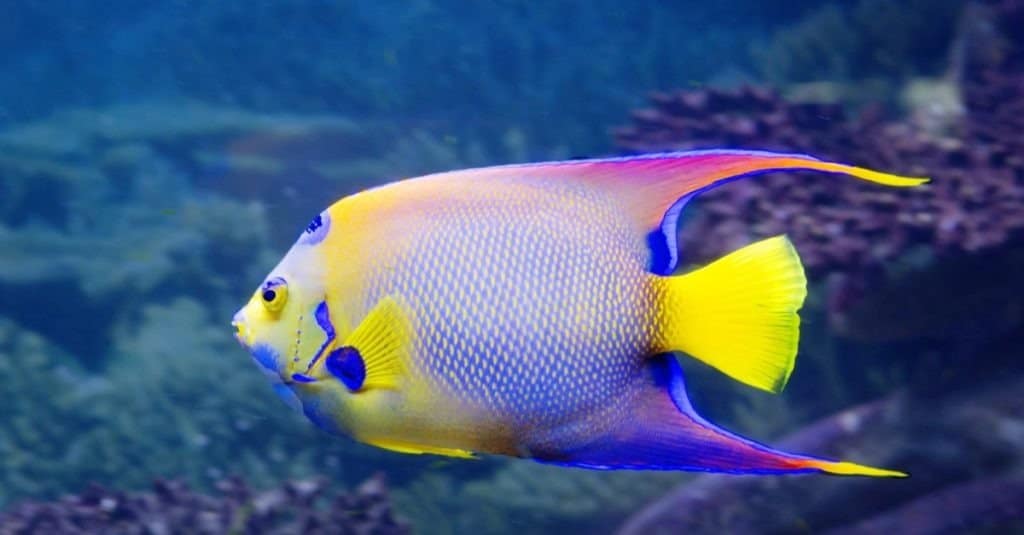
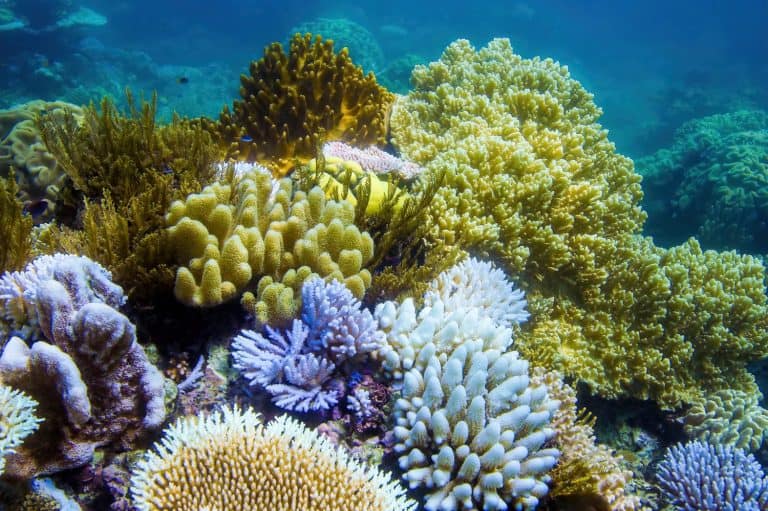
Angelfish help reef ecosystems by controlling algae and sponge populations.
©Galina Savina/Shutterstock.com
How the Angelfish Diet Helps Keep Coral Reefs Healthy
One of the most important roles angelfish play in their ecosystem is to reduce the overgrowth of fast-growing coral, algae, and sponges on a reef. The foraging strategy for many angelfish is simply to forage among the coral reefs, since most of their primary food sources are either slow-moving or totally motionless. Juvenile angelfish, especially French angelfish, clean ectoparasites and loose scales off larger fish, helping keep other organisms in the reef healthy as well.
Researchers have also observed French angelfish eating the bacterial mats in reefs in the Caribbean. While cyanobacteria fix atmospheric nitrogen that supports the growth of other organisms in the ecosystem, too much bacteria can form a mass called a benthic cyanobacterial mat. These mats can interfere with the settlement of coral larvae, resulting in sickness and suffocation of the corals.