

Quick Take
- Arctic wolves break one of the most basic rules of wolf behavior, and the reason why has everything to do with the frozen environment they inhabit. See their cave-dwelling habits →
- An Arctic wolf can go without eating for a shocking stretch of time, though doing so comes with a deadly catch. See how long they can starve →
- Wolf pups are born looking nothing like the adults they'll become, and the transformation is far more dramatic than you'd expect. Explore pup development →
- Only two wolves in an entire pack ever get to mate, and the reason behind this turns out to be surprisingly strategic. See who gets to mate →
Arctic wolves live in Greenland, Alaska, and Canada. Because permafrost makes digging difficult, these wolves use rock outcroppings, caves, or shallow depressions in the ground as dens, rather than digging traditional dens like other types of wolves. Their short noses and small ears help to maintain their body heat on the tundra. The territory traveled by an Arctic wolf can add up to hundreds of miles.

Arctic Wolf Top Facts
- These wolves travel in packs of around seven to ten individuals.
- They live about 7 to 10 years in the wild.
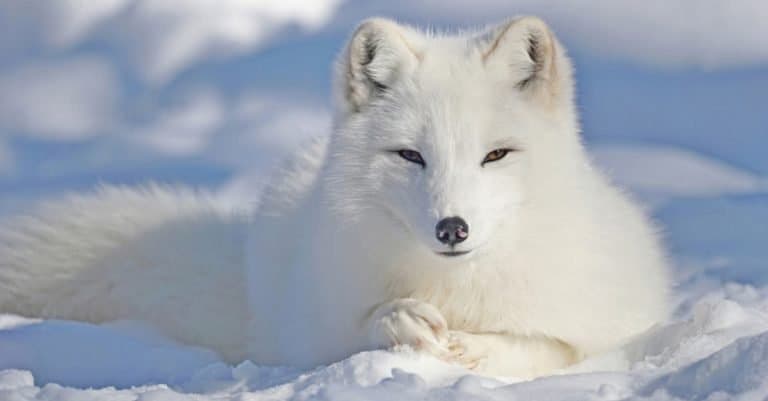
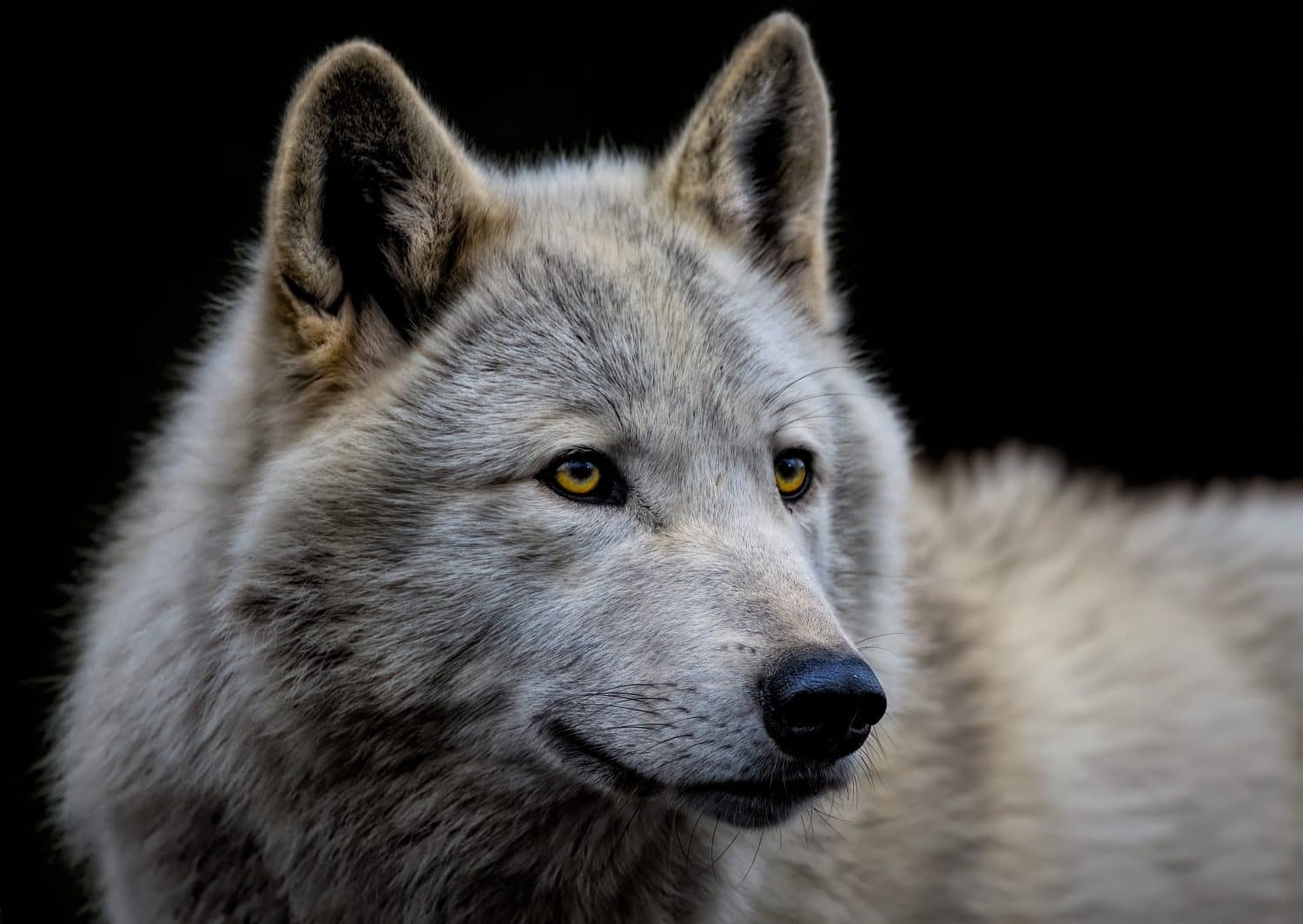
- They have a thick, white coat that’s insulated against very cold temperatures.
- Wolf pups are born with blue irises that change to yellow/gold as they grow older.
Classification and Scientific Name

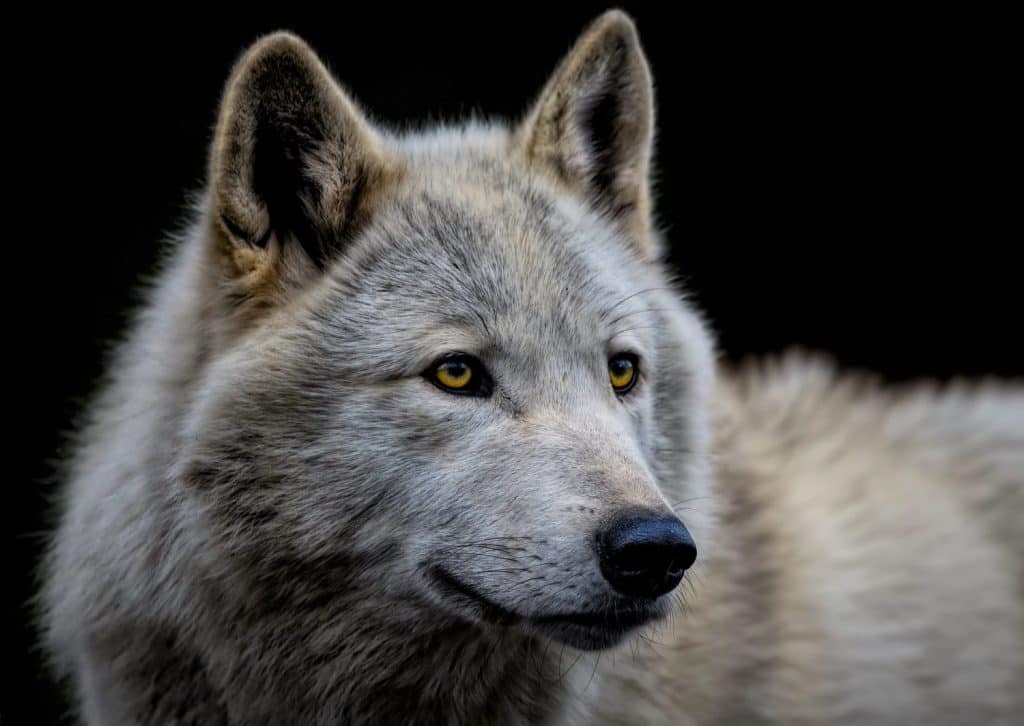
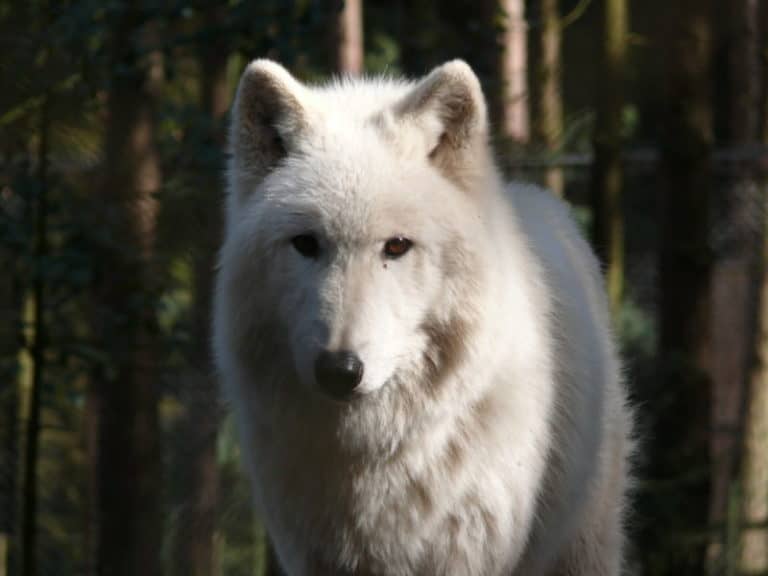
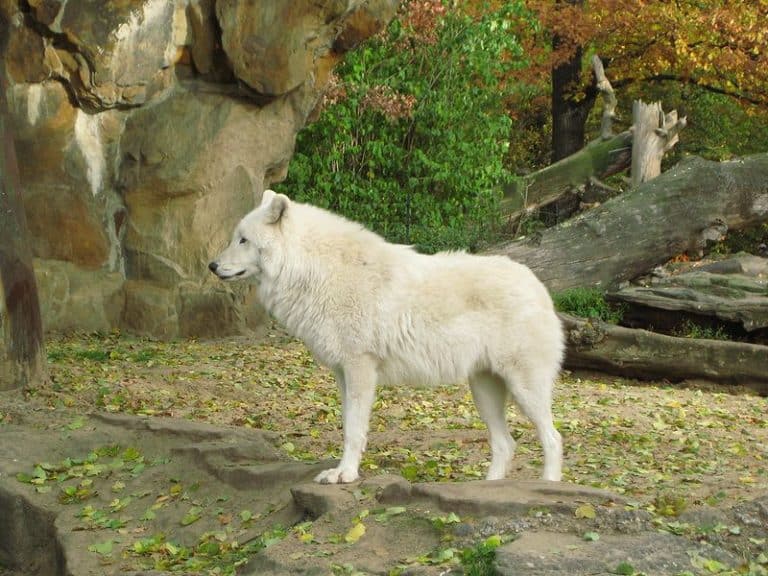
Arctic wolf is the common name of this mammal, though it’s sometimes called a polar or white wolf.
©Jean-michel DEMIMIEUX / Creative Commons – Original / License
Arctic wolf is the common name of this mammal, though it’s sometimes called a polar or white wolf. Its scientific name is Canis lupus arctos. It belongs to the Canidae family, and its class is Mammalia.
Its genus name, Canis, means dog, while lupus means wolf. The word arctos means bear, referring to the constellation Ursa Major, after which the Arctic region is named.
Evolution and Origins
Arctic wolves evolved from a lineage of other canids around 1 to 2 million years ago. In fact, scientists believe that Arctic wolves were at times highly isolated during their evolution. For example, they believe that Arctic wolves were isolated during the Ice Age, and they developed during that time period the adaptations needed to survive in extreme weather conditions such as the Arctic.
Appearance and Behavior
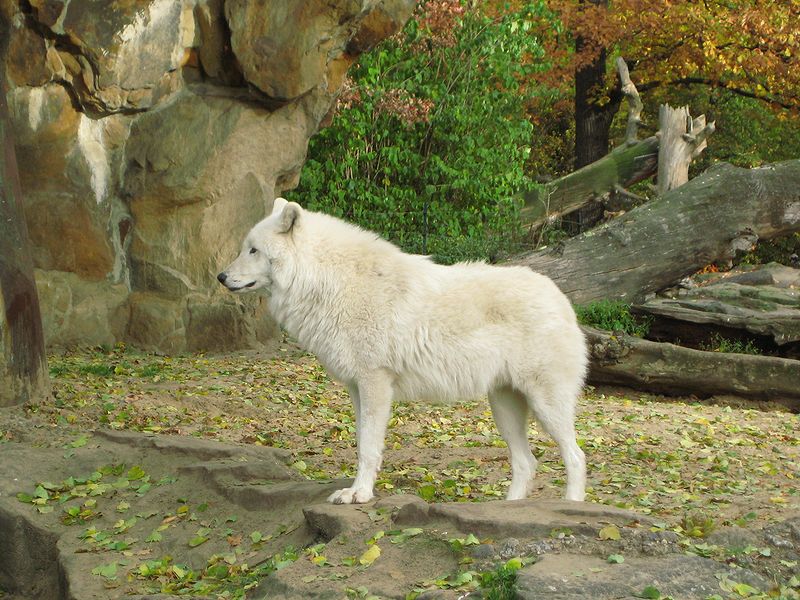
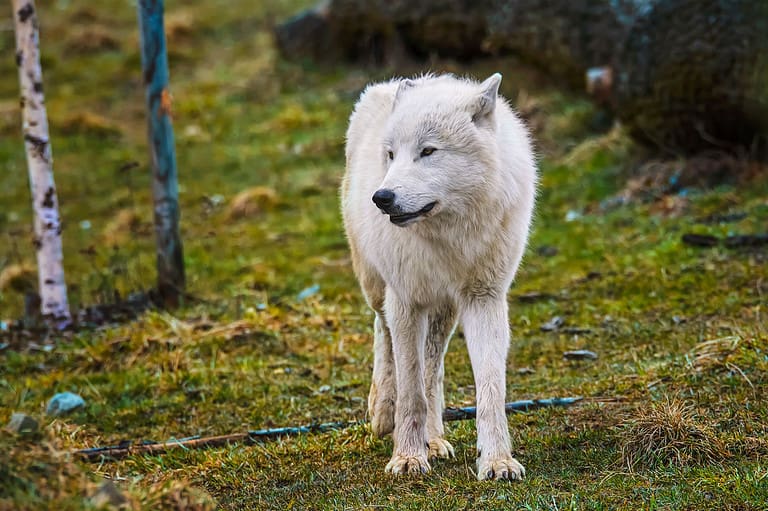
An adult Arctic wolf can weigh between 70 and 155 pounds. A 70-pound wolf is equal to the weight of 4 adult Dachshunds. They range between 2 and 2.5 feet tall and can be up to 5.9 feet long, including their tail. For reference, an Arctic wolf’s body is about three-quarters the length of the average Christmas tree.
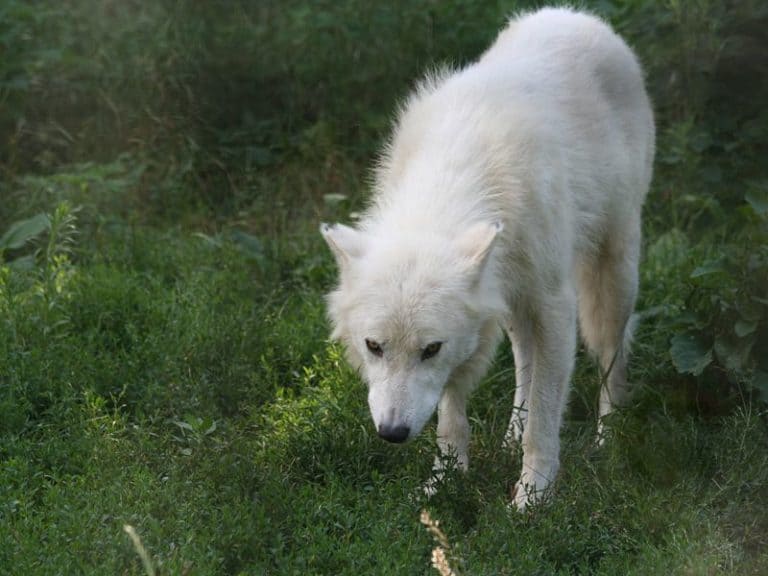
The white or sometimes grayish coat of this wolf has two layers. The upper layer gets thicker as the temperature drops in the tundra. The layer of fur closest to the wolf’s skin is waterproof. The waterproof layer of fur helps this wolf to stay dry and maintain its body heat in subzero temperatures.
Along with their insulated fur coats, Arctic wolves have paws with thick pads allowing them to walk on frozen ground. Plus, these pads give them traction on the slippery surfaces they walk and run on. Arctic wolves run while hunting muskoxen or other prey. The fastest recorded speed of an Arctic wolf is 46 mph.
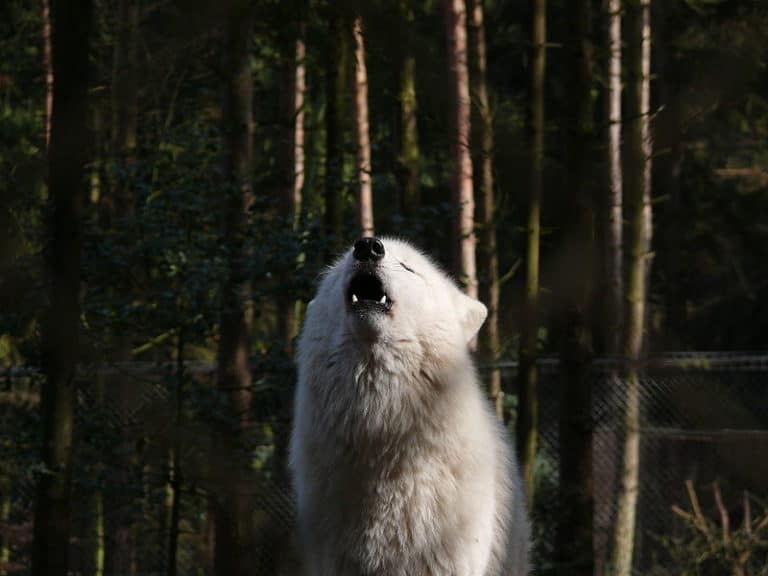
You may think of a wolf as a solitary animal, but Arctic wolves travel in packs of six or so. These wolves live in incredibly cold climates, so they rarely encounter people. They are not aggressive animals unless they are defending their territory from another wolf or animal.
Habitat
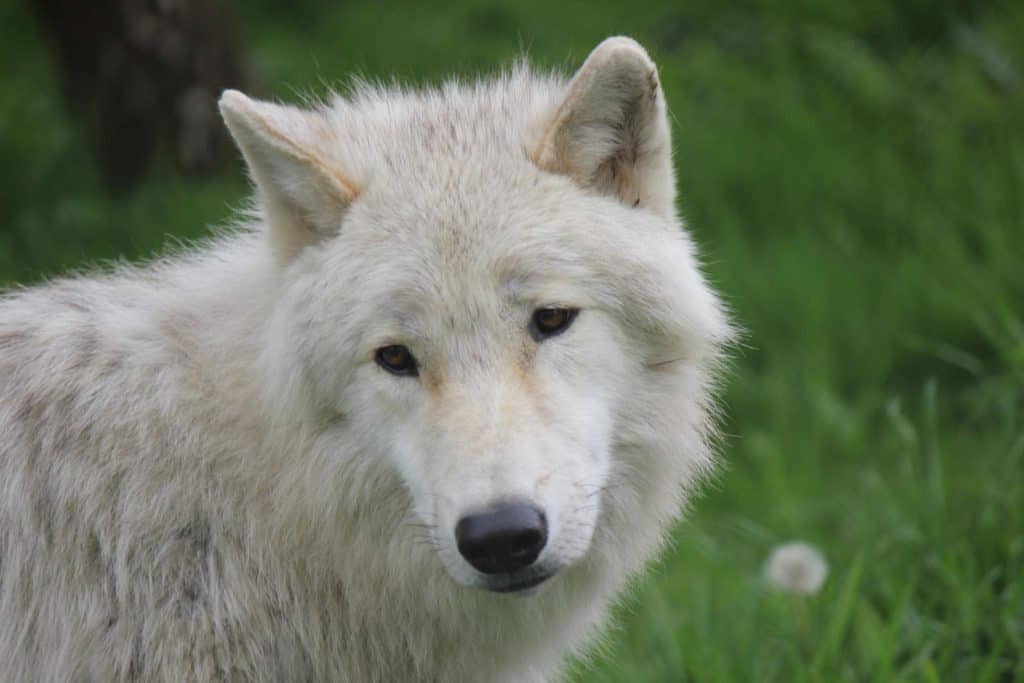
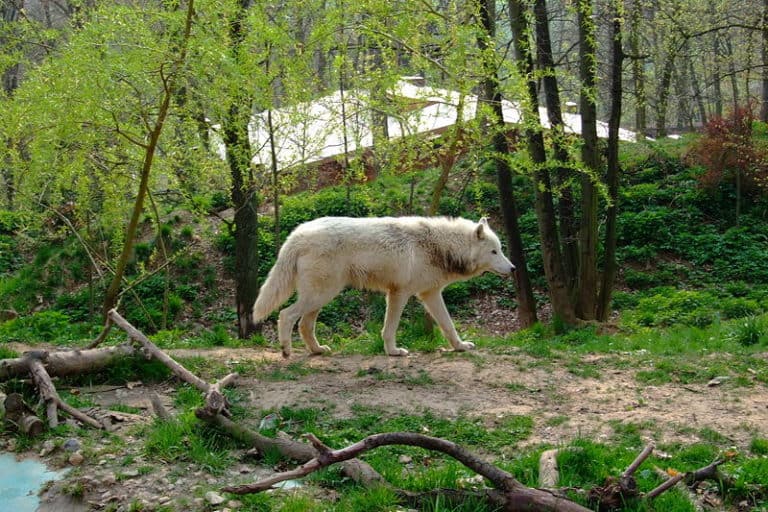
Arctic wolves live in northern Canada, Greenland, Alaska, and Iceland.
Arctic wolves live in northern Canada, Greenland, Alaska, and Iceland. They live in these Arctic regions year-round. These regions also experience dark periods lasting about five months. So, Arctic wolves have adapted to living in the dark as well as the cold.
Instead of living in dens in the ground, Arctic wolves live in caves or seek shelter in outcroppings of rocks. The ground in these Arctic areas is always frozen, making it impossible for them to dig traditional dens.
Diet
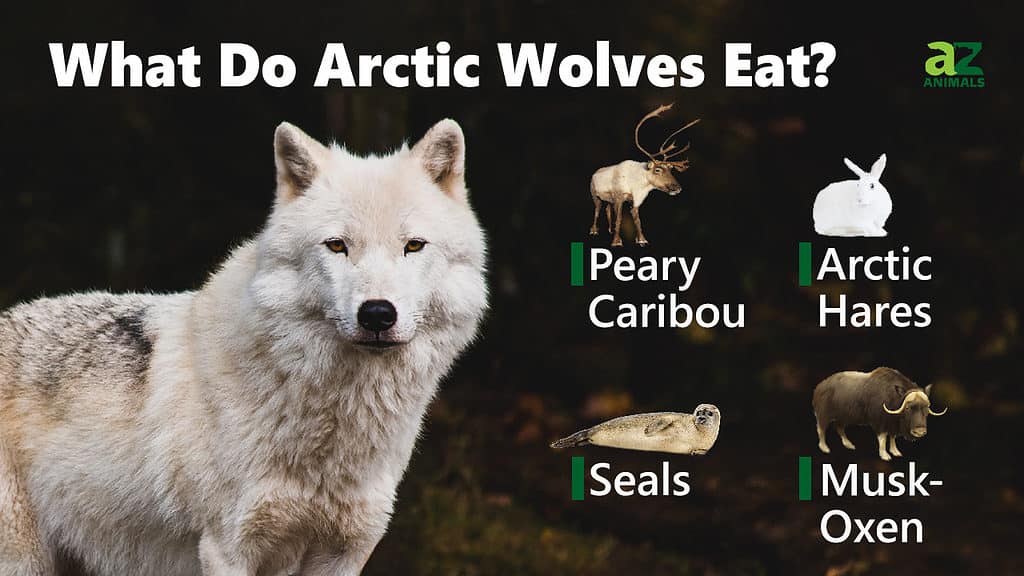
What do Arctic wolves eat? Arctic wolves eat Arctic hares, caribou, lemmings, and muskoxen. An Arctic wolf is smaller than its close relative, the gray wolf. So, you may be wondering how a single Arctic wolf could hunt and kill large mammals. The answer is: They don’t hunt alone.
A pack of wolves will work together to single out a weak member of a herd of caribou or muskoxen to capture. A pack of wolves will consume a large mammal over the course of a week or so. An Arctic wolf can eat about 20 pounds of meat in a single feeding. For reference, 20 pounds is roughly the weight of two one-gallon cans of paint.
Predators and Threats
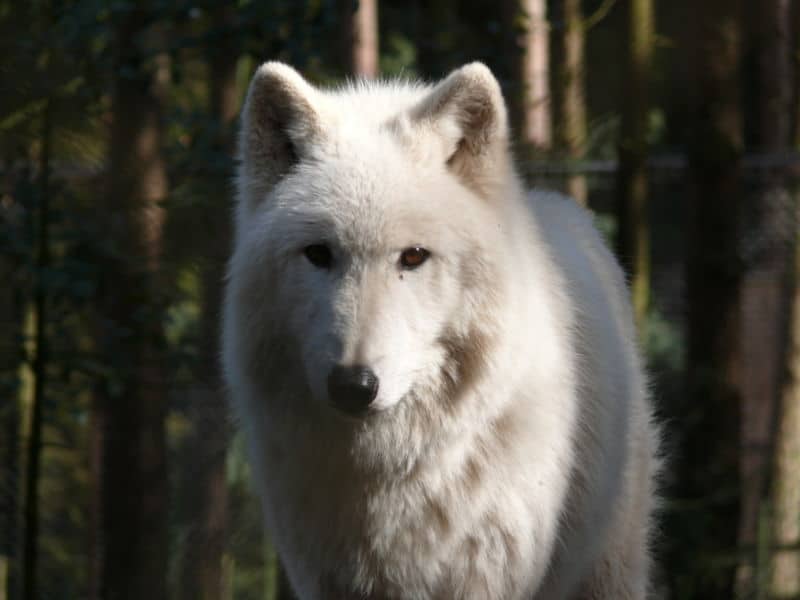
Polar bears are the only animal predators of Arctic wolves.
©Gunnar Ries, CC BY-SA 2.5, via Wikimedia Commons – Original / License
Polar bears are the only animal predators of Arctic wolves. If a young wolf cub wanders out of the cave, it can be killed by a bear or another wolf. When humans venture out to where the Arctic wolves live, humans pose a threat to the wolves as well.
An Arctic wolf can survive for days or even weeks without eating. It can survive on fat stored in its body. But it must eventually find nourishment to survive this harsh climate. If a wolf is in a weakened condition due to hunger, it may be attacked by other wolves.
The official conservation status of the Arctic wolf is Least Concern. Because they live in such a harsh environment, they are not endangered or threatened by hunters, and their habitat is not at risk.
Reproduction, Babies, and Lifespan
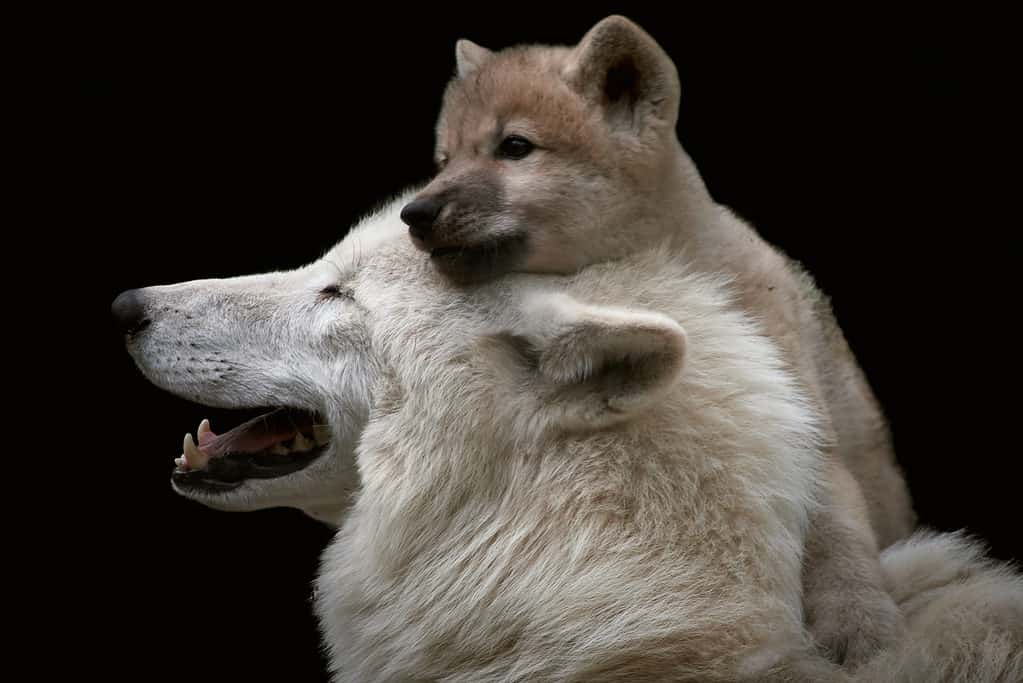
Newborn pups have dark fur and blue irises that change to yellow as they grow older.
©Thomas Marx/Shutterstock.com
In a pack of Arctic wolves, only the alpha male will mate with the alpha female. Arctic wolves are known to stay with one mate. This helps to control the number of wolf pups, also called pups or whelps, so there will be adequate food available to them. The gestation period is approximately 63 days, and the mother gives live birth to up to 6 wolf pups.
Newborn pups have dark fur and blue irises that change to yellow as they grow older. They weigh about 3 to 4 pounds when they’re born, but quickly start to gain weight. Arctic wolves give birth in late May or sometimes early June. This differs from gray wolves, which give birth in April and usually have 4 to 5 pups per litter.
They are born with their eyes and ears closed but are able to see and hear within about 12 to 14 days. The pups can crawl around a bit, especially when they want to nurse from their mother. In a few weeks, the pups start to nibble on small pieces of chewed food brought to them by their mother.
Arctic wolf pups stay in the cave or den with their mother for about 6 weeks. After 6 weeks, they join in the activities with the pack and are fully grown by 8 months. Generally, grown pups stay with the same pack for years.
The average lifespan of male and female Arctic wolves is about 7 years in the wild and 20 years in captivity. One of the most common reasons for the early death of an Arctic wolf is a lack of available food in the harsh climate. The alpha male and beta male and females in a pack may consume a disproportionate share of the available food.
Another reason for early death is injury. An Arctic wolf may be injured during a hunt, and the injury can become infected.
Population
The population of Arctic wolves is about 200,000. They are not considered to be a threatened species and are officially listed as Least Concern. The main reason Arctic wolves aren’t threatened is that they inhabit tundra where very few humans travel and even fewer other animals can survive.
One of the largest populations of these wolves is found in northern Alaska.
Arctic Wolf Pictures
View all of our Arctic Wolf pictures in the gallery.

How to say Arctic Wolf in ...
Sources
- David Burnie, Dorling Kindersley Animal, The Definitive Visual Guide To The World's Wildlife / Accessed November 4, 2008
- Tom Jackson, Lorenz Books The World Encyclopedia Of Animals / Accessed November 4, 2008
- David Burnie, Kingfisher The Kingfisher Animal Encyclopedia / Accessed November 4, 2008
- Richard Mackay, University of California Press The Atlas Of Endangered Species / Accessed November 4, 2008
- David Burnie, Dorling Kindersley Illustrated Encyclopedia Of Animals / Accessed November 4, 2008
- Dorling Kindersley Dorling Kindersley Encyclopedia Of Animals / Accessed November 4, 2008
- David W. Macdonald, Oxford University Press The Encyclopedia Of Mammals / Accessed November 4, 2008