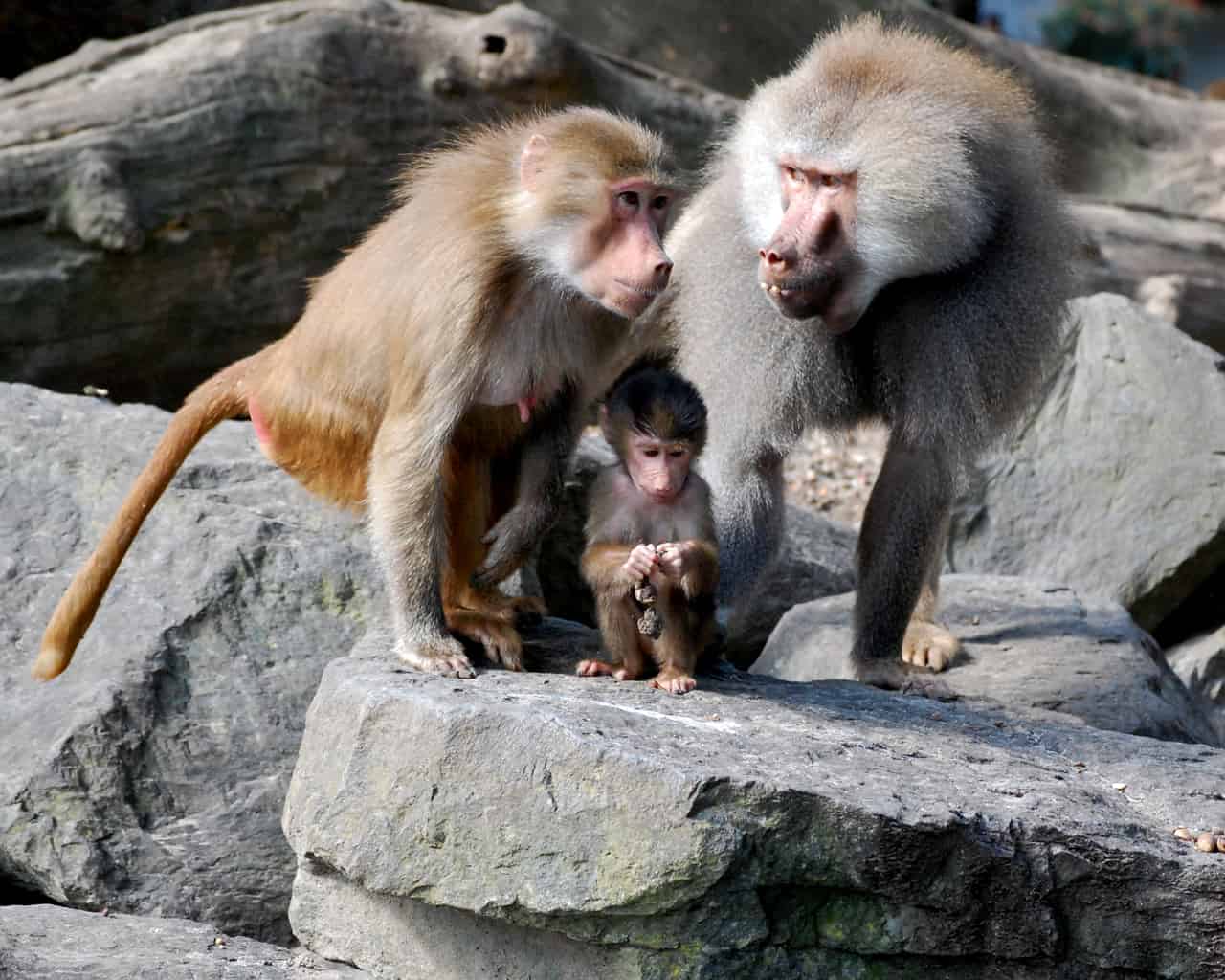

As humanity’s closest cousins in the animal kingdom, primates offer a fascinating look at complex social behavior in the wild. With emotional and intellectual faculties that in many ways mirror human beings, the various primate species invite comparisons between their social structures and our own. A recently released study conducted by the German Primate Center hints at another similarity. After observing Guinea baboons in Senegal over a two-year period, researchers uncovered a certain degree of gender equality in leadership: males and females alike successfully initiated group travel.
Guinea Baboons vs. Hamadryas Baboons
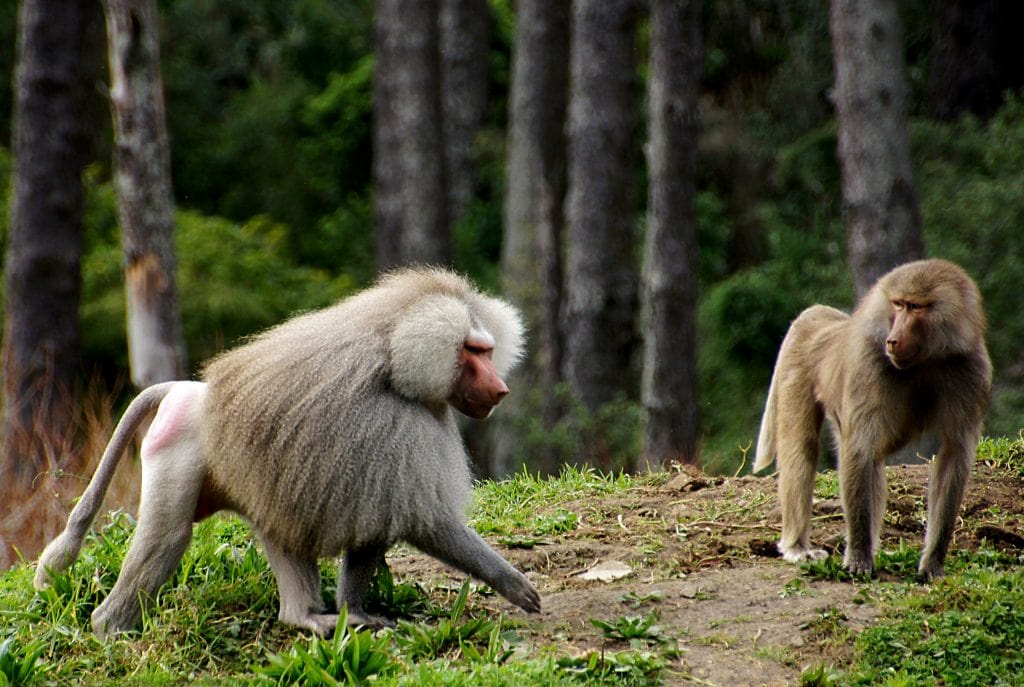
Relationships between hamadryas baboon males are primarily competitive.
©Bernard Spragg / Public Domain CC0 1.0 Universal – Original / License
Of the six baboon species in Africa, four — chacma, kinda, olive, and yellow baboons — organize into simple, uni-level societies, meaning their groups do not contain smaller subgroups. The remaining two, Guinea and hamadryas baboons, operate in multi-level societies. The differences in how these two species structure their groups highlight their distinct approaches to gender roles.
Hamadryas baboons, for example, form single-male units, each consisting of one male and several females who mate exclusively with him. These units then combine to form clans, which further unite into bands. Within these bands, males keep their female mates and generally avoid mixing with other males, resulting in relationships characterized by competition.
In contrast, Guinea baboons have a much more fluid social structure. Although they also form one-male units, the females are free to change partners as they choose, sometimes staying with a male for just a few weeks or for many years. This social flexibility also applies to males, who tend to form close bonds with each other rather than engaging in rivalries.
Follow the Leader
Hamadryas baboon bands follow only male leaders. When it’s time to move on from one area to another, only a male hamadryas baboon will initiate that mobilization. In contrast, three of the uni-level baboon species, chacma, olive, and yellow baboons, will follow leaders of either sex. Given the more open society of Guinea baboons, researchers questioned whether gender influenced leadership. Would Guinea baboons behave like other multi-level species, or would they demonstrate gender equality in their group movements?
Graduate student Davide Montanari led the research team in the study, conducted at the German Primate Center’s Simenti facility. Over the course of their research, they observed 121 group departures and 100 journeys. They analyzed how factors such as sex, age, and reproductive status influenced leadership. Their findings revealed another significant difference between Guinea and hamadryas baboons.
Gender Equality Among Guinea Baboons
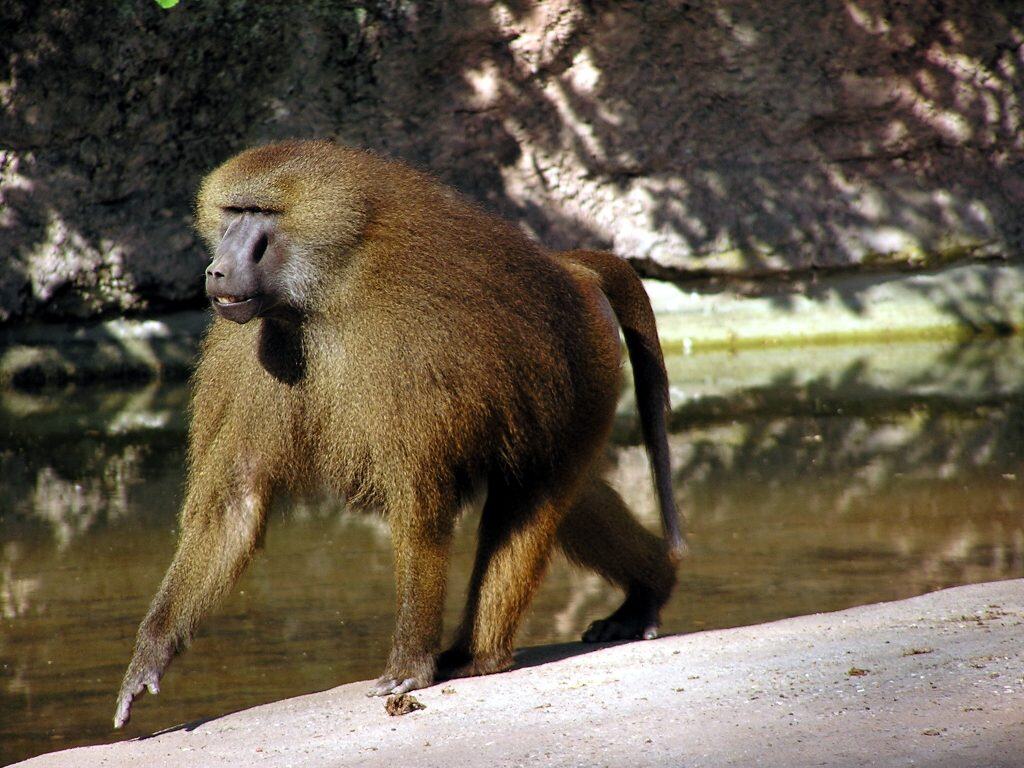
Researchers found that Guinea baboons followed both male and female leaders.
“Social organization alone does not determine who leads the group,” said the German Primate Center’s head of Cognitive Ethology Laboratory, Julia Fischer. Despite sharing similar organizing principles in their societies, “In Guinea baboons, females have a high degree of social and physical freedom and are less subordinate to males than in hamadryas baboons,” Fischer observed.
While males still initiated the majority of group movements at 60%, females initiated travel 36% of the time. Of all the group movements initiated, researchers found that the group followed 80% of the time, regardless of whether the leader was male or female. Once in motion, both females and males continued to lead the group. Furthermore, the trailing group’s middle and rear featured an even mix of male and female baboons, indicating no gender-based hierarchy throughout the group.
However, single males without accompanying units often traveled faster and ahead of the rest. In contrast, units stayed close together during travel, maintaining their tight-knit relationships.
Scant Guinea Baboon Research
Among the six baboon species, Guinea baboons are the least studied. Before this study, it was assumed that only males dictated group movements. Unlike hamadryas baboons, where males actively rally their females before traveling, Guinea males were thought to be less aggressive, leading their groups more passively by example. While this is still accurate, Montanari’s research shows that females also participate in leadership.
Similarly, another study released in 2011 changed perceptions of Guinea baboon society. It broke from conventional assumptions about baboon social structures, falling into either uni-level or multi-level groups. The fluidity of Guinea baboon society led to the formation of some all-male units, single bachelor male units, and units with multiple males and females. Although they are primarily a multi-level species, these findings suggest a more complex understanding of Guinea baboon socialization.
These fascinating animals deserve greater attention, but they face environmental pressures that make them more difficult to study. The International Union for Conservation of Nature lists them as Near Threatened. While adaptable, their range stretches over a limited territory in Western Africa where agriculture imposes upon their habitat. Farmers consider them a nuisance, as they feed on crops, and hunters reduce their numbers. However, the Niokolo-Koba National Park in Senegal offers a safe refuge where conservation efforts are in place to ensure their survival.