
Quick Take
- One pre-meal gesture chimps perform is so dangerous it could cost them a finger, yet they do it willingly. See the risky technique →
- More pre-meal touching didn't always mean less conflict. For one group, the opposite was true. Explore the mixed results →
- The behavior that inspired the entire study looks absurd on the surface, but that impression changes once you understand what it actually signals. Meet the reassurance train →
- Your instinct to reach for someone's hand when stress spikes may trace back over six million years, a possibility that apes appear to support. Trace the shared ancestry →
Food is often the source of conflict among wild animals. Just watch any nature show where food is involved, and you’ll see tension and aggression often on full display. But this isn’t the case across all species.
A new study published in the journal Proceedings of the Royal Society B suggests that, at least for chimpanzees and bonobos, taking the opposite approach — physical reassurance — keeps things calm among the group.
How the Study Was Conducted
Researchers from Durham University wanted to understand why chimps and bonobos seemed to approach group feeding in a calm, measured way. Led by Dr. Jake Brooker and Professor Zanna Clay, the team studied 116 chimps and bonobos across five semi-wild groups in two African sanctuaries – Lola ya Bonobo Sanctuary in the Democratic Republic of Congo and Chimfunshi Wildlife Orphanage Trust in Zambia.
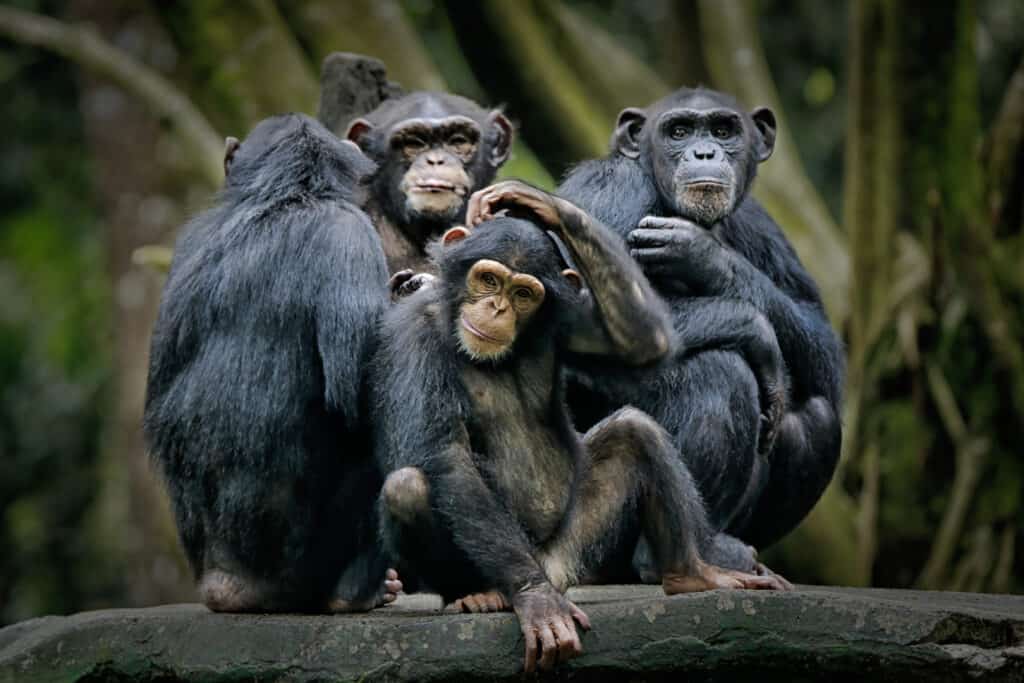
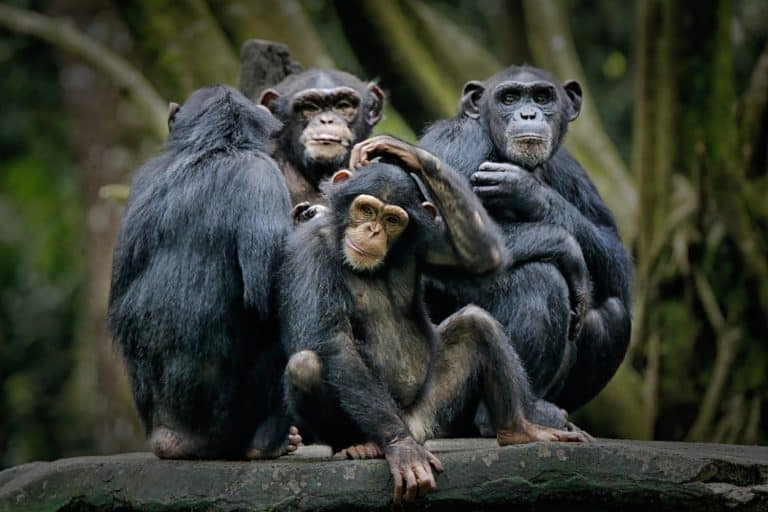
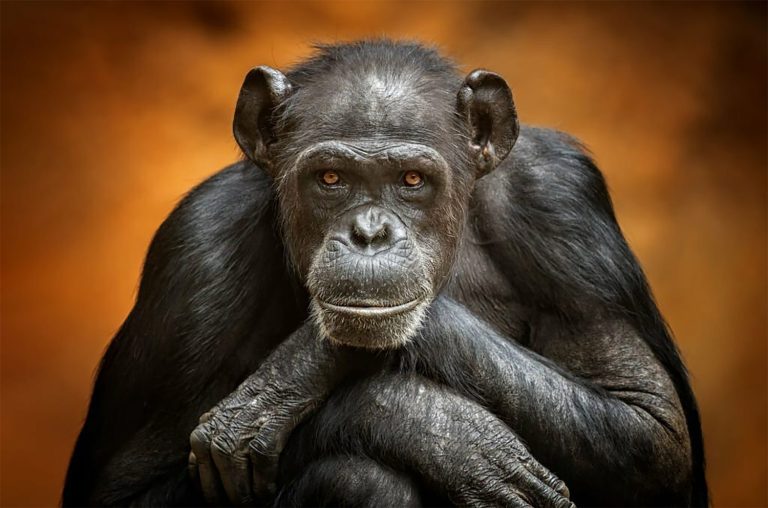
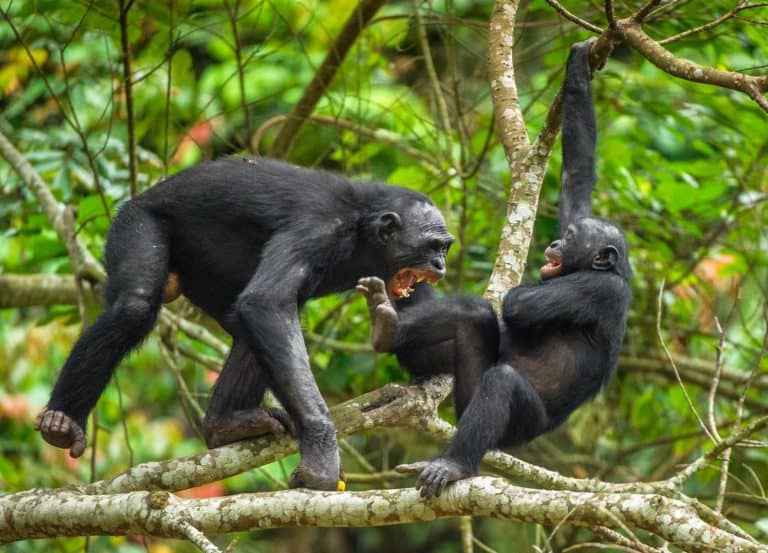
Chimpanzees are highly social animals and were one species involved in the study.
©Ari Wid/Shutterstock.com
The team used a method called a “peanut swing,” in which researchers gathered a group of apes together and waited for about five minutes before dropping food into the center of the group. The researchers were ready with video cameras to capture group behavior before, during, and after the food was presented. The team filmed 60 separate encounters.
What the Study Found
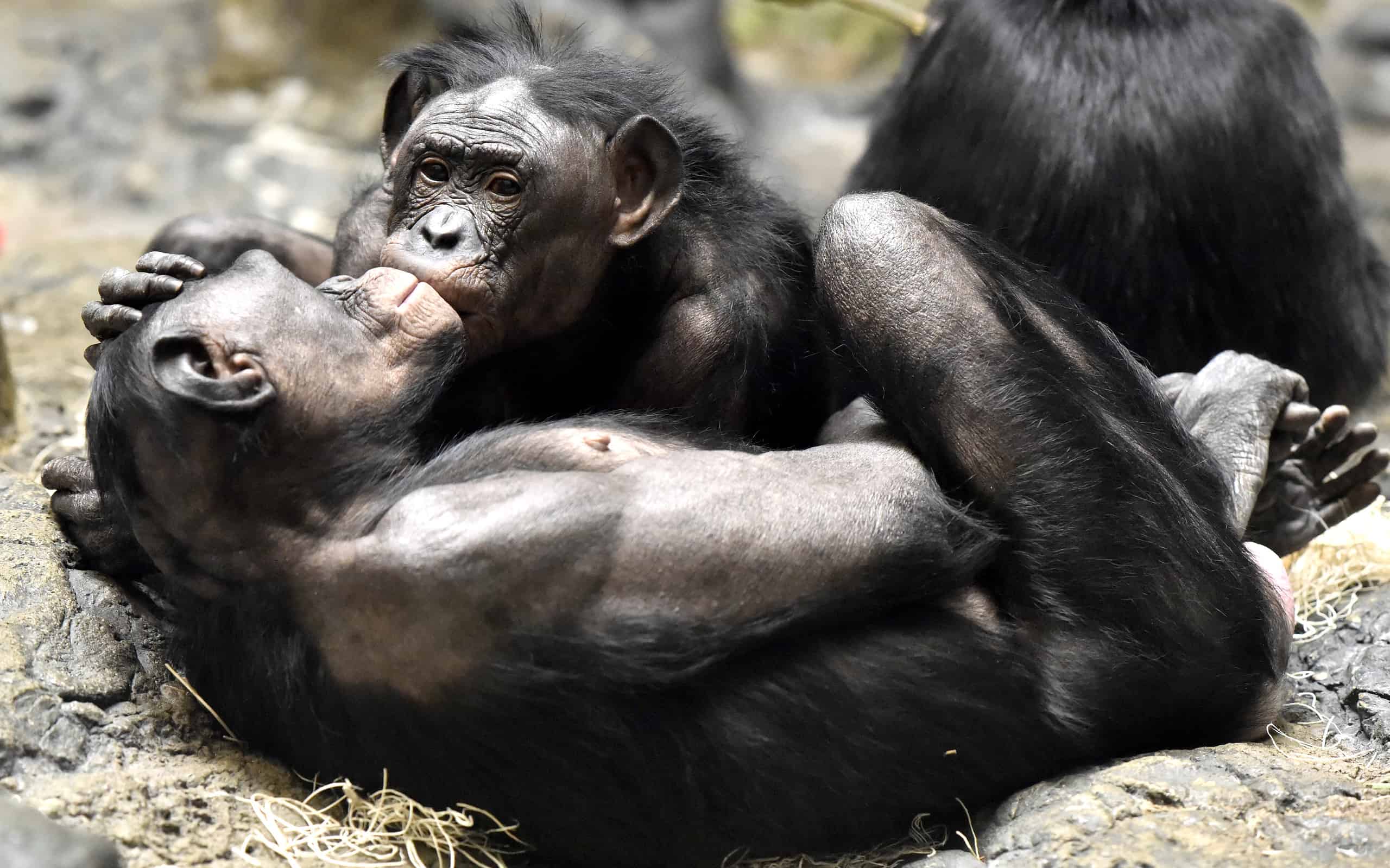
Researchers noticed that the apes that touched more before the food was delivered went on to spend more time eating side by side peacefully. The pre-food contact included hugs, light pats, and even kisses. The contact acted to lighten the mood as the apes waited for their meal.
But the results weren’t identical across the board.
In one chimp group, extensive pre-meal touching led to less communal sharing once the food arrived. The results also depended on the group’s overall social dynamics: as dominance hierarchies became stronger, groups were less likely to engage in pre-meal touching.
“In more despotic groups, where resources were more easily monopolized, we noticed that they seemed to lack strong reassurance bonds between the dominant sexes,” Dr. Brooker told Earth.com.
Results also varied by species. Bonobo groups focus on female bonds, so it was typically the females observed performing the pre-meal touching. Chimpanzees, on the other hand, depend on male alliances. In those groups, unsurprisingly, it was the males who initiated the behaviors.
Additionally, in chimpanzee groups, researchers noticed something more. The chimps slipped fingers and sometimes an entire hand into another chimp’s mouth. Because chimpanzees can easily bite off a finger, this action signals extreme trust between the animals.
“Chimpanzees can and do bite fingers off during severe conflicts, and yet, in the minutes before competition, you watch males place their teeth onto others’ backs and shoulders or shove their hands into each other’s mouths and hold them there while panting and making soft calls,” Dr. Brooker told Earth.com.
The Embrace That Inspired the Study
Brooker noted that part of the inspiration for the study was observing male chimpanzees form a kind of “hug train.” One male would embrace another from behind, then a second male would join in, and so on, until all the males were settled into a long line of hugging chimps.
Brooker and his team called it a “reassurance train.”
The Link Between Ape and Human Touch
Humans share about 98.8 percent of their DNA with chimpanzees. For bonobos, the match is about 98.7 percent. This high degree of shared DNA reflects the understanding that chimps, bonobos, and humans all share a common ancestor. At some point, the lineage of humans and apes diverged. It is generally believed that this split occurred between five and eight million years ago.
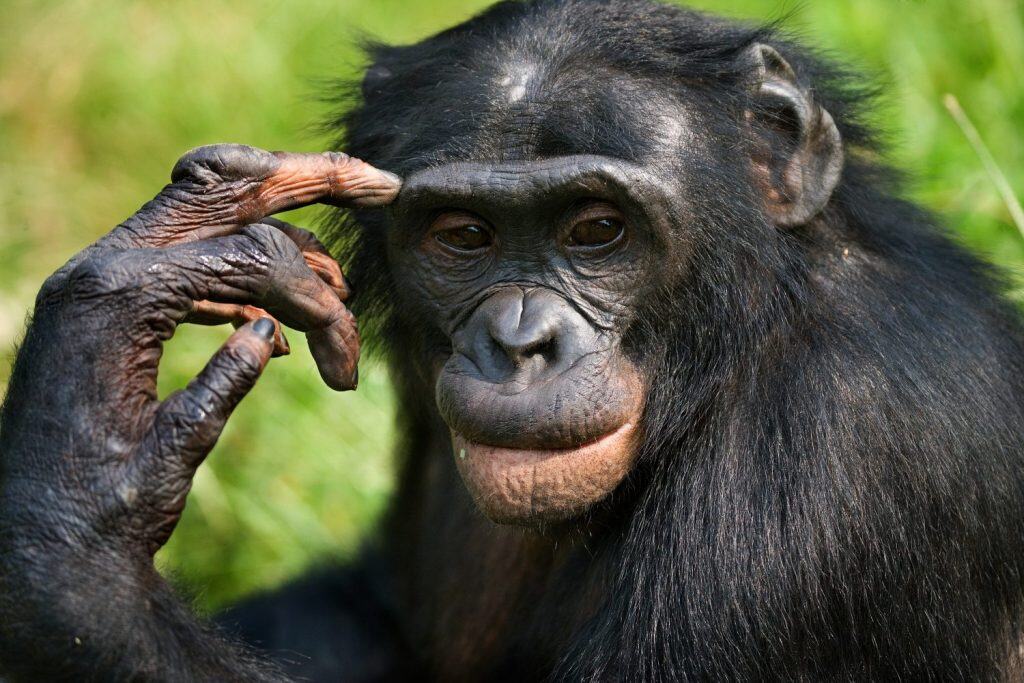
Bonobos were the second species involved in the study.
©GUDKOV ANDREY/Shutterstock.com
It is therefore unsurprising that researchers compare the ape behavior observed in the study to similar human behavior. They point to the human reflex to seek out a hug or hold a hand when tensions rise.
“Seeing bonobos and chimpanzees do essentially the same thing, despite our lineages having split over six million years ago, suggests we inherited this capacity from at least our last common ancestor,” Brooker told Earth.com.
What’s Next?
While the researchers observed that touch immediately preceded calm eating sessions, they are quick to point out that they cannot yet be certain that touch caused the lower tensions. It could simply indicate that tension was already low within the group.
The next step for the research team is to test whether a hug lowers stress hormones in chimps and bonobos. They also want to test whether apes that reassure each other before mealtime subsequently share more food.
Brooker thinks it might.
“We’d expect both parties to feel reassured, especially when using the more vulnerable gestures, and the strength of that feeling of relief is buffered by the relationship between the two,” he told Earth.com.
Future studies are in the works.